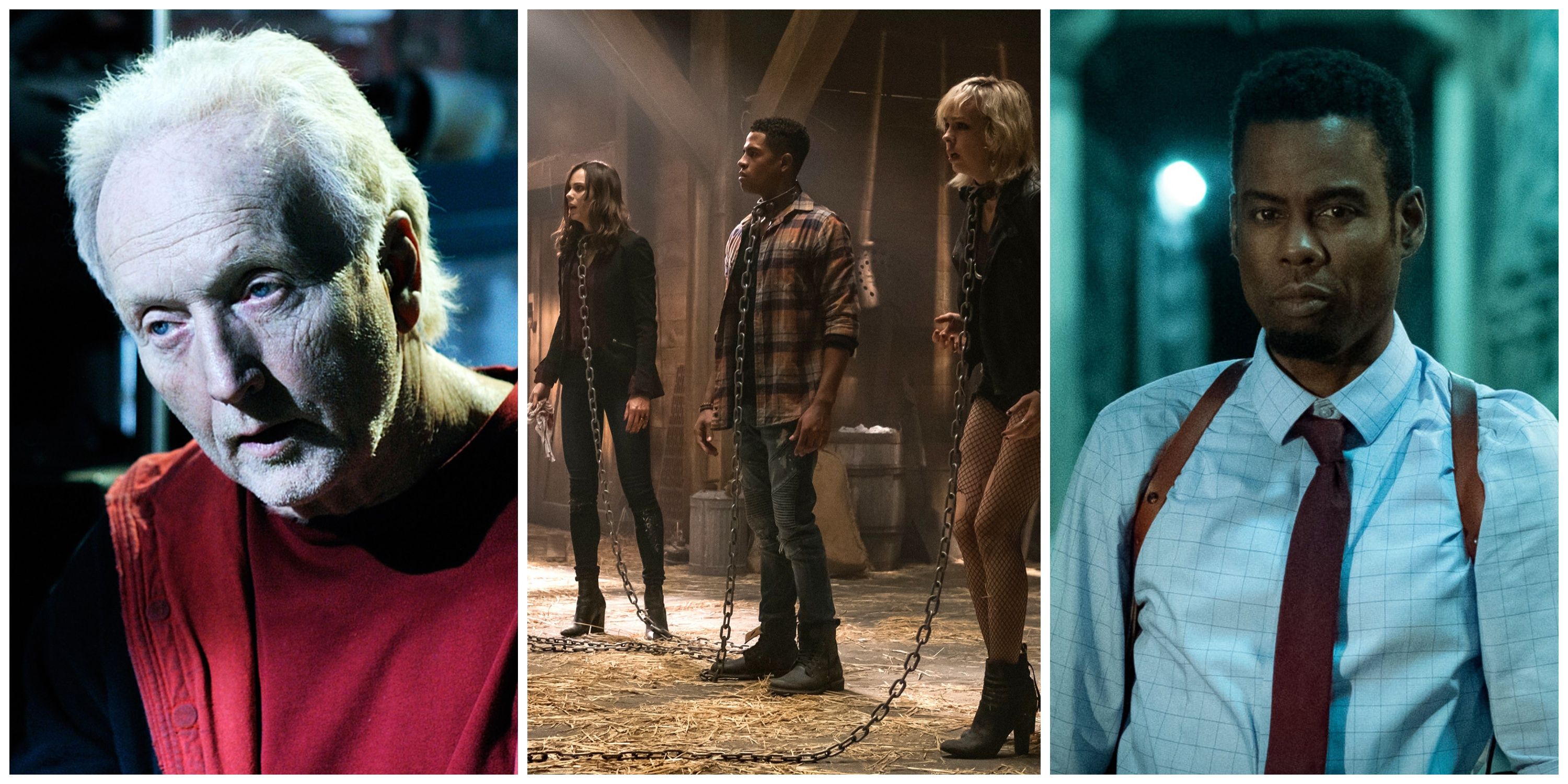
To watch the Saw franchise in chronological order, you must navigate a complex web of prequels, mid-quels, and concurrent timelines. The sequence begins with the "past" game in Jigsaw, followed by Saw (2004), Saw X, and Saw II. The timeline then splits as Saw III and Saw IV occur simultaneously, leading into Saw V, Saw VI, Saw 3D, the "present" events of Jigsaw, and finally Spiral: From the Book of Saw.
The Saw franchise is notorious for its non-linear storytelling. What began as a gritty, low-budget indie thriller in 2004 evolved into a massive "torture porn" phenomenon characterized by intricate soap-opera-style plotting and heavy reliance on flashbacks. As of 2026, with the recent expansion of the universe through Saw X and Saw XI, the timeline has become even more layered. Understanding the "Jigsaw" legacy requires more than just watching the films in the order they hit theaters; it requires a deep dive into the life of John Kramer and his various apprentices.
The Complexity of the Jigsaw Timeline
Unlike most horror franchises that follow a linear path (like Halloween or Friday the 13th), Saw uses the passage of time as a narrative tool. The series frequently reveals that events we thought happened years ago were actually occurring yesterday, or that a character we believed was a hero was actually working for the villain the entire time.
The most significant challenge in establishing a chronological order is the "flashback" structure. Almost every film contains footage that takes place before the first movie. However, for a cohesive viewing experience, we categorize the films based on where the "main" game or primary narrative block fits into the life and death of John Kramer.
The Problem with "Jigsaw" (2017)
The eighth film in the franchise, Jigsaw, is the most difficult to place. It features two distinct timelines: a game taking place on a farm and a police investigation occurring ten years after John Kramer’s death. To watch the series chronologically, one could technically start with the farm game, but because it is edited to look like it is happening in the present, it often serves better as a bridge between the "Kramer Era" and the "Post-Kramer Era."
The Saw Chronological Viewing Sequence
If you want to experience the story as it unfolds for the characters—moving from the early days of John Kramer’s philosophy to the legacy of his copycats—follow this specific order.
1. Jigsaw (2017) – The Barn Game Segments
Chronologically, the "Barn Game" is the earliest full game we see in the franchise. It takes place roughly several years before the events of the original Saw. This is where John Kramer (Tobey Bell) first tests Logan Nelson. While the movie was released much later, the events here predate the infamous "Bathroom Game."
2. Saw (2004)
This is the foundational entry. It introduces Dr. Lawrence Gordon and Adam Stanheight trapped in a dilapidated bathroom. While there are flashbacks to the "Jigsaw Killer's" earlier crimes (like the Reverse Bear Trap with Amanda Young), the bulk of this film takes place here. It establishes the "rules" of the universe and the motive of the antagonist.
3. Saw X (2023)
Set just weeks after the events of the first Saw, this "mid-quel" finds a desperate John Kramer traveling to Mexico for a risky experimental medical procedure to treat his brain cancer. When the procedure is revealed to be a scam, John and his apprentice Amanda Young (Shawnee Smith) set up a game for the con artists. This film is vital for chronological viewers as it provides the most significant character development for John and Amanda's relationship before things take a dark turn in Saw II.
4. Saw II (2005)
Moving forward, John Kramer is captured by Detective Eric Matthews. While John is in custody, a group of people (including Matthews' son and Amanda Young) are trapped in a "nerve gas house." This film introduces the idea of multiple apprentices and expands the scope of the traps.
5. Saw III (2006) and Saw IV (2007) – Concurrent Events
These two films are unique because they happen at the exact same time. Saw III focuses on Jeff, a grieving father, undergoing a series of tests while John Kramer lies on his deathbed, being tended to by a frantic Amanda. Meanwhile, Saw IV follows Officer Rigg as he is led through his own series of tests by a mysterious shadow apprentice. The timelines converge in the final minutes of both films, ending with the death of John Kramer.
6. Saw V (2008)
Following the death of Kramer, the timeline becomes linear again for a period. Saw V focuses on Detective Mark Hoffman as he attempts to eliminate the remaining threats to his secret identity as Jigsaw’s successor. It also provides crucial flashbacks to how Hoffman was recruited by John years earlier, specifically regarding the Seth Baxter trap.
7. Saw VI (2009)
This entry follows Hoffman as he carries out John’s posthumous request to test William Easton, an insurance executive. This film is highly regarded for its social commentary and for tightening the remaining threads of the "Jill Tuck vs. Hoffman" rivalry.
8. Saw 3D: The Final Chapter (2010)
Originally intended as the conclusion, this film follows Bobby Dagen, a man who lied about surviving a Jigsaw trap. It concludes the "Hoffman Era" and features the dramatic return of a key character from the first film, providing a definitive (if temporary) end to the primary storyline.
9. Jigsaw (2017) – The Investigation Segments
Now we jump forward ten years. The police investigation into new murders that seem to be the work of John Kramer takes place here. This segment resolves the mystery of the "Barn Game" and reveals who has been carrying on the legacy a decade after John's death.
10. Spiral: From the Book of Saw (2021)
This is a standalone spin-off set some years after the events of Saw 3D and Jigsaw. It follows Detective Zeke Banks as he hunts a copycat killer who is targeting corrupt police officers. While it references John Kramer, it is the furthest point in the future of the Saw timeline (until the potential events of Saw XI are fully integrated).
Summary Table: Release vs. Chronological Order
| Film Title | Release Year | Chronological Position | Primary Timeline Focus |
|---|---|---|---|
| Saw | 2004 | 2 | The Bathroom Game |
| Saw II | 2005 | 4 | The Nerve Gas House |
| Saw III | 2006 | 5 (Concurrent) | John Kramer's Death |
| Saw IV | 2007 | 5 (Concurrent) | Detective Rigg's Test |
| Saw V | 2008 | 6 | Hoffman's Ascension |
| Saw VI | 2009 | 7 | The Insurance Game |
| Saw 3D | 2010 | 8 | The Public Game / Hoffman's Downfall |
| Jigsaw | 2017 | 1 & 9 | The First Game & 10 Years Post-Death |
| Spiral | 2021 | 10 | The Copycat Investigation |
| Saw X | 2023 | 3 | Kramer's Mexico Trip (Mid-quel) |
The Role of "Saw XI" in the Timeline
As we look back from 2026, Saw XI has added further layers to the mid-quel era. Much like Saw X, it seeks to fill the gaps between the early films. For viewers using the chronological method, Saw XI typically slots in after Saw X but before Saw II, further fleshing out the transition from John's solo work to his collaboration with Amanda and Hoffman. For more information on the latest franchise developments, the official Lionsgate website remains the primary source for casting and canon updates.
Why Watch in Chronological Order?
Watching the films in chronological order, rather than release order, provides a deeper psychological profile of John Kramer. In the release order, John is an enigmatic monster who is killed off early (in the third film), and the audience is left to piece together his motives through cryptic tapes.
In chronological order, you see a man who is genuinely trying to "help" people (in his twisted way) before he becomes disillusioned and more brutal. You witness the growth and eventual corruption of Amanda Young. Seeing her journey in Saw X immediately after Saw (2004) makes her tragic fate in Saw III much more impactful.
Furthermore, the chronological order helps clarify the "Apprentice Wars." The rivalry between Mark Hoffman and Amanda Young is a subtle undercurrent in the early films that becomes a full-blown war by Saw VI. Watching the timeline linearly makes these power dynamics much easier to track.
Major Time Skips and Flashbacks to Note
While the list above provides the "main" sequence, hardcore fans should be aware of specific historical markers within the films:
- The Cecil Adams Trap: Shown in Saw IV, this is John Kramer’s first actual trap, occurring shortly after the loss of his unborn son, Gideon.
- The Seth Baxter Trap: Shown in Saw V, this is Hoffman’s "copycat" trap that John Kramer uses to blackmail Hoffman into becoming his apprentice.
- The Bobby Dagen Book Signings: Shown in Saw 3D, these occur during the height of Jigsaw’s fame (around the time of Saw II and III).
Detailed fan communities like the Saw Wiki provide exhaustive breakdowns of every minute of the franchise's timeline for those who want to timestamp every single flashback.
Frequently Asked Questions
Is Saw X a prequel or a sequel?
Saw X is technically a "mid-quel." It is a sequel to the original 2004 Saw but a prequel to Saw II. It takes place during the gap between the first and second films, making it the third film in the chronological timeline.
Do I need to watch Jigsaw before the original Saw?
If you are watching for the first time, no. It is better to watch in release order first to experience the twists as intended. However, for a chronological rewatch, the "farm game" portion of Jigsaw is the earliest event, so it would come first.
Why do Saw III and Saw IV happen at the same time?
The filmmakers decided to show two different perspectives of Jigsaw's final masterpiece. Saw III shows the internal perspective (John’s death), while Saw IV shows the external perspective (the police response). The ending of Saw IV actually reveals that the autopsy of John Kramer seen at the start of the movie takes place after the events of both films conclude.
Does Spiral connect to the other Saw movies?
Spiral is set in the same universe but does not feature John Kramer as a character. It takes place the furthest in the future and functions as a standalone story about the legacy of Jigsaw's methods rather than a direct continuation of the apprentice storylines.
Who is the "first" apprentice?
According to the timeline established in Jigsaw (2017), Logan Nelson was the first person John Kramer recruited, even before Amanda Young or Mark Hoffman. However, this remains a point of contention among fans who prefer the original trilogy's lore.
Recommendations for New Viewers
If this is your first time entering the world of Jigsaw, start with Release Order. The franchise relies heavily on "the twist," and watching chronologically will spoil several major reveals in the earlier films. For example, knowing who the apprentices are in Saw (2004) or Saw II removes the tension of the mystery.
However, for those who have seen the films and want to appreciate the intricate planning of the writers, a Chronological Rewatch is highly recommended. It transforms the series from a collection of horror movies into a sprawling, decade-long epic about legacy, morality, and the consequences of one man’s obsession with "testing" the human spirit.