This guide focuses strictly on the professional protocols for physical forensic investigation and biohazard remediation of a real crime scene, distinguishing these critical legal and safety procedures from fictionalized media portrayals.
The landscape of forensic science and scene management has undergone a radical transformation by 2026. Managing a real crime scene today requires a sophisticated integration of advanced biotechnology, AI-driven spatial mapping, and rigorous biohazard safety standards. Whether you are a property owner facing the aftermath of an incident or a professional entering the field, understanding the 2026 standards for evidence preservation and site restoration is essential for legal compliance and public health.
The Evolution of Forensic Investigation in 2026
The methodology for processing a real crime scene has shifted from manual collection to a "digital-first" approach. In 2026, the primary objective is to create a persistent digital twin of the scene before any physical evidence is touched. This ensures that the context of the evidence is preserved in a three-dimensional space that can be revisited by investigators and jurors years later.
Hyperspectral Imaging and Molecular Detection
Traditional forensic lighting (UV and Blue light) has been largely superseded by portable hyperspectral imaging units. These devices allow investigators to identify biological fluids, explosive residues, and drug metabolites that are invisible to the naked eye, even if the scene has been subjected to attempted cleaning.
In 2026, real-time molecular sensors can now identify the specific DNA profile or chemical composition of a substance on-site within minutes, significantly reducing the "discovery-to-lead" timeframe that hampered investigations in 2024 and 2025.
AI-Driven Spatial Mapping
Modern investigators use autonomous drone systems for interior mapping. These compact units navigate the real crime scene, using LiDAR and photogrammetry to build a millimeter-accurate model. This technology eliminates the risk of human investigators accidentally contaminating the scene during the initial documentation phase.
Procedural Integrity: The Chain of Custody in a Digital Era
The integrity of a real crime scene hinges entirely on the Chain of Custody. In 2026, this is managed through decentralized ledger technology (blockchain), ensuring that every person who enters the scene and every piece of evidence collected is logged with an immutable timestamp and biometric signature.
Legal Admissibility in 2026
The Forensic Evidence Integrity Act of 2026 mandates that all physical evidence must be paired with a digital hash. If the digital record shows any unauthorized access or a gap in the GPS tracking of a sample, the evidence is often deemed inadmissible in high-court proceedings.
Standardized Evidence Packaging
All biological samples are now stored in "Smart-Tainers." These containers monitor the internal temperature and humidity, sending real-time alerts to the laboratory if the environment fluctuates, which could compromise DNA stability.
Professional Biohazard Remediation and Decontamination
Once the law enforcement "release" of a real crime scene occurs, the responsibility shifts to specialized biohazard remediation firms. As of 2026, the industry is governed by the updated IICRC S540 standards, which dictate the specific protocols for cleaning trauma scenes.
The Critical Role of IICRC S540 (2026 Revision)
The 2026 revision of the S540 Standard for Trauma and Crime Scene Remediation introduces stricter requirements for "deep-tissue" decontamination. This refers to the removal of biological fluids that have seeped into subflooring, wall studs, or HVAC systems. Standard janitorial services are legally and technically prohibited from handling these scenarios due to the risk of bloodborne pathogens like HIV, Hepatitis B, and the 2026-variant respiratory pathogens.
Advanced Remediation Chemistry
The chemicals used in 2026 are significantly more effective and environmentally conscious than those used in the previous decade.
- Enzymatic Bio-Digesters: These are customized to target specific proteins in human blood and tissue, breaking them down into inert components.
- Nanoparticle Disinfectants: These provide a "residual kill" effect, remaining active on surfaces for up to 90 days to prevent any bacterial regrowth.
- Vaporized Hydrogen Peroxide (VHP): Used for whole-room sterilization, VHP ensures that even the air and inaccessible crevices are rendered 100% sterile.
Comparative Analysis: Investigation vs. Remediation Phases
The management of a real crime scene is divided into two distinct phases with different goals, personnel, and legal authorities.
| Feature | Forensic Investigation Phase | Biohazard Remediation Phase |
|---|---|---|
| Primary Goal | Evidence collection and prosecution | Health, safety, and property restoration |
| Lead Authority | Law Enforcement / Medical Examiner | Property Owner / Certified Remediation Firm |
| 2026 Tech Used | LiDAR, DNA Sequencing, AI Mapping | VHP Sterilization, Bio-Enzymes, HEPA-Air Scrubbers |
| Documentation | Evidence Logs, Case Files | Certificate of Disinfection, Waste Manifests |
| Legal Mandate | Fourth Amendment / Search Warrants | OSHA 1910.1030 / EPA Waste Protocols |
| Average Duration | 24 to 72 hours | 12 to 48 hours post-release |
| Cost Responsibility | Government Funded | Private Insurance / Property Owner |
Step-by-Step Professional Management of a Real Crime Scene
Managing a scene from discovery to restoration requires a disciplined sequence of events to ensure both legal integrity and biological safety.
- Scene Stabilization and First Response: Emergency personnel prioritize life-saving measures while minimizing the "footprint" of their movements.
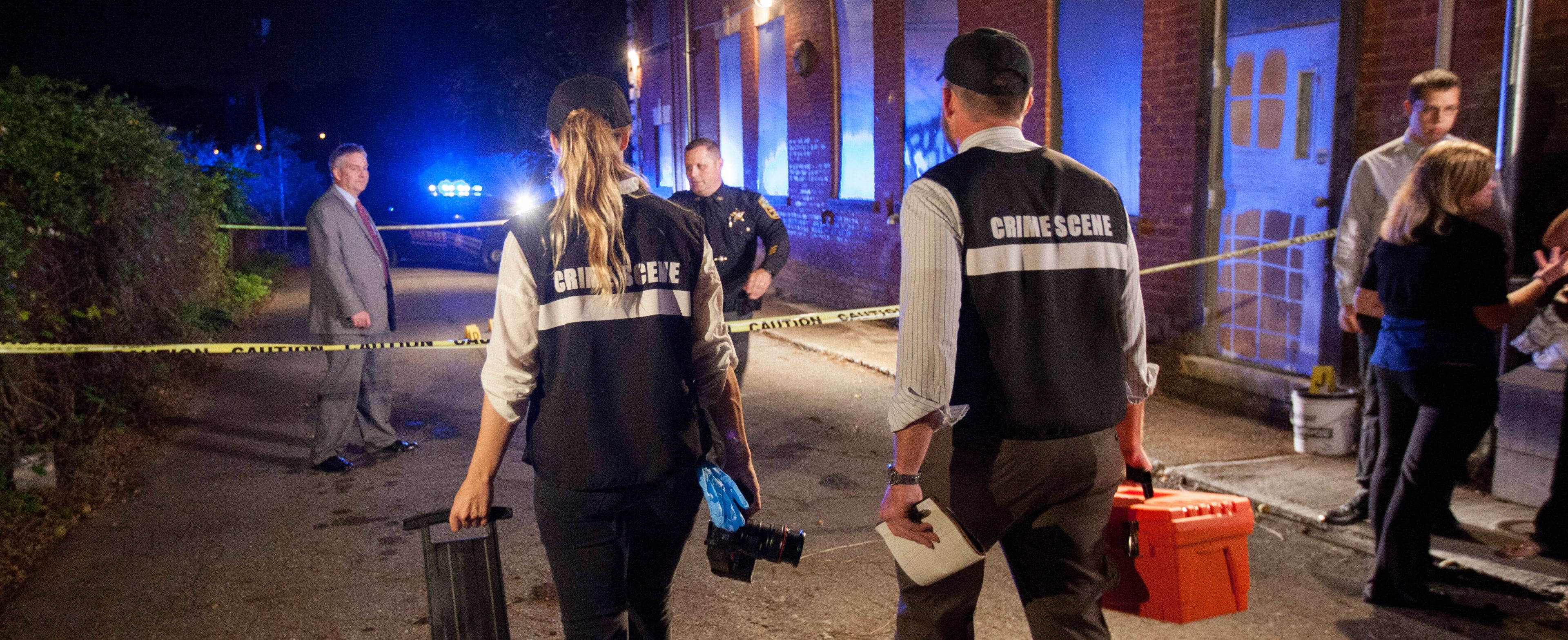
- Forensic Cordoning: Law enforcement establishes a multi-tier perimeter. The "Hot Zone" is restricted to forensic technicians wearing Level B PPE.
- Evidence Processing: Investigators use 2026-standard 3D scanning and molecular analysis to document the scene in situ before physical collection begins.
- Site Release: Once all evidence is processed, the lead investigator issues a formal "Scene Release" document to the property owner.
- Initial Assessment for Remediation: A certified biohazard technician performs a forensic cleaning assessment, using ATP (Adenosine Triphosphate) testing to measure the level of biological contamination.
- Structural Decontamination: This involves the removal of porous materials (carpet, drywall) that cannot be fully sterilized and the chemical treatment of non-porous surfaces.
- Verification and Clearance: Final testing ensures the site meets the 2026 "Clean-to-Human-Occupancy" metric, followed by the issuance of a Certificate of Decontamination.
Financial and Insurance Realities in 2026
The cost of remediating a real crime scene can be substantial, often ranging from $3,000 to over $25,000 depending on the scope of the incident. In 2026, insurance coverage for these events is standard but requires specific documentation.
Insurance Coverage Details
Most Homeowners Insurance policies (H03 and H05 forms) cover "Crime Scene Cleanup" under the "Additional Coverages" or "Perils Insured Against" sections. However, in 2026, many carriers like State Farm, Allstate, and Liberty Mutual require that the remediation firm holds a valid IICRC certification for the claim to be honored.
- Deductibles: Usually apply to the structural repair, but some 2026 policies waive the deductible for the biohazard removal portion to encourage rapid decontamination.
- Excluded Items: Policies typically do not cover the loss of illegal items or structures that were already in violation of local building codes before the incident.
- Government Assistance: Many states in 2026 have expanded Victim Compensation Funds that help bridge the gap if insurance coverage is insufficient.
Expert Insight: Dealing with "Hidden" Contamination
As a Senior Technical Strategist in biohazard management, the most frequent failure I see in 2026 is the oversight of "secondary contamination." In a real crime scene, biological material is often pressurized (in cases of ballistic trauma) or aerosolized.
Failure to inspect the interior of electrical outlets, the tracks of sliding doors, or the return vents of the HVAC system can lead to lingering odors and significant health risks months after the event. Always insist on a "fluorescent tracer" test post-cleanup. This 2026 technology uses a harmless reactive spray that glows under a specific frequency if any trace of biological protein remains.
Frequently Asked Questions
Can I clean a real crime scene myself in 2026?
Technically, a property owner may attempt it, but it is highly discouraged and often legally restricted due to hazardous waste disposal laws. In 2026, EPA regulations require that any material saturated with blood be disposed of at a licensed medical waste facility, which is inaccessible to the general public.
How long does it take for a real crime scene to be "released"?
Most scenes are released within 48 to 72 hours. However, in 2026, complex scenes involving digital evidence or multiple jurisdictions may take up to a week. The use of 3D scanning has actually shortened this time compared to 2024 standards by allowing investigators to "take the scene with them" digitally.
Does homeowners insurance cover the cost of forensic cleanup?
Yes, in the vast majority of cases in 2026, biohazard remediation is a covered peril. The cleanup is considered part of the "remediation of hazardous conditions" that prevents further damage to the property, such as mold or permanent structural odors.
What is a Certificate of Decontamination?
This is a legal document issued by a certified remediation firm in 2026 that guarantees the property has been cleaned to the IICRC S540 standard. This document is essential for the future sale or rental of the property to prove that all biohazards have been mitigated.
Are the chemicals used in 2026 safe for pets and children?
Yes, the 2026 generation of bio-enzymatic cleaners is designed to be biodegradable and non-toxic once the drying process is complete. Professional firms use air scrubbers to ensure no volatile organic compounds (VOCs) remain in the atmosphere.
If you are currently managing the aftermath of an incident, your first priority must be securing the scene and ensuring no unauthorized individuals enter the contaminated area. Contact your local law enforcement for scene status and immediately engage an IICRC-certified remediation professional to handle the biological restoration. Taking swift, professional action is the only way to ensure the long-term safety and legal standing of your property in 2026.