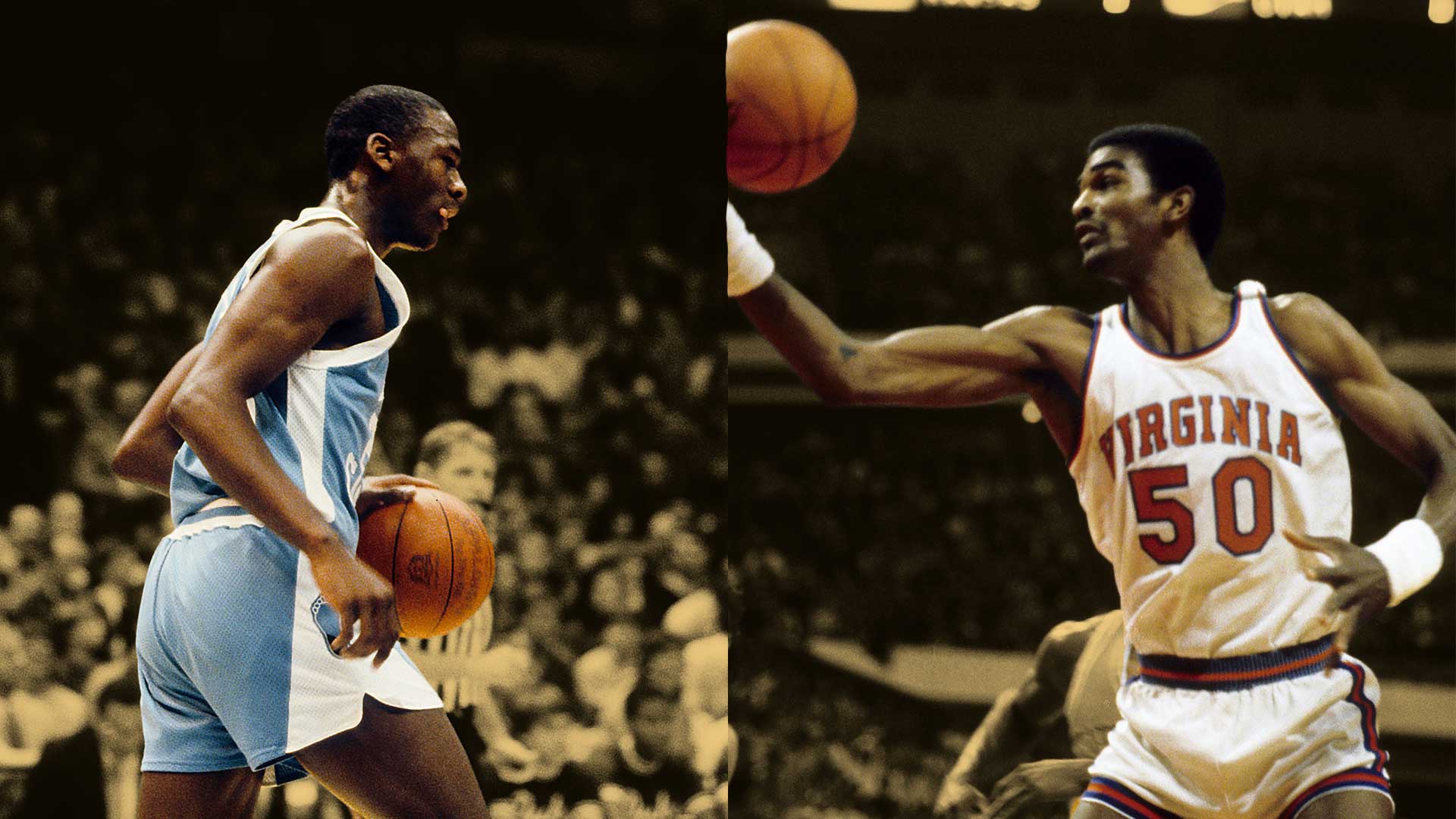
Ralph Sampson’s NBA career remains a seminal case study of immense physical talent challenged by persistent injury. Across nine seasons, he recorded career averages of 15.4 points, 8.8 rebounds, and 1.6 blocks per game. His legacy is defined by his transformative impact as a seven-foot-four offensive hub who redefined the expectations for center play during the 1980s.
The Physicality and Promise of a Prototype
Standing seven-foot-four with the agility of a small forward, Ralph Sampson entered the NBA in 1983 as a generational prospect. Selected first overall by the Houston Rockets following a decorated career at the University of Virginia, Sampson was tasked with ushering in a new era of "Twin Tower" basketball. His initial statistical output validated the hype; he averaged 21.0 points and 11.1 rebounds per game in his rookie season, earning the NBA Rookie of the Year award.
During his first three seasons, Sampson operated as a primary scoring option and a rim protector. He possessed a rare combination of soft touch, mobility, and perimeter shooting ability that preceded the modern era of the "stretch five." For basketball analysts, the mid-1980s marked a transition period where the traditional back-to-the-basket center began to evolve. Sampson was the vanguard of this shift, demonstrating that a player of his height could influence the game from multiple spots on the court, including the high post and the top of the key.
Statistical Profile and Career Averages
A comprehensive view of Sampson’s statistics illustrates a sharp decline after his fourth season due to chronic knee issues. Examining his progression provides a clear window into how his role shifted as his physical mobility waned.
Annual Statistical Breakdown
The following table highlights the contrast between his explosive early production and his later years in the league, capturing the reality of his injury-impacted trajectory.
| Season | Team | Games | PPG | RPG | APG | BPG |
|---|---|---|---|---|---|---|
| 1983–84 | HOU | 82 | 21.0 | 11.1 | 2.0 | 2.4 |
| 1984–85 | HOU | 82 | 22.1 | 10.4 | 2.7 | 2.0 |
| 1985–86 | HOU | 79 | 18.9 | 11.1 | 3.6 | 1.6 |
| 1986–87 | HOU | 61 | 15.6 | 8.7 | 2.8 | 1.3 |
| 1987–88 | HOU/GSW | 55 | 16.0 | 8.0 | 2.5 | 1.2 |
| 1988–89 | GSW | 61 | 6.4 | 5.0 | 1.5 | 0.6 |
| 1989–90 | SAC | 26 | 4.2 | 4.1 | 1.1 | 0.5 |
| 1990–91 | SAC | 25 | 3.0 | 2.8 | 0.6 | 0.4 |
Note: Data reflects official NBA regular season statistics.
The decline in his scoring and rebounding averages starting in the 1986–87 season corresponds directly with the knee surgeries that hampered his ability to plant, jump, and pivot. While his per-game impact fell significantly, his early career peaks—specifically his three consecutive All-Star selections from 1984 to 1986—remain the defining metrics of his professional value.
The Twin Towers Era and Tactical Impact
Sampson’s tenure with Hakeem Olajuwon in Houston serves as the most significant chapter of his legacy. By pairing two elite seven-footers, the Rockets forced opposing defenses to adjust their entire schematics. In the 1986 playoffs, this configuration culminated in a Western Conference Finals victory over the Los Angeles Lakers, a series in which Sampson famously hit a buzzer-beating shot to secure the win.
This period demonstrated the tactical utility of having a dual-threat frontcourt. Sampson acted as the facilitator, utilizing his high basketball IQ to pass from the high post, while Olajuwon functioned as the primary low-post finisher and defensive anchor. This synergy allowed the Rockets to control the glass and create high-percentage scoring opportunities that were nearly impossible for teams of the era to defend. While the duo did not secure an NBA championship, their success against the dominant Lakers of the mid-80s remains a historical benchmark for unconventional team building.
Analyzing the Impact of Injuries
The narrative of Ralph Sampson is inextricably linked to his medical history. His mobility, which was his greatest asset, became his greatest vulnerability. The repeated stress on his knees, combined with the medical technology and training regimens available in the 1980s, hindered his longevity.
Modern observers often note that if Sampson had played in the 2020s, his career might have followed a different path. Contemporary load management protocols, advanced arthroscopic surgical techniques, and sports science support systems likely would have mitigated the repetitive stress injuries that cut his prime short. His case is frequently cited by medical historians and sports analysts as a turning point in how NBA teams approach the long-term physical maintenance of tall, mobile athletes.
Legacy Beyond the Stat Sheet
Beyond the box score, Sampson’s legacy is defined by his role as a bridge between the era of the traditional center and the era of the modern, versatile big man. He proved that height did not have to limit a player’s perimeter capabilities. Players like Kevin Garnett, Dirk Nowitzki, and even Victor Wembanyama have, in various ways, been compared to the archetype Sampson pioneered.
His impact on the culture of the game extends to his transition from collegiate greatness to the professional ranks. As a three-time College Player of the Year at Virginia, he arrived in the NBA with massive expectations. While he did not reach the sustained championship success many anticipated, he set a standard for what an offensive-minded center could accomplish. His induction into the Naismith Memorial Basketball Hall of Fame in 2012 serves as formal recognition of his immense talent and his role in the evolution of the center position.
Evaluating Historical Comparisons
When analyzing Sampson’s career, it is helpful to place him against the context of his peers and the subsequent generations of big men. His career is often viewed through the lens of "what could have been," yet the statistics from his first four seasons clearly demonstrate a player capable of dominating at an elite level.
Comparative Factors
- Skill Set: Sampson was one of the first true perimeter-shooting big men, creating spacing that was revolutionary for the 1984–86 timeframe.
- Versatility: His ability to pass out of double teams as a seven-foot-four center made him a top-tier offensive hub.
- Durability: Unlike his contemporary Hakeem Olajuwon, whose durability allowed for a long career, Sampson’s injury profile forced a premature transition into a role player.
Frequently Asked Questions
How many times was Ralph Sampson an NBA All-Star?
Ralph Sampson was named an NBA All-Star four consecutive times, from 1984 to 1987. Furthermore, he was named the All-Star Game MVP in 1985 after scoring 24 points and grabbing 10 rebounds.
What was Ralph Sampson’s highest scoring season?
His highest scoring average occurred during the 1984–85 season, his second year in the league, where he averaged 22.1 points per game.
Was Ralph Sampson part of a championship-winning team?
Sampson did not win an NBA championship during his career. However, he was instrumental in leading the Houston Rockets to the 1986 NBA Finals, where they were ultimately defeated by the Boston Celtics in six games.
How does Ralph Sampson’s height compare to other centers of his era?
Standing seven-foot-four, Sampson was one of the tallest players in the league throughout the 1980s. While he was taller than most traditional centers of the time, such as Moses Malone or Robert Parish, his defining characteristic was not just his height but his mobility and ability to move fluidly on the perimeter.
Why is Ralph Sampson considered a "prototype" for modern big men?
He is considered a prototype because he combined extreme height with the ability to handle the ball, pass, and shoot from mid-range. This skill set is the precursor to the modern "positionless" basketball movement, where big men are expected to contribute as shooters and playmakers rather than just rebounders and rim protectors.
Next Steps for Analyzing Historical NBA Player Data
For those interested in exploring the depth of Sampson's career or comparing his statistics to current NBA players, the most reliable approach is to consult the official records of the NBA and the Naismith Memorial Basketball Hall of Fame.
- Reference Official Databases: Utilize the official NBA stats portal to verify historical game logs and advanced metrics that might not appear in basic career averages.
- Consult Archival Footage: Review highlights from the 1986 playoffs to observe the mechanical execution of the "Twin Towers" strategy.
- Cross-Reference With Advanced Metrics: Look into "win shares" or "box plus-minus" data available on sites like Basketball-Reference to quantify his efficiency during his healthy years.
- Review Hall of Fame Documentation: Access the formal induction materials for Ralph Sampson to understand the specific criteria and historical context cited by the committee for his 2012 honor.