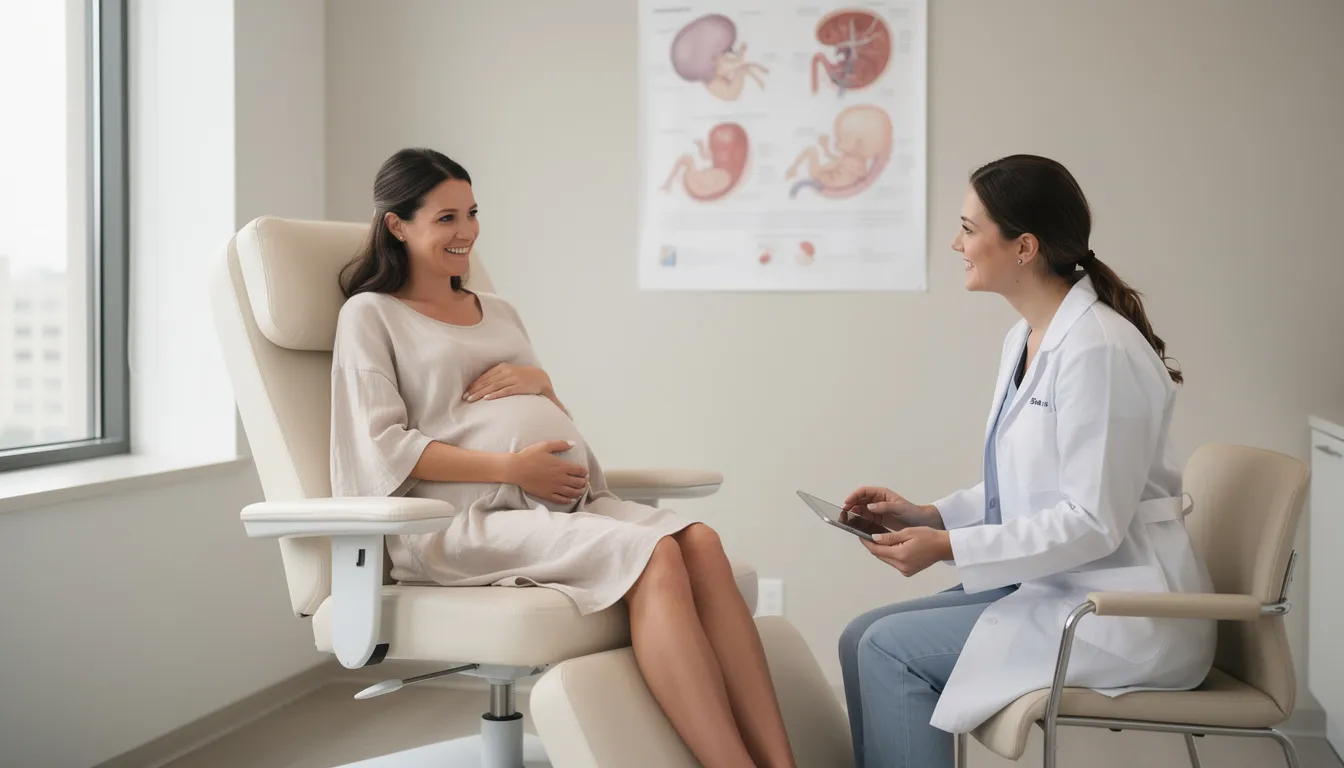
Maternity photography requires a specialized approach that balances artistic vision with rigorous physical safety protocols and ethical considerations. Protecting maternal well-being involves managing physical strain, preventing fall risks, accommodating hormonal joint laxity, and avoiding positions that compromise vascular circulation. Ethically, photographers must prioritize informed consent, physical privacy during wardrobe changes, transparent retouching policies, and absolute client autonomy throughout the session.
Physiological Awareness and Physical Safety Protocols
Photographing pregnant clients requires an understanding of the physiological changes occurring across the second and third trimesters. As pregnancy progresses, the body's center of gravity shifts forward, altering balance and increasing the risk of slips or falls. Additionally, the body releases higher levels of the hormone relaxin, which loosens ligaments and joints—particularly in the pelvis—making clients more susceptible to strain, hyper-extension, and joint instability.
Critical Physiological Safety
- Avoid extended supine positioning (lying flat on back)
- Account for altered center of gravity and reduced balance
- Protect hyper-mobile joints caused by increased relaxin
- Monitor for orthostatic dizziness and sudden physical fatigue
Avoiding Supine Hypotensive Syndrome
A primary physiological concern during maternity sessions is supine hypotensive syndrome. When a pregnant individual lies flat on their back—especially after the 20th week of gestation—the weight of the gravid uterus can compress the inferior vena cava and the abdominal aorta. This compression reduces venous return to the heart, potentially leading to a sudden drop in blood pressure, dizziness, nausea, and decreased fetal perfusion.
- Posing Restriction: Never require a client to lie flat on their back for extended poses.
- Safe Alternatives: Use semi-reclined positions angled at 45 degrees or higher, supported by firm studio wedges, bolster pillows, or pregnancy cushions. Side-lying poses on the left side are optimal, as this position maximizes blood flow and relieves pressure on major blood vessels.
Balance, Stability, and Pose Selection
Dynamic or challenging poses—such as standing on tiptoes, balancing on single legs, or posing on elevated, narrow props—present unnecessary injury risks.
- Footwear and Surfaces: Discourage unassisted high-heel poses on hard, smooth studio floors. If elevated heels are requested for aesthetic reasons, ensure the client is seated or has a stable handhold just out of frame.
- Supported Standing: When guiding standing poses, ensure the client's feet are positioned shoulder-width apart to preserve balance. Avoid asking clients to arch their lower back excessively (hyper-lordosis), which places extreme mechanical stress on the lumbar spine.
- Seated Transitions: Transition slowly between positions. Rapid changes from sitting or kneeling to standing can induce orthostatic hypotension, causing lightheadedness. Always offer a steady hand or physical support frame during pose changes.
Environmental Controls and Studio Hazard Management
The studio environment must be actively managed to prevent physical injury, overheating, and fatigue. Pregnant individuals experience an elevated basal metabolic rate, making them particularly sensitive to ambient temperature and prone to sudden overheating.
Studio Hazard Mitigation
- Cables: Taped down & covered with safety ramps
- Stands: Weighted with sandbags at maximum footprint
- Floors: Non-slip mats under backdrops and posing props
- Climate: Maintained at 68°F to 72°F (20°C to 22°C)
Cable Management and Gear Placement
Photographic studios often present hazards such as trailing power cords, light stands, modifier booms, and backdrop stands. In a maternity session, these hazards carry elevated risk.
- Gaffer Taping and Ramps: All lighting cables, extension cords, and tethering cables must be secured flat to the floor using high-tack gaffer tape or heavy-duty rubber cable ramps.
- Stand Stabilization: Every C-stand and light stand must be properly counterweighted with sandbags placed on the longest leg. Avoid placing light stands or reflectors directly within the client's walking path.
- Clear Walkways: Maintain a minimum 4-foot-wide clear pathway from the dressing area to the shooting bay. Keep floor surfaces free of loose gels, lenses, camera bags, and excess draping fabric.
Climate Control and Hydration
Overheating can cause maternal discomfort, elevated heart rates, and syncope (fainting).
- Temperature Calibration: Keep the studio climate controlled between 68°F and 72°F (20°C to 22°C). Continuous air circulation using low-noise fans helps dissipate heat generated by studio strobe modeling lights or continuous LED panels.
- Hydration Access: Provide easily accessible bottled or filtered water at room temperature. Schedule mandatory 5-to-10-minute breaks every 30 minutes to encourage hydration, rest, and restroom access.
Ethical Standards: Consent, Privacy, and Tactile Boundaries
Ethical practice in maternity photography centers on autonomy, physical modesty, and clear communication. Maternity sessions often involve form-fitting wardrobe, fine-art semi-nudity, or sheer draping, making explicit consent and professional boundaries essential.
Ethical Consent Continuum
- Written Agreement: Clear contract specs privacy & usage terms
- Verbal Confirmation: Confirm comfort before each new wardrobe pose
- Touch: Ask before adjusting
Informed Consent and Modesty Protocols
Informed consent must be established before the session begins and continuously reaffirmed during the shoot.
- Pre-Session Disclosure: Clearly outline the scope of the shoot during the initial consultation. If fine-art nudity or implied nudity is planned, discuss the exact positioning, draping techniques, and lighting styles in advance.
- Private Changing Quarters: Provide a completely private dressing area equipped with full-length mirrors, adequate seating, and robes. Photographers and studio staff must never enter the dressing space without clear permission.
- Draping and Wardrobe Adjustments: Photographers must maintain a hands-off policy by default. If a drape, gown, or hair strand requires adjustment, explain what needs to be moved and request permission before taking action. Alternatively, employ a female assistant or invite the client's partner to handle direct wardrobe adjustments.
Tactile and Communication Boundaries
Touch must be kept to a minimum and strictly confined to necessary, consensual adjustments.
- Ask First: Always use explicit verbal requests, such as: "May I adjust the fabric over your shoulder?"
- Describe the Action: Clearly describe the movement before making physical contact.
- Respect Non-Verbal Cues: Pay close attention to hesitation, posture shifts, or facial expressions that signal discomfort, even if verbal consent was previously given. Immediately offer alternative poses or breaks if tension is observed.
Image Integrity, Retouching Ethics, and Privacy Rights
Digital post-processing in maternity photography involves subtle distinctions between temporary physiological changes, permanent body features, and artistic enhancements. Establishing clear boundaries around editing preserves client trust and avoids reinforcing unrealistic body standards.
| Default Removal | Discuss Before Altering |
|---|---|
| Temporary blemishes | Linea nigra (pregnancy line) |
| Minor skin redness | Stretch marks (striae) |
| Transient bruises | Body shape / contouring |
| Fabric creases/dust | Surgical or C-section scars |
Retouching Boundaries and Client Consultation
Pregnancy brings natural skin and structural shifts, including the linea nigra (a dark vertical line on the abdomen), stretch marks (striae gravidarum), hyperpigmentation (melasma), and temporary fluid retention (edema).
- Collaborative Editing Expectations: Include a post-processing preference checklist in the pre-shoot questionnaire. Allow the client to explicitly state whether they wish to retain, soften, or remove natural pregnancy markers.
- Body Contouring Boundaries: Photographers should refrain from unprompted digital slimming, altering overall body proportions, or erasing pregnancy characteristics unless specifically requested by the client. Unrequested body modifications can inadvertently communicate that the client's natural pregnant form is unsatisfactory.
- Scar Sensitivity: Scars from previous surgeries, laparoscopies, or medical conditions should never be edited out without explicit direction. Many clients view these features as meaningful aspects of their personal history.
Digital Privacy and Image Licensing
Due to the intimate nature of maternity portraiture, strict digital security and privacy protections must be applied to image handling and distribution.
- Model Releases and Nuance: Standard model releases should offer tiered permission levels. Clients must be allowed to opt out of public social media display, portfolio usage, or commercial marketing while still receiving their private gallery.
- Secure Gallery Hosting: Password-protect all client proofing galleries. Ensure cloud storage providers adhere to modern data privacy standards, and never share unedited, full-resolution RAW files on public networks.
Technical Comparison of Maternity Session Protocols
The following reference table outlines standard technical and operational protocols across key phases of a maternity shoot to ensure client safety and ethical compliance.
| Session Phase | Safety Risk Factor | Operational Protocol | Ethical & Consent Standard |
|---|---|---|---|
| Pre-Session Consultation | Unclear physical limitations or medical risks | Collect health questionnaire detailing gestational age, mobility restrictions, and medical considerations. | Establish image usage permissions, retouching preferences, and studio privacy rules. |
| Studio Setup & Rigging | Tripping hazards, light stand collapse, slick surfaces | Sandbag all stands, tape down all cables, use rubber-backed rugs over slick flooring. | Ensure private changing space is completely shielded from public view or studio windows. |
| Posing & Shooting | Supine hypotension, loss of balance, physical exhaustion | Limit poses to sitting, supported standing, or 45-degree reclined positions; incorporate mandatory 10-minute rest breaks. | Request explicit verbal consent before modifying wardrobe or physical positioning; maintain a hands-off default. |
| Wardrobe & Draping | Overheating, fabric entanglement, accidental exposure | Use lightweight, breathable fabrics; ensure drapes are pinned securely without restricting breathing. | Provide robes for transit between sets; ensure a female assistant or partner is present for adjustments. |
| Post-Processing & Delivery | Misrepresentation of body image, unauthorized privacy disclosure | Retouch temporary blemishes while preserving natural pregnancy features unless requested otherwise. | Honor tiered licensing agreements; encrypt online galleries and store files securely. |
Operational Workflow: From Booking to Final Delivery
To consistently maintain high safety and ethical standards, studio owners and independent photographers should embed safety checks into their standard operating workflow.
Operational Workflow
- Intake & Health Screening Questionnaire
- Safety Inspection of Studio Set & Equipment
- Pre-Shoot Briefing & Consent Review
- Managed Session with Rest Breaks & Hydration
- Ethics-Compliant Post-Processing & Secure Gallery Delivery
Step 1: Client Intake and Health Screening
During onboarding, send a short intake form to gather relevant session details:
- Gestational age (the ideal window for maternity shoots is generally between 28 and 36 weeks, when the belly is defined but mobility remains manageable).
- Any medical conditions flagged by their healthcare provider, such as pre-eclampsia, placenta previa, or pelvic girdle pain (PGP/SPD).
- Mobility considerations or balance limitations.
Step 2: Studio Hazard Inspection
Before the client arrives, conduct a sweep of the shooting area:
- Verify that all lighting stands are weighted and positioned away from transit paths.
- Secure all floor wiring and check that heating/cooling systems are operating efficiently.
- Inspect posing stools, chairs, and benches for structural stability.
Step 3: Pre-Shoot Briefing
Spend the first 10 minutes reviewing the session plan with the client:
- Reiterate that the client has full authority to pause, skip, or change any pose at any time.
- Confirm their preferences for wardrobe changes and touching boundaries.
- Identify the location of restrooms, water stations, and seating areas.
Step 4: Session Management
During the shooting process:
- Monitor for signs of fatigue, flushing, sudden perspiration, or shortness of breath.
- Offer water at frequent intervals.
- Maintain a predictable pacing structure: 20 minutes of shooting followed by 5 to 10 minutes of rest.
Step 5: Proofing and Delivery
When preparing final images:
- Apply agreed-upon editing guidelines consistently across the gallery.
- Deliver proofs via encrypted, password-protected client portals.
- Archive files according to the privacy permissions specified in the contract.
Frequently Asked Questions
Is it safe for a pregnant client to lie flat on her back during a photography session?
No. Lying flat on the back (supine position) after 20 weeks of pregnancy can compress the inferior vena cava, reducing venous blood return to the heart. This can cause a sudden drop in blood pressure, dizziness, nausea, and reduced blood flow to the fetus. Always use semi-reclined setups angled at 45 degrees or higher, side-lying poses, or supported seating instead.
How should a photographer handle touching or adjusting a client's pose?
Photographers should follow a strict consent protocol. Always ask for verbal permission before touching a client to adjust clothing, hair, or posing alignment (e.g., "May I adjust the sleeve on your shoulder?"). Explain what you plan to do before doing it. Whenever possible, demonstrate the pose yourself or ask the client's partner or a studio assistant to assist with wardrobe adjustments.
What gestational age is best for scheduling a maternity photo shoot?
The window between 28 and 36 weeks of pregnancy is generally ideal. During this timeframe, the abdomen is well-defined, while the client typically retains sufficient mobility and comfort to complete a session safely. Shoots scheduled after 36 weeks carry a higher likelihood of extreme physical fatigue or early onset of labor.
What temperature should a photography studio be kept during a maternity shoot?
The ambient temperature should be kept between 68°F and 72°F (20°C to 22°C). Pregnant clients tend to overheat quickly due to an increased metabolic rate. Ensure active air circulation with fans, keep continuous lighting sources positioned at a safe distance, and provide cold drinking water throughout the session.
How should photographers handle editing stretch marks and body changes?
Handling body edits requires open communication before post-processing begins. Provide a preferences section in your pre-session questionnaire where clients can specify how they want stretch marks, the linea nigra, or skin changes handled. A good practice is to remove temporary blemishes (such as minor scratches or acne) while keeping permanent or pregnancy-specific characteristics unaltered unless the client explicitly requests their removal.
Implementation Actions for Professional Photographers
To bring your studio practice into full alignment with established physical safety and ethical standards, implement the following actions:
- Update Contract Templates: Revise client agreements to include explicit clauses regarding physical safety boundaries, continuous consent, and tiered image licensing choices.
- Audit Studio Gear: Replace lightweight or unstable posing props with heavy-duty, low-profile options. Purchase commercial-grade sandbags for every light stand and heavy rubber cable protectors for power distribution lines.
- Draft a Standard Intake Form: Incorporate health, mobility, and post-processing preference questions into your digital client onboarding portal.
- Establish Emergency Protocols: Maintain a basic first-aid kit, keep an up-to-date CPR certification, and retain local emergency contact numbers readily accessible near the primary shooting space.