Celebrating Lunar New Year requires an understanding of ancient lunisolar traditions, meticulous home preparation, meaningful gift-giving etiquette, and symbolic culinary practices. This practical guide outlines how to prepare your household, participate in time-honored rituals, honor regional variations, and host memorable gatherings while adhering to traditional customs and taboos.
Understanding the Timing and Cultural Significance of Lunar New Year
Lunar New Year, widely recognized as the Spring Festival in China (Chūnjié), Tết Nguyên Đán in Vietnam, and Seollal in Korea, marks the transition of the moon's cycle and heralds the arrival of spring. Unlike the Gregorian calendar, which relies strictly on the Earth's orbit around the sun, the lunisolar calendar determines the new year based on the second new moon following the winter solstice. As a result, the holiday falls on varying dates between January 21 and February 20.
At its core, Lunar New Year serves as a profound period of spiritual renewal, ancestral remembrance, and family unification. The underlying philosophy rests on releasing the old year's misfortunes to invite health, prosperity, and harmony into the home for the coming twelve months. Each year is associated with one of twelve zodiac animals—Rat, Ox, Tiger, Rabbit, Dragon, Snake, Horse, Goat, Monkey, Rooster, Dog, and Pig—alongside one of five elemental agents (Wood, Fire, Earth, Metal, and Water). Understanding this framework helps participants appreciate why specific decorations, colors, and blessings change slightly from one year to the next.
While celebrated across vast geographic regions with distinct regional customs, the unifying theme across all cultures remains the reaffirmation of familial bonds and the welcoming of renewed life energy (Qi or Vital Force).
Pre-Festival Preparation: Cleaning, Decorating, and Financial Housekeeping
The period leading up to Lunar New Year is as critical as the holiday itself. Preparation typically begins several days to a week prior to the new year, focused on purging negative energy and making physical room for good fortune.
Deep Cleaning and the Ritual of Sweeping Away Bad Luck
In traditional custom, households undergo a comprehensive deep cleaning before New Year's Eve. Sweeping floors, scrubbing doorways, laundering bedding, and organizing clutter symbolize clearing out lingering bad luck (Huiqi) from the previous year.
Once the cleaning is finished, all cleaning implements—brooms, mops, dustpans, and brushes—must be packed away out of sight before New Year's Day. Sweeping or dusting on the first day of the New Year is strictly avoided, as doing so is symbolically seen as sweeping away newly arrived luck and wealth.
Settling Debts and Resolving Disputes
Financial and interpersonal housekeeping is equally vital. Tradition dictates that outstanding personal debts, unpaid loans, and financial obligations should be settled before midnight on New Year's Eve. Entering the new year with unpaid debts is believed to invite financial strain throughout the upcoming year. Similarly, family members and neighbors are encouraged to resolve interpersonal grievances, forge reconciliations, and start the cycle with a clean emotional state.
Adorning the Home with Symbolic Decorations
Once the home is cleaned, it is decorated with vibrant, auspicious items:
- Red Paper Couplets (Chūnlián): Hung vertically on either side of the main entry door, these display poetic lines written in black or gold calligraphy expressing hopes for health, wealth, and longevity.
- The Character Fu (Happiness/Prosperity): Often pasted on doors or windows. Displaying the character upside down (Dào) is a popular play on words, as the word for "upside down" sounds identical to the word for "arrived," signifying that prosperity has arrived.
- Spring Flowers and Plants: Fresh blossoms represent rebirth and growth. Popular choices include plum and peach blossoms (resilience and romance), kumquat trees (wealth, as the fruit resembles golden coins), and orchids (nobility and fertility).
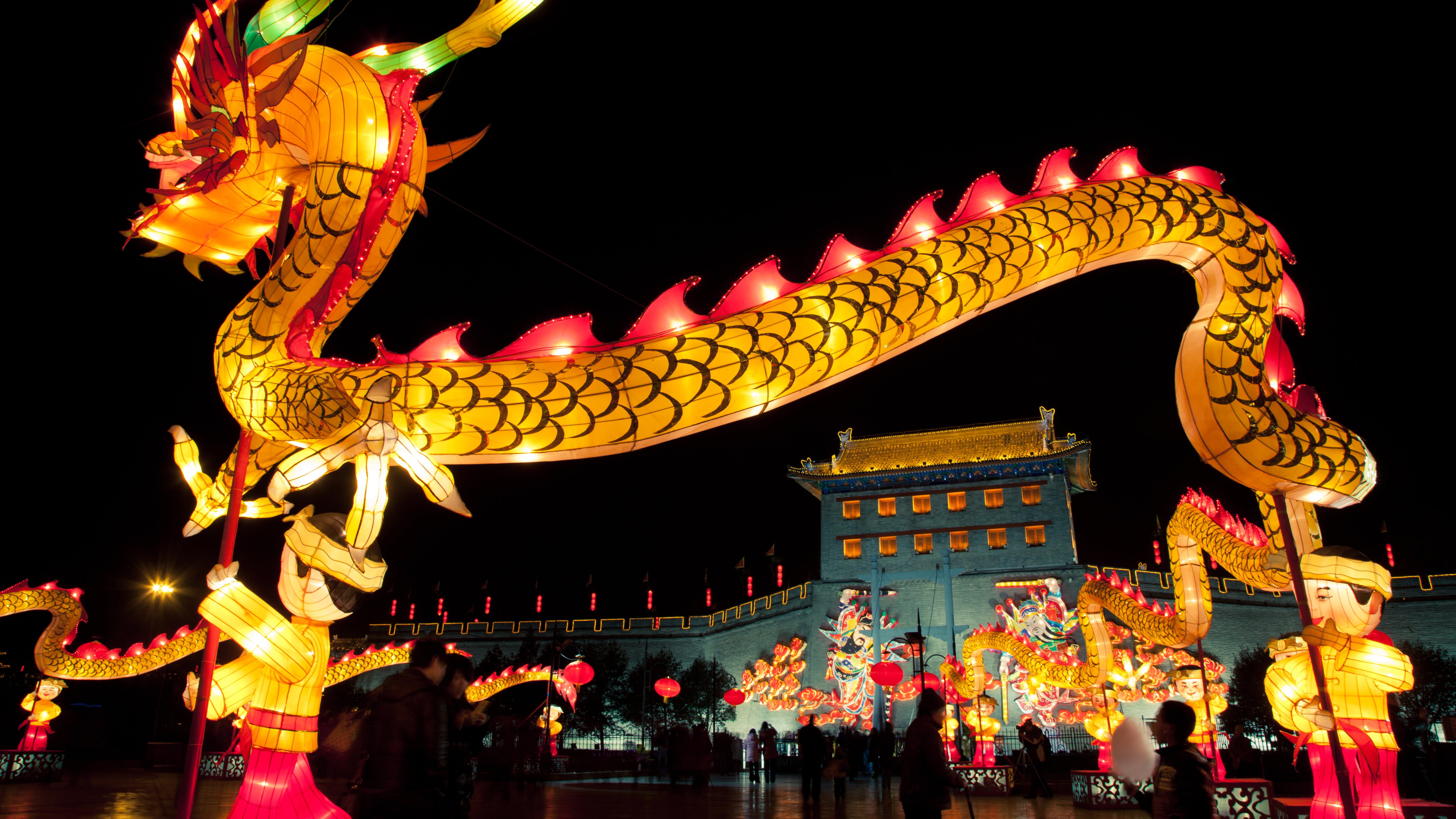
- Paper Lanterns: Red lanterns are hung outside entryways and in windows to illuminate the path for good fortune and guide family spirits home.
Key Traditions and Festival Etiquette
Observing Lunar New Year involves participating in formal rituals that emphasize respect for elders, family harmony, and generous hospitality.
Preparation Phase (Days -7 to -1) ---> Reunion Dinner (New Year's Eve) ---> Festival Days (Days 1 to 15) • Deep cleaning & organizing • Ancestral offerings • Visiting extended family • Settling debts & disputes • Multi-generational feast • Distributing Red Envelopes • Decorating with red couplets • Midnight countdown & firecrackers • Lantern Festival finale
The Family Reunion Dinner (Niányèfàn)
Held on New Year's Eve, the Reunion Dinner is universally considered the most important meal of the year. Family members travel long distances to return to their ancestral or family home. For those unable to attend, an empty chair and place setting are often maintained at the table to signify their presence in spirit.
Before dining, many families perform ancestral worship rituals, laying out small portions of food, tea, and incense at a family altar to express gratitude and inform ancestors of the family's current well-being.
Red Envelopes (Hongbao, Lixi, Saebae-don)
The exchange of monetary gifts enclosed in bright red envelopes is one of the most recognizable traditions of Lunar New Year. Known as Hongbao in Mandarin, Ang Pao in Hokkien, Lixi in Vietnamese, and Saebae-don in Korean, these gifts carry deep symbolic weight.
When preparing and giving red envelopes, specific etiquette rules apply:
- Crisp, New Currency: Always insert newly minted, uncreased bills into the envelopes. Worn or torn paper money is considered disrespectful and inauspicious.
- Even Amounts (Except Number 4): Monetary amounts should feature even numbers, as odd numbers are associated with funeral traditions. The number 8 is favored due to its phonetic similarity to wealth, while the number 4 must be avoided completely because its pronunciation mirrors the word for death.
- Two-Handed Delivery and Receipt: Envelopes should always be handed over and received using both hands as a gesture of deference and respect.
- Opening Etiquette: Envelopes should never be opened immediately in front of the giver. Receivers should express sincere thanks and set the envelope aside to open privately later.
Greeting Protocols and Vernacular
Proper verbal greetings set a positive tone for the year. Rather than a simple hello, traditional greetings center on specific wishes for health, prosperity, and success:
- Mandarin: "Xīn Nián Kuài Lè" (Happy New Year) or "Gōng Xǐ Fā Cái" (Wishing you happiness and prosperity).
- Cantonese: "Gung Hei Fat Choy" (Wishing you wealth and prosperity).
- Vietnamese: "Chúc Mừng Năm Mới" (Happy New Year) or "Vạn Sự Như Ý" (May all your wishes be fulfilled).
- Korean: "Saehae bok mani badeuseyo" (May you receive many blessings in the new year).
Traditional Foods and Symbolic Meanings
Every dish served during Lunar New Year is selected deliberately for its homophonic similarity to positive words or its physical resemblance to auspicious objects.
| Dish / Ingredient | Cultural Origin | Symbolic Meaning | Preparation & Serving Guidance |
|---|---|---|---|
| Whole Fish (Yú) | Chinese | Surplus, abundance, and prosperity (Yú sounds like "surplus"). | Served whole with head and tail intact. The head points toward the guest of honor. A portion is left uneaten to ensure surplus in the coming year. |
| Dumplings (Jiǎozi) | Northern Chinese | Wealth and accumulation of capital. | Shaped to resemble silver and gold ingots (Yuanbao). Often filled with pork, cabbage, or chives. |
| Glutinous Rice Cake (Nián Gāo) | Chinese | Higher achievement and growth year-over-year. | Sweet or savory steamed rice cakes; sliced and pan-fried for serving. |
| Sticky Rice Cake (Bánh Chưng / Bánh Tét) | Vietnamese | Gratitude to Earth and Sky; ancestral connection. | Glutinous rice filled with mung bean and pork belly, wrapped tightly in banana or dong leaves and boiled for hours. |
| Rice Cake Soup (Tteokguk) | Korean | Purity, a fresh start, and gaining a year of age. | Clear broth featuring thinly sliced oval rice cakes, sliced egg, and beef garnish. |
| Prosperity Salad (Yusheng / Lo Hei) | Singaporean / Malaysian | Good fortune, rising success, and vitality. | Raw fish salad tossed high into the air by diners while shouting auspicious phrases. |
| Longevity Noodles (Chángshòu Miàn) | Chinese | Long life, health, and uninterrupted vitality. | Uncut long noodles served boiled or stir-fried; must not be severed or bitten through while eating. |
| Mandarin Oranges & Kumquats | Regional-wide | Gold, luck, and financial success. | Displayed in pairs on trays or gifted when visiting friends and relatives. |
Regional Variations Across Asian Cultures
While sharing common astrological roots, Lunar New Year is practiced with rich regional distinctions across different Asian cultures.
Chinese Spring Festival (Chūnjié)
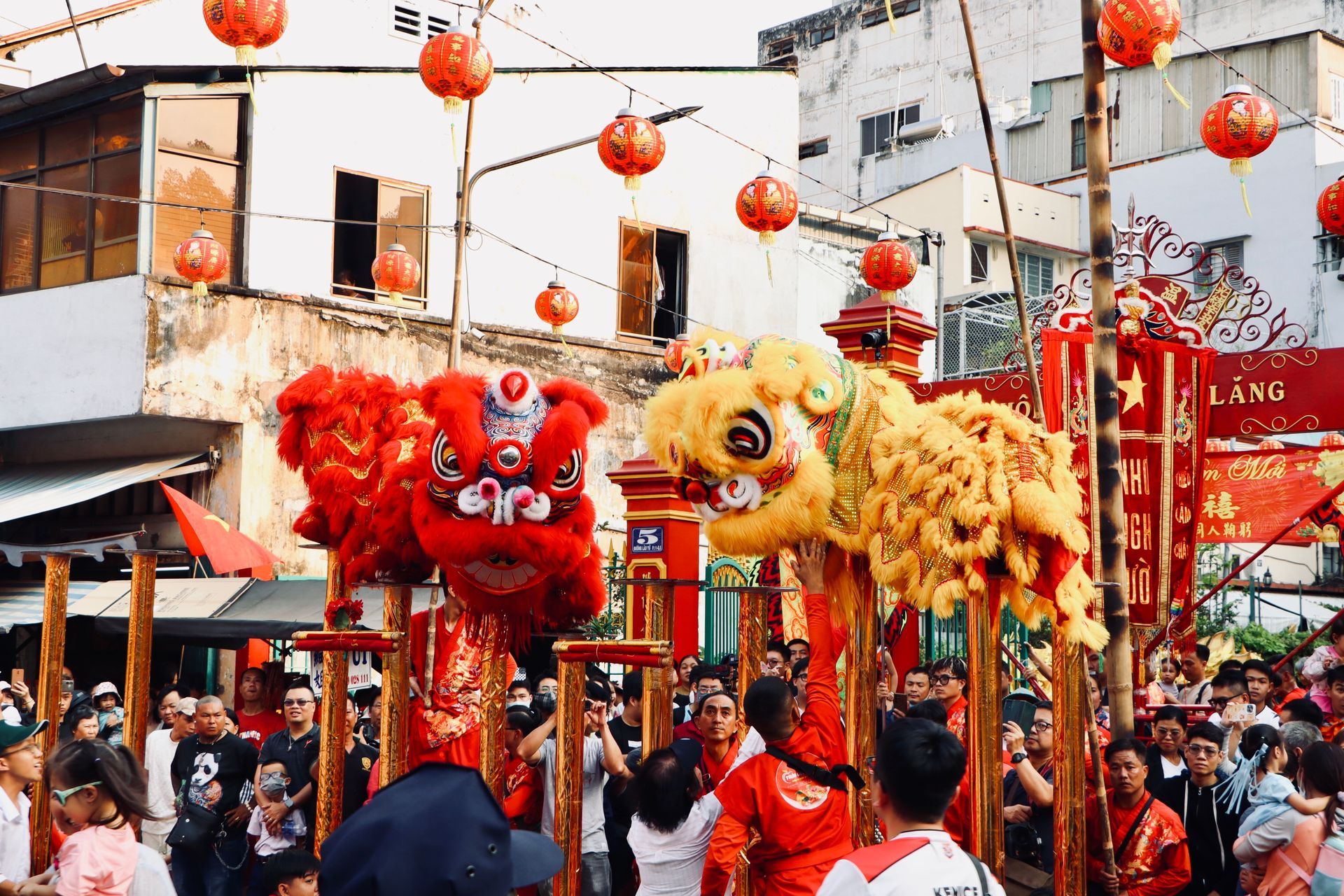
In China, celebrations span fifteen days, culminating in the Lantern Festival (Shàngyuán Jié). Northern celebrations focus heavily on making Jiaozi from scratch on New Year's Eve, while Southern traditions feature Nián Gāo, floral market visits, and lion dances intended to ward off harmful spirits with drums, cymbals, and physical displays of agility.
Vietnamese Tết Nguyên Đán
In Vietnam, Tết places significant focus on honoring ancestors and welcoming spring. Homes are decorated with Hoa Đào (peach blossoms) in the North or Hoa Mai (yellow apricot blossoms) in the South. Families prepare Bánh Chưng (square rice cakes representing Earth) and Bánh Tét (cylindrical rice cakes). A vital tradition is Xộc Đất (the first visitor to enter a home in the new year), whose personal zodiac alignment and disposition are believed to dictate the family's luck for the entire year.
Korean Seollal
Seollal is a quiet, family-centered three-day holiday in South Korea. Family members wear traditional garments (Hanbok) to perform Charye—a formal ancestral ritual laying out meticulously arranged food offerings. Younger generations perform Saebae (deep formal bows touching knees and forehead to the floor) to elders, who respond with words of wisdom (Deokdam) and monetary gifts (Saebae-don). The meal centers on Tteokguk, symbolizing a clean slate.
Southeast Asian Lo Hei (Singapore & Malaysia)
In Singapore and Malaysia, ethnic Chinese communities celebrate with Yusheng, a vibrant salad featuring shredded vegetables, raw fish, crushed peanuts, and plum sauce. Gathering around the table, participants use chopsticks to toss the ingredients high into the air together—a practice known as Lo Hei—while shouting wishes for prosperity. The higher the salad is tossed, the greater the luck believed to follow.
Practical Preparation and Celebration Timeline
To plan an authentic and stress-free celebration, structure your activities using the following timeline:
| Phase | Recommended Timing | Key Actions & Preparation Tasks | Essential Considerations |
|---|---|---|---|
| Phase 1: Planning & Clearing | 7 to 10 Days Before | • Schedule home deep cleaning.• Pay off outstanding personal debts.• Plan holiday menus and guest lists. | Stock up on non-perishable pantry goods early before specialty markets close for the holiday. |
| Phase 2: Shopping & Decorating | 3 to 6 Days Before | • Purchase fresh flowers, fruits, and snacks.• Obtain new paper currency from banks.• Hang red couplets, banners, and lanterns. | Ensure monetary bills are uncirculated and crisp for red envelopes. |
| Phase 3: Culinary Prep | 1 to 2 Days Before | • Prepare broths, fillings, and rice cakes.• Set up ancestral altars.• Assemble red envelopes (Hongbao). | Store prepared foods properly to accommodate multi-day family gatherings. |
| Phase 4: New Year's Eve | New Year's Eve | • Host the Reunion Dinner (Niányèfàn).• Pay respects to ancestors.• Stay up past midnight (Shǒusuì). | Leave lights on overnight to welcome prosperity into the house. |
| Phase 5: New Year's Day | Day 1 of New Year | • Don new red clothing.• Offer formal greetings to elders.• Rest and avoid cleaning or chores. | Do not sweep, use scissors, or wash hair to preserve incoming luck. |
| Phase 6: Extended Visits | Days 2 to 14 | • Visit extended relatives and friends.• Exchange mandarin oranges in pairs.• Participate in community lion dances. | Married daughters traditionally visit their natal family on Day 2. |
| Phase 7: Lantern Festival | Day 15 | • Eat sweet glutinous rice balls (Yuanxiao).• Light paper lanterns.• Mark the official conclusion of festivities. | Represents the return of the full moon and community unity. |
Navigating Taboos and Observances
To maintain traditional harmony, participants follow several taboos during the first few days of the New Year:
- Avoid Using Sharp Objects: Knives, scissors, and sewing needles should be packed away on New Year's Day. Cutting actions are believed to slice through threads of good fortune.
- Do Not Wash Hair or Clothes: Washing hair or laundry on the first day of the year is avoided because it symbolically washes away good fortune and wealth.
- Refrain from Negative Speech: Mentioning topics such as death, illness, poverty, or ghost stories is strictly taboo. Speak only of positive outcomes, health, and growth.
- Avoid Breaking Ceramics: Dropping or breaking plates, bowls, or glasses is viewed as an omen of financial loss or family division. If an item breaks accidentally, immediately wrap it in red paper and state "Suì Suì Píng Ān" (Peace year after year) to neutralize the negative impact.
- Do Not Demand Debt Repayment: Pressuring someone to pay back money during the holiday brings bad luck to both the requester and the debtor.
Frequently Asked Questions
When does Lunar New Year begin, and how long does the celebration last?
Lunar New Year begins on the first new moon of the lunisolar calendar (typically between late January and mid-February). In Chinese tradition, the main festival lasts 15 days, concluding with the Lantern Festival. In Vietnam (Tết) and South Korea (Seollal), the primary public holiday spans three to five days, though cultural observances often continue for a full week.
What is the correct way to give and receive red envelopes?
Red envelopes should contain clean, crisp currency in even amounts (avoiding the number 4). Hand the envelope over using both hands while offering a verbal blessing. Recipients must accept the envelope with both hands, express gratitude, and refrain from opening it in front of the giver.
Can individuals from outside these cultures host or participate in Lunar New Year celebrations?
Yes. Lunar New Year is a welcoming holiday centered on family, gratitude, and good fortune. Non-Asian hosts can participate respectfully by decorating with auspicious red accents, preparing traditional foods, learning correct verbal greetings, and observing primary etiquette rules like offering red envelopes with crisp bills.
What should you wear during Lunar New Year gatherings?
Wear brand-new clothing in bright, cheerful colors, with red being the most auspicious option as it symbolizes energy, joy, and protection. Avoid wearing predominantly black or white outfits, as these colors are traditionally associated with mourning and funerals.
How do you properly greet someone in different languages during the holiday?
In Mandarin, use "Xīn Nián Kuài Lè" (Happy New Year) or "Gōng Xǐ Fā Cái" (Wishing you wealth). In Cantonese, say "Gung Hei Fat Choy". In Vietnamese, use "Chúc Mừng Năm Mới". In Korean, say "Saehae bok mani badeuseyo". Pair these verbal greetings with a slight nod or bow when addressing elders.
Essential Practical Advice for Hosting Your Celebration
If you plan to host a Lunar New Year gathering at home, structure your event around welcoming hospitality and clear cultural respect. Start by deep cleaning your home at least two days prior, allowing ample time to hang entry couplets and arrange fresh floral displays.
Prepare your menu to balance convenience and symbolic relevance. Dishes like dumplings and rice cakes can be prepared ahead of time and cooked just before guests arrive. Ensure your dining table features a whole fish, uncut longevity noodles, and plenty of mandarin oranges displayed in pairs. Prepare red envelopes in advance, placing crisp, even-numbered bills inside so you are ready to distribute them to younger guests or children.
Finally, set a positive, welcoming environment by playing traditional music, wearing bright or red clothing, and avoiding any negative topics of conversation. By combining thoughtful food preparation, clean spaces, and classic etiquette, you create an inviting atmosphere that brings good health, fortune, and family harmony to everyone present.