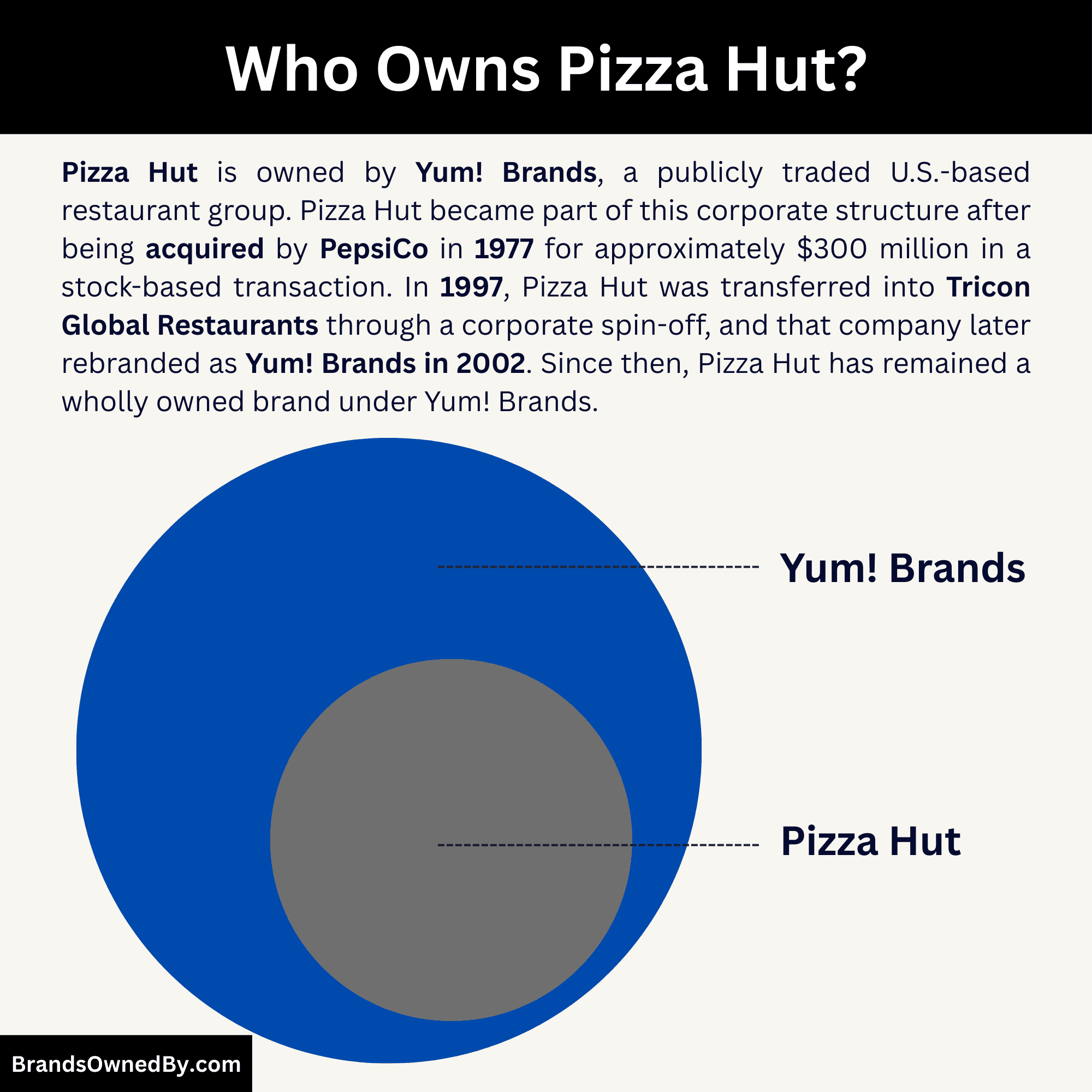
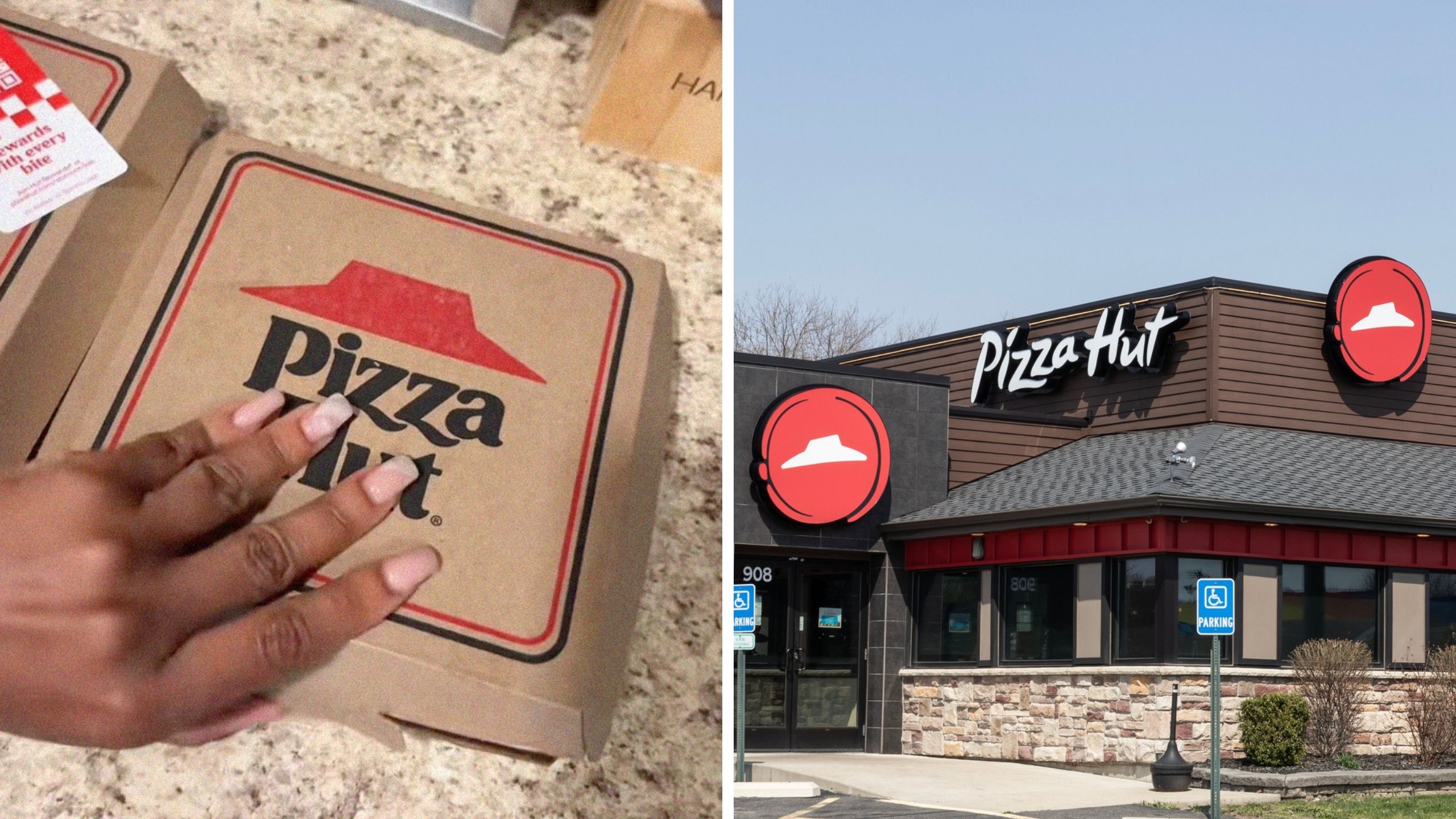
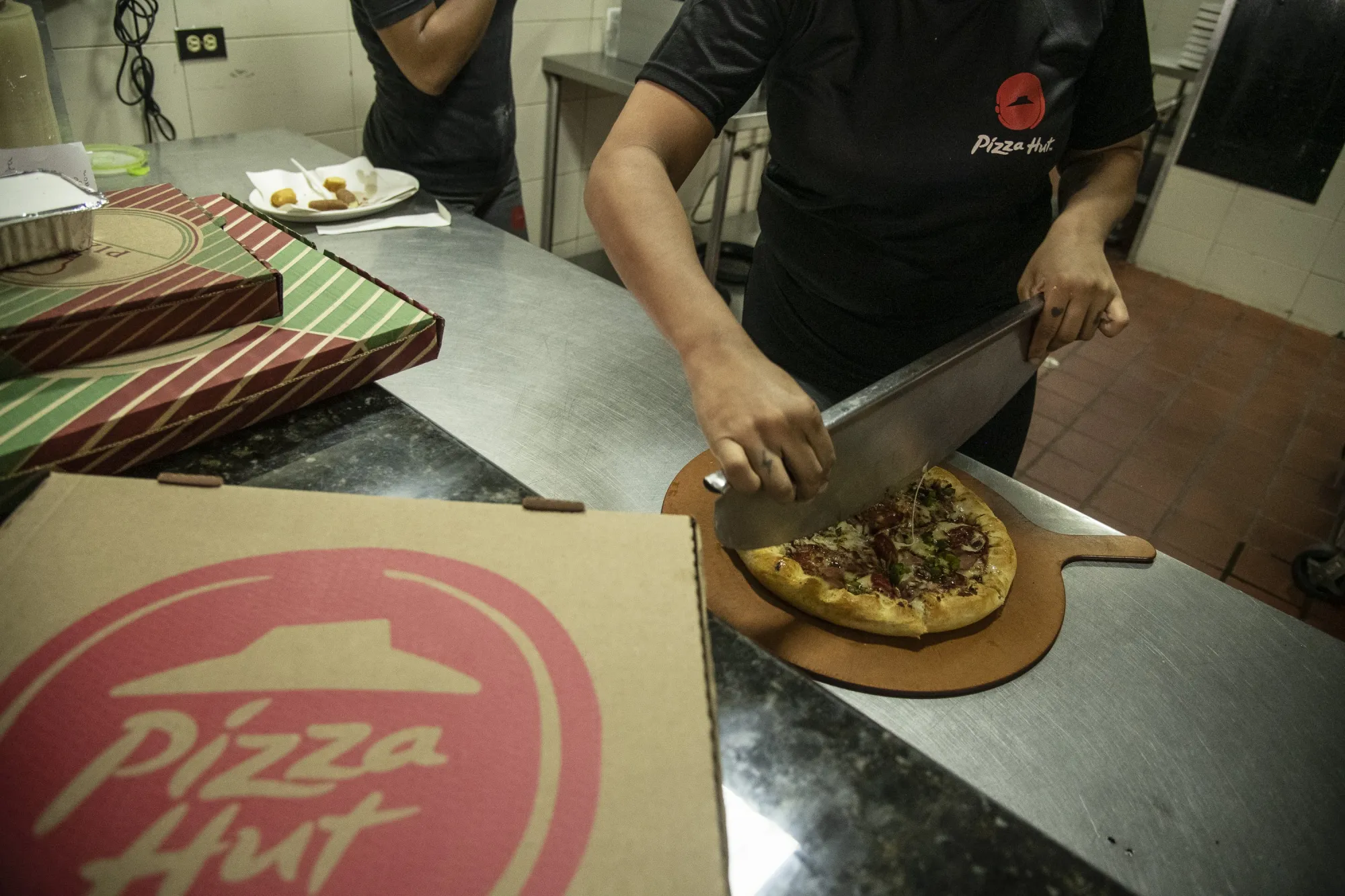
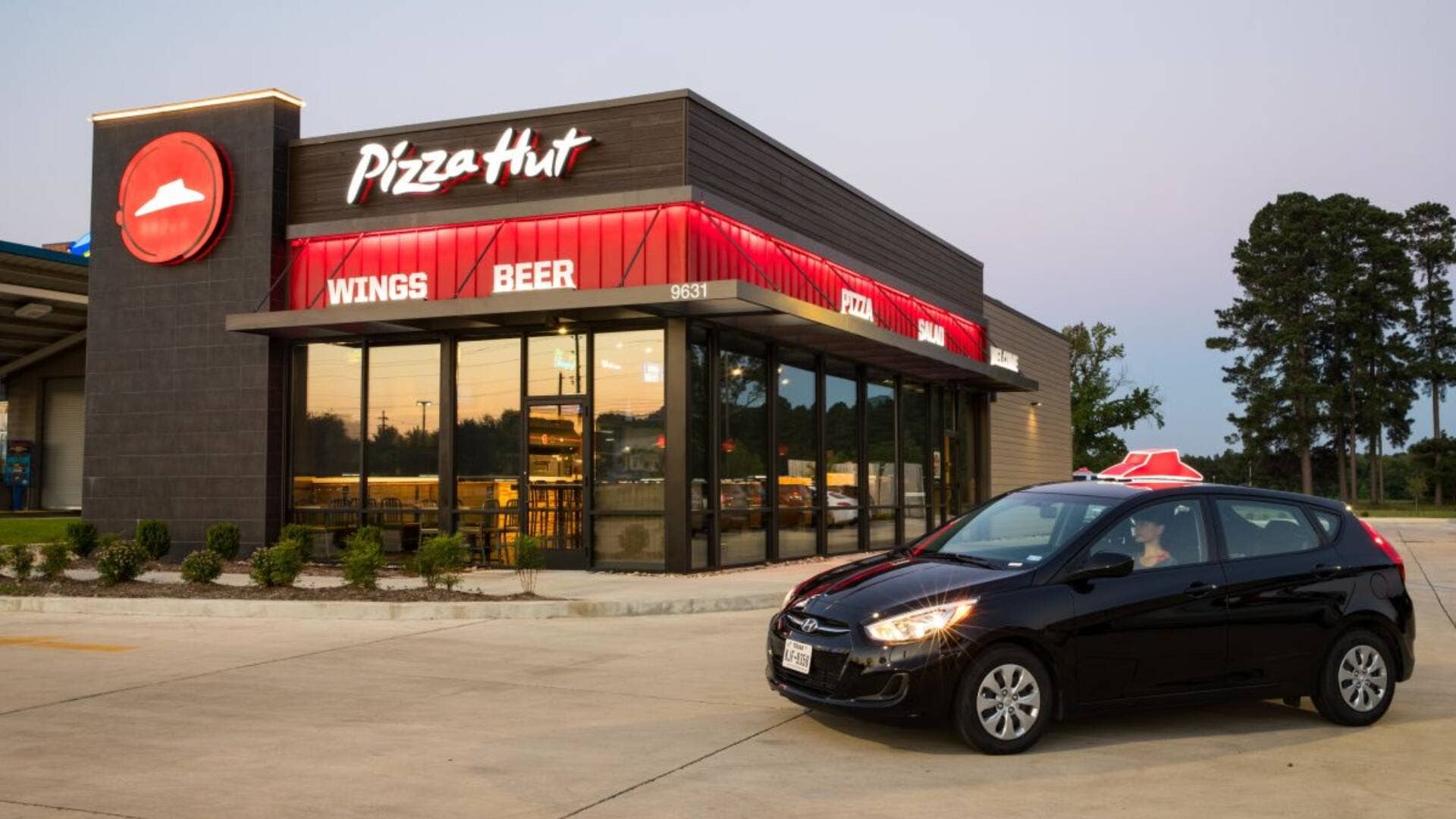
Pizza Hut is currently owned and operated by Yum! Brands, Inc. (NYSE: YUM), a global restaurant corporation headquartered in Louisville, Kentucky. While Yum! Brands holds the trademark and intellectual property, the vast majority of individual Pizza Hut locations are owned by independent franchisees rather than the parent corporation itself.
Founded in 1958, Pizza Hut has evolved from a single storefront in Kansas into one of the world's largest pizza chains. Its ownership journey reflects the broader trends of the American fast-food industry, transitioning from a family-run business to a subsidiary of a massive soda conglomerate, and finally to a pillar of a specialized, publicly traded global restaurant powerhouse. To understand who owns Pizza Hut in 2026, one must look at the three distinct layers of its structure: the parent company, the public shareholders, and the localized franchise owners.
Yum! Brands: The Corporate Architect
Yum! Brands, Inc. is the definitive owner of the Pizza Hut brand name, its secret recipes, and its global operational standards. As of 2026, Yum! Brands remains one of the world's largest restaurant companies, managing a portfolio that includes other household names such as KFC, Taco Bell, and The Habit Burger Grill.
The relationship between Pizza Hut and Yum! Brands is managed through a subsidiary structure. Specifically, Pizza Hut, LLC operates as the legal entity responsible for the brand’s domestic operations in the United States, while international divisions oversee global growth. Yum! Brands provides the overarching digital infrastructure, supply chain management, and marketing strategy that allow Pizza Hut to compete with digital-first rivals like Domino’s.
Under the ownership of Yum! Brands, Pizza Hut has shifted toward an "asset-light" business model. This means the parent company focuses on collecting royalty fees and franchise dues rather than managing the day-to-day operations of thousands of individual kitchens. This strategy allows Yum! Brands to maintain high profit margins and reinvest capital into technology and brand innovation rather than real estate and labor costs.
The Evolution of Ownership: From the Carneys to PepsiCo
The ownership history of Pizza Hut is a classic narrative of American entrepreneurship. The brand was founded in Wichita, Kansas, by brothers Dan and Frank Carney. With a $600 loan from their mother, they opened the first location in a small brick building. Their "ownership" was direct and hands-on, but as the brand scaled, the need for institutional capital became apparent.
In 1977, the Carney brothers sold Pizza Hut to PepsiCo, Inc. for approximately $300 million. This acquisition marked a significant era for the brand. Under PepsiCo, Pizza Hut benefited from massive distribution networks and marketing budgets. PepsiCo’s strategy at the time was to own the "share of throat"—ensuring that whenever a consumer ate out, they were also consuming a Pepsi beverage.
However, by the mid-1990s, PepsiCo realized that the restaurant business was significantly different from the snack and soda business. Restaurants require constant capital investment for renovations and are highly sensitive to labor market fluctuations. In 1997, PepsiCo made the strategic decision to spin off its restaurant division—consisting of Pizza Hut, KFC, and Taco Bell—into an independent, publicly traded entity originally named Tricon Global Restaurants, Inc. This company was later renamed Yum! Brands in 2002, solidifying the ownership structure that exists today in 2026.
Public Ownership: Who Really Controls the Shares?
Because Yum! Brands is a publicly traded company on the New York Stock Exchange, the "owners" are technically the thousands of individual and institutional investors who hold its stock. As of 2026, the majority of Yum! Brands' equity is held by large institutional investment firms. These firms do not manage pizza recipes, but they do elect the Board of Directors, which in turn hires the executive leadership that runs the company.
Major institutional shareholders typically include:
- The Vanguard Group: Often the largest shareholder, holding a significant percentage of the company through its various index funds.
- BlackRock, Inc.: Another primary stakeholder that exerts influence through its massive capital holdings.
- State Street Corporation: Frequently among the top three institutional investors in major American corporations.
This public ownership model means that Pizza Hut is ultimately accountable to the financial markets. The brand’s strategic shifts—such as the recent focus on "Hut Lane" drive-thru pickups and enhanced mobile app integration—are often driven by the need to deliver growth and dividends to these shareholders. You can track the current financial performance and ownership filings of the parent company through the Yum! Brands Investor Relations portal.
The Franchise Model: Ownership at the Local Level
While Yum! Brands owns the brand, they do not "own" the building or the equipment in most Pizza Hut locations. Instead, the company relies on a franchising model. As of 2026, over 95% of Pizza Hut units are owned by independent franchisees. This creates a dual-layer ownership structure:
- Multi-Unit Operators: Large corporations that own hundreds or even thousands of Pizza Hut locations. A primary example is the Flynn Restaurant Group, which acquired a massive portfolio of Pizza Hut restaurants following the bankruptcy of NPC International in 2021. These entities are major businesses in their own right, managing their own HR, local marketing, and maintenance teams.
- Small Business Franchisees: While less common than in the early days of the brand, some individuals or family groups still own and operate a small number of local units. These owners pay an initial franchise fee and ongoing royalties (typically a percentage of gross sales) to Yum! Brands in exchange for using the Pizza Hut name and systems.
This distinction is vital for consumers and employees to understand. If you have a grievance or a business inquiry regarding a specific location, the "owner" is usually a franchise corporation, not the corporate headquarters in Louisville.
Ownership Differences in International Markets
Ownership becomes more complex when looking outside the United States. In many countries, Yum! Brands uses a "Master Franchise" agreement, where a single large entity is given the rights to develop and own the brand across an entire nation or region.
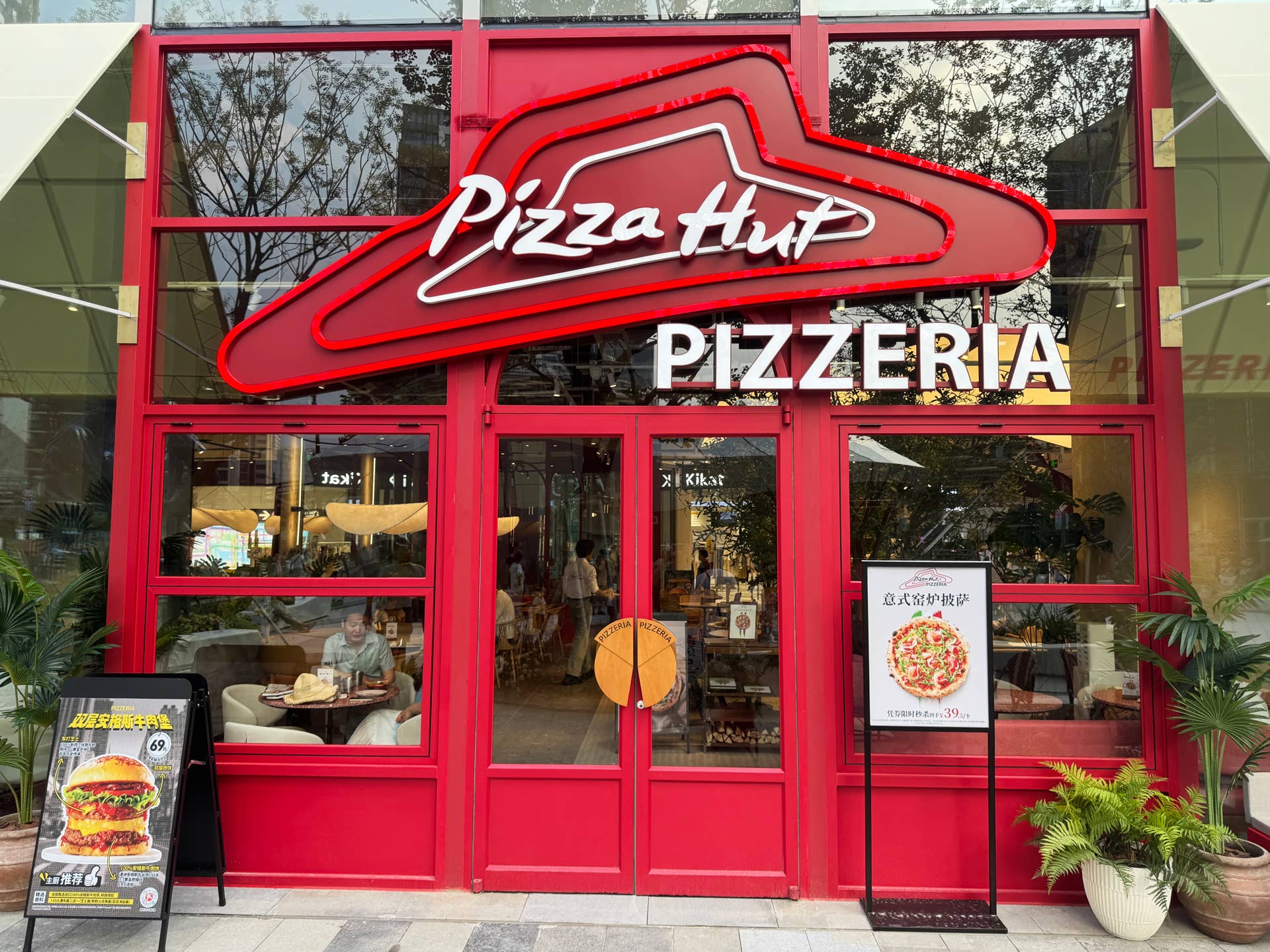
The most notable example is Yum China Holdings, Inc. In 2016, Yum! Brands spun off its China operations into a separate, independent company traded on the NYSE (ticker: YUMC). Therefore, if you are eating at a Pizza Hut in Shanghai or Beijing, you are patronizing a location owned by Yum China, which pays a licensing fee to Yum! Brands but operates with total autonomy.
In other regions, such as the Middle East or parts of Europe, large conglomerates like the Americana Group have historically held the rights to operate Pizza Hut. These partnerships allow the brand to expand rapidly using local capital and expertise while maintaining the core identity established by the parent company.
Comparative Ownership Landscape (2026)
To understand where Pizza Hut stands, it is helpful to compare its ownership structure with its primary competitors in the global pizza market.
| Feature | Pizza Hut (Yum! Brands) | Domino's Pizza | Papa Johns |
|---|---|---|---|
| Parent Entity | Yum! Brands, Inc. | Domino's Pizza, Inc. | Papa John's International, Inc. |
| Ownership Type | Publicly Traded (NYSE: YUM) | Publicly Traded (NYSE: DPZ) | Publicly Traded (NASDAQ: PZZA) |
| Franchise % | ~95% - 99% | ~98% | ~85% |
| Key Advantage | Part of a massive multi-brand conglomerate. | Industry leader in digital delivery tech. | Focus on premium ingredients and quality. |
| Global Presence | Over 100 countries. | Over 90 countries. | Over 50 countries. |
Frequently Asked Questions
Does PepsiCo still own Pizza Hut?
No, PepsiCo does not own Pizza Hut. While PepsiCo acquired the brand in 1977, it spun off its restaurant holdings into an independent company in 1997. However, many Pizza Hut locations still have exclusive pouring rights contracts with PepsiCo, which is why you will typically find Pepsi products rather than Coca-Cola products in their restaurants.
Can an individual buy a Pizza Hut from Yum! Brands?
You cannot buy a Pizza Hut restaurant directly from the corporate office as if it were a retail transaction. Instead, you must apply to become a franchisee. This involves meeting strict financial requirements—including significant liquid assets and net worth—and agreeing to operate the restaurant according to Yum! Brands' specific guidelines.
Who is the CEO of Pizza Hut?
The leadership of Pizza Hut is split into several roles. There is typically a Global CEO of Pizza Hut who reports to the CEO of Yum! Brands. These executives do not own the company; they are employees hired by the Board of Directors to manage the brand’s performance and strategy.
Is Pizza Hut a private or public company?
Pizza Hut is a subsidiary of a public company. While "Pizza Hut, LLC" is a private entity in the sense that you cannot buy shares of just the pizza division, its parent company, Yum! Brands, Inc., is public. Investors buy shares of YUM to gain an ownership stake in the combined performance of Pizza Hut, KFC, and Taco Bell.
Who owns the most Pizza Hut franchises?
In the United States, the Flynn Restaurant Group is the largest franchisee. They took over a significant portion of the domestic market after acquiring hundreds of stores from NPC International. Globally, various master franchisees like Yum China hold the largest concentrations of units.
How to Verify Ownership and Franchise Status
If you are researching a specific Pizza Hut location for legal, business, or investment reasons, there are several ways to verify who owns that specific branch. The most direct method is to look for the Franchise Disclosure Document (FDD), which Yum! Brands is required to file annually. This document outlines the relationship between the franchisor and franchisees.
Additionally, most Pizza Hut locations are required by law to display their business license or a "locally owned and operated by" sign near the entrance or on the menu. For corporate-level ownership data, the U.S. Securities and Exchange Commission (SEC) provides access to EDGAR filings for Yum! Brands, Inc., where you can view the most recent quarterly (10-Q) and annual (10-K) reports detailing the company’s organizational structure and major shareholders.