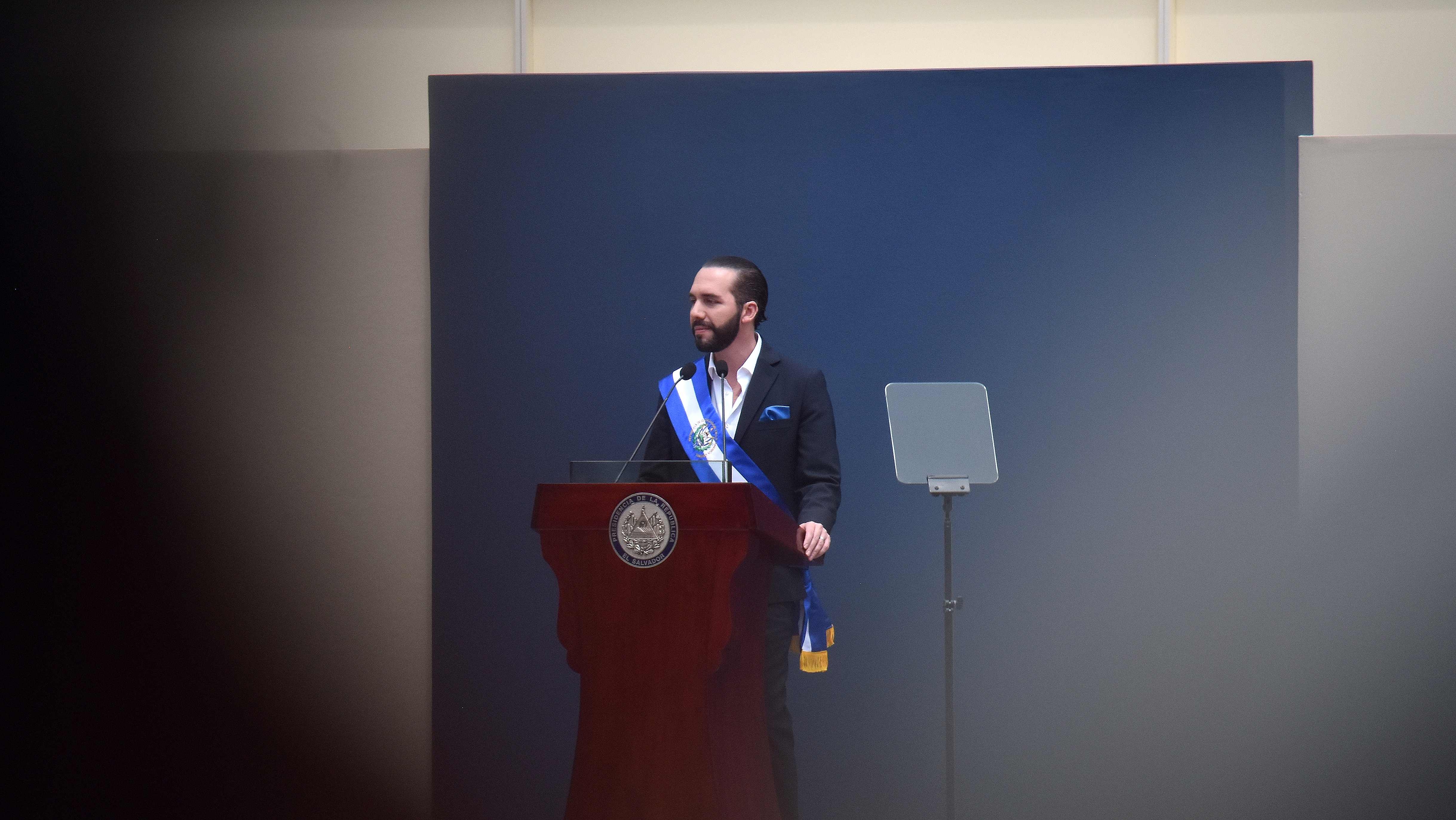
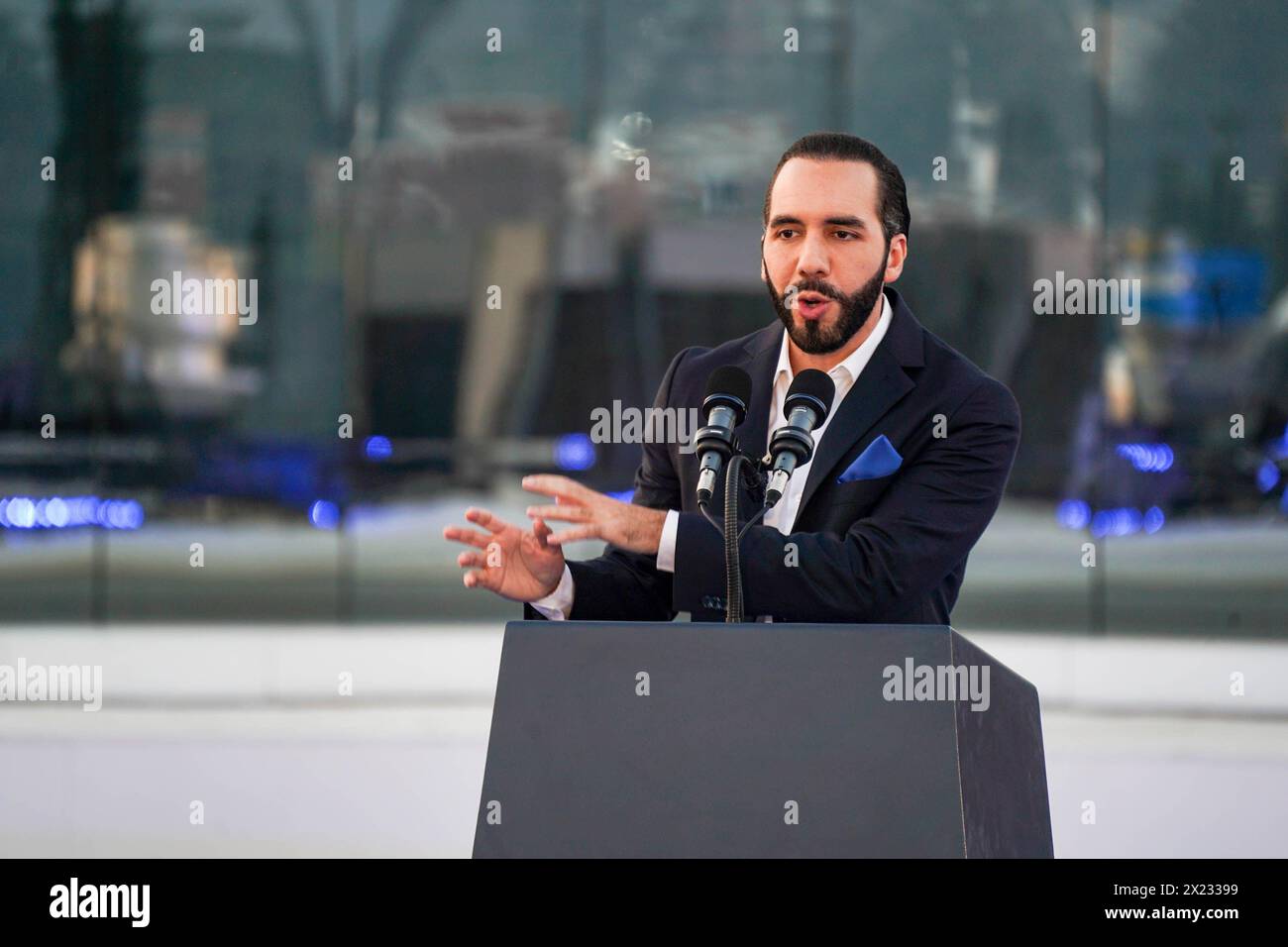
Born on July 24, 1981, Nayib Bukele is 44 years old and serves as the 43rd President of El Salvador, having assumed office in June 2019 and secured a controversial second term in 2024. His political rise, marked by sweeping constitutional maneuvers, aggressive anti-gang crackdowns, and the adoption of Bitcoin as legal tender, has positioned him as one of the most polarizing and closely watched heads of state in Latin America.
Understanding the trajectory of El Salvador’s leader requires examining his personal background, entrepreneurial beginnings, municipal mayoralty career, national political ascendance, and controversial governance policies. As state institutions continue to shift under his administration, analyzing these facts provides a comprehensive view of how a former businessman transformed the political landscape of Central America.
Early Life and Family Background
Nayib Armando Bukele Kattán was born in San Salvador, El Salvador, on July 24, 1981. He is the son of Armando Bukele Kattán, a prominent and respected Salvadoran businessman, chemist, and intellectual of Palestinian-Christian descent, and Olga Marina Ortez. His paternal grandparents immigrated to El Salvador from Jerusalem and Bethlehem in the Ottoman Empire during the early 20th century. This diverse heritage played a foundational role in his upbringing within San Salvador’s active business and immigrant communities.
Before entering politics, Bukele pursued higher education at the Universidad Centroamericana José Simeón Cañas (UCA), though he left his legal studies to manage family enterprises. He quickly transitioned into the private sector, proving himself as an astute businessman. He held leadership positions in several family-owned companies, most notably serving as the head of Yamaha Motors El Salvador, a major distributor of vehicles and power equipment in the country.
In addition to his commercial ventures in the automotive sector, Bukele ventured into advertising and media. He managed an advertising agency named Obermet, which handled communication campaigns for various commercial clients and eventually for leftist political candidates. This early exposure to media strategy, public relations, and corporate management laid the groundwork for the modern, digital-first communication style that would later define his political campaigns and governance model.
Entry into Politics and Mayoral Career
Bukele’s formal entry into politics occurred under the banner of the Farabundo Martí National Liberation Front (FALABUNDO MARTÍ or FMLN), a leftist political party that originated from the guerrilla movement of the Salvadoran Civil War. Despite his family's wealth and capitalist background, Bukele aligned with the FMLN to launch his electoral career, appealing to voters seeking an alternative to the traditional right-wing ARENA party that had dominated Salvadoran politics for decades.
In 2012, Bukele ran for mayor of Nuevo Cuscatlán, a small, semi-rural municipality in the La Libertad department. He won the election and served a three-year term characterized by visible municipal investments, infrastructure modernizations, and social welfare programs funded partly through municipal savings and private donations. His tenure as mayor of Nuevo Cuscatlán established his reputation as an executive who delivered tangible local results, earning him domestic media attention.
Building on this momentum, Bukele ran for the much larger and politically significant mayoralty of San Salvador, the nation's capital, in the 2015 municipal elections. Running once again under the FMLN, he defeated his ARENA opponent and took office in May 2015. As mayor of San Salvador, Bukele focused heavily on revitalizing the historic downtown center, relocating informal vendors, and implementing urban renewal projects.
However, his relationship with the FMLN leadership grew increasingly strained due to internal disagreements, policy criticisms, and accusations of authoritarian tendencies within the party structure. In 2017, the FMLN expelled Bukele from its ranks following a disciplinary tribunal that accused him of public disrespect toward party leadership and physical altercations with party members. This expulsion freed him from traditional party lines and set the stage for an independent presidential run.
Presidential Ascendance and First Term
With his expulsion from the FMLN, Bukele recognized that public disillusionment with both the FMLN and ARENA—the two traditional parties that had governed since the 1992 peace accords—created a wide-open political vacuum. Barred from running under an existing major party in time for the 2019 presidential election, he briefly attempted to form his own political party, Nuevas Ideas (New Ideas), but faced bureaucratic delays from electoral authorities. Consequently, he aligned with the Grand Alliance for National Unity (GANA), a conservative party, to serve as his electoral vehicle.
Running on an explicit anti-corruption platform and promising to break the two-party monopoly, Bukele won the February 3, 2019 presidential election in a landslide. He captured over 53% of the vote in the first round, avoiding a runoff and ending decades of bipartisan rule. At age 37, he became one of the youngest presidents in Salvadoran history, taking office on June 1, 2019.
| Election Year | Political Party / Coalition | Vote Share (%) | Key Campaign Focus |
|---|---|---|---|
| 2012 | FMLN (Nuevo Cuscatlán) | ~50.2% | Municipal modernization and social welfare |
| 2015 | FMLN (San Salvador) | ~48.5% | Downtown revitalization and urban renewal |
| 2019 | GANA / Nuevas Ideas | 53.1% | Anti-corruption, breaking the bipartisan status quo |
| 2024 | Nuevas Ideas | 84.6% | Continuation of the anti-gang security crackdown |
Once in power, Bukele utilized social media—particularly X (formerly Twitter)—to bypass traditional journalistic gatekeepers, communicate directly with citizens, and announce major government decisions, cabinet dismissals, and policy initiatives. His executive power faced early legislative friction because the opposition-controlled Legislative Assembly refused to approve several key security loans and policy measures. This legislative deadlock culminated in February 2020, when Bukele ordered armed military and police forces to enter the Legislative Assembly building to pressure lawmakers into passing a security loan, an act widely condemned by domestic and international human rights organizations as an assault on constitutional separation of powers.
Major Policies: Security Crackdown and Bitcoin Legalization
Bukele’s administration is internationally defined by two major policy pillars: a drastic security crackdown on transnational gangs and the unprecedented adoption of cryptocurrency as national legal tender. These initiatives have generated intense international debate, dividing opinions between domestic safety improvements and concerns over democratic backsliding.
The Territorial Control Plan and State of Exception
For decades, El Salvador suffered from one of the highest homicide rates in the world, driven largely by powerful street gangs such as Mara Salvatrucha (MS-13) and Barrio 18. Upon taking office, Bukele launched the Plan Control Territorial (Territorial Control Plan), aiming to retake gang-controlled neighborhoods, disrupt gang financing, and upgrade security infrastructure.
Homicides initially declined, but the turning point occurred in March 2022 following a weekend massacre in which gangs murdered over 80 people. In response, Bukele asked the Legislative Assembly to declare a Régimen de Excepción (State of Exception). This emergency decree suspended constitutional guarantees such as the right to a prompt judicial hearing, freedom of association, and the confidentiality of communications.
The security forces launched mass roundups, arresting over 80,000 suspected gang members in subsequent years. To house the influx of detainees, the government constructed the Terrorism Confinement Center (CECOT), a mega-prison designed to hold 40,000 inmates under strict isolation. While human rights groups have documented arbitrary arrests, overcrowding, and deaths in custody, the crackdown drastically reduced the homicide rate, making El Salvador one of the safest countries in Latin America statistically and transforming daily life for ordinary citizens.
Bitcoin Legalization and Economic Strategy
In September 2021, El Salvador made global financial history by becoming the first sovereign nation to adopt Bitcoin (BTC) as legal tender alongside the United States dollar, which had replaced the Salvadoran colón in 2001. Spearheaded by Bukele, the initiative was introduced via the Chivo Wallet, a state-sponsored cryptocurrency application intended to bankroll the unbanked population, reduce remittance transfer fees, and attract foreign technology investment.
- Government Policy: Bitcoin Adoption
- Legal Tender Status (September 2021)
- Introduction of Chivo Wallet app
- Treasury Purchases of BTC reserves
- Plans for tax-exempt "Bitcoin City" (deferred/stalled)
The rollout faced significant technical challenges, public skepticism, and warnings from international financial institutions such as the International Monetary Fund (IMF). Critics pointed to Bitcoin's extreme price volatility and potential money-laundering vulnerabilities. While the government established sovereign Bitcoin reserves and proposed building a tax-free "Bitcoin City" powered by geothermal energy from volcanoes, daily adoption rates among citizens remained low, with the majority of the population continuing to use the U.S. dollar for everyday transactions.
Controversial Re-election and Constitutional Debates
The trajectory of El Salvador’s constitutional jurisprudence shifted significantly during Bukele’s first term. The Salvadoran Constitution explicitly prohibits consecutive presidential re-election, stating that a president cannot serve two terms back-to-back and must wait a full term before running again. However, in September 2021, the Constitutional Chamber of the Supreme Court—whose magistrates had been abruptly replaced by the Nuevas Ideas-controlled Legislative Assembly in May 2021—issued a ruling modifying the interpretation of the constitutional clause.
The court ruled that a president could run for immediate re-election, provided they stepped aside six months before the start of a new presidential term. This decision paved the way for Bukele to register as a candidate for the February 2024 general election. Legal scholars, opposition politicians, and international observers argued that the ruling violated multiple constitutional articles and subverted democratic checks and balances.
Despite these legal controversies, Bukele remained extraordinarily popular among the domestic electorate, largely credited with restoring public safety. In the February 2024 elections, running under the Nuevas Ideas banner, Bukele claimed a landslide victory, securing approximately 84.6% of the vote. Concurrently, his party won an overwhelming majority of seats in the newly downsized Legislative Assembly. He was sworn in for his second five-year presidential term on June 1, 2024, cementing his dominance over the country’s political institutions.
Frequently Asked Questions
How old is Nayib Bukele?
Nayib Bukele is 44 years old, born on July 24, 1981. He assumed office as president at age 37 in 2019 and secured his second term in 2024 at age 42.
What political party does Nayib Bukele belong to?
Bukele currently belongs to Nuevas Ideas (New Ideas), a political party he founded. Earlier in his career, he belonged to the FMLN, serving as mayor of Nuevo Cuscatlán and San Salvador before being expelled in 2017.
Why is El Salvador's state of exception controversial?
While the state of exception drastically reduced gang violence and homicides, human rights organizations criticize it for suspending constitutional rights, allowing mass arbitrary detentions, eliminating the right to a prompt trial, and causing numerous uninvestigated deaths within the prison system.
How did El Salvador adopt Bitcoin?
In June 2021, the Legislative Assembly approved the Bitcoin Law proposed by President Bukele, making Bitcoin legal tender alongside the U.S. dollar effective September 7, 2021. The government launched the Chivo Wallet app and purchased cryptocurrency for the national treasury.
Is consecutive presidential re-election legal in El Salvador?
The Salvadoran Constitution historically banned consecutive re-election. However, in 2021, a newly appointed Constitutional Chamber reinterpreted the constitution to permit immediate re-election, enabling Bukele to run and win a second term in 2024.
Next Actions and Governance Outlook
As Nayib Bukele navigates his second presidential term, attention has turned toward the long-term economic sustainability of El Salvador and the institutional permanence of his security policies. Observers and financial analysts recommend monitoring ongoing negotiations with the International Monetary Fund regarding fiscal adjustments, the performance of sovereign bond markets, and whether the government will eventually lift the ongoing state of exception as crime rates remain suppressed. Citizens and civil society organizations continue to track legal developments concerning press freedom, judicial independence, and human rights transparency.