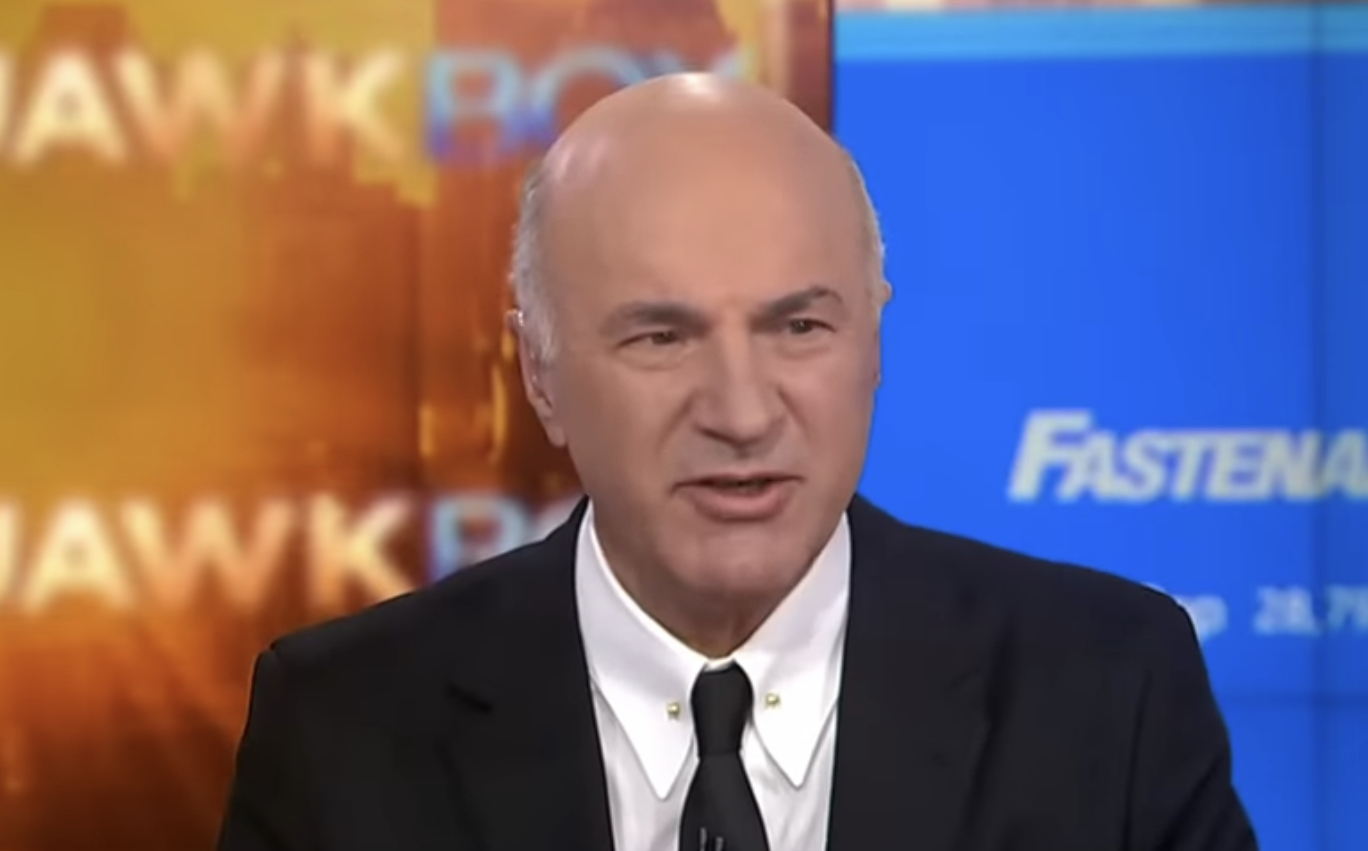
Mr. Wonderful is the television persona of Kevin O’Leary, a Canadian businessman, author, and politician who rose to international fame as a primary investor on the ABC reality series Shark Tank. His background is rooted in educational software, where he built a multi-billion dollar company before transitioning into a global financial commentator and venture capitalist.
The Origins of "Mr. Wonderful": Early Life and Education
Terence Thomas Kevin O’Leary was born on July 9, 1954, in Montreal, Quebec, Canada. His upbringing was marked by a diverse cultural background; his father was of Irish descent and his mother of Lebanese descent. After his parents divorced and his father passed away shortly after, his mother, Georgette, married a United Nations International Labour Organization executive. This led to O’Leary spending much of his youth traveling internationally, living in places such as Cambodia, Cyprus, Tunisia, and Switzerland.
It was during these formative years that O’Leary received his first and perhaps most influential lessons in finance. His mother was a skilled investor who secretly managed her own portfolio, focusing on dividend-paying stocks and interest-bearing bonds. She believed in never spending the principal of an investment, only the "yield." This philosophy would later become the cornerstone of O'Leary’s professional identity and his "Mr. Wonderful" persona, which emphasizes cash flow and immediate returns.
O’Leary pursued higher education with a focus on business and psychology. He earned a Bachelor’s degree in environmental studies and psychology from the University of Waterloo in 1977. Recognizing the need for a deeper understanding of market mechanics, he went on to earn an MBA from the Ivey Business School at the University of Western Ontario in 1980. His early career included a brief stint as an assistant brand manager at Nabisco, where he learned the importance of marketing and consumer psychology—skills he would later use to dominate the software industry and television.
The Billion-Dollar Exit: Building SoftKey and The Learning Company
The foundation of Kevin O’Leary’s wealth and his credibility as a "Shark" lies in the software boom of the late 1980s and 1990s. In 1986, O’Leary co-founded SoftKey Software Products in a Toronto basement. The company’s initial strategy was unconventional: instead of developing expensive, high-end software, SoftKey focused on "shovelware"—low-cost, high-volume software packaged in brightly colored boxes sold in mass-market retailers like Costco and Walmart.
By the early 1990s, SoftKey became a powerhouse through aggressive consolidation. O’Leary realized that it was more efficient to buy competitors than to compete with them. This led to the acquisition of several major educational software brands, most notably The Learning Company (TLC) in 1995 for $606 million. O’Leary adopted the TLC name for the entire enterprise.
The pinnacle of this journey occurred in 1999 when Mattel, the toy giant, sought to enter the interactive software market. In what is now considered one of the most controversial acquisitions in corporate history, Mattel purchased The Learning Company for approximately $3.6 billion. Shortly after the sale, Mattel suffered significant losses due to declining sales and high integration costs, leading to O’Leary’s departure and a massive drop in Mattel’s stock value. Despite the subsequent fallout for Mattel, the deal cemented O’Leary’s status as a billionaire-tier negotiator and provided the liquidity for his future investment career.
Television Career: From Dragon’s Den to Shark Tank
Long before he was a household name in the United States, Kevin O’Leary established himself as a media personality in Canada. In 2006, he joined the cast of Dragon’s Den, the Canadian precursor to Shark Tank. It was here that he developed his "villainous" reputation. While other investors tried to be encouraging to entrepreneurs, O’Leary was blunt, often telling contestants their ideas were "trash" or that they should "take it behind the barn and shoot it."
The nickname "Mr. Wonderful" actually began as a sarcastic remark by fellow Dragon Robert Herjavec. During a pitch where O’Leary was being particularly harsh, Herjavec asked, "Are you Mr. Wonderful now?" The name stuck, and O’Leary leaned into it, eventually trademarking the moniker. He used it to frame his cold, calculated approach to business as a form of "tough love" that prevented entrepreneurs from wasting more money on failing ventures.
In 2009, Mark Burnett brought the format to the U.S. as Shark Tank. O’Leary was cast as one of the original Sharks, alongside Herjavec, Barbara Corcoran, and Daymond John. On the show, he is known for his unique deal structures, specifically royalty deals. While other Sharks typically exchange capital for equity, O’Leary often asks for a "buck a unit" until his initial investment is paid back, sometimes with interest, while still retaining a smaller equity stake. This approach aligns with his mother’s philosophy of prioritizing immediate cash flow.
Investment Philosophy and the "Mr. Wonderful" Persona
The "Mr. Wonderful" persona is more than just a television character; it is a manifestation of O'Leary's disciplined investment ideology. He often states that "money has no soul" and that its only purpose is to grow. This leads to several recurring themes in his investment strategy:
- The Power of Yield: O’Leary is obsessed with dividends and distributions. He famously claims he will not own a stock that does not pay him to own it. This translates to his Shark Tank deals, where he seeks "money while he sleeps" through royalties.
- Rationality Over Emotion: He frequently criticizes entrepreneurs who are "in love" with their products to the point of blindness. To O’Leary, a business is a machine designed to generate profit; if it fails to do so, it should be dismantled.
- Risk Mitigation: His background in psychology helps him read people, but his background in finance dictates his risk management. He often seeks "venture debt" structures that protect his downside if a company fails to scale.
- The "Cold" Truth: He views his bluntness as a service. By telling an entrepreneur their business is not viable, he believes he is saving them years of lost time and potential bankruptcy.
Summary of Major Business Ventures
Kevin O'Leary has diversified his interests far beyond software. His current portfolio includes financial services, consumer goods, and digital assets.
| Venture Name | Industry | Description | Status / Outcome |
|---|---|---|---|
| SoftKey / TLC | Software | Educational and productivity software conglomerate. | Sold to Mattel for $3.6B in 1999. |
| O’Leary Funds | Finance | A mutual fund and investment firm focusing on yield. | Assets sold to Canoe Financial in 2016. |
| O’Shares ETFs | Finance | Exchange-traded funds focusing on quality and dividends. | Acquired by ALPS Advisors in 2022. |
| O’Leary Ventures | Venture Capital | His private investment arm for Shark Tank and other deals. | Active (Current 2026). |
| Beanstox | FinTech | An automated wealth management app for retail investors. | Active (Current 2026). |
| O'Leary Fine Wines | Beverages | A wine brand aimed at providing "award-winning" taste at a value price. | Active (Current 2026). |
Diversifying the Portfolio: O’Leary Ventures and Beyond
As of 2026, Kevin O’Leary’s business interests are remarkably broad. He has successfully leveraged his "Mr. Wonderful" brand to launch products that appeal to the middle-market consumer. O’Leary Fine Wines, for example, was born out of his genuine passion for viticulture and his desire to apply his "best value" business model to the wine industry.
In the realm of financial technology, O’Leary has become a vocal advocate for fractional investing and digital assets. Through Beanstox, he focuses on teaching younger generations the importance of automated, disciplined saving—a digital version of the investment habits his mother practiced. He has also become a significant figure in the cryptocurrency space, moving from an initial skeptic to a major proponent of institutional-grade digital asset regulation and "green" mining.
Furthermore, his interest in high-end horology has turned into a business influence. O’Leary is a world-renowned watch collector, often seen wearing unique red-banded timepieces (his signature color). His commentary on the luxury watch market has made him a respected voice in that niche, further diversifying his "Mr. Wonderful" brand into the luxury and lifestyle sectors.
Controversy and Resilience
No profile of Kevin O’Leary is complete without acknowledging the controversies that have trailed his career. The Mattel merger remains a primary point of criticism for those who question his operational management skills versus his deal-making skills. Critics often point out that while O'Leary profited immensely, the shareholders of Mattel suffered.
In 2017, O’Leary entered the political arena, running for the leadership of the Conservative Party of Canada. Although he was a frontrunner in the polls, he eventually dropped out, citing a lack of support in Quebec and a realization that he was a "businessman, not a politician."
Legal challenges have also surfaced, including a tragic boating accident in 2019 involving O’Leary and his wife, Linda. While Linda O'Leary was charged with "careless operation of a vessel," she was ultimately found not guilty in 2021. Throughout these challenges, O’Leary has maintained a consistent public presence, demonstrating a level of resilience that he often demands from the entrepreneurs he invests in.
Frequently Asked Questions
Is "Mr. Wonderful" actually a billionaire?
While Kevin O'Leary was involved in a multi-billion dollar sale to Mattel, his personal net worth is generally estimated to be around $400 million to $600 million as of 2026. While he is not a billionaire by the strictest definition, his liquidity and investment portfolio place him in the top tier of global high-net-worth individuals.
Why does Kevin O’Leary always wear a red watch strap?
The red strap is part of his "Mr. Wonderful" branding. He began the trend with his luxury watch collection to make his timepieces stand out on television. He has since collaborated with various watchmakers to create custom pieces with his signature "O’Leary Red."
Does Kevin O’Leary actually help the companies he invests in?
Yes. Beyond the capital, O'Leary provides "The Mr. Wonderful Effect," which includes massive marketing exposure through his social media channels and television appearances. He also has a dedicated team at O’Leary Ventures that assists his portfolio companies with logistics, accounting, and scaling.
What happened to O’Leary Funds?
O’Leary Funds was an investment management firm he founded to provide yield-heavy products to Canadian investors. In 2016, the management contracts for the funds were sold to Canoe Financial, a firm led by fellow Canadian investor W. Brett Wilson. O'Leary transitioned his focus toward ETFs (O'Shares) and private venture capital.
How to Apply the "Mr. Wonderful" Strategy to Your Finances
To emulate O'Leary's financial success, one must focus on the "yield" and the "protection of the downside." For the average person, this doesn't mean becoming a venture capitalist on Shark Tank, but rather adopting a disciplined approach to personal wealth management.
First, prioritize dividend-paying investments. Whether through ETFs or individual stocks, look for assets that provide a regular cash payout. This creates a psychological and financial "floor" for your portfolio. Second, remove emotion from spending. O'Leary often advocates for the "don't buy crap" rule—avoiding depreciating assets and unnecessary luxury spending until your investments can pay for them. Finally, focus on diversification. Just as O'Leary has interests in software, wine, watches, and finance, your personal portfolio should not be overly concentrated in a single sector or asset class.