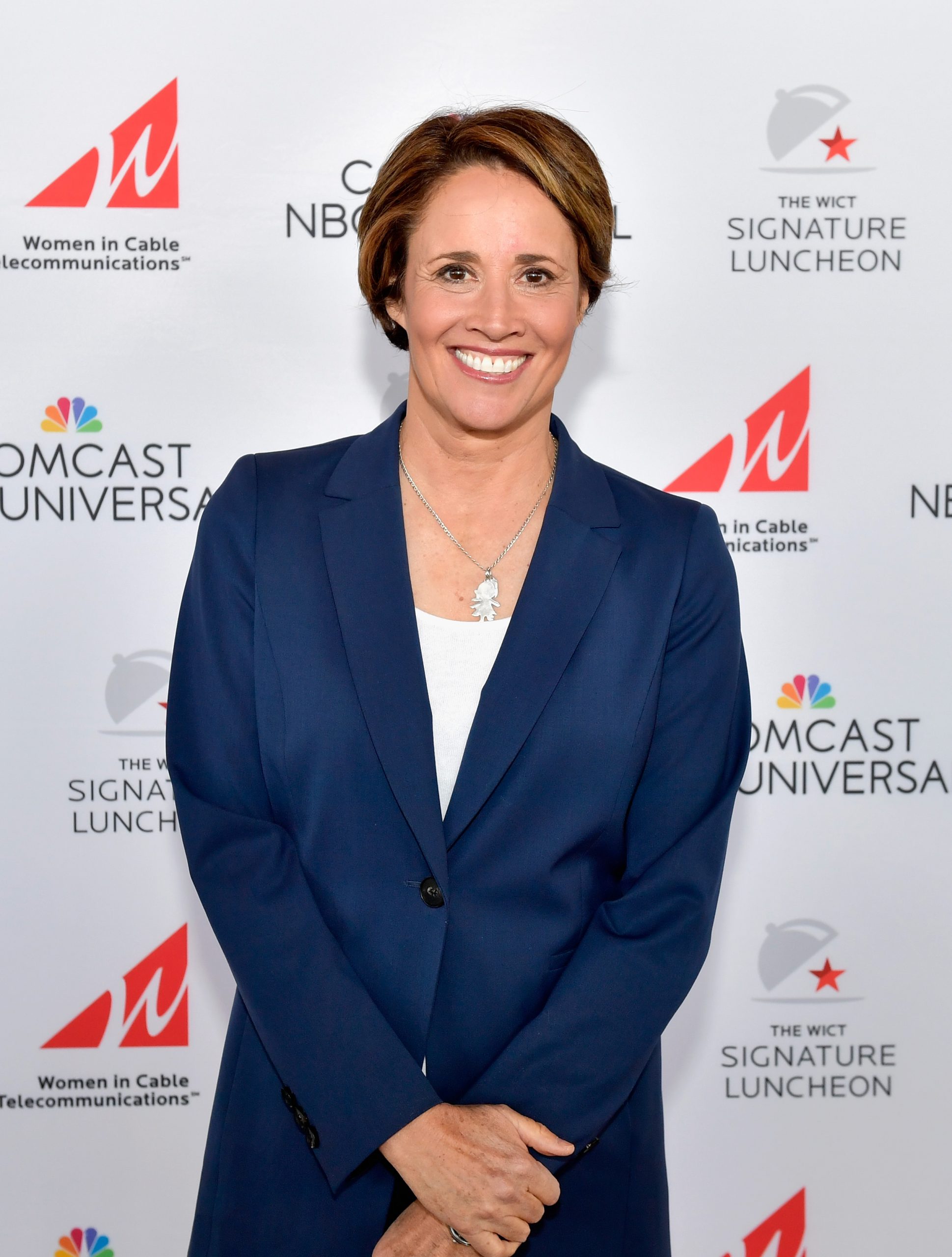
Mary Carillo is an acclaimed American sports broadcaster, journalist, and former professional tennis player who was born on March 15, 1957. Celebrating her 69th birthday in 2026, Carillo remains one of sports media's most respected commentators, celebrated for her candid analysis, award-winning documentary work, and decades of coverage across major television networks.
Key Facts and Biographical Summary
Mary Carillo was raised in Queens, New York, where she developed her tennis game alongside future legends of the sport. Standing 5 feet 10 inches tall, her athleticism and powerful net play allowed her to transition successfully from elite junior competition into professional tennis in the late 1970s. Although chronic knee injuries truncated her active playing career, Carillo quickly re-channeled her deep tactical knowledge of tennis into sports journalism, ultimately becoming one of the most identifiable voices in modern sports broadcasting.
Carillo resides in Naples, Florida, maintaining a public profile defined by her intellectual honesty, humor, and advocacy for journalistic integrity in athletic coverage. Over a media career spanning more than four decades, she has bridged the gap between professional sports performance and prime-time network journalism. Her work spans network commentary for Grand Slam tennis tournaments, investigative reporting for premium cable channels, and cultural travelogues for international Olympic broadcasts.
Professional Tennis Career: From Queens to Grand Slam Champion
Before achieving national prominence behind the microphone, Mary Carillo established herself as a formidable competitor on the WTA Tour. Growing up in Douglaston, Queens, she frequently trained with fellow New Yorker John McEnroe. That partnership yielded the highlight of her professional playing career at the 1977 French Open.
At Roland Garros in 1977, the 20-year-old Carillo paired with the 18-year-old McEnroe to capture the French Open Mixed Doubles championship. The duo navigated through an elite international field to secure the Grand Slam title, marking a major milestone for both young American players. That same year, Carillo demonstrated her strength in women's doubles by reaching the double semifinals at the U.S. Open alongside partner Janet Newberry.
| Career Milestone / Metric | Detail / Historical Record |
|---|---|
| Full Name | Mary Carillo |
| Date of Birth | March 15, 1957 |
| Birthplace | Queens, New York City, New York |
| Professional Playing Era | 1977–1980 |
| Career High WTA Singles Ranking | No. 33 |
| Career High WTA Doubles Ranking | No. 15 |
| Major Playing Title | 1977 French Open Mixed Doubles Champion (with John McEnroe) |
| Broadcasting Entry Year | 1980 (USA Network) |
| Key Broadcast Networks | USA Network, CBS Sports, ESPN, NBC Sports, HBO, Tennis Channel |
| Major Industry Honors | Sports Broadcasting Hall of Fame (2018), 2 Peabody Awards (1999, 2006) |
Carillo's singles play was equally competitive, reaching a career-high ranking of No. 33 in the world. However, her playing career was cut short by recurrent knee injuries. After undergoing multiple surgeries to repair damaged cartilage and ligaments, Carillo retired from professional tournament play in 1980 at age 23. While an early retirement can derail an athlete's livelihood, Carillo utilized her exit from active play as an immediate springboard into the broadcasting booth.
The Transition to Sports Media and Network Television
In 1980, Mary Carillo joined USA Network as a tennis analyst, embarking on a career that broke structural barriers for female sports commentators. During an era when female analysts were largely restricted to women's events or sideline reporting, Carillo demanded equal standing as a tactical analyst for both men's and women's matches.
Her broadcasting resume expanded rapidly as major networks recognized her sharp technical analysis and unwillingness to rely on sanitized public relations speak. Over the subsequent four decades, Carillo held high-profile commentary positions across virtually every major American sports outlet:
- CBS Sports (1986–2014): Served as a primary analyst for the U.S. Open Tennis Championships, becoming the first female analyst to call a men's Grand Slam singles final on network television.
- ESPN (1988–2010): Provided tournament coverage for Wimbledon, the French Open, and the Australian Open, pairing frequently with veterans Patrick McEnroe and Cliff Drysdale.
- NBC Sports (1996–Present): Covered the French Open and Olympic Games, earning praise for both her live sports analysis and her human-interest features.
- HBO Sports (1996–2023): Worked as a correspondent on the acclaimed monthly investigative show Real Sports with Bryant Gumbel, covering complex societal issues, international sports diplomacy, and athlete welfare.
- Tennis Channel: Offered tournament coverage, historical commentary, and special presentation hosting for major tennis events.
Carillo’s signature broadcasting style combines deep technical insight with unvarnished candor. She gained widespread respect among viewers and peers for directly critiquing player strategy, physical conditioning, and mental mistakes—regardless of the player's star status.
Landmark Career Milestones and Industry Accolades
Mary Carillo’s contributions to journalism extend beyond live match commentary. Her work on sports documentaries and Olympic features has earned her some of the highest honors in broadcast media.
Peabody Awards
Carillo is a two-time recipient of the prestigious George Foster Peabody Award, which recognizes distinguished and meritorious public service by television and radio stations, networks, and individuals:
- 1999: Co-wrote and hosted Dare to Compete: The Struggle of Women in Sports, a groundbreaking HBO documentary detailing the historical evolution and social impact of female athletics in the United States.
- 2006: Served as writer and anchor for the HBO documentary Billie Jean King: Record Breaker, detailing the life, athletic accomplishments, and social activism of the tennis legend.
Hall of Fame Induction and Industry Honors
In 2018, Carillo was inducted into the Sports Broadcasting Hall of Fame, cementing her legacy alongside the most influential executives, directors, and commentators in sports media history. Her induction highlighted her role in dismantling gender barriers in the broadcast booth and her sustained excellence across multiple sports disciplines.
Additionally, the International Tennis Hall of Fame presented Carillo with the Eugene L. Scott Award in 2010, recognizing her commitment to communicating honest, critical opinions about the sport. In 2018, she received the Dick Enberg Award from the International Tennis Hall of Fame, presented annually to an individual who has made significant contributions to the sport of tennis and society as a whole.
- 1977: French Open Mixed Doubles Champion
- 1980: Transitions to Broadcasting (USA Network)
- 1999: Wins 1st Peabody Award ("Dare to Compete")
- 2006: Wins 2nd Peabody Award ("Billie Jean King")
- 2018: Inducted into Sports Broadcasting Hall of Fame
Cultural Impact, Public Profile, and Signature Style
Beyond her technical mastery of tennis, Mary Carillo achieved broader mainstream culture status through her humor and storytelling during Olympic broadcasts. Serving as a late-night host and cultural correspondent for NBC’s Olympic coverage across multiple Summer and Winter Games, Carillo introduced viewers to local traditions, niche sports, and regional quirks.
Her most famous viral segment occurred during the 2004 Athens Summer Olympics. Tasked with explaining the game of badminton, Carillo delivered an unscripted, increasingly absurd four-minute monologue detailing how backyard badminton games inevitably descend into lost equipment, tree-climbing, and family disputes. The "Badminton Rant" became a viral classic, frequently re-aired on Late Show with David Letterman and shared across digital video platforms for decades as a masterclass in comedic broadcasting.
Despite her humorous viral moments, Carillo’s public profile remains anchored in journalistic rigor. Through her decades on HBO's Real Sports, she investigated difficult topics, including international sportswashing, brain injuries in athletics, and systemic corruption within international governing bodies. Her dual capability—delivering lighthearted cultural observational reporting alongside hard-hitting investigative journalism—distinguishes her from traditional sports commentators.
Life After Professional Sports: Current Status and Legacy
As she reaches age 69 in 2026, Carillo maintains a selective schedule of broadcast appearances, documentary narration, and speaking engagements. After concluding her long-standing relationship with HBO following the retirement of Real Sports in late 2023, she continues to lend her voice to high-profile tennis events and special network projects.
Carillo was previously married to Bill Bowden, a tennis instructor and executive, from 1983 until their divorce in 1998. The couple raised two children, Anthony and Rachel. Carillo resides in Naples, Florida, where she remains involved in community initiatives, local tennis programs, and sports mentorship.
Her enduring legacy resides in the path she carved for subsequent generations of female sports journalists. Commentators such as Pam Shriver, Tracy Austin, and Rennae Stubbs frequently cite Carillo’s direct analytical style and refusal to accept gender-segregated commentary roles as vital precedents that transformed modern sports television.
Frequently Asked Questions About Mary Carillo
How old is Mary Carillo, and when was she born?
Mary Carillo was born on March 15, 1957, in Queens, New York. As of March 15, 2026, she is 69 years old.
Did Mary Carillo win any Grand Slam tennis titles?
Yes, Mary Carillo won the 1977 French Open Mixed Doubles title alongside her childhood friend John McEnroe. She also reached the women's doubles semifinals at the 1977 U.S. Open with partner Janet Newberry.
Why did Mary Carillo retire from professional tennis early?
Carillo retired from professional tennis in 1980 at the age of 23 due to severe knee injuries and subsequent surgical operations that limited her mobility on the court.
What major awards has Mary Carillo won during her media career?
Carillo has earned two Peabody Awards (1999 and 2006) for her documentary work with HBO Sports, multiple Sports Emmy nominations and wins, the 2010 Eugene L. Scott Award, the 2018 Dick Enberg Award, and induction into the Sports Broadcasting Hall of Fame in 2018.
What is Mary Carillo's famous Olympic badminton monologue?
During NBC’s coverage of the 2004 Athens Summer Olympics, Carillo delivered an unscripted, satirical commentary on how casual backyard badminton games deteriorate into chaos. The segment gained widespread fame, appearing repeatedly on national talk shows and becoming a classic sports comedy clip.
Navigating Mary Carillo's Archival Broadcasts and Journalism Legacy
For viewers, sports historians, and aspiring journalists looking to study Mary Carillo’s contributions to sports media, exploring her body of work offers valuable insights into the evolution of sports commentary:
- Examine Her Grand Slam Analysis: Watch archival broadcasts of U.S. Open and Wimbledon matches from CBS Sports and ESPN (spanning 1990 to 2010). Note how Carillo explains court positioning, shot selection, and mental toughness without relying on jargon.
- Review Her Award-Winning Documentaries: Stream HBO’s Dare to Compete: The Struggle of Women in Sports (1999) and Billie Jean King: Record Breaker (2006) to analyze how documentary broadcast writing can effectively place athletic achievements within broader socio-political contexts.
- Study Her Investigative Work: Search archived episodes of HBO’s Real Sports with Bryant Gumbel featuring Carillo’s field reporting to understand how to conduct tough, direct interviews with sports executives and international figures.
- Analyze Olympic Feature Storytelling: Review her NBC Olympic travelogues from the 2004 Athens, 2008 Beijing, and 2014 Sochi Games to see how cultural context, observational humor, and broadcast editing construct compelling narrative television.