Survey data and demographic research indicate that roughly 11% of Americans—over 35 million people—have never traveled outside the state where they were born or currently reside. While nearly six in ten Americans live in their birth state, complete state immobility is driven primarily by socioeconomic constraints, vast geographic distances, and regional employment structures.
Understanding geographic mobility in the United States requires sifting through survey statistics, census data, and economic realities. Media headlines often conflate residing in one's birth state with never having crossed a state border, leading to widespread confusion about how Americans move, work, and travel. A detailed breakdown of the available research reveals the exact figures, underlying causes, and broader societal impacts of domestic travel habits.
Core Statistics: What the Data Reveals About Domestic Travel
The claim that millions of Americans have never left their home state comes from a combination of national travel surveys and demographic studies. A widely cited survey conducted by OnePoll examined the travel habits of 2,000 U.S. adults and found that 11% of respondents reported never having traveled outside their home state.
While 11% represents a minority of the population, it translates to tens of millions of individuals when applied across the entire U.S. population of over 330 million people. Related travel benchmarks from the same body of research provide additional context regarding domestic mobility:
- Airplane Travel: Approximately 13% of American adults have never flown on a commercial airplane.
- Passport Ownership: Historically, passport ownership in the U.S. was under 15% in 1990, but U.S. Department of State data shows that approximately 48% to 50% of Americans now hold a valid passport.
- International Mobility: Roughly 40% of Americans have never traveled outside the United States, meaning that while most people cross state lines, a far larger percentage never cross national borders.
Age and household income heavily influence these figures. Younger demographics (under 30) and older adults (over 65) report higher rates of never having left their state compared to middle-aged demographics. Furthermore, lower-income households are significantly overrepresented among those who have never crossed state borders, establishing economic hardship as the single primary constraint on travel.
Disambiguating Travel Metrics: "Never Left" vs. "Born in State"
To accurately assess geographic mobility, it is vital to distinguish between two frequently confused metrics: adults who have never stepped foot outside their state and adults who currently reside in the state where they were born.
Data from the U.S. Census Bureau's American Community Survey (ACS) consistently shows that approximately 58% to 60% of native-born Americans live in the state of their birth. This metric measures long-term residency, not travel history. A person born in Ohio who lives in Ohio at age 45 is counted in census data as living in their birth state, even if they have vacationed in Florida, attended college in Pennsylvania, or traveled extensively across all 50 states.
| Demographic / Travel Metric | Approximate U.S. Percentage | Primary Data Source | Key Driving Factors |
|---|---|---|---|
| Never Left Home State | ~11% | OnePoll / Industry Surveys | Financial limitations, local employment, geographic isolation |
| Never Flown on an Airplane | ~13% | Industry Travel Surveys | Cost, fear of flying, preference for driving |
| Reside in Birth State | ~58% – 60% | U.S. Census Bureau (ACS) | Family ties, cost of living, regional job markets |
| Do Not Own a Valid Passport | ~50% – 52% | U.S. Department of State | High cost of international travel, domestic vacation alternatives |
| Never Traveled Internationally | ~35% – 40% | Pew Research / Travel Polls | Financial barriers, lack of paid time off, language barriers |
Confusing these two metrics creates a skewed perception of American mobility. While tens of millions of Americans remain rooted in their home states for life, only a fraction of those individuals have literally never crossed a state line.
Key Factors Behind Why Some Americans Never Cross State Lines
The choice—or circumstance—to remain entirely within state borders is driven by interconnected economic, geographic, and cultural factors.
1. Financial Constraints and Travel Costs
The primary barrier to traveling outside one's home state is economic. Travel requires discretionary income for gasoline, flight tickets, lodging, meals, and emergency reserves. For households living paycheck to paycheck, out-of-state travel is often financially impossible. Additionally, workers in hourly, entry-level, or gig-economy jobs frequently lack paid time off (PTO). Taking a multi-day trip out of state means forfeiting income while simultaneously incurring travel expenses.
2. The Scale of U.S. Physical Geography
The immense landmass of the United States plays a substantial role in shaping mobility patterns. Many individual U.S. states are larger than entire European nations. For example:
- Texas covers over 268,000 square miles—larger than France or Germany.
- California stretches nearly 800 miles from north to south.
- Alaska encompasses more land area than Texas, California, and Montana combined.
A resident living in central Texas can drive eight hours in any direction and still remain within state borders. In contrast, a European resident traveling eight hours by car or train would likely cross multiple international boundaries. Consequently, Americans can experience vast changes in landscape, climate, and local culture without ever leaving their state.
3. Deep Family and Community Roots
Social capital and intergenerational caretaking keep millions of individuals tied to their local areas. Taking care of aging parents, relying on family members for child care, or maintaining multi-generational family farms and businesses anchor people to their immediate communities. For many, the cultural expectation and personal desire to stay close to extended family outweigh the motivation to explore distant states.
4. Localized Employment and Infrastructure Reliance
Certain industries, such as agriculture, local manufacturing, state government, and regional natural resources, bind workers to specific geographical zones. Furthermore, public transportation infrastructure in rural U.S. areas is often limited. Without a reliable personal vehicle capable of long-distance highway travel, individuals living in low-income or rural regions face physical hurdles to crossing state lines.
Primary Drivers of State-Bound Living
- Financial Constraints
- Lack of PTO, low disposable income
- Geographic Scale
- Vast state sizes (e.g., TX, CA)
- Social & Family Ties
- Caretaking, localized support net
- Transit Limitations
- Lack of reliable long-haul travel
Geographic Disparities: Large States vs. Small States
The likelihood of an individual leaving their state depends heavily on geography. State size and population density directly affect physical mobility statistics.
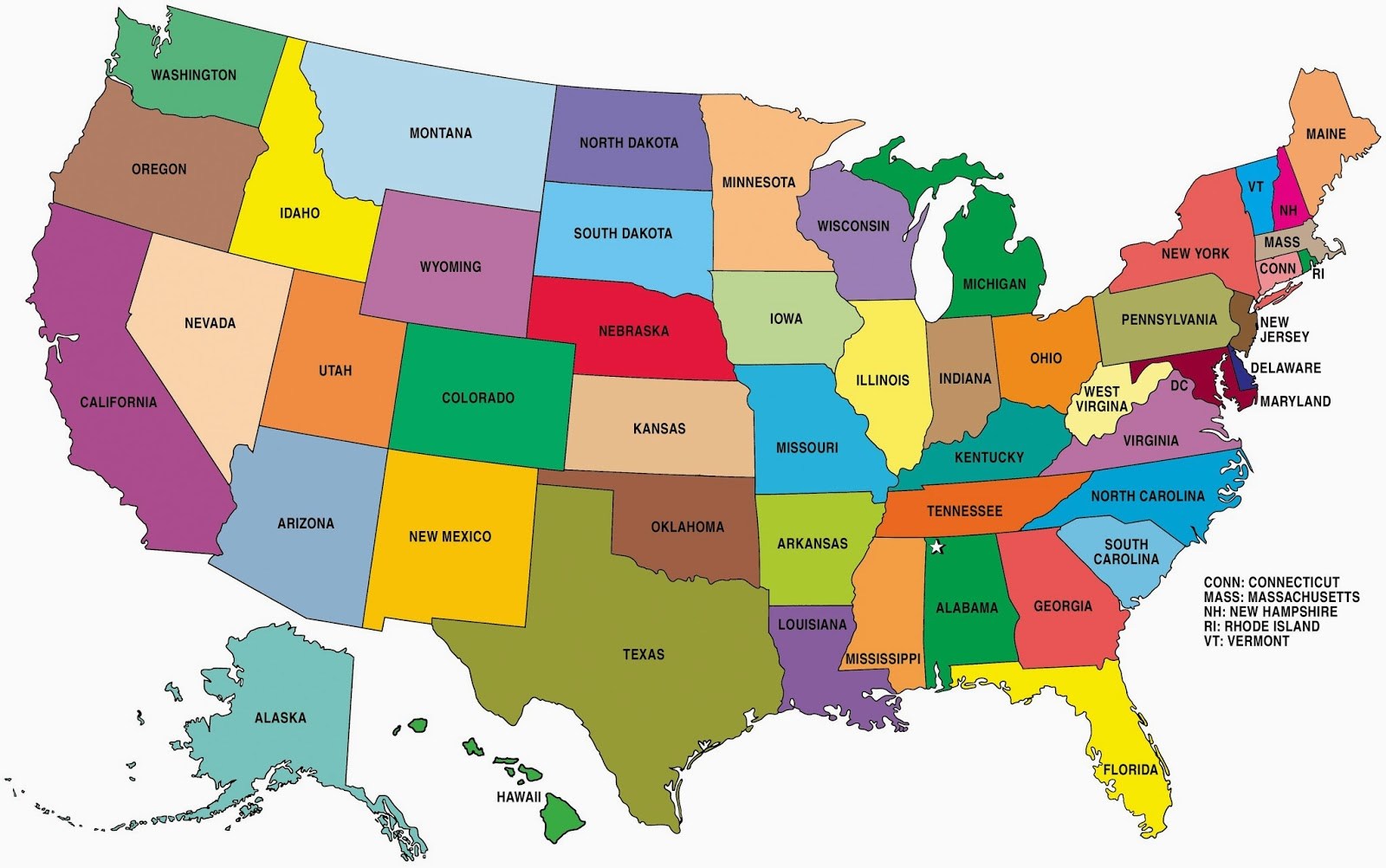
Residents of smaller, densely populated states in the Northeast—such as Rhode Island, Delaware, New Jersey, and Connecticut—frequently cross state lines during routine daily activities. A resident of northern New Jersey may cross into New York for work every morning, while a Delaware resident might drive into Pennsylvania or Maryland for groceries or healthcare.
Conversely, residents of vast, geographically isolated states face higher barriers to exiting their home territory:
- Hawaii: Leaving the state requires purchasing an expensive transpacific flight, making out-of-state travel financially burdensome for lower-income residents.
- Alaska: Separated from the contiguous U.S. by Canada, leaving Alaska requires air travel, a ferry ride, or a complex international road trip.
- Texas and California: Due to massive highway networks internal to the state, residents can take extensive multi-day vacations across beaches, mountains, deserts, and major metropolitan areas without ever crossing a state line.
Socioeconomic and Cultural Impacts of Low Geographic Mobility
Geographic immobility is closely linked to economic opportunity and social mobility. Research into migration patterns indicates that individuals who move across state lines at least once in their young adult years often achieve higher lifetime earnings compared to those who stay in their hometowns or birth states. Interstate mobility allows workers to chase expanding job markets, pursue specialized higher education, and adapt to shifting regional economic declines.
From a policy perspective, understanding why millions of citizens do not leave their home state helps municipal and federal leaders target transportation equity, rural transit investment, and regional economic development:
- Workforce Retraining: Areas with low out-migration need robust local job creation, as residents are less likely to relocate to economic hubs.
- Infrastructure Investments: Enhancing regional intercity rail and affordable bus service can give lower-income communities access to adjacent state labor markets.
- Educational Access: Expanding access to out-of-state educational programs or remote degrees helps bridge the gap for students who cannot physically relocate.
Frequently Asked Questions
What percentage of Americans have never left their home state?
Survey data indicates that approximately 11% of American adults have never traveled outside the state where they currently live or were born. This represents over 35 million people, driven largely by economic limitations and geographic distances.
How does living in one's birth state differ from never leaving the state?
Living in one's birth state means a person currently resides in the state where they were born, which applies to roughly 58% to 60% of Americans according to Census data. Many of these individuals travel frequently to other states. "Never leaving the state" means an individual has literally never crossed a state border in their lifetime.
Why do state sizes affect travel statistics so significantly?
Large U.S. states like California, Texas, and Alaska span hundreds of thousands of square miles. Residents can travel vast distances and access diverse climates without crossing state lines. In contrast, residents of small states like Rhode Island or Delaware often cross state lines during daily commutes.
How many Americans do not own a valid U.S. passport?
Roughly 50% to 52% of Americans do not hold a valid U.S. passport. While passport holding has increased dramatically from under 15% in 1990, half of the population relies exclusively on domestic travel due to the costs associated with international trips.
What is the biggest barrier preventing Americans from traveling to other states?
Financial constraint is the single largest barrier. The costs of gasoline, lodging, commercial flights, and food—combined with a lack of paid time off for hourly workers—make out-of-state travel unaffordable for many low-income households.
Practical Strategies for Expanding Personal Mobility
For individuals seeking to explore beyond their state borders on a limited budget, several accessible strategies can reduce travel expenses:
- Utilize Regional Intercity Transit: Low-cost intercity bus lines (such as Greyhound, Megabus, or FlixBus) and regional passenger rail offer affordable alternatives to air travel or vehicle ownership for crossing state borders.
- Explore Border Region State Parks: Traveling to state parks or historical sites located near state borders allows individuals to visit neighboring states via short, low-cost day trips without incurring lodging costs.
- Leverage Off-Peak and Off-Season Travel: Planning trips during mid-week windows or off-peak seasons significantly reduces hotel rates and transportation fees.
- Seek Out Regional Grants and Educational Programs: Students and young professionals can utilize state-sponsored exchange programs, regional workforce initiatives, and university grants designed to subsidize interstate travel for study or training.