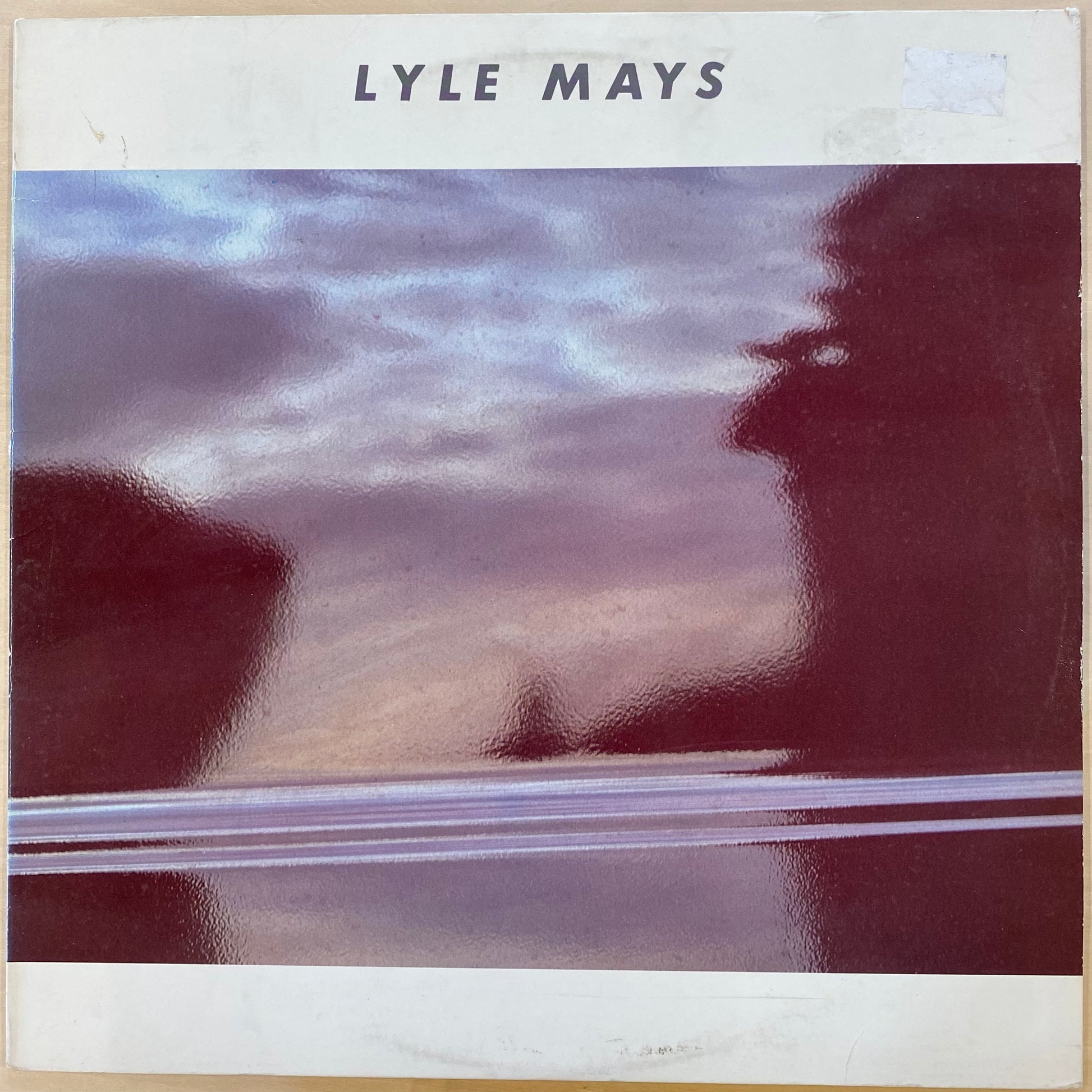
Lyle Mays died on January 10, 2020, in Los Angeles, California, at the age of 66. The official cause of death was complications from a long battle with a recurrent autoimmune disease. His passing was publicly announced by his longtime musical partner, guitarist Pat Metheny, and Mays' niece, vocalist Aubrey Johnson.
The Circumstances Surrounding Lyle Mays' Passing
Lyle Mays passed away peacefully in Los Angeles on January 10, 2020, surrounded by close family and loved ones. While his health struggles had been kept largely private for several years, his death resulted from a long-standing, recurrent autoimmune illness. Because Mays maintained a quiet and highly private personal life away from the spotlight, the broader public was unaware of the severity of his condition until the official announcement.
Following his death, Pat Metheny shared a moving tribute honoring their four-decade artistic partnership. Metheny praised Mays as one of the most gifted musicians he had ever encountered, highlighting his unique combination of harmonic genius, structural mastery, and emotional depth. Niece Aubrey Johnson, who also contributed vocals to Mays' final musical project, confirmed that he maintained his curiosity, intellect, and creative passion throughout his final days.
The news of Mays' passing reverberated across the global jazz community. Fellow musicians, critics, and listeners mourned the loss of a pioneer whose work reshaped contemporary jazz, acoustic-electric fusion, and keyboard orchestration during the late 20th and early 21st centuries.
Lyle Mays’ Health and Choice for Personal Privacy
Autoimmune diseases occur when the body's immune system mistakenly attacks healthy tissues, leading to chronic inflammation, systemic fatigue, and variable organ stress over extended periods. Because many autoimmune conditions feature alternating periods of remission and relapse, managing them requires ongoing medical care and significant personal energy.
Mays chose not to speak publicly about his medical treatment or the specific sub-type of autoimmune illness he managed. This decision aligned with his lifelong approach to fame and public life. Unlike many high-profile musicians of his era, Mays viewed music as a rigorous intellectual discipline rather than a vehicle for personal celebrity.
In the late 2000s, as the Pat Metheny Group went on extended hiatus after decades of intensive world touring, Mays gradually stepped back from the relentless cycle of international concerts. While fans initially speculated that his retreat from the road was purely an artistic choice to explore other interests, his health was also a contributing factor. Reducing the physical strain of constant travel allowed him to manage his health while focusing his remaining energy on specialized studio projects, composition, software development, and family.
Key Eras and Milestones in the Career of Lyle Mays
To understand the scope of Lyle Mays' life and his legacy in modern music, it is helpful to examine the major phases of his career, spanning his early academic training through his celebrated work with the Pat Metheny Group and his final studio compositions.
| Career Phase | Timeframe | Key Accomplishments & Projects | Musical Focus |
|---|---|---|---|
| Early Formative Years | 1953–1976 | North Texas State University; arrangements for the One O'Clock Lab Band; stint with Woody Herman's Thundering Herd. | Big band arranging, acoustic piano, complex time signatures, harmonic theory. |
| Pat Metheny Group Era | 1977–2005 | Co-founded Pat Metheny Group; co-wrote iconic compositions; won 11 Grammy Awards across multiple decades. | Synthesizer orchestration, multi-keyboard setups, acoustic piano, long-form composition. |
| Solo Projects & Scoring | 1986–2000 | Released self-titled solo album Lyle Mays (1986), Street Dreams (1988), and Solo (2000); composed film scores (The Falcon and the Snowman). | Chamber jazz, impressionistic acoustic piano solos, film scoring, sound design. |
| Polymathic Explorations | 2005–2019 | Transitioned into software engineering, architectural drafting, and puzzle design; selective composition. | Computer programming, mathematical logic, specialized studio work, private research. |
| Final Masterwork | 2019–2021 | Composed and recorded Eberhard; posthumously released in 2021; won a Grammy Award in 2022. | Large-ensemble mini-suite, multi-layered vocal and instrumental arrangements, tribute to Eberhard Weber. |
Musical Innovation and Keyboard Orchestration
Lyle Mays was fundamentally an architect of sound. While most jazz pianists of his generation focused primarily on melodic improvisation within standard jazz frameworks, Mays approached the keyboard—and the recording studio—with the mindset of an orchestral arranger and structural engineer.
Blending Acoustic Piano with Synthesizers
During the late 1970s and 1980s, electronic synthesizers were rapidly entering jazz and rock. While many players used synthesizers merely for novelty sounds or high-speed solos, Mays used them to build rich, organic textures that expanded the physical resonance of the acoustic piano.
By layering instruments like the Oberheim synthesizer, Prophet-5, and Kurzweil modules beneath his acoustic grand piano, Mays created a signature sonic palette. His electronic textures sounded warm, breathy, and symphonic, serving as a lush background that lifted Pat Metheny’s guitar synth and acoustic leads.
Compositional Counterpoint and Complex Meters
As the primary co-composer for the Pat Metheny Group, Mays was responsible for the complex harmonic shifts, counter-melodies, and formal structures that elevated the group beyond standard jazz fusion. Tracks such as "Phase Dance," "Are You Going With Me?," "First Circle," and "The Way Up" showcase his mastery of shifting meter, classical counterpoint, and extended suite-style forms.
"First Circle," for example, features a famous opening sequence in an intricate 22/8 time signature. Mays designed the rhythmic and harmonic framework so naturally that listeners experienced the piece as fluid and melodic rather than academic or forced. His ability to render complex mathematical structures accessible and deeply emotional was his defining musical signature.
Beyond Music: Lyle Mays as a Polymath
One of the most remarkable aspects of Lyle Mays' life was that his intellect extended far beyond the keyboard. He was a true polymath who approached non-musical disciplines with the same rigor and curiosity he applied to composition.
- Computer Programming and Software Engineering: Mays was an avid self-taught programmer. He developed custom software tools, studied algorithmic design, and followed software architecture trends closely. He viewed coding as another expression of logical structure and creative problem-solving.
- Architectural Drafting and Spatial Design: Fascinated by physical structures, Mays studied architectural blueprints, designed custom furniture, and explored how spatial aesthetics mirrored musical arrangement.
- Mathematics and Mechanical Puzzles: Mays possessed a lifelong passion for complex logic puzzles, mathematics, and games. Friends and colleagues frequently noted his ability to solve intricate spatial problems that stumped specialists.
This multi-faceted intellect explains why Mays felt comfortable stepping away from the music business in his later years. Unlike artists who feel lost without the stage, Mays found immense satisfaction in quiet intellectual discovery, research, and technical design.
Posthumous Recognition and the Masterwork 'Eberhard'
Before his death in January 2020, Lyle Mays completed the composition and initial recording of a final, major work titled Eberhard. The 13-minute mini-suite was conceived as a homage to the pioneering German bassist Eberhard Weber, whose work with ECM Records had significantly influenced both Mays and Pat Metheny in their formative years.
Following Mays' passing, his friends, family, and long-time musical colleagues rallied to bring the unfinished masterwork to completion. Executive produced by his niece Aubrey Johnson alongside co-producers Steve Rodby and Timothy Morrison, the recording featured an extraordinary lineup of guest artists, including:
- Steve Rodby on acoustic and electric bass
- Jimmy Johnson on bass
- Alex Acuña on percussion
- Bob Sheppard on woodwinds
- Mitchel Forman on organ
- Aubrey Johnson, Rosana Eckert, and Gary Eckert on multi-layered vocals
Released in August 2021, Eberhard stands as a breathtaking summary of Mays' artistic life. It seamlessly weaves together complex vocal polyphony, soaring synth lines, propulsive rhythm sections, and intricate woodwind arrangements. At the 64th Annual Grammy Awards in 2022, Eberhard won the award for Best Instrumental Composition, providing a poignant, fitting final honor for one of modern music's great masters.
Frequently Asked Questions
What was Lyle Mays' exact cause of death?
Lyle Mays died from complications related to a long battle with a recurrent autoimmune disease. He passed away peacefully in Los Angeles on January 10, 2020, surrounded by close family.
How old was Lyle Mays when he died?
Lyle Mays was 66 years old at the time of his passing. He was born on November 27, 1953, in Wausaukee, Wisconsin.
What was Lyle Mays' role in the Pat Metheny Group?
Lyle Mays was the co-founder, lead keyboardist, pianist, synthesizer operator, primary co-composer, and arranger for the Pat Metheny Group from its inception in 1977 through its final album releases and tours in the mid-2000s.
Did Lyle Mays win any awards after his death?
Yes. Lyle Mays posthumously won the Grammy Award for Best Instrumental Composition at the 64th Annual Grammy Awards in 2022 for his final 13-minute composition, Eberhard.
What non-musical fields did Lyle Mays pursue later in life?
In his later years, Mays focused heavily on computer software engineering, architectural design, spatial mathematics, and mechanical puzzle construction, stepping away from full-time music touring.
How to Explore and Honor Lyle Mays’ Musical Legacy
For listeners, music students, and contemporary arrangers seeking to study and appreciate the work of Lyle Mays, several essential avenues offer deep insight into his creative contributions:
- Listen to Key Landmark Recordings: Begin with core Pat Metheny Group releases such as Pat Metheny Group (1978), As Falls Wichita, So Falls Wichita Falls (1981), Offramp (1982), First Circle (1984), and the epic long-form album The Way Up (2005).
- Study His Solo and Acoustic Work: Explore his self-titled 1986 solo album Lyle Mays, his 1988 release Street Dreams, and his intimate 2000 acoustic piano recording Solo (Improvisations for Expanded Piano), which showcases his unadorned touch and classical sensibilities.
- Analyze His Final Masterwork: Listen closely to Eberhard (2021), paying specific attention to how he layers vocal textures as instrumental lines—a technique he refined over forty years of composition.
- Examine Keyboard Transcription Books: For pianists and arrangers, studying printed score transcriptions of Mays' compositions reveals his sophisticated use of voice leading, altered harmonies, and non-standard time signatures, offering invaluable lessons in modern orchestration.