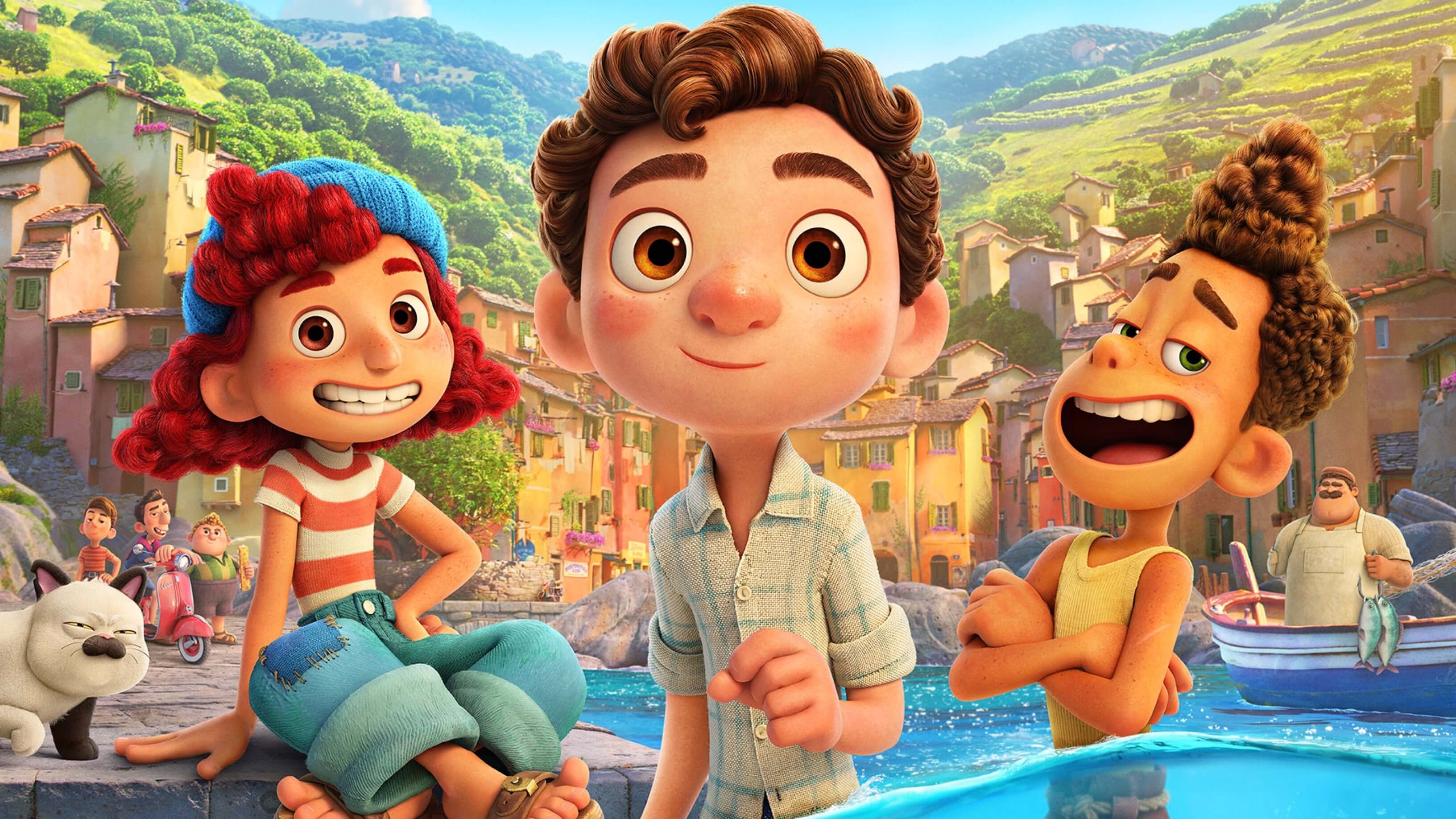
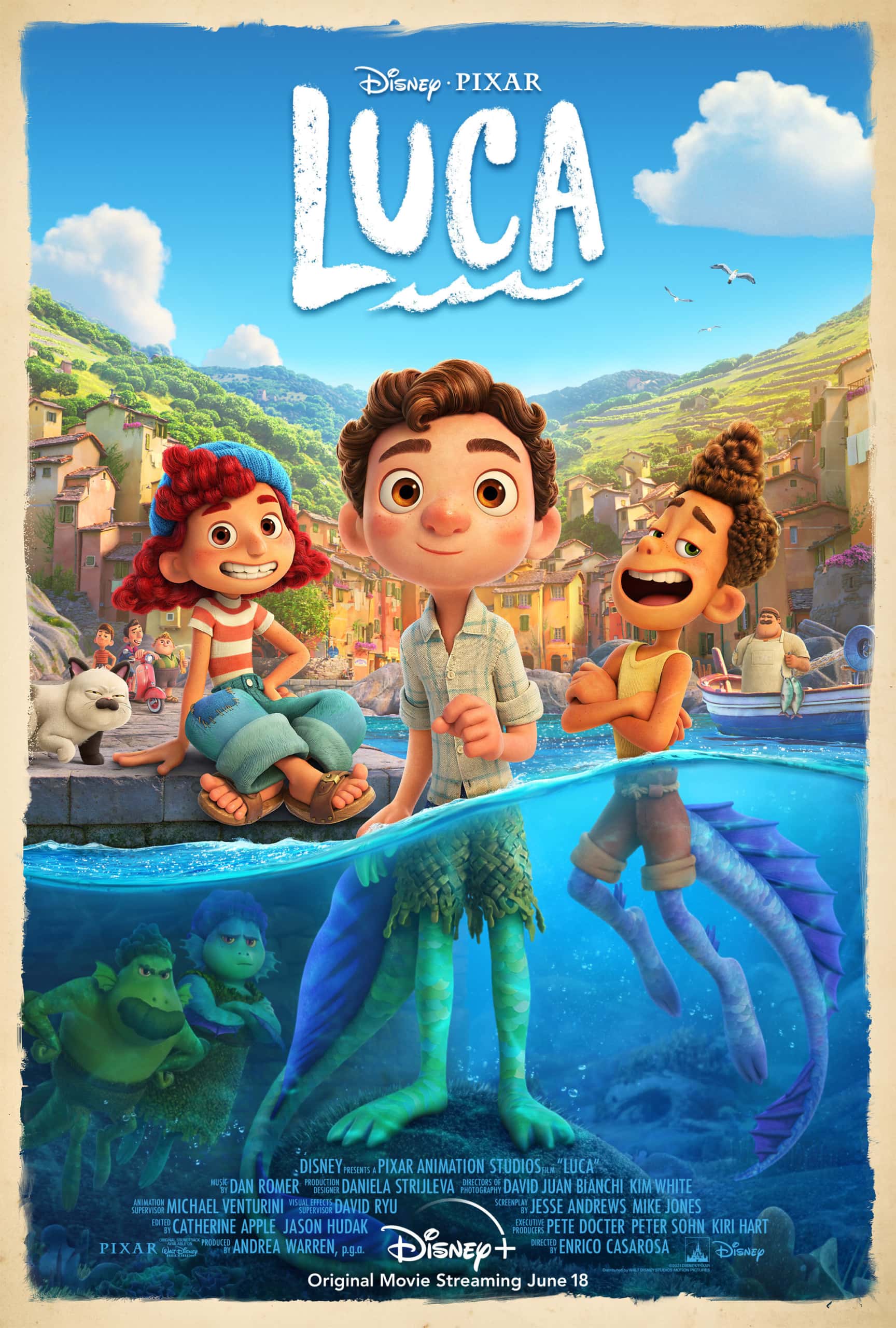
Luca is a 2021 Disney/Pixar animated film directed by Enrico Casarosa that tells the story of a young sea monster experiencing a life-changing summer on the Italian Riviera. Disguised as a human, Luca explores the town of Portorosso while learning about friendship, bravery, and self-acceptance.
Originally released during a pivotal shift in digital distribution, the film has since become a staple of the Pixar library. By 2026, it is recognized not only for its vibrant visual style and "storybook" aesthetic but also for its profound exploration of identity and the "outsider" experience. The film follows Luca Paguro, a timid sea monster who discovers that his kind transforms into human form when dry. Alongside his adventurous friend Alberto Scorfano and the spirited Giulia Marcovaldo, Luca enters a local triathlon to win a Vespa, representing the ultimate symbol of freedom and escape.
The Narrative Core and Setting of Portorosso
The heart of Luca lies in its meticulously crafted setting. Portorosso is a fictional town deeply inspired by the Cinque Terre in Liguria, Italy, where director Enrico Casarosa grew up. The film captures the essence of the 1950s and 60s Italian coast, characterized by narrow cobblestone streets, vibrant pastel buildings, and a culture centered around fishing, pasta, and community. This historical and geographical specificity provides a grounded backdrop for the fantastical elements of the story.
The narrative focuses on the friendship between Luca and Alberto. While Luca is cautious and curious, Alberto is bold and seemingly fearless. Their dynamic is the engine of the film’s growth. Alberto introduces Luca to the "surface world," teaching him how to walk and navigate human life. However, their secret—that they are sea monsters who will revert to their true forms if they get wet—creates a constant undercurrent of tension. This tension serves as a metaphor for anyone who has ever felt like they had to hide a part of themselves to fit into a judgmental society.
The conflict reaches its peak during the Portorosso Cup, a local race involving swimming, pasta-eating, and cycling. The boys team up with Giulia, an energetic girl who is herself an outsider in her town. Their rivalry with the local bully, Ercole Visconti, provides the traditional stakes, but the true emotional climax occurs when Luca and Alberto must decide whether to remain hidden or reveal their true identities to protect one another.
Character Archetypes and Voice Cast
The success of Luca is largely attributed to its distinct characters, who balance whimsical humor with deep emotional resonance. The voice cast, led by Jacob Tremblay and Jack Dylan Grazer, brings a youthful authenticity to the roles that avoids the "over-rehearsed" feel sometimes found in major animated productions.
| Character | Voice Actor | Role and Description |
|---|---|---|
| Luca Paguro | Jacob Tremblay | A curious 13-year-old sea monster who yearns to see the world above the waves. |
| Alberto Scorfano | Jack Dylan Grazer | A free-spirited teen sea monster who becomes Luca’s mentor and best friend. |
| Giulia Marcovaldo | Emma Berman | An outgoing, bookish girl who befriends Luca and Alberto and hates the town bully. |
| Massimo Marcovaldo | Marco Barricelli | Giulia’s father, a formidable but kind fisherman who only has one arm. |
| Ercole Visconti | Saverio Raimondo | The narcissistic local bully and repeated winner of the Portorosso Cup. |
| Daniela Paguro | Maya Rudolph | Luca’s overprotective mother who fears the surface world. |
| Lorenzo Paguro | Jim Gaffigan | Luca’s well-meaning but often distracted father. |
| Uncle Ugo | Sacha Baron Cohen | A deep-sea monster relative who represents the terrifying isolation of the deep. |
Visual Style and Animation Innovations
Technically, Luca marked a significant departure from the hyper-realistic trend that Pixar had been following with films like Toy Story 4 and Soul. Enrico Casarosa sought a "hand-drawn" feel within a 3D environment, heavily influenced by the works of Hayao Miyazaki and Studio Ghibli. This is evident in the film’s rounded shapes, simplified textures, and expressive "mouth shapes" that mimic 2D animation techniques.
The water physics in Luca are also handled differently than in previous Pixar outings. Instead of focusing solely on the photorealistic behavior of fluid, the animators focused on the "feeling" of the water. The transformation scenes, where the characters shift between scales and skin, required the development of new rigging software. This technology allowed for a seamless transition that looked organic rather than mechanical, capturing the shimmering quality of Mediterranean sea life.
The color palette is another standout feature. The world above water is saturated with golden sunlight and warm earthy tones, while the world beneath the sea is rendered in cool teals, purples, and deep blues. This visual contrast reinforces the theme of two worlds colliding and helps the audience feel the same wonder that Luca experiences when he first breaks the surface.
Themes of Identity and "Silenzio Bruno!"
One of the most enduring legacies of Luca is its contribution to the cultural lexicon through the phrase "Silenzio Bruno!" In the film, Alberto teaches Luca this phrase as a way to silence the "inner critic"—the voice in one's head that causes doubt and fear. It has since become a popular mantra for audiences of all ages, representing the act of taking a leap of faith despite anxiety.
Beyond the "Silenzio Bruno" concept, the film is widely analyzed for its themes of identity. While the director has stated the story is primarily about platonic friendship, many viewers and critics have interpreted the sea monster metaphor as an allegory for the LGBTQ+ experience or the experience of being an immigrant. The fear of being "found out" and the eventual acceptance by a community that once feared "monsters" resonates deeply with marginalized groups.
The film also explores the theme of education as a tool for liberation. Giulia’s passion for books and school inspires Luca to want more for himself than a life of herding "goatfish" on the sea floor. This pursuit of knowledge eventually leads to a bittersweet ending that emphasizes that true friendship sometimes means letting someone go so they can achieve their potential.
Production Background and Cultural Impact
The production of Luca was unique because it occurred almost entirely during the global pandemic. The animators and voice actors worked from their homes, a feat of technical coordination that influenced how Pixar approached subsequent projects. Despite the remote nature of its creation, the film feels remarkably cohesive and intimate.
Culturally, the film has had a lasting impact on tourism in the Liguria region of Italy. Even five years after its release, in 2026, the towns of the Cinque Terre continue to see "Luca-themed" visitors seeking the real-life inspirations for Portorosso. Disney has capitalized on this by maintaining a strong presence for the characters in theme parks and through the short film Ciao Alberto, which provides a sequel of sorts by detailing Alberto’s life in Portorosso after Luca leaves for school.
The score, composed by Dan Romer, also plays a vital role in the film's identity. By utilizing traditional Italian instruments like the accordion and mandolin, Romer created a soundtrack that feels timeless and nostalgic. The inclusion of classic Italian pop songs from the era further cements the film’s specific sense of time and place.
Critical Reception and Awards
Upon its release, Luca received high praise for its simplicity and charm. Critics noted that while it didn't have the existential weight of Soul or the high-concept complexity of Inside Out, its focus on the small, formative moments of childhood gave it a different kind of power.
- Rotten Tomatoes: Maintained a high critical score, often cited for its "breezy" but emotional storytelling.
- Awards: The film was nominated for Best Animated Feature at the 94th Academy Awards and the Golden Globes.
- Streaming Performance: Luca was a massive hit for Disney+, consistently ranking as one of the most-watched movies on the platform in the months following its debut.
The film's legacy in 2026 is that of a "comfort movie." It is frequently cited in retrospectives as the film that brought a sense of summer and sunshine to audiences during a period of global isolation. Its focus on kindness over conflict—where even the "monsters" are just people trying to find their place—remains its most poignant contribution to the Pixar canon.
FAQ
Where can I watch the film Luca?
As of 2026, Luca remains a cornerstone of the Disney+ streaming library. It is available in 4K Ultra HD with Dolby Vision and Atmos on supported devices. Physical media enthusiasts can also find the film on Blu-ray and 4K UHD discs at major retailers.
Is Portorosso a real place in Italy?
No, Portorosso is not a real town, but it is a composite of several real locations in the Cinque Terre region of Liguria, Italy. Director Enrico Casarosa specifically drew inspiration from towns like Monterosso, Vernazza, and Riomaggiore to create the fictional setting.
What does "Silenzio Bruno" mean?
"Silenzio Bruno" is a phrase invented by the character Alberto to help Luca silence his internal fears. "Bruno" represents the negative voice in your head that tells you that you can't do something or that you aren't good enough. By saying "Silenzio Bruno," the characters choose to ignore those doubts and take risks.
Does the film have a sequel?
While there is no feature-length "Luca 2" as of 2026, there is a popular short film titled "Ciao Alberto" on Disney+. This short explores Alberto’s relationship with Massimo and his life as a fisherman’s apprentice in Portorosso after Luca goes away to school with Giulia.
Is Luca an allegory for a specific identity?
Director Enrico Casarosa has stated that the film is based on his own childhood friendship and is about the "pre-pubescent" period of life. However, he has also acknowledged that the "sea monster" metaphor is designed to be universal, allowing it to represent many different "outsider" experiences, including those of the LGBTQ+ community or immigrants.
Viewing Recommendations and Related Media
For viewers who enjoy the themes and aesthetic of Luca, there are several related projects and media worth exploring to deepen the experience.
- Watch "Ciao Alberto": This short film is essential viewing for anyone who felt the ending of the main film was too abrupt. It provides much-needed closure on Alberto's character arc and his search for a father figure.
- Explore "La Luna": This was Enrico Casarosa’s 2011 Academy Award-nominated short film. It shares a similar visual style and "fable-like" quality that eventually blossomed into the full feature of Luca.
- Read "The Art of Luca": For those interested in the technical depth of the animation, this book provides concept art and interviews that explain how the team achieved the film's unique Mediterranean look.
- Visit the Italian Riviera: If you are a fan of the setting, the real-life Cinque Terre offers a very similar atmosphere to the film, including the food, the architecture, and the geography of the cliffs and coves.