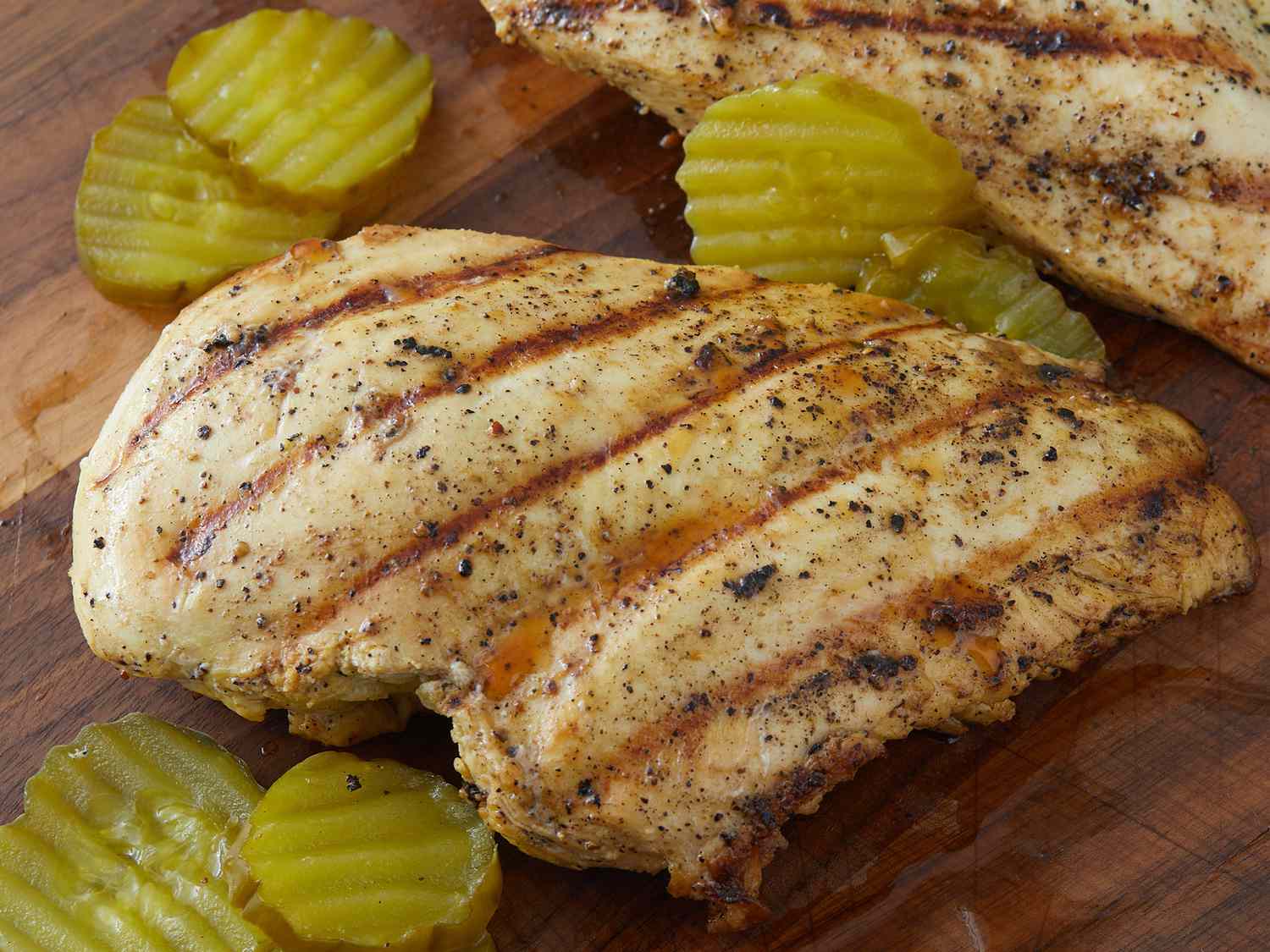
For optimal flavor and moisture, marinate boneless chicken breasts or tenders in pickle juice for 2 to 4 hours, while bone-in pieces like thighs or drumsticks benefit from 4 to 8 hours. Smaller cuts need at least 30 to 60 minutes, but avoid exceeding 24 hours to prevent the acetic acid from breaking down the meat proteins into a mushy texture.
The Science of Pickle Juice Marinating: Acid, Salt, and Protein Structure
Pickle juice is an exceptionally effective marinade because it operates as a dual-action system: a high-acid tenderizer and a wet brine. Standard commercial and homemade pickle brines consist primarily of water, vinegar (acetic acid), salt (sodium chloride), and aromatic botanicals such as dill, garlic, and mustard seed. Understanding how these chemical components interact with raw poultry ensures consistently tender, juicy results without compromising the structural integrity of the meat.
- Dual-Action Pickle Juice Marinade:
- Acetic Acid: Weakens protein bonds to allow flavor penetration
- Sodium Chloride: Denatures myosin, traps water inside muscle matrix
- Result: Juicy, Deeply Seasoned Chicken
The acetic acid in pickle juice lowers the pH level on the surface of the chicken muscle tissue. As the environment becomes acidic, the tightly bound protein strands begin to denature, or unwind. This structural relaxation allows the aromatic compounds from garlic, dill, and spices to penetrate deeper into the outer layers of the meat than a standard oil-based marinade could achieve.
Concurrently, the salt in the brine performs osmotic magic. Sodium and chloride ions diffuse into the chicken cells, causing the protein filaments—specifically myosin—to dissolve partially and form a gel-like matrix. This matrix traps water molecules within the cell walls, preventing the meat from drying out during high-heat cooking methods like frying or grilling. According to research on muscle food chemistry from the USDA Food Safety and Inspection Service, salt retention in meat proteins significantly reduces moisture loss during thermal processing.
However, balance is critical. Because vinegar contains a relatively high concentration of acid (typically 4% to 5% acetic acid before dilution), leaving chicken submerged for too long causes excessive protein degradation. Instead of remaining plump and firm, the muscle fibers turn stringy, chalky, or soft.
Recommended Marinating Times by Chicken Cut
The duration chicken should remain in pickle juice depends largely on the cut's thickness, surface-area-to-mass ratio, and whether skin and bones are present. Skin acts as a protective barrier that slows brine absorption, whereas boneless cuts absorb liquid rapidly.
- Marinating Timeline (Hours):
- Tenders: Optimal (1-2 hrs)
- Boneless Breasts: Optimal (2-4 hrs)
- Bone-in Cuts: Optimal (4-8 hrs)
- Whole Chicken: Optimal (8-12 hrs)
- Maximum Safe Limit: 24 hrs
Boneless, Skinless Breasts and Tenderloins
Boneless, skinless chicken breasts and tenderloins have exposed muscle tissue and thin profiles, making them highly susceptible to acid over-exposure.
- Minimum Time: 30 to 60 minutes for quick tenderizing.
- Optimal Time: 2 to 4 hours for balanced dill flavor and maximum juiciness.
- Maximum Time: 8 hours. Beyond this window, the edges become mushy.
Bone-In, Skin-On Thighs, Drumsticks, and Breasts
Dark meat cuts contain higher fat content and dense muscle structure, while skin slows acid penetration. These cuts require more time for the salt and flavor compounds to reach the center of the meat.
- Minimum Time: 2 hours.
- Optimal Time: 4 to 8 hours.
- Maximum Time: 16 to 24 hours.
Whole Chickens or Spatchcocked Poultry
When marinating an entire bird for roasting or smoked chicken, the ratio of brine to surface area is smaller, requiring extended soaking times.
- Minimum Time: 4 hours.
- Optimal Time: 8 to 12 hours (overnight).
- Maximum Time: 24 hours.
| Chicken Cut | Minimum Time | Optimal Marinating Window | Absolute Maximum Limit | Primary Risk of Over-Marinating |
|---|---|---|---|---|
| Chicken Tenders / Strips | 30 minutes | 1 to 2 hours | 4 hours | Meaty texture becomes mealy and disintegrates during cooking. |
| Boneless, Skinless Breasts | 1 hour | 2 to 4 hours | 8 hours | Surface layer turns spongy; meat loses natural bite. |
| Boneless, Skinless Thighs | 1.5 hours | 3 to 5 hours | 12 hours | Excess salt absorption creates an overly cure-like taste. |
| Bone-In, Skin-On Thighs/Legs | 2 hours | 4 to 8 hours | 24 hours | Skin becomes excessively soft and difficult to crisp. |
| Whole / Spatchcock Chicken | 4 hours | 8 to 12 hours | 24 hours | Deep tissue becomes soft near joints; outer skin degrades. |
Step-by-Step Guide to Marinating Chicken in Pickle Brine
To maximize tenderness and avoid safety pitfalls, follow a standardized preparation workflow.
Step 1: Strain and Balance the Brine
Pour the leftover pickle juice from your jar through a fine-mesh strainer to remove stray bits of garlic or floating spices if you prefer a smoother exterior coating. If using an exceptionally sour or pungent brine (such as extra-sour dill), dilute it slightly by mixing 3 parts pickle juice with 1 part water or buttermilk to moderate the acidity.
Step 2: Prepare and Trim the Meat
Pat the raw chicken dry with paper towels. Trim away excess surface fat, loose skin, or cartilage. For thick chicken breasts, consider butterflying them horizontally or pounding them to an even 1/2-inch thickness with a meat mallet. Uniform thickness ensures equal brine absorption and even cooking.
- Correct Brining Container Setup:
- Cover / Lid / Sealed Top
- Pickle Brine Level
- Raw Chicken Submerged
- Glass, Food-Grade Plastic, or Stainless Container
Step 3: Submerge and Seal
Place the chicken in a non-reactive container. Glass baking dishes, food-safe ceramic containers, stainless steel bowls, or heavy-duty zip-top plastic bags work best.
- Avoid reactive metals: Do not use aluminum, copper, or unlined cast-iron containers. The acetic acid reacts with reactive metals, leaching a metallic taste into the food and staining the cookware.
- Ensure the chicken is completely submerged. If using a sealable bag, press out all air so the liquid covers every surface.
Step 4: Refrigerate Immediately
Cover the container tightly with a lid or plastic wrap, or seal the zip-top bag completely. Place the container on the bottom shelf of your refrigerator, kept strictly at or below 40°F (4°C).
Step 5: Drain, Dry, and Rest Before Cooking
Once the target marinating time is reached, remove the chicken from the liquid. Discard the spent brine immediately. Place the chicken pieces on a paper-towel-lined plate and pat the surfaces thoroughly dry. Removing excess surface moisture is essential for achieving a crispy crust when frying or good sear marks when grilling. Allow the chicken to sit at room temperature for no more than 15 to 20 minutes before cooking to take off the chill.
Essential Food Safety Guidelines for Poultry Brining
Handling raw poultry combined with liquid marinades introduces specific cross-contamination and bacterial growth risks. Adheres to these food safety protocols established by public health agencies:
Strict Temperature Control
Bacteria grow rapidly in the "Danger Zone" between 40°F (4°C) and 140°F (60°C). Never marinate chicken on the kitchen counter or outdoors at room temperature. Cold temperatures slow bacterial multiplication while allowing the brine to penetrate safely.
Safe Disposal of Spent Marinade
Once raw chicken touches the pickle juice, the liquid is contaminated with pathogenic bacteria, including Salmonella and Campylobacter.
- Never reuse marinade as a dipping sauce or table condiment unless it has been brought to a rolling boil (212°F / 100°C) for at least 60 seconds.
- Never pour used brine over cooked chicken.
- Safely discard the used brine down the drain, rinsing the sink thoroughly with hot water and sanitizer afterward.
Target Cooking Temperatures
Marinating changes texture and moisture retention, but it does not pasteurize meat. Always verify internal doneness using a calibrated digital meat thermometer inserted into the thickest part of the cut:
- All Poultry (Breasts, Thighs, Wings, Ground): Must reach an internal temperature of 165°F (74°C) as mandated by the CDC Food Safety Guidelines.
Common Mistakes to Avoid When Using Pickle Juice
While pickle juice yields restaurant-quality chicken, several common execution errors can ruin the final dish.
| Pitfalls to Avoid | Description |
|---|---|
| ❌ Reactive Containers | Uses aluminum/copper (leaches metallic taste). |
| ❌ Over-Marinating | Leaves meat in acid > 24 hrs (mushy, stringy texture). |
| ❌ Over-Salting Dry Rub | Adds standard salt to rubs (meat becomes unpalatable). |
| ❌ Wet Surface Cooking | Fails to pat dry before cook (steams instead of sears). |
1. Over-Marinating Past the 24-Hour Mark
The most widespread mistake is leaving chicken in brine for a full day or longer under the assumption that more time equals more flavor. Acid continuously breaks down structural proteins. Past 24 hours, the surface of the meat turns to mush, and the cooked chicken develops a dry, stringy interior due to excessive denaturing.
2. Over-Salting the Final Dish
Commercial pickle brine contains high levels of sodium—often between 300 mg and 600 mg of sodium per fluid ounce. Because the salt penetrates deeply into the meat during marinating, using a standard salty dry rub or seasoning blend right before cooking will make the final dish unpalatably salty. Use salt-free seasoning blends, garlic powder, onion powder, paprika, and black pepper for your final rub.
3. Using Sweet Pickle Brine Without Temperature Adjustments
Bread-and-butter or sweet pickle juices contain high concentrations of added sugars (sucrose or high-fructose corn syrup). When exposed to direct heat on a grill or pan, sugar caramelizes rapidly and burns above 350°F (177°C). If marinating with sweet pickle juice:
- Lower your cooking temperature slightly.
- Use indirect heat methods on the grill.
- Monitor frying oil closely to avoid premature charring of the exterior coating.
4. Failing to Dry the Meat Surface
Placing wet, pickle-juice-soaked chicken directly into hot oil or onto a hot grill grate lowers the cooking surface temperature and creates steam. Steaming prevents the Maillard reaction (browning), resulting in rubbery skin or pale breading that slides off the meat. Always pat the exterior completely dry with paper towels prior to dredging or searing.
Cooking Techniques: Frying, Grilling, and Baking Pickle-Brined Chicken
Different culinary techniques leverage the structural changes caused by pickle juice in distinct ways.
- Pickle Brined Chicken:
- Deep Frying:
- Dredge in buttermilk
- Fry at 350°F (177°C)
- Southern style crust
- Outdoor Grilling:
- Pat ultra-dry
- Oil grates well
- Prevents sticking
- Oven Roasting:
- Bake at high heat (400°F / 204°C)
- Crisp skin, moist meat
- Deep Frying:
1. Southern-Style Deep Frying (The Classic Method)
Pickle-brined fried chicken is popular for replicating famous fast-food chicken sandwiches.
- Preparation: Drain marinated boneless breasts or tenders, pat dry, and soak briefly in whole buttermilk mixed with egg.
- Dredge: Combine seasoned flour (paprika, black pepper, garlic powder, cayenne, cornstarch) and press the chicken into the flour mixture until fully coated.
- Frying: Fry in neutral oil (peanut, canola, or vegetable) maintained at 350°F to 375°F (177°C to 190°C) until golden brown and the internal temperature hits 165°F (74°C). The salt-retaining properties of the brine keep the interior meat exceptionally juicy against the crisp fried coating.
2. High-Heat Outdoor Grilling
Grilling pickle-marinated chicken creates smoky, charred flavor notes that complement the tang of dill and vinegar.
- Preparation: Remove chicken from brine, dry thoroughly, and rub light vegetable oil over the exterior.
- Process: Preheat the grill to medium-high heat (375°F to 400°F / 190°C to 204°C). Clean and oil the grates. Grill chicken breasts for 5 to 7 minutes per side, or bone-in thighs for 10 to 12 minutes per side over direct heat, turning once.
- Result: The acid-treated surface sears quickly, locking in the trapped water content.
3. Oven Baking and Roasting
Baking provides a lighter, lower-fat cooking option while maintaining deep flavor integration.
- Preparation: Place marinated chicken pieces on a wire rack set inside a rimmed baking sheet. Elevating the meat allows hot air to circulate completely around it.
- Process: Bake at 400°F (204°C) for 20 to 30 minutes (depending on cut thickness). High oven heat crisps the exterior while preventing the acid-tenderized interior from losing structural moisture.
Frequently Asked Questions
Can you marinate chicken in pickle juice for 24 hours?
Yes, but only for large, bone-in, skin-on cuts or whole chickens. Boneless breasts and small tenders should never exceed 8 to 12 hours, as extended exposure to the acetic acid breaks down muscle fibers, causing the surface layer to become soft, mealy, and unappealing.
Does pickle juice make chicken taste strongly of pickles?
No. When marinated for the recommended time (2 to 4 hours), chicken does not taste like a dill pickle. Instead, the brine leaves behind a subtle, savory tang, light garlic and herbal notes, and a deep, well-salted umami profile. The primary noticeable effect is exceptional juiciness rather than a sour flavor.
Should you rinse chicken after marinating in pickle juice?
Rinsing chicken under tap water is generally not recommended by food safety authorities because splashing water spreads bacteria across sinks, counters, and utensils. Instead of rinsing, simply drain the liquid and thoroughly pat the chicken surfaces dry using disposable paper towels before cooking.
Can you mix pickle brine with milk or buttermilk?
Yes. Mixing equal parts dill pickle juice and buttermilk creates a traditional Southern marinade base. The calcium and lactic acid in buttermilk gently soften meat fibers, while the acetic acid and salt in pickle juice infuse deep flavor and moisture. This combination is ideal for fried chicken tenders and cutlets.
What type of pickle juice works best for marinating?
Standard dill pickle brine (specifically dill or kosher dill) works best due to its balanced ratio of vinegar, salt, garlic, and herbs. Claussen, Vlasic, or homemade dill pickle juices are popular choices. Avoid high-sugar varieties like sweet gherkins or bread-and-butter pickles unless you intend to bake or roast at lower temperatures, as the sugars easily burn over direct heat.
Next Steps for Success
To get started with pickle-brined chicken:
- Save Your Leftover Brine: Rather than pouring empty pickle jar liquid down the drain, strain it into a clean jar and store it in the refrigerator for up to 3 weeks.
- Match Cut to Duration: Set a kitchen timer based on your specific cut: 2 to 4 hours for boneless breasts, 4 to 8 hours for bone-in thighs.
- Adjust Your Seasoning: Skip the salt in your pre-cook rub. Stick to unsalted spices like cracked black pepper, smoked paprika, garlic powder, and onion powder to prevent over-salting.
- Pat Dry and Cook High: Always pat the surface completely dry before cooking, and verify doneness using an instant-read thermometer pushed into the deepest section of the meat until it registers 165°F (74°C).
EDITORIAL CATEGORY METADATA: