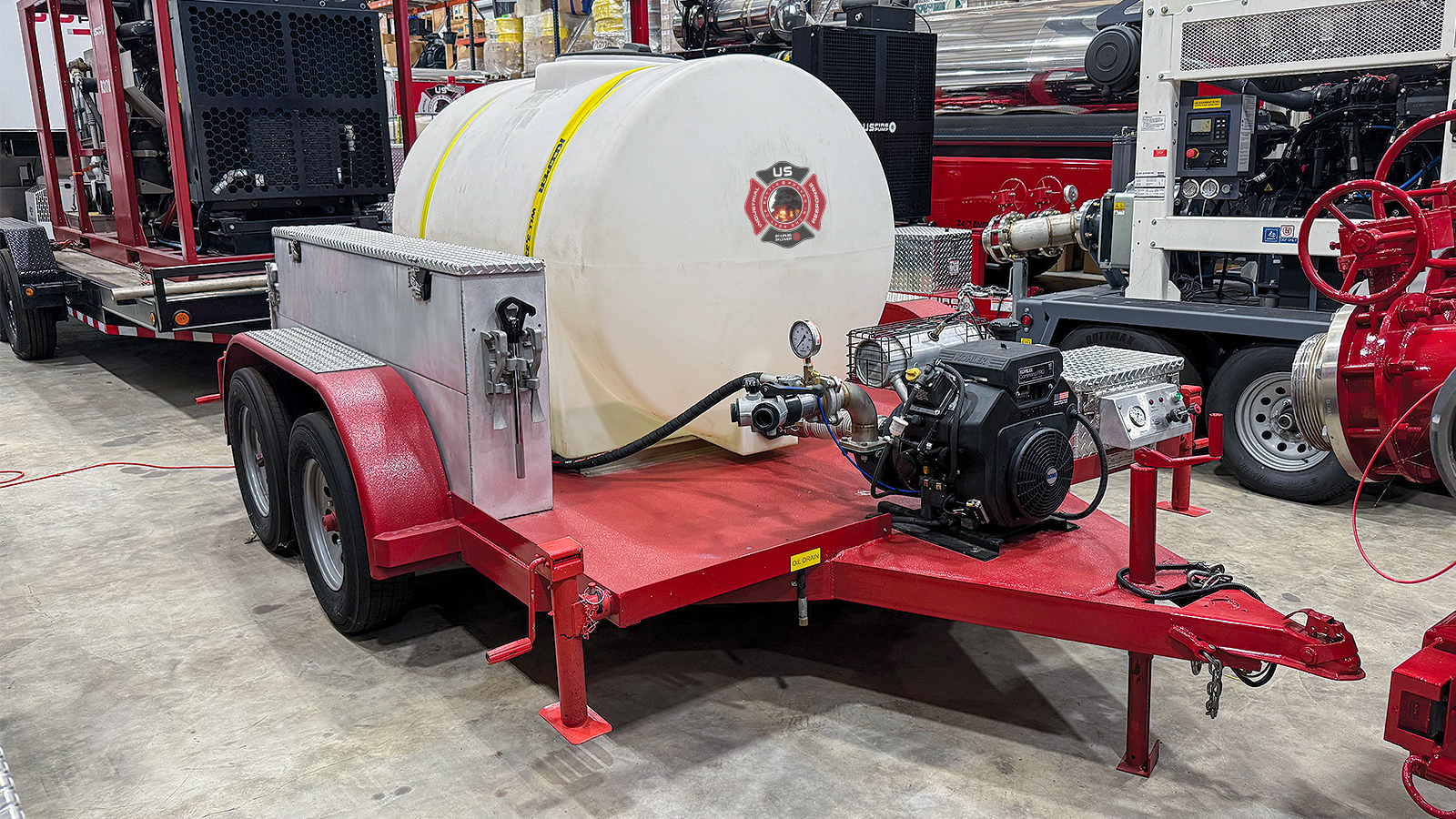
A line of fire trailer is a specialized mobile training unit designed to provide hands-on, high-impact safety demonstrations regarding industrial hazards. It allows workers to visualize and experience "line of fire" risks—situations where a person is positioned in the path of moving objects, released energy, or falling debris—within a controlled, educational environment.
In industrial sectors such as oil and gas, construction, and heavy logistics, the "line of fire" remains one of the leading causes of workplace fatalities and severe injuries. Despite rigorous classroom training, the abstract nature of stored energy and mechanical tension often fails to resonate with personnel until a near-miss occurs. As of 2026, the line of fire trailer has become a cornerstone of proactive safety cultures, bridging the gap between theoretical knowledge and practical field awareness. These trailers are not merely transport vehicles; they are sophisticated, mobile laboratories equipped with simulators that recreate the physics of workplace accidents without the actual danger.
The Evolution of Line of Fire Training
Traditionally, safety training relied heavily on manuals, slide presentations, and instructional videos. While these methods provide a foundational understanding of safety protocols, they often struggle to convey the speed and violence of an energy release. The concept of the line of fire trailer emerged from the need for "tactile learning." Psychologically, humans are better at retaining information when it is associated with a physical experience or a visual spectacle that triggers a heightened state of awareness.
By 2026, these trailers have evolved to include integrated digital sensors and augmented reality (AR) interfaces. A modern line of fire trailer typically features several stations, each dedicated to a specific type of hazard. For example, a station might demonstrate the lethal force of a snapped synthetic winch line or the crushing power of a hydraulic failure. By bringing these demonstrations directly to the job site, companies eliminate the logistical hurdles of sending crews to remote training centers, ensuring that safety education is both frequent and relevant to the specific equipment used on-site.
Core Hazards Demonstrated in a Line of Fire Trailer
To understand why these trailers are essential, one must understand the three primary categories of line of fire hazards they are designed to mitigate. Each station within the trailer is meticulously calibrated to represent these physical realities.
1. Stored Energy (The "Invisible" Threat)
Stored energy is perhaps the most dangerous hazard because it is often silent and invisible. Line of fire trailers utilize pressurized systems to show how a small pinhole leak in a hydraulic line can result in "high-pressure injection" injuries, where fluid is forced under the skin. They also demonstrate mechanical stored energy, such as compressed springs or tensioned cables. When these systems fail, the release is instantaneous, leaving no time for a worker to react if they are standing in the wrong spot.
2. Moving Objects and Impact
This category involves items that are intentionally or unintentionally set in motion. In a trailer setting, this might be demonstrated through a "drop test" mechanism. Trainees watch as a relatively light tool dropped from a height generates enough force to shatter a hard hat or penetrate a simulated limb. This visual evidence reinforces the necessity of "drop zones" and the use of tethered tools when working at heights.
3. Striking and Pinch Points
Trailers often feature mock-ups of rotating machinery, pulleys, and sliding gates. These demonstrations highlight how easily a gloved hand or loose clothing can be drawn into a "pinch point." By using mannequins or simulated biological materials (like high-density foam or fruit), the trailer provides a visceral look at the skeletal and soft-tissue damage that occurs in seconds when a worker enters a machine's line of fire.
Why the Line of Fire Trailer Matters in 2026
The significance of these trailers extends beyond simple education; they are a strategic investment in risk management and corporate liability reduction. As insurance premiums for high-risk industries continue to climb, demonstrating a "best-in-class" safety program is a financial necessity.
Breaking "Normalized Deviance"
One of the greatest enemies of industrial safety is "normalized deviance"—the tendency of workers to ignore safety rules because they have performed a dangerous task many times without an accident. The line of fire trailer shatters this complacency. When a veteran worker sees a steel cable whip through a protective shield during a controlled demonstration, it resets their perception of risk. It transforms a "rule" into a "reality."
Enhancing Experience Modification Rates (EMR)
For contractors, the EMR is a critical number that affects their ability to bid on major projects. A high EMR indicates a history of accidents, while a low EMR suggests a safe operation. By implementing mobile training trailers, companies can document proactive engagement with their workforce, leading to fewer recordable incidents and, consequently, lower insurance costs and higher competitiveness in the marketplace.
Compliance with Modern Standards
In 2026, regulatory bodies like OSHA (Occupational Safety and Health Administration) and global equivalents place a higher premium on "demonstrated competency" rather than just "documented training." The line of fire trailer provides a platform for workers to demonstrate that they can identify hazards in a real-world configuration, meeting the rigorous standards of modern safety audits.
Key Components and Technical Specifications
A high-quality line of fire trailer is a marvel of engineering, balanced between being a rugged piece of equipment and a sensitive educational tool. Below is a breakdown of the typical features found in a professional-grade unit.
| Component | Description | Safety Purpose |
|---|---|---|
| Pneumatic Simulator | A system that mimics sudden air pressure release. | Demonstrates the danger of unsecured hoses (the "whipping" effect). |
| Hydraulic Injection Block | A transparent box showing high-pressure fluid streams. | Visualizes how fluid can penetrate skin and cause internal damage. |
| Gravity Drop Tower | A calibrated rail for dropping weights onto various objects. | Proves the relationship between height, mass, and impact force. |
| Spring Tension Rig | A heavy-duty coil spring with a quick-release trigger. | Shows the violence of mechanical energy release in valves or brakes. |
| Pinch Point Mock-up | Gear and belt assemblies with guarded "danger zones." | Educates on the necessity of machine guarding and lockout/tagout. |
| AR/Digital Integration | Screens that overlay "danger heatmaps" on physical gear. | Helps workers visualize the "invisible" zones where energy travels. |
Integrating the Trailer into a Safety Culture
Simply having a trailer show up on a job site is not enough. To be effective, the "line of fire" curriculum must be integrated into the broader Safety Management System (SMS). This usually involves a three-tier approach:
- The Pre-Work Assessment: Before a shift begins, workers are encouraged to use the "trailer mindset" during their Job Safety Analysis (JSA). They ask themselves: "If this hose fails, where does the energy go? Am I standing there?"
- The Tactical Demonstration: During the trailer session, trainers should use equipment that matches what the workers use daily. If the crew is working with 2-inch high-pressure lines, the trailer should demonstrate hazards specifically related to that diameter and pressure rating.
- The Post-Training Validation: Following the demonstration, safety leads should conduct field observations to ensure that the "out of the line of fire" positioning is being practiced. This creates a feedback loop that reinforces the training.
Common Misconceptions About Line of Fire Hazards
Despite the prevalence of safety training, several myths persist in the industrial workforce. The line of fire trailer is specifically designed to debunk these misconceptions through physical proof.
- "I'm fast enough to move": Many workers believe their reflexes can save them. Trailers use high-speed cameras or synchronized timers to show that energy release (like a snapping cable) occurs in milliseconds—far faster than human reaction time (typically 200-250 milliseconds).
- "My PPE will protect me": While Personal Protective Equipment is essential, it is the last line of defense. A trailer demonstration can show a dropped tool piercing a "safety-rated" boot, emphasizing that staying out of the line of fire is more important than relying on the gear.
- "It’s only a hazard if the machine is on": Stored energy remains long after a machine is shut down. Trailers demonstrate "residual" pressure in lines or tension in springs that can cause injury during maintenance, highlighting the importance of de-energization.
Frequently Asked Questions
What is the difference between a "pinch point" and "line of fire"?
A pinch point is a specific type of line of fire hazard where two or more moving parts come together, or a moving part meets a stationary one, potentially trapping a limb. "Line of fire" is a broader term that encompasses pinch points but also includes being in the path of falling objects, released pressure, or projectiles.
How often should employees go through a line of fire trailer training?
In most high-risk industries, an annual refresher is considered the standard. However, it is highly recommended to bring the trailer on-site whenever a new project phase begins or when new equipment is introduced that changes the mechanical landscape of the job site.
Can these trailers be customized for specific industries?
Yes. Professional safety firms often build modular trailers. For example, a trailer for a logging company will focus more on tensioned cables and falling timber hazards, while a trailer for a chemical plant will prioritize high-pressure valve failures and corrosive spray patterns.
Is the training in a line of fire trailer OSHA-compliant?
While OSHA does not specifically mandate the use of a "trailer," the training provided inside one directly addresses multiple OSHA standards, including Machine Guarding (29 CFR 1910.212), Lockout/Tagout (29 CFR 1910.147), and PPE requirements. It serves as excellent documentation of an employer's effort to provide a safe workplace.
What is the typical duration of a training session?
A comprehensive walkthrough of a line of fire trailer usually takes between 60 to 90 minutes. This allows for several live demonstrations, a Q&A session, and a hands-on component where workers practice identifying hazard zones on the simulators.
Implementing a "Line of Fire" Strategy
To maximize the value of a line of fire trailer, organizations should move toward a "Total Hazard Recognition" model. This involves not only recognizing where the danger is but also engineering the workplace to eliminate the need for a human to be in that zone in the first place.
When scheduling a trailer visit, ensure that the site leadership is present. When workers see management taking the "line of fire" seriously, it reinforces the message that safety is a core value rather than a box-ticking exercise. After the trailer leaves, the goal is for every worker to see the world differently—viewing every pressurized hose, every suspended load, and every rotating shaft not just as a tool, but as a potential path of energy that they must respect and avoid.