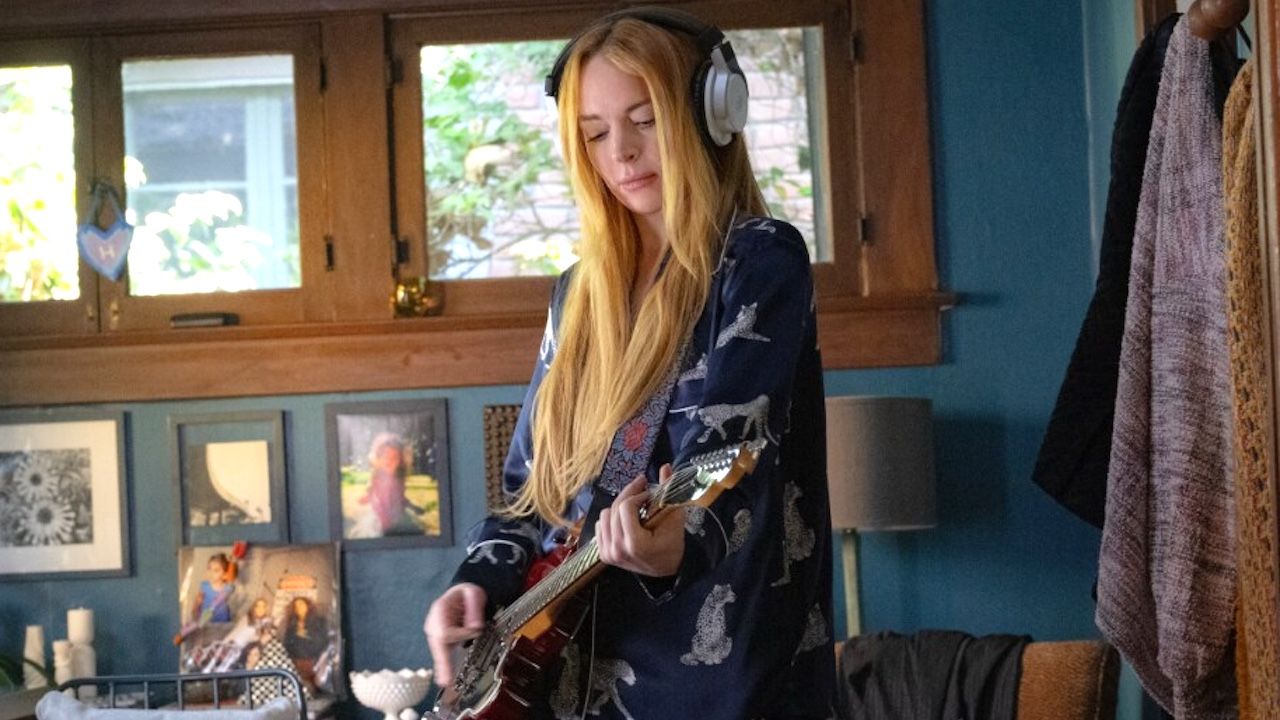
Lindsay Lohan did not play the lead guitar parts heard on the Freaky Friday soundtrack, though she learned to play the instrument for the role. While Lohan practiced extensively to ensure her hand movements and chord transitions looked authentic on screen, the professional solos and studio recordings were performed by seasoned session musicians.
The 2003 remake of Freaky Friday remains a touchstone of millennial cinema, and as we look back from 2026, the film’s musical authenticity continues to be a point of discussion. The story of Anna Coleman and her band, Pink Slip, required a level of musical "believability" that set it apart from many other teen comedies of its era. To achieve this, the production team didn't just rely on camera tricks; they put the actors through a rigorous "rock star" training program.
The Training Process: How Lindsay Lohan Prepared for the Role
At the time of filming in late 2002 and early 2003, Lindsay Lohan was a rising star with a burgeoning interest in music. Director Mark Waters was adamant that the musical sequences in Freaky Friday should not look "faked." This led to Lohan undergoing several months of intensive guitar lessons.
The goal of this training was not necessarily to turn Lohan into a virtuoso capable of recording a studio album, but to ensure her "fretting" (the movement of the left hand on the neck of the guitar) and her "strumming" (the right-hand rhythm) matched the audio track perfectly. Lohan worked with professional instructors to master the specific fingerings for the songs "Take Me Away" and "Ultimate."
The psychological aspect of her training was equally important. To play Anna Coleman, Lohan had to adopt the physical language of a lead guitarist—the stance, the way one holds a pick, and the aggressive energy required for a Battle of the Bands performance. By the time the cameras rolled, Lohan was capable of playing the basic rhythm chords of the songs, which allowed the director to use wide shots and long takes without breaking the illusion.
Behind the Music: The Professional Guitarists of Freaky Friday
While Lohan’s physical performance was grounded in real training, the audio the audience hears is a different story. In the world of film production, even when an actor is a capable musician, the "hero" audio used for the final cut is almost always recorded by professional session players in a controlled studio environment. This ensures the highest audio quality and allows for complex arrangements that a novice could not execute.
The iconic guitar solo in "Take Me Away," which Anna’s character performs from behind the curtain while her mother (in Anna’s body) mimes on stage, was performed by a professional session guitarist. Historically, several sources have pointed toward musicians like Amir Derakh (of Orgy and Julien-K) or studio pros hired by Disney’s music department to lay down the tracks for Pink Slip.
The song "Ultimate," which serves as the film’s emotional and musical climax, followed a similar production path. The track was produced to sound like a high-energy pop-punk anthem of the early 2000s. While Lohan provided the vocals—showcasing the voice that would later launch her music career with the 2004 album Speak—the intricate layering of the guitars was the work of experts.
Visual Authenticity vs. Audio Production in Musical Cinema
The reason many fans still ask if Lohan "actually" played is a testament to how well the "musical miming" was executed. In cinema, there is a significant difference between "playing for the camera" and "playing for the track."
- Miming Accuracy: Lohan’s ability to hit the correct power chords during the chorus of "Take Me Away" is technically accurate. If you were to mute the film and watch her hands, she is indeed in the correct positions for the song's key.
- The Solo Discrepancy: The most obvious giveaway that the audio is professional occurs during the high-speed solos. While Lohan’s hand movements are energetic and stylistically correct, the synchronization of individual notes in a fast-paced solo is nearly impossible for a beginner to mime perfectly without years of experience.
- The "Pink Slip" Dynamic: The band members in the film—played by Christina Vidal and Haley Hudson—also underwent training. Vidal, who played the lead singer and guitarist when Anna wasn't available, was already an accomplished performer. This collective effort made Pink Slip feel like a real entity rather than a group of actors holding props.
Comparing the On-Screen Performance vs. Studio Reality
To better understand the division of labor between the actors and the musicians, the following table breaks down the musical elements of the film's most famous scenes.
| Scene / Song | On-Screen Performer | Physical Authenticity | Actual Audio Source |
|---|---|---|---|
| "Take Me Away" (Garage) | Lindsay Lohan | High (Rhythm Chords) | Session Musicians |
| "Take Me Away" (Solo) | Jamie Lee Curtis (on stage) | High (Stylistic Miming) | Session Musicians |
| "Take Me Away" (Behind Curtain) | Lindsay Lohan | Very High (Fingering) | Session Musicians |
| "Ultimate" (Battle of the Bands) | Lindsay Lohan | High (Vocals & Rhythm) | Lohan (Vocals) / Pros (Guitar) |
| "Happy Together" (Ending) | Cast | Moderate | Studio Vocalists/Cast |
Jamie Lee Curtis and the "Behind the Stage" Solo
One of the most memorable moments in Freaky Friday is the solo during "Take Me Away." In the narrative, Tess (in Anna's body) is failing to play the guitar on stage, so Anna (in Tess's body) plays the solo from the wings.
Interestingly, Jamie Lee Curtis also had to learn how to handle the guitar. While her character is supposed to be "bad" at playing for most of the scene, the final sequence where she "shreds" required Curtis to learn the specific motions. Like Lohan, Curtis was praised for her dedication to the role's physical requirements. The production used a 1962 reissue Fender Stratocaster for these scenes, a choice that resonated with guitar enthusiasts for its classic "rock" aesthetic.
The juxtaposition of the two actresses—one playing a teenager in an adult's body and the other an adult in a teenager's body—extended to their musical training. They had to learn not just how to play, but how to play like each other would play.
The Cultural Impact of Pink Slip and the 2025/2026 Revival
As of 2026, Freaky Friday has seen a massive resurgence in popularity, largely due to the release of the sequel, Freakier Friday, in late 2025. This sequel reunited Lohan and Curtis, and once again, the "Pink Slip" band took center stage.
The question of whether Lohan actually plays the guitar has become relevant again as fans compare her 2003 performance to her contemporary appearances. In the years since the original film, Lohan has maintained a connection to music, and her comfort with the instrument in the 2025 sequel shows a much higher level of natural proficiency. This "full circle" moment has led many to revisit the original 2003 footage with a more analytical eye.
The legacy of "Take Me Away" persists in pop culture. It is frequently cited as one of the best "fake movie songs" of all time. The fact that the production team took the time to ensure Lohan and her castmates actually knew the chords is a major reason why the movie doesn't feel dated in its musical execution, even 23 years after its initial release.
FAQ: Common Questions About the Music in Freaky Friday
Did Lindsay Lohan sing her own songs in Freaky Friday?
Yes, Lindsay Lohan performed her own vocals for the film. Her performance of "Ultimate" was a significant factor in her signing a recording contract with Casablanca Records shortly after the film's success. The vocals heard in the movie and on the soundtrack are authentically hers.
What kind of guitar did Lindsay Lohan play in the movie?
In the most famous scenes, Anna Coleman plays a 1962 reissue Fender Stratocaster in a sunburst finish. This guitar became iconic among fans of the movie. For the garage rehearsals, she is also seen using a black Gibson Les Paul Studio, which fits the "punk-rock" aesthetic of the band Pink Slip.
Did Jamie Lee Curtis actually play the solo behind the stage?
No. While Jamie Lee Curtis learned the movements to make the performance look realistic, the audio of the solo was recorded by a professional session guitarist. Curtis has joked in interviews that while she can look like a rock star, she doesn't actually have the technical skills to pull off a solo of that magnitude.
Who wrote the songs for Pink Slip?
The songs "Take Me Away" and "Ultimate" were written by professional songwriters. "Take Me Away" was co-written by Scott Bradley, Karen Disher, and others, while "Ultimate" was written by Robert Palmer and Christina Vidal. The tracks were specifically designed to capture the early 2000s pop-punk sound popularized by bands like Avril Lavigne and Paramore.
Can Lindsay Lohan play guitar in real life now?
Lindsay Lohan can play basic rhythm guitar and has a fundamental understanding of the instrument. While she has focused more on acting and vocals throughout her career, the foundation she built during her Freaky Friday training has allowed her to pick up the instrument for various roles and personal projects over the years.
Practical Recommendation: Exploring the Pink Slip Legacy
If you are a fan of the musical elements of Freaky Friday, the best way to appreciate the work put into the film is to watch the "Battle of the Bands" sequence with the audio muted. You will notice that Lohan’s hand movements—specifically the shifting of power chords—align perfectly with the rhythm of the song.
For those interested in the technical side of the film's music, researching the work of the late 90s and early 2000s Disney music supervisors provides great insight into how these "teen rock" soundtracks were manufactured to such high standards. Additionally, with the 2025 sequel Freakier Friday now available on major streaming platforms as of early 2026, fans can see a more mature Pink Slip, offering a fascinating comparison of musical performances across two decades.