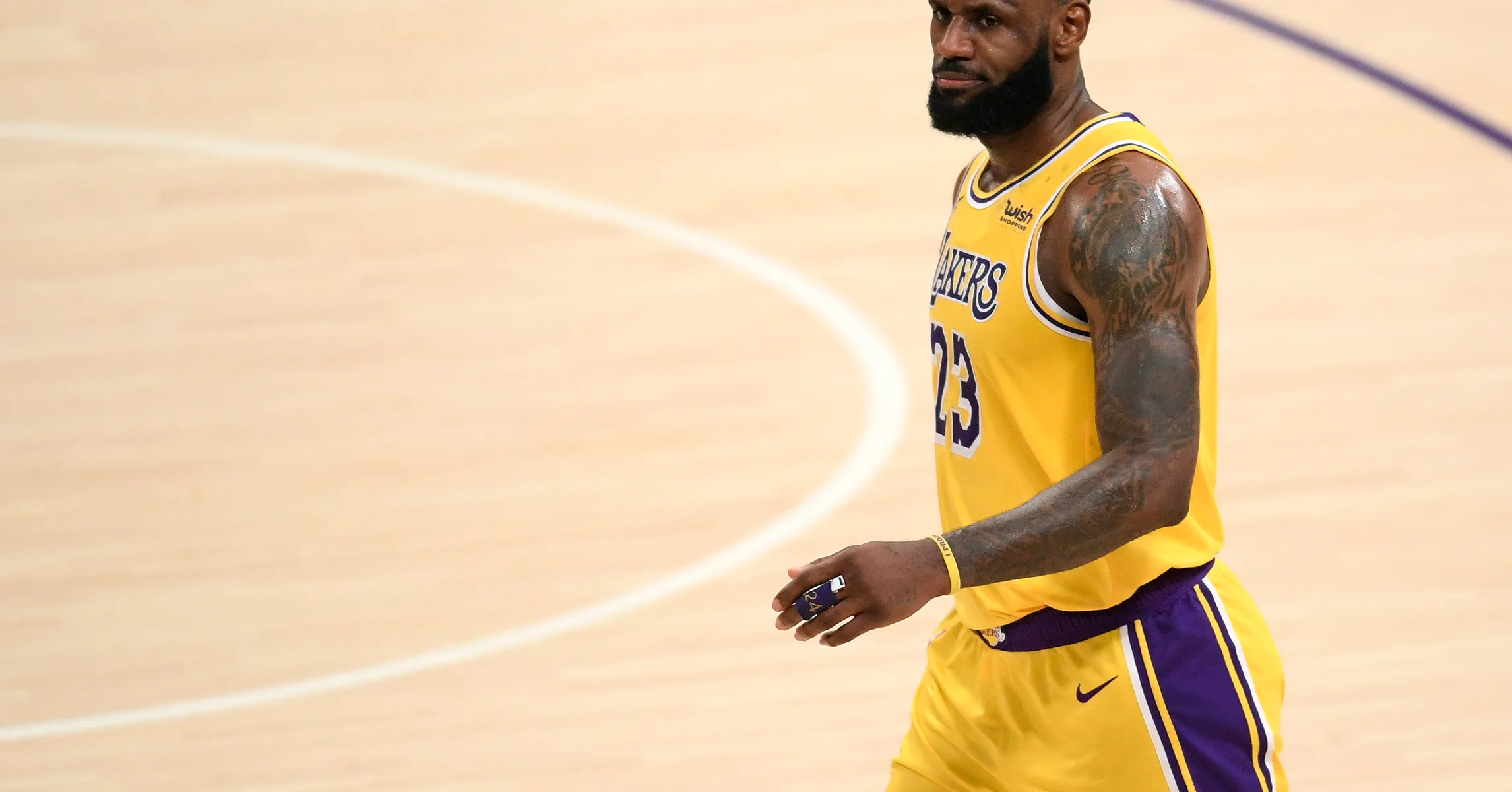
In 2026, LeBron James continues to command an annual income exceeding $128 million, a figure derived from a roughly $52.6 million NBA player option salary and approximately $75 million to $85 million in off-court endorsements and business ventures. This total solidifies his position as one of the highest-paid athletes in history, leveraging a "lifetime" Nike partnership and a diversified portfolio of equity-based brand deals.
While most athletes see their earning potential peak in their late 20s, LeBron James has defied the traditional aging curve both on the court and in the boardroom. As we evaluate his financial standing in 2026, the complexity of his earnings has shifted from simple cash-for-service contracts to sophisticated equity plays and ownership stakes. To understand the scale of his annual income, one must look past the bi-weekly NBA paycheck and into the mechanics of global brand architecture.
The Anatomy of a Billion-Dollar Annual Income
The financial profile of LeBron James in 2026 is built on three distinct pillars: his NBA salary, his traditional endorsement contracts, and the dividends or valuations of his private business interests. Unlike the early stages of his career, where the NBA salary represented the majority of his liquid wealth, his off-court "passive" and semi-active income now dwarfs his professional basketball wages.
This "LeBron James Economy" is a blueprint for the modern "player-empowerment" era. By 2026, the synergy between his on-court performance and his off-court ventures has created a feedback loop: his longevity in the NBA maintains his relevance for global brands, while his business success provides him with the leverage to dictate terms in his athletic career. His ability to maintain a top-tier salary while being one of the oldest active players in the league is a feat of both physical maintenance and strategic contract negotiation.
NBA Contract Dynamics: On-Court Compensation in 2026
For the 2025-2026 NBA season, LeBron James holds a player option worth approximately $52,627,153. This figure is the result of a two-year extension signed earlier in his tenure with the Los Angeles Lakers. Even as the league introduces stricter "apron" rules under the latest Collective Bargaining Agreement (CBA) to curb high-spending teams, James remains a "max-contract" player due to his sustained All-NBA level of play.
Understanding the actual "take-home" of this $52.6 million is essential for an accurate earnings report:
- Escrow Requirements: Under the NBA CBA, 10% of a player's gross salary is typically held in escrow to ensure a 50/50 split of Basketball Related Income (BRI) between owners and players.
- Taxation: Playing in California subjects James to the highest state income tax in the U.S. (13.3%), in addition to federal taxes and the "jock tax" paid to other states where he competes.
- Agent Fees: Standard agency fees for NBA contracts are capped at 4%, though James’s unique relationship with Klutch Sports Group—which he helped catalyze—often keeps these costs strategically aligned with his broader brand goals.
Despite these deductions, his on-court earnings provide the liquid capital necessary to fund larger private equity investments that characterize his broader financial strategy.
The Nike Partnership: A Lifetime of Passive and Active Income
The cornerstone of LeBron James's annual endorsement earnings is his lifetime deal with Nike, signed in late 2015. While the specific annual payout is not publicly disclosed in Nike's SEC filings, industry analysts and financial reports estimate the value at upwards of $30 million to $32 million annually in 2026.
This partnership is unique because it functions as a sub-brand within Nike, similar to the Jordan Brand, though it has not yet reached the same level of independent retail autonomy. The income includes:
- Base Retainer: A guaranteed annual sum paid for his association and likeness.
- Royalty Payments: A percentage of sales from the "LeBron" signature line of footwear and apparel.
- Marketing Bonuses: Incentives tied to specific milestones or global tour appearances.
By 2026, the "LeBron" brand has expanded its reach into "retro" markets, where older shoe models (like the LeBron 7 or 8) are re-released to a new generation of sneaker enthusiasts. This creates a secondary stream of royalty income that persists regardless of his active status on the court.
Diversified Endorsement Portfolios: Beyond the Apparel Giant
Beyond Nike, James’s endorsement portfolio in 2026 is a "who’s who" of blue-chip corporations. His strategy has shifted away from short-term promotional deals toward long-term partnerships that often include an equity component.
Key Partnerships and Estimated Values
| Partner | Category | Estimated Annual Value | Primary Objective |
|---|---|---|---|
| Nike | Apparel/Footwear | $30,000,000+ | Global brand identity and retail royalties. |
| PepsiCo (MTN DEW) | Beverage | $10,000,000 | Multi-platform marketing and lifestyle branding. |
| AT&T | Telecommunications | $8,000,000 | Integration with 5G technology and media delivery. |
| Beats by Dre (Apple) | Electronics | $6,000,000 | High-end audio and cultural lifestyle association. |
| Crypto.com | Fintech/Web3 | $7,000,000 | Community impact initiatives and digital assets. |
| DraftKings | Sports Gaming | $5,000,000 | Ambassador role in the expanding legal betting market. |
The transition from Coca-Cola to PepsiCo several years ago marked a significant shift in his commercial strategy, allowing for more integrated marketing across food and snack categories. Furthermore, his partnership with DraftKings, which intensified in the mid-2020s, reflects the NBA's evolving stance on sports betting and James's ability to capitalize on emerging multi-billion dollar industries.
The Ownership Shift: Turning Endorsements into Equity
What truly sets LeBron James's 2026 earnings apart is his role as a business owner. He has famously stated his desire to own an NBA team, and his current financial moves are geared toward that "liquidity event."
The SpringHill Company
As a co-founder of The SpringHill Company, James earns both a salary as an executive and a share of profits. The company, valued at approximately $725 million after a minority stake sale in 2021 to investors including Nike and Epic Games, serves as a production powerhouse for films (like Space Jam: A New Legacy), documentaries, and the "Uninterrupted" athlete empowerment platform. In 2026, this entity contributes significantly to his annual wealth through production fees and content licensing.
Fenway Sports Group (FSG)
James is a partner in Fenway Sports Group, which owns the Boston Red Sox, Liverpool FC, and the Pittsburgh Penguins. As these franchises increase in value and generate annual revenue, James receives a proportional share of the distributions. His stake in FSG is a critical component of his "endorsement" earnings because he often acts as a global ambassador for these teams, blending his roles as owner and influencer.
Financial Management and the "Rich Paul" Effect
The management of $130 million in annual income requires a sophisticated family office structure. James’s financial affairs are handled with a focus on capital preservation and aggressive growth in private equity. His inner circle—composed of Maverick Carter, Rich Paul, and Randy Mims—has pioneered the "LRMR" management model, which prioritizes internal control over external agency influence.
In 2026, James's wealth management strategy also includes significant tax mitigation through charitable giving. The LeBron James Family Foundation and the "I PROMISE" School in Akron, Ohio, are not just philanthropic endeavors but are central to his brand's "Social Impact" value. This philanthropic "halo" increases his attractiveness to corporate partners who are increasingly focused on Environmental, Social, and Governance (ESG) criteria.
Comparison of Earnings: 2016 vs. 2026
To understand the trajectory, it is helpful to compare his earnings from a decade ago to his 2026 status.
| Earnings Category | 2016 (Estimated) | 2026 (Projected) | Growth Factor |
|---|---|---|---|
| NBA Salary | $23.2 Million | $52.6 Million | 2.26x |
| Endorsements | $54 Million | $80 Million | 1.48x |
| Equity/Investments | Minimal/Private | $15 Million+ (Distributions) | N/A |
| Total Annual | $77.2 Million | $147.6 Million | 1.91x |
Note: 2026 figures include conservative estimates of investment distributions and the full value of the NBA player option.
Frequently Asked Questions
Does LeBron James earn more from Nike than his NBA salary?
In 2026, the gap has narrowed due to the massive increase in NBA "supermax" salaries, but when factoring in royalties and the "lifetime" nature of the deal, his total compensation from Nike often rivals or exceeds his net on-court take-home pay. While the base retainer may be lower than $52 million, the cumulative brand value and secondary royalties make Nike his most consistent financial engine.
How do his earnings compare to Michael Jordan in 2026?
While LeBron James has higher active "annual earnings" from a combination of salary and endorsements, Michael Jordan’s annual income from the Jordan Brand (a division of Nike) typically remains higher due to the sheer volume of the Jordan Brand’s multi-billion dollar annual revenue. Jordan’s royalties are estimated to exceed $200 million annually, surpassing James’s current annual total.
Will his retirement in the near future affect his endorsement earnings?
Historically, "icon" athletes like Michael Jordan and David Beckham have seen their endorsement earnings remain stable or even increase post-retirement. In 2026, even if James considers retirement, his "lifetime" deals and ownership stakes in FSG and SpringHill are designed to provide a "permanent" income stream that is not dependent on active jersey sales or box scores.
What is the impact of the "I PROMISE" School on his finances?
The "I PROMISE" School is primarily funded through the LeBron James Family Foundation in partnership with the Akron Public School system. While it is a significant charitable expense, it enhances James’s brand equity, making him a more valuable partner for corporations looking to align with social causes, thus indirectly supporting his high endorsement fees.
Does he own a percentage of the teams he endorses?
James typically does not own stakes in the specific brands he endorses (like AT&T or PepsiCo) as part of a standard contract, but he frequently negotiates equity in smaller, high-growth companies. However, through Fenway Sports Group, he does have ownership in major sports franchises, which is a departure from the traditional "paid spokesperson" model.
Strategic Observation for Investors and Fans
For those tracking the intersection of sports and high finance, LeBron James represents the transition of the athlete from a "laborer" to a "capitalist." His 2026 earnings are a testament to the power of brand longevity and equity over cash. The most important takeaway for any observer is that James no longer relies on the "next contract" for financial security; he has built a self-sustaining ecosystem where his past achievements continue to fund his future ownership ambitions.
As he nears the eventual conclusion of his playing career, his financial focus will likely pivot entirely toward acquiring a majority stake in an NBA expansion team, likely in Las Vegas. His $130M+ annual earnings in 2026 serve as the "down payment" for that ultimate goal, proving that his career in the NBA was merely the marketing campaign for his career as a global sports mogul.