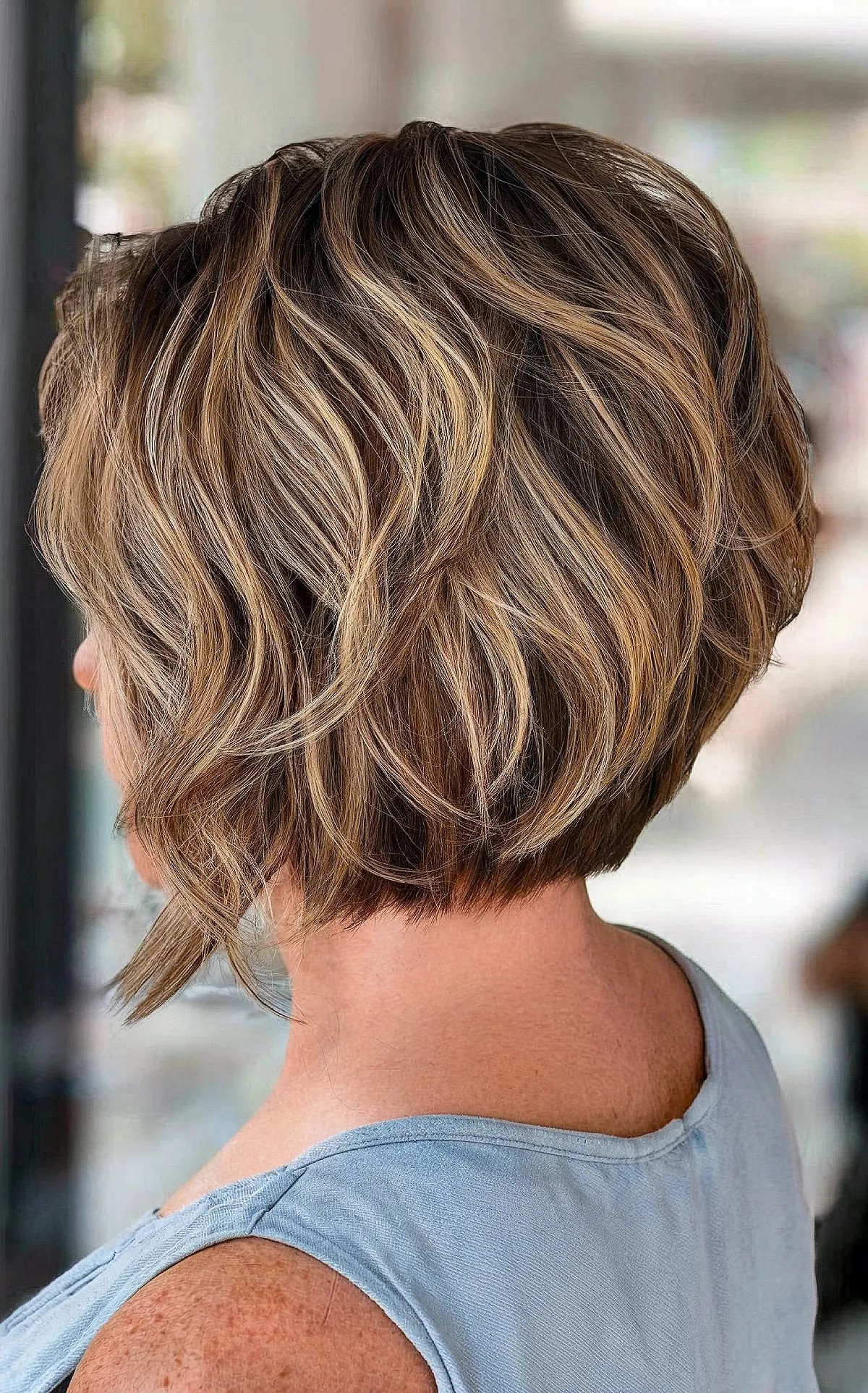
The layered stacked bob remains the definitive silhouette for individuals seeking a marriage of architectural precision and low-maintenance volume. As we navigate the stylistic landscape of 2026, this cut has evolved from a simple trend into a sophisticated technique that balances weight distribution with personalized face-framing geometry.
Defining the Precision of the Stacked Architecture
At its technical core, the layered stacked bob is defined by graduated layers at the nape of the neck, which create a distinctive "stack" or rounded elevation. Unlike a standard blunt bob, the stacked variation utilizes vertical sections to build density toward the occipital bone. By 2026, the industry standard for this cut prioritizes "weightless graduation," where the transition between the shorter back layers and the longer front sections is softened to prevent a shelf-like appearance.
The primary objective of this cut is to solve two distinct hair challenges: adding volume to fine, limp strands and removing bulk from thick, coarse hair textures. By manipulating the angle of the cut—typically ranging from 45 to 90 degrees—stylists can tailor the degree of elevation to suit the client’s head shape and natural growth patterns.
Technical Execution and Structural Requirements
Achieving a professional-grade stacked bob requires a rigorous adherence to sectioning and tension control. For the 2026 season, the focus is on "texture-inclusive" cutting, where the stylist accounts for the natural movement of the hair rather than forcing it into a static, artificial shape.
- Nape Preparation: The cut begins with a tight, clean perimeter at the neckline. Precision here is non-negotiable, as it dictates the slope of the entire profile.
- Vertical Graduation: Using vertical partings, the stylist elevates the hair away from the head to build the stack. The higher the elevation, the more pronounced the stack; the lower the elevation, the more subtle the shape.
- Interior Layering: Layers are incorporated through the crown and mid-lengths to ensure the hair does not appear bottom-heavy. This is where texturizing shears or slide cutting techniques are employed to remove internal weight without compromising the external length.
- Face-Framing Integration: To modernize the look, the front sections are often left slightly longer or finished with bespoke fringe elements, such as curtain bangs or wispy tendrils, to frame the cheekbones.
Comparison of Stacked Bob Variations
Choosing the right variation of the stacked bob depends heavily on hair density and desired maintenance frequency. The following table illustrates the structural differences commonly requested in 2026 salons.
| Variation | Nape Length | Elevation Level | Maintenance Level | Best For |
|---|---|---|---|---|
| Classic Graduated | Mid-Neck | Moderate | Every 6-8 weeks | Fine to medium density |
| Extreme Stack | High-Nape | High | Every 4 weeks | Thick, coarse hair |
| Textured Soft-Stack | Nape-Graze | Low | Every 8-10 weeks | Wavy or curly textures |
| A-Line Hybrid | Jaw-Line | Gradual | Every 6 weeks | Round face shapes |
Managing Maintenance and Styling Protocols
The primary drawback of the layered stacked bob is the necessity for consistent upkeep. Because the geometry relies on the precise relationship between the nape and the crown, even a few weeks of unmanaged growth can disrupt the intended silhouette.
For those managing the cut in 2026, professional recommendations involve the use of lightweight volumizing mousses and heat-protectant sprays. Given the focus on internal layering, excessive use of heavy silicones or thick styling creams is discouraged, as they collapse the intentional volume created by the stack. Instead, use a round brush during the blowout phase to encourage the internal layers to curve inward, reinforcing the rounded shape of the back.
Addressing Common Concerns and Troubleshooting
Transitioning into a stacked bob can be intimidating. Often, clients worry that the layers will become frizzy or unmanageable. However, when the cut is executed correctly, the layers act as a support system for the hair, preventing the "triangle" effect often associated with blunt bobs. If you find the ends feeling too heavy, ask your stylist to employ point-cutting techniques to soften the perimeter, which allows the hair to sit flatter and move more naturally.
Expert Consultation Tips
Preparation is Key Before your appointment, gather inspiration photos that represent your specific hair density and texture. A stacked bob on thick, straight hair will behave significantly differently than one on fine, curly hair.
Communication of Angles Clearly discuss the desired slope of the cut. If you want a more subtle look, request a gradual decline rather than a severe, high-stack wedge.
Tool Selection Ensure your stylist uses thinning shears judiciously. Over-thinning can lead to jagged edges or an uneven stack, which is the most common point of failure for this haircut style.
Frequently Asked Questions
Does a layered stacked bob require daily heat styling? While the cut is designed to hold its shape naturally, most stacked bobs benefit from a quick round-brush blowout or a light pass with a flat iron to emphasize the graduation of the layers. Using the right volumizing product can reduce the need for excessive heat.
Can a stacked bob work with curly or wavy hair textures? Yes, but the technique must be adjusted. Stylists should cut the hair while it is dry or use minimal tension to ensure that the natural curl pattern is accounted for, preventing the layers from shrinking up too much.
How often do I need to visit the salon to maintain the stack? To keep the neckline clean and the stack defined, plan for a trim every 6 to 8 weeks. If you opt for an extreme stack, you may need a neck clean-up as early as 4 weeks.
Will this haircut make my hair look thinner? Quite the opposite. The internal layering and stacking process are specifically designed to build density at the crown, creating the illusion of thicker, fuller hair even for those with fine strands.
What is the best way to grow out a stacked bob? Growing out this style requires patience. The goal is to gradually equalize the length by trimming the back more frequently than the front until the perimeter reaches a uniform length.
Is there a specific face shape that this cut does not suit? The stacked bob is incredibly versatile. By adjusting the front length—leaving it longer for rounder faces or shorter for heart-shaped faces—this cut can be customized to balance almost any facial structure in 2026.
Ensuring Style Longevity
Ultimately, the layered stacked bob of 2026 is about personalization. Whether you prefer the sharp, aggressive lines of a classic wedge or the soft, lived-in aesthetic of a textured stack, the success of the look lies in the relationship between your hair’s weight and the stylist’s precision. Schedule a consultation with a stylist experienced in geometric precision cutting to determine the specific angle and layering density that will best complement your natural features and daily routine.