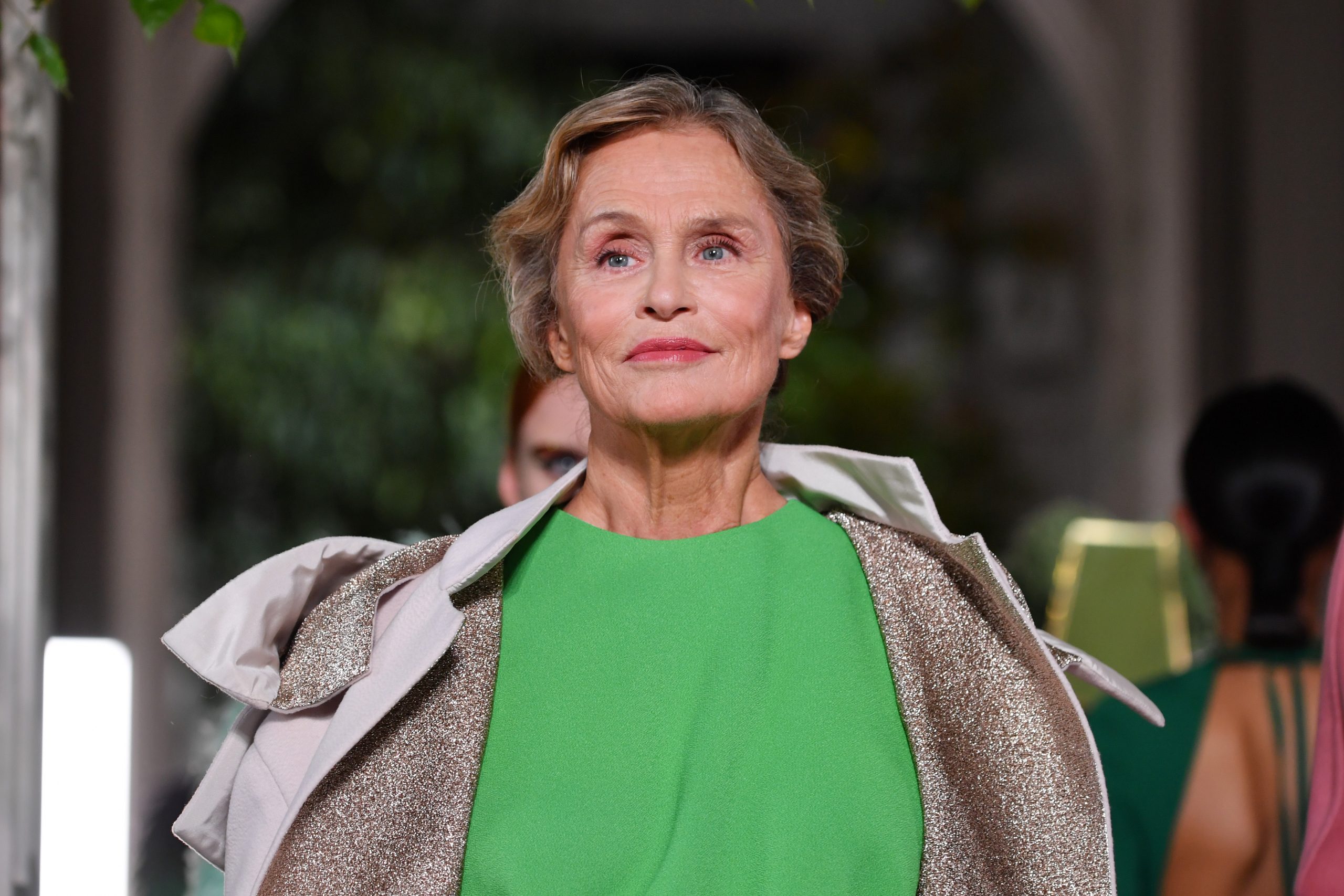
As of 2026, Lauren Hutton remains a defining figure in the intersection of fashion, beauty entrepreneurship, and strategic brand management. With an estimated net worth of approximately $30 million, her financial success stems from pioneering the first major modeling contract in history, the sustained growth of her eponymous cosmetics line, and high-value collaborations with luxury houses that leverage her status as a "perennial" icon.
The Architect of the Modern Modeling Contract
To understand Lauren Hutton’s current financial standing in 2026, one must look back at her revolutionary approach to labor in the fashion industry. In 1973, Hutton negotiated a landmark deal with Revlon, which is widely cited as the first "supermodel" contract. At a time when models were paid by the hour or the day, Hutton secured a $250,000-a-year deal (worth over $1.7 million in today’s inflation-adjusted terms) for just 20 days of work.
This move was not merely about the immediate payout; it was a calculated investment in her personal brand. By becoming the exclusive face of Revlon, she transitioned from a freelance worker to a corporate partner. This contract set the precedent for every major modeling deal that followed, from the 1990s supermodels to the digital influencers of the 2020s. Her ability to recognize her image as a scalable asset was her first and most significant investment insight, allowing her to accumulate the seed capital necessary for her future entrepreneurial ventures.
Lauren Hutton Cosmetics: A Case Study in Niche Market Capture
While many celebrities attach their names to existing beauty conglomerates, Lauren Hutton took a more hands-on approach with the launch of Lauren Hutton Cosmetics. In 2026, the brand continues to thrive by adhering to a philosophy that most of the beauty industry ignored for decades: the specific dermatological and aesthetic needs of women over 40.
The Signature Kit Strategy
The cornerstone of her product line is the "Signature Kit," a curated collection of face discs and brushes designed to provide a natural, "no-makeup" look. In an era where 2026 beauty trends often oscillate between high-glam AI-generated filters and extreme skincare, Hutton’s brand has maintained a loyal customer base by focusing on "the sheer."
From an investment perspective, Hutton’s business model is highly efficient:
- Direct-to-Consumer (DTC) Focus: By maintaining a strong online presence and limited, high-end retail partnerships, the brand preserves higher margins.
- Demographic Loyalty: Older consumers typically exhibit higher brand loyalty and greater disposable income than younger demographics, reducing the "churn" often seen in Gen Z-focused brands.
- Minimalist SKU Count: Rather than launching hundreds of products, the brand focuses on a core set of essentials, which minimizes inventory risk and simplifies the supply chain.
Iconic Brand Collaborations and Long-Term Royalties
Hutton’s brand collaborations are rarely one-off marketing stunts. Instead, they are strategic partnerships that often result in revived interest in her persona and, consequently, her own product lines. In 2026, these collaborations are viewed as blueprints for how a public figure can maintain relevance across six decades.
The Bottega Veneta "Lauren 1980" Clutch
One of the most financially significant collaborations in her later career was with the Italian luxury house Bottega Veneta. In the 1980 film American Gigolo, Hutton carried a particular Intrecciato leather clutch. Decades later, Bottega Veneta re-released the bag as the "Lauren 1980." Her appearance on the brand’s runway at age 73 was not just a viral moment; it was a calculated move that associated her name with timeless luxury. This partnership likely involved both a performance fee and ongoing licensing or royalty structures that continue to contribute to her net worth.
Expanding the Portfolio: J.Crew, Theory, and Anthropologie
Hutton has also successfully navigated the "high-low" retail landscape. Her collaborations with brands like J.Crew and Theory have typically focused on "ageless style," allowing her to tap into the mass-market premium segment. These deals provide significant upfront capital and keep her image in front of a diverse range of consumers, which serves as top-of-funnel marketing for her own cosmetics company.
| Collaboration Entity | Nature of Partnership | Primary Market | Strategic Value |
|---|---|---|---|
| Revlon | Exclusive Face (1973-1983) | Global Mass Market | Established the "Supermodel" financial blueprint. |
| Bottega Veneta | Heritage Icon & Runway | Luxury / High-End | Re-monetized historical film association via the "Lauren 1980" clutch. |
| Lauren Hutton Cosmetics | Founder / Majority Owner | Niche Mature Beauty | Direct ownership of equity and long-term recurring revenue. |
| J.Crew / Theory | Campaign Model / Stylist | Premium Retail | Maintained cross-generational visibility and brand "cool" factor. |
| Strivectin | Brand Ambassador | Clinical Skincare | Leveraged credibility in the anti-aging sector for high-six-figure fees. |
Net Worth and Asset Allocation in 2026
As of 2026, Lauren Hutton’s net worth is estimated at $30 million. This figure is not merely a reflection of her past modeling fees but a result of diversified income streams and prudent asset management.
Revenue Streams
- Business Equity: The valuation of Lauren Hutton Cosmetics remains the most significant variable in her wealth. As a privately held company, its value is tied to its consistent performance in the "Silver Economy."
- Licensing and Royalties: Income from likeness rights, book royalties (such as her memoirs and beauty guides), and ongoing fashion house partnerships.
- Real Estate: Hutton has historically held property in high-value markets, including New York City and various international locations. In the current 2026 real estate climate, these holdings represent a substantial portion of her net-worth stability.
- Acting Residuals: While she transitioned away from full-time acting, her filmography (including American Gigolo and The Gambler) continues to generate modest residual income through streaming platforms.
Investment Insights: The "Hutton Method" of Longevity
For investors and entrepreneurs, Lauren Hutton’s career offers several critical insights into "Personal Brand Equity." Her success is a result of refusing to be a "wasting asset."
1. Diversification Beyond the Physical
Hutton understood early on that beauty is a depreciating asset in the eyes of the traditional fashion industry. By launching a product line, she converted her physical appearance into a scalable business (intellectual property). This shifted her income from "active" (being present at a shoot) to "passive" (sales occurring while she sleeps).
2. Identifying Under-Served Markets
While the 1990s and 2000s beauty industries were obsessed with youth, Hutton doubled down on the mature market. In 2026, this is now known as "The Longevity Economy," and it is one of the fastest-growing sectors in the world. Hutton was nearly 30 years ahead of the curve.
3. Authenticity as a Moat
Hutton’s refusal to fix her signature tooth gap or succumb to the "over-filled" aesthetic of the early 2020s created a unique "brand moat." In a world of filtered uniformity, her specific look became a premium commodity. Investors call this "differentiation," and it allows for premium pricing power.
FAQ
What is Lauren Hutton's most successful product?
The Lauren Hutton Signature Kit is her most commercially successful product. It was revolutionary for its time, using a color-coded system of "discs" to help women apply a natural look in minutes. It specifically addressed the way makeup interacts with textured or aging skin, which cemented its place as a cult favorite that still sells in 2026.
How much was Lauren Hutton's first Revlon contract?
Her initial 1973 contract was for $250,000 per year. Adjusting for 2026 inflation and purchasing power, this was a massive sum for the era and remains one of the most influential negotiations in the history of the talent industry.
Does Lauren Hutton still own her cosmetics brand in 2026?
Hutton has maintained a high degree of control over her brand since its inception. While there have been various distribution and manufacturing partnerships over the decades, she remains the primary face and creative force behind the company, ensuring it stays true to her "natural beauty" ethos.
What are Lauren Hutton’s primary investment interests?
Beyond her own company, Hutton has focused on tangible assets like real estate and fine art. However, her most profound "investment" has been in her own health and global travel, which she has often cited as the source of her creative longevity and mental sharpness—qualities that have allowed her to continue working and earning well into her 80s.
Why is Lauren Hutton considered a pioneer for older models?
Hutton was one of the first models to successfully secure major fashion campaigns in her 40s, 50s, 60s, and 70s. By appearing on the cover of Vogue over 25 times and fronting campaigns for brands like Calvin Klein and Bottega Veneta in her later years, she proved that the mature demographic was both aspirational and commercially viable.
Strategic Direction for 2026 and Beyond
For those looking to emulate Hutton’s financial and professional success, the takeaway is clear: own the niche. In 2026, the global economy rewards those who can provide authentic solutions to specific demographic problems. Whether it is through her minimalist beauty products or her selective brand collaborations, Hutton has demonstrated that a personal brand is most valuable when it is backed by a tangible product and a consistent, unshakeable identity.
Investors should look to the "Silver Economy" and "Authentic Aging" sectors as areas where Hutton’s influence continues to drive consumer behavior. For individuals, the "Hutton Method" suggests that the best investment one can make is in a career that builds cumulative value, rather than one that relies solely on temporary trends.