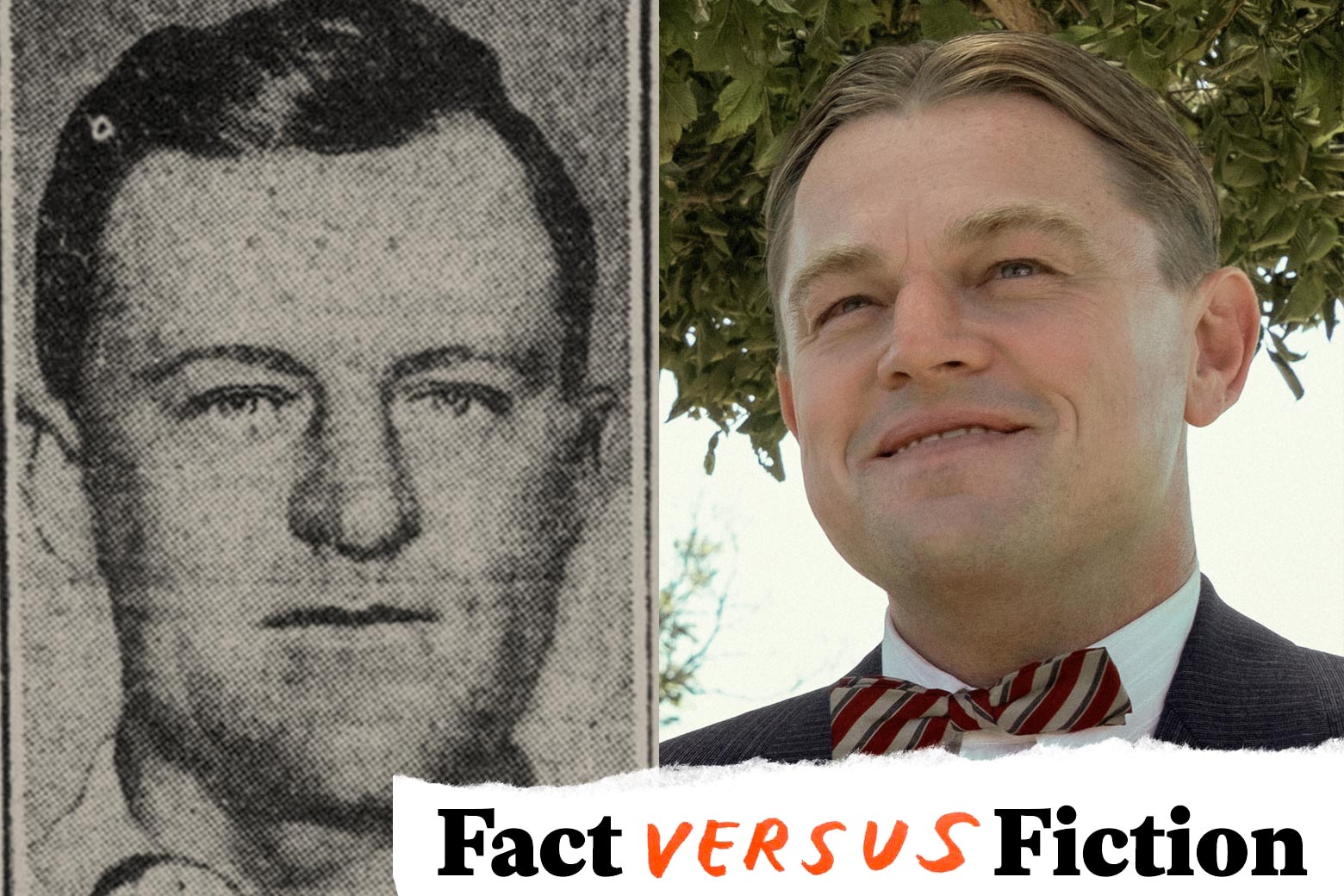
Martin Scorsese’s Killers of the Flower Moon is a haunting 2023 epic crime drama that chronicles the systematic murders of the Osage Nation in 1920s Oklahoma. The film explores the "Reign of Terror" through a complex lens of betrayal and greed, featuring career-defining performances by Lily Gladstone, Leonardo DiCaprio, and Robert De Niro.
The Narrative Arc: A Plot of Betrayal and Genocide
Set in the 1920s, the film follows the arrival of Ernest Burkhart (Leonardo DiCaprio), a war veteran who moves to Fairfax, Oklahoma, to live with his uncle, William "King" Hale (Robert De Niro). Hale presents himself as a benevolent benefactor to the Osage Nation, but beneath this facade, he is the mastermind behind a conspiratorial plot to seize the Osage people's "headrights"—their shares in the massive oil wealth discovered beneath their land.
The story centers on the relationship between Ernest and Mollie Kyle (Lily Gladstone), an Osage woman whose family holds significant oil wealth. Under Hale’s direction, Ernest marries Mollie, not out of pure affection, but as part of a calculated scheme to inherit her family's fortune. One by one, Mollie’s sisters and mother die under suspicious circumstances—poisoning, "wasting illnesses," and professional hits.
As the body count rises and local law enforcement remains indifferent or complicit, the Osage people are trapped in a state of constant fear. The plot shifts when the newly formed Bureau of Investigation (the precursor to the FBI) sends agent Tom White (Jesse Plemons) to investigate. The narrative moves from a domestic tragedy into a legal procedural, culminating in a devastating realization of the depth of the betrayal Mollie suffered at the hands of those who claimed to love her.
Analyzing the Cast: A Trio of Powerhouse Performances
The success of Killers of the Flower Moon rests heavily on its central trio, whose performances elevate the film from a standard historical drama to a profound character study.
Lily Gladstone as Mollie Burkhart
Lily Gladstone provides the emotional core of the film. Her portrayal of Mollie is a masterclass in subtlety and internal strength. Unlike traditional victims in cinema, Mollie is depicted with immense agency and intelligence, making her eventual physical decline due to poisoning all the more tragic. Gladstone’s performance earned her a historic Academy Award nomination and established her as a premier talent in contemporary cinema.
Leonardo DiCaprio as Ernest Burkhart
DiCaprio plays Ernest not as a typical villain, but as a weak, easily manipulated man. This interpretation is pivotal to the film’s themes; Ernest is a "banal" kind of evil. He truly believes he loves Mollie even as he actively participates in the destruction of her family. DiCaprio captures the internal conflict of a man who is too cowardly to stand up to his uncle, yet too morally compromised to be a hero.
Robert De Niro as William "King" Hale
De Niro’s William Hale is one of the most chilling villains in Scorsese’s filmography. Hale does not view himself as a monster; he views himself as a pioneer who is simply accelerating the "natural order" of things. His ability to switch from speaking the Osage language and comforting the grieving to ordering the execution of children is terrifyingly seamless.
The True Story: The Osage Reign of Terror
The film is based on the non-fiction bestseller by David Grann. To understand the gravity of the film, one must understand the historical reality of the Osage Nation in the early 20th century. In the 1890s, the Osage were moved to a rocky reservation in Oklahoma, which was later discovered to sit atop one of the largest oil deposits in the United States.
By the 1920s, the Osage were the wealthiest people per capita in the world. However, the U.S. government implemented a discriminatory "guardianship" system. Because the government deemed many Osage "incompetent" to manage their own wealth (primarily based on their degree of indigenous blood), white "guardians" were appointed to oversee their spending. This system invited rampant corruption, embezzlement, and eventually, murder.
The "Reign of Terror" saw dozens, and likely hundreds, of Osage people murdered for their headrights. The film focuses on the Kyle family, but the scale of the conspiracy involved doctors, lawyers, bankers, and the local police. It was this specific series of crimes that forced the federal government to intervene, leading J. Edgar Hoover to use the case to justify the expansion of the FBI.
Technical Specifications and Production Facts
Scorsese’s commitment to authenticity involved filming on location in Oklahoma and working closely with the Osage Nation to ensure historical and cultural accuracy.
| Feature | Details |
|---|---|
| Director | Martin Scorsese |
| Original Release Year | 2023 |
| Current Status (2026) | Streaming on Apple TV+ / Available on 4K Blu-ray |
| Runtime | 206 minutes (3 hours and 26 minutes) |
| Cinematographer | Rodrigo Prieto |
| Musical Score | Robbie Robertson (Final film score before his passing) |
| Budget | Approximately $200 million |
| Historical Period | 1918–1930s |
Critical Review: Scorsese’s Late-Career Masterpiece
As of 2026, Killers of the Flower Moon is regarded as a cornerstone of Martin Scorsese’s late-period work, alongside The Irishman. While some critics initially noted its long runtime, the pacing is intentional. Scorsese uses the 206 minutes to immerse the audience in the slow-moving dread that the Osage experienced.
The film’s most radical departure from the source material is its perspective. While David Grann’s book is a procedural focused on the FBI, Scorsese and co-writer Eric Roth shifted the focus to the marriage of Ernest and Mollie. This choice highlights the systemic nature of the crimes—it wasn't just a series of murders; it was a betrayal within the most intimate unit of society.
The ending of the film is particularly noteworthy. Eschewing standard "where are they now" text cards, Scorsese presents the final fates of the characters through a 1930s-style radio play. This meta-commentary suggests that the tragedy of the Osage was often treated as mere entertainment for white audiences, further highlighting the erasure of indigenous suffering.
Cultural Accuracy and Osage Involvement
One of the most significant aspects of the production was the involvement of the Osage community. Scorsese met with Osage Principal Chief Geoffrey Standing Bear early in pre-production. This collaboration resulted in:
- Language Preservation: Much of the dialogue is in the Osage language, with Gladstone and DiCaprio training extensively with native speakers.
- Costume and Set Design: Osage artisans were consulted for traditional clothing, ensuring that wedding blankets and funeral rites were depicted with reverence.
- Casting: Many supporting roles and background actors were members of the Osage Nation, providing a sense of community that is often missing from Hollywood depictions of indigenous people.
Why the "Guardianship" System Was Fatal
The technical mechanics of the murders relied on the "Headright" system. Unlike land, which could be sold, headrights (oil royalties) could only be inherited. This created a perverse incentive: if a white man married an Osage woman and she, along with her heirs, died, the white man could legally inherit the perpetual wealth of the oil shares. The film meticulously demonstrates how the legal system was weaponized to facilitate this wealth transfer.
FAQ: Understanding the Context
Is Killers of the Flower Moon a true story?
Yes, the film is based on the documented "Reign of Terror" in the Osage Nation during the 1920s. While some character interactions are dramatized for the screen, the primary events, including the murders of the Kyle family and the subsequent FBI investigation, are historically accurate.
Why is the movie over three hours long?
The 206-minute runtime allows the film to explore the atmospheric tension and the slow, methodical nature of the conspiracy. Scorsese intended to move beyond a simple "whodunit" to show the "whydunit," requiring deep character development for Ernest, Mollie, and Hale.
What happened to the real Ernest Burkhart and William Hale?
Historically, both men were convicted for their roles in the murders. William Hale was sentenced to life in prison but was later paroled in 1947. Ernest Burkhart was also sentenced to life, paroled in 1937, but later returned to prison for a different crime before being pardoned by the Governor of Oklahoma in 1966.
Does the film accurately represent the birth of the FBI?
While the film focuses more on the domestic tragedy, it does depict the transition of the Bureau of Investigation into the FBI. It highlights how J. Edgar Hoover used the successful prosecution of the Osage cases to professionalize the bureau and secure more federal funding.
Where can I watch Killers of the Flower Moon in 2026?
As of 2026, the film remains a flagship title on Apple TV+. It is also available through digital retailers and on physical 4K UHD and Blu-ray formats for those who prefer high-bitrate home viewing.
Next Steps for Viewers and History Buffs
After watching the film, viewers seeking a deeper understanding of the events should read David Grann’s original book, Killers of the Flower Moon: The Osage Murders and the Birth of the FBI. It provides a more detailed look at the investigative side of the case and reveals even more murders that were never officially solved.
Furthermore, supporting the Osage Nation’s current cultural preservation efforts is a meaningful way to acknowledge the history depicted in the film. The Osage Nation Museum in Pawhuska, Oklahoma, offers extensive resources for those interested in the actual artifacts and genealogy of the families affected by the Reign of Terror.