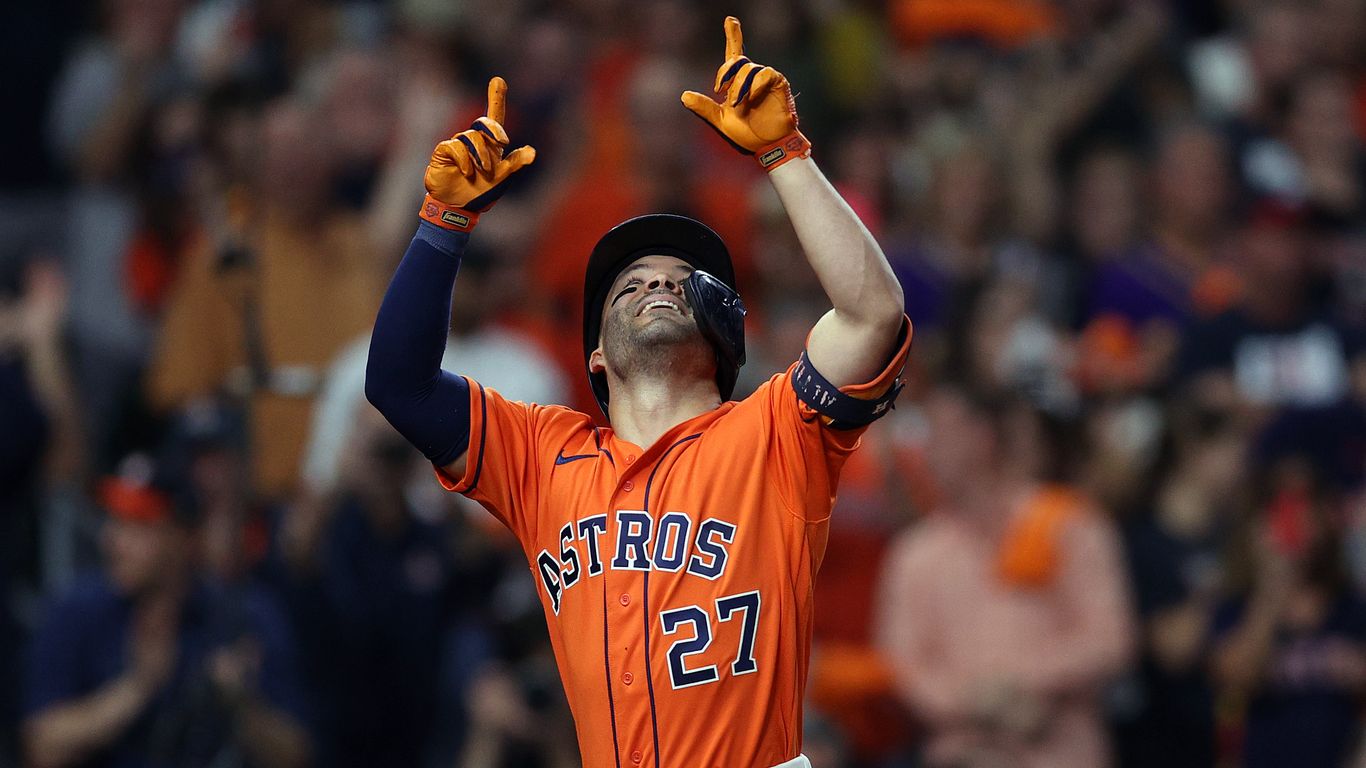
A.J. Hinch served as the manager of the Houston Astros from 2015 to 2019, leading the franchise through its most successful and controversial era. Under his leadership, the team secured its first World Series title in 2017, though his tenure ended abruptly following the revelation of a sign-stealing scandal that fundamentally altered his professional legacy.
The story of A.J. Hinch and the Houston Astros is one of extreme highs and lows, blending a revolutionary analytical approach with a cultural failure that shook Major League Baseball (MLB). To understand the team Hinch managed, one must look at the intersection of aggressive rebuilding, elite talent development, and the high-pressure environment of professional sports in the late 2010s.
The Path to Houston: Hinch’s Background and Philosophy
Before arriving in Houston, Andrew Jay Hinch had a career defined by high intellectual standards and a deep understanding of the catcher's perspective. A graduate of Stanford University, Hinch played seven seasons in the Major Leagues as a catcher for the Oakland Athletics, Kansas City Royals, Detroit Tigers, and Philadelphia Phillies. This "catcher’s brain" is often cited as the foundation for his managerial style—balancing the tactical needs of a pitching staff with the psychological demands of a clubhouse.
His first foray into managing came with the Arizona Diamondbacks in 2009. At just 34 years old, Hinch was a controversial hire because he lacked traditional minor-league managing experience. His tenure in Arizona was short-lived and largely unsuccessful, ending with his firing in 2010. This failure was a pivotal moment for Hinch; it taught him that while data and analytics were vital, they could not replace the human element of leadership and communication.
When the Houston Astros hired him in September 2014, the team was at a crossroads. General Manager Jeff Luhnow had spent years stripping the roster to its bones to accumulate draft picks and international talent. Hinch was brought in to be the "calm in the storm"—the man who could bridge the gap between Luhnow’s cold, hard numbers and the players on the field.
Building the Powerhouse: The 2015–2016 Foundation
When Hinch took the helm in 2015, the "Astros Process" was beginning to bear fruit. The team was no longer the laughingstock of the league, and Hinch’s immediate impact was visible. He fostered a clubhouse environment that encouraged young players like Jose Altuve and George Springer to play with freedom and aggression.
In his first year, Hinch led the Astros to an 86-76 record, earning a Wild Card spot. This was the franchise’s first postseason appearance in a decade. They defeated the New York Yankees in the Wild Card Game before pushing the eventual champion Kansas City Royals to five games in the ALDS. Hinch’s ability to manage a young, high-variance roster earned him second place in the AL Manager of the Year voting.
The 2016 season saw a slight step back as the team finished 84-78 and missed the playoffs. However, this period was crucial for the development of the core roster. Alex Bregman made his debut, and Carlos Correa solidified himself as a superstar shortstop. Hinch’s management during this time focused on "process over results," a mantra that kept the young core from panicking during slumps.
The 2017 Championship Season: Reaching the Pinnacle
The 2017 season remains the defining chapter of A.J. Hinch’s time in Houston. The team won 101 games, dominating the American League West. Hinch’s tactical brilliance was on full display, particularly in his aggressive use of the bullpen and his willingness to shift defensive alignments based on spray charts.
The mid-season acquisition of Justin Verlander provided the veteran leadership Hinch needed to stabilize the rotation. The Astros’ path through the 2017 postseason was a gauntlet:
- ALDS vs. Red Sox: A 3-1 series victory where the offense proved unstoppable.
- ALCS vs. Yankees: A grueling 7-game series where Hinch famously leaned on Lance McCullers Jr. and his curveball to close out Game 7.
- World Series vs. Dodgers: A legendary 7-game battle. Hinch was praised for his "cool under fire" demeanor, specifically his decision to use Charlie Morton for the final four innings of Game 7 to secure the title.
At the time, the 2017 Astros were hailed as the future of baseball—a perfect marriage of scouting, analytics, and managerial intuition. Hinch was the face of this new era, a modern manager who could speak the language of the front office and the dugout with equal fluency.
Management Style and Key Personnel
A.J. Hinch’s success was not just about his own decisions; it was about how he managed a specific group of high-IQ, high-talent players. His team was built on a foundation of "The Core Four": Jose Altuve, George Springer, Carlos Correa, and Alex Bregman.
Tactical Innovation
Hinch was an early adopter of several "new school" strategies that are now standard in 2026. He was a proponent of the "opener" concept before it was widely popularized, and he excelled at managing high-leverage situations by using his best relievers in the 7th or 8th innings if that's where the heart of the opponent's lineup fell.
The Human Element
Despite the team’s heavy reliance on data, Hinch was known for his "open-door policy." He understood that 162 games a year take a mental toll. He was credited with helping players like Marwin Gonzalez and Dallas Keuchel reach their peak performance by finding the right roles for them and clearly communicating their value to the team.
| Aspect | Hinch’s Approach | Result for the Astros |
|---|---|---|
| Analytics | Heavy integration of spin rates and launch angles. | League-leading offensive efficiency and strikeout rates. |
| Clubhouse Culture | "Be Yourself" mantra; focused on individual personalities. | High team chemistry and resilience under pressure. |
| In-Game Moves | Aggressive pitcher changes; heavy use of defensive shifts. | Optimized run prevention; maximized bullpen utility. |
| Player Development | Direct feedback loops between coaching staff and players. | Rapid ascent of prospects like Bregman and Yordan Alvarez. |
The Scandal: Investigation and Fallout
The legacy of the A.J. Hinch era changed forever in November 2019, when former Astros pitcher Mike Fiers revealed a sophisticated sign-stealing scheme used by the team during their 2017 championship run. The investigation by MLB Commissioner Rob Manfred found that the Astros used a center-field camera to decode opposing catchers' signs, which were then relayed to batters by banging on a trash can.
The investigation’s findings regarding Hinch were nuanced but ultimately damning. The report stated that Hinch did not start the scheme, nor did he participate in it. In fact, on two separate occasions, Hinch reportedly showed his disapproval by smashing the monitors used for the sign-stealing. However, as the manager, he failed to stop the practice or report it to the front office.
On January 13, 2020, MLB suspended A.J. Hinch for one year. Within an hour of the announcement, Astros owner Jim Crane fired both Hinch and GM Jeff Luhnow. Crane stated that while Hinch was a man of integrity, the culture of the team had become "toxic," and a leadership change was mandatory to restore the franchise's reputation.
Post-Houston Legacy and the Detroit Transition
Following his suspension, Hinch spent 2020 out of baseball, reflecting on his failures in leadership. His return to the game in 2021 as the manager of the Detroit Tigers was met with mixed reactions. While many in the industry respected his tactical mind, fans of the Dodgers and Yankees—the teams most affected by the 2017 scandal—remained critical.
In Detroit, Hinch proved that his managerial skills were not solely a product of the Astros’ system. He took over a rebuilding Tigers team and applied the same principles of player development and analytical optimization. By 2026, Hinch had largely rehabilitated his image within the league as a talented strategist who made a significant error in judgment but remained one of the best tactical managers in the game.
His tenure in Houston remains a Rorschach test for baseball fans. To some, he is the architect of a brilliant dynasty that changed how the game is played. To others, he is the captain who let his crew break the rules under his watch.
A.J. Hinch Houston Astros Managerial Record
| Season | Wins | Losses | Win % | Postseason Result |
|---|---|---|---|---|
| 2015 | 86 | 76 | .531 | Lost ALDS (2-3) |
| 2016 | 84 | 78 | .519 | Missed Playoffs |
| 2017 | 101 | 61 | .623 | World Series Champions (4-3) |
| 2018 | 103 | 59 | .636 | Lost ALCS (1-4) |
| 2019 | 107 | 55 | .660 | Lost World Series (3-4) |
| Total | 481 | 329 | .594 | 1 Title, 2 Pennants |
Frequently Asked Questions
Did A.J. Hinch help create the sign-stealing system?
No, the MLB investigation concluded that Hinch did not initiate or participate in the sign-stealing system. The scheme was largely driven by players and lower-level staff. However, Hinch was held responsible for the culture of the dugout and his failure to put a definitive end to the practice despite his personal disapproval of it.
Why was Hinch fired if he didn't participate in the cheating?
Major League Baseball places the ultimate responsibility for clubhouse conduct on the manager. Even though Hinch destroyed the monitors used for cheating, his inability to stop his players from continuing the scheme was viewed as a failure of leadership. Astros owner Jim Crane decided that a clean break was necessary to move the organization forward and distance the franchise from the scandal.
Who were the most important players during the Hinch era?
The "Core Four" of Jose Altuve, George Springer, Carlos Correa, and Alex Bregman were the primary drivers of the team's success. Additionally, veteran pitchers Justin Verlander, Dallas Keuchel, and Charlie Morton played pivotal roles in Hinch's postseason strategies. Utility player Marwin Gonzalez was also vital as Hinch's "Swiss Army Knife" during the 2017 season.
How did the Astros perform after Hinch was fired?
The Astros remained highly competitive after Hinch's departure. Under his successor, Dusty Baker, the team continued to reach the ALCS and World Series, eventually winning another championship in 2022. This led many analysts to conclude that while Hinch was a great manager, the talent pool and analytical infrastructure built by the organization were the primary factors in their long-term dominance.
What is A.J. Hinch doing now in 2026?
As of 2026, A.J. Hinch is the manager of the Detroit Tigers. He has been credited with leading the Tigers through a successful rebuild, turning them into a competitive force in the American League Central. While his time in Houston remains a point of discussion, he is widely regarded as one of the most intellectually capable managers in professional baseball today.
Analyzing the Managerial Impact
To truly understand A.J. Hinch’s impact on the Houston Astros, one must look past the 2017 trophy and the 2020 scandal. He was a pioneer in how managers interact with front-office data. Before Hinch, there was often a wall between the "stat heads" and the "baseball men." Hinch demolished that wall.
He proved that you could use 3D ball-tracking data to tell a pitcher exactly how to grip a slider, while still having the emotional intelligence to know when that pitcher needs a day off for his mental health. His team was a reflection of this balance: they were hyper-efficient, technically sound, but played with a swagger and joy that made them one of the most watchable (and later, most hated) teams in the history of the sport.
For those looking to study leadership or sports management, the Hinch-Astros era serves as a masterclass in both the power of innovation and the necessity of ethical oversight. Moving forward, his career serves as a reminder that in the high-stakes world of professional sports, what you permit, you promote.