The Iron Throne is the ultimate symbol of authority in George R.R. Martin’s A Song of Ice and Fire universe, representing the unified power of the Seven Kingdoms of Westeros. Forged from the swords of defeated enemies by Aegon the Conqueror, it serves as both a literal seat of government and a metaphorical warning about the brutal nature of absolute power.
In the cultural landscape of 2026, the Iron Throne remains one of the most recognizable icons in fantasy literature and television history. Whether viewed through the lens of the original Game of Thrones series or the historical depth of House of the Dragon, the throne is more than just furniture; it is the physical manifestation of the "Great Game." To understand the Iron Throne is to understand the history of the Targaryen dynasty, the architectural intent of Aegon I, and the philosophical burdens of leadership that define the fate of Westeros.
The Forging of a Legend: Origins and Construction
The history of the Iron Throne begins nearly three centuries before the events of the main series, during the period known as Aegon’s Conquest. After Aegon Targaryen and his sisters, Visenya and Rhaenys, successfully brought six of the seven independent kingdoms of Westeros under their control, Aegon sought a way to solidify his rule and remind his subjects of the cost of rebellion.
The throne was not crafted by a carpenter or a stonemason, but by armorers and a dragon. According to legend, Aegon collected the swords of every lord who had surrendered to him or fallen on the battlefield—most notably those from the "Field of Fire," where the combined might of the Reach and the Westerlands was decimated. These thousands of blades were allegedly hammered together and blasted with the dragonflame of Balerion the Black Dread. It took fifty-nine days to complete the construction.
The resulting seat was intentionally designed to be hideous and uncomfortable. Aegon I famously remarked that a king should never sit easy, believing that the constant threat of the throne’s sharp edges would prevent a monarch from becoming complacent or overconfident. This design philosophy ensured that every decision made from the throne was accompanied by a physical reminder of the violence required to maintain the peace of the realm.
Aesthetic Discrepancies: The Book vs. The Screen
One of the most significant points of discussion among enthusiasts is the difference between the Iron Throne as described in George R.R. Martin’s novels and the iconic prop used in the HBO adaptations. While both serve the same narrative purpose, their physical scales suggest different things about the power they represent.
The Literary Vision
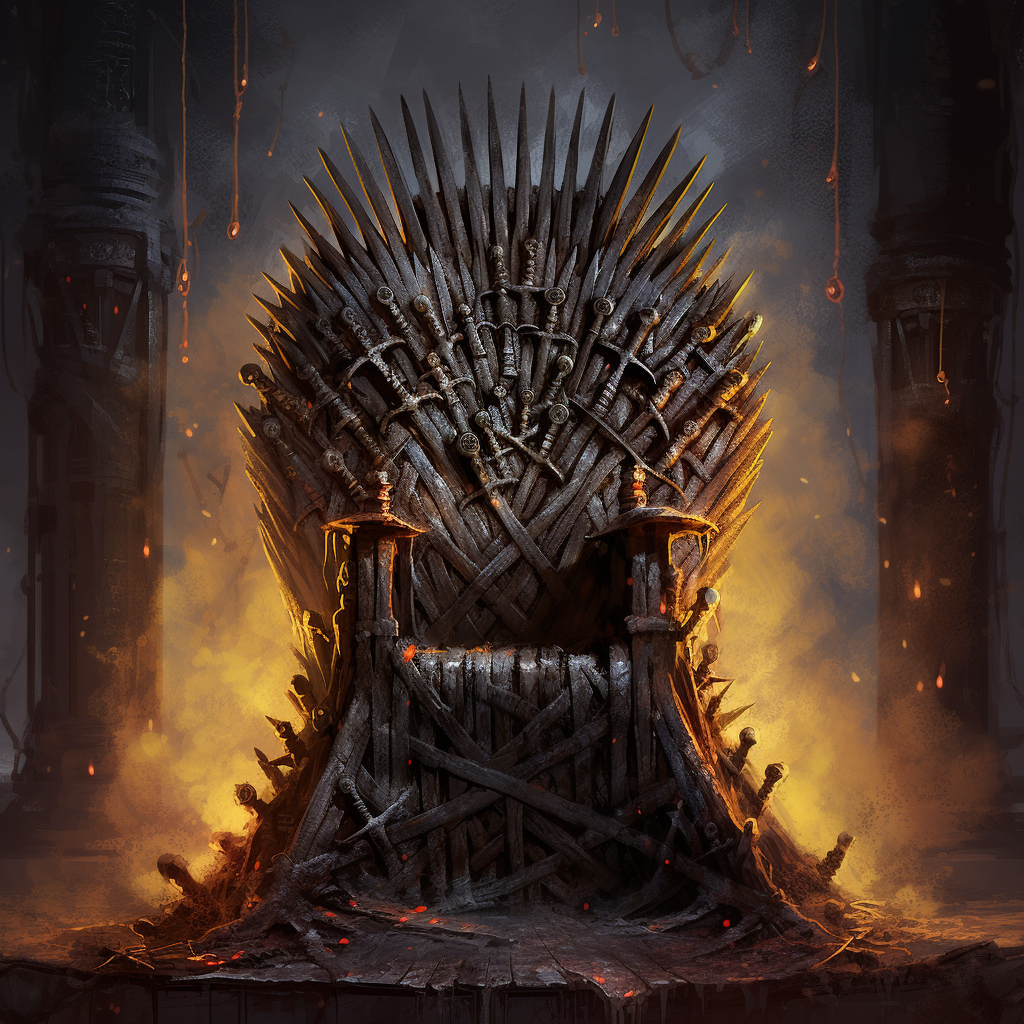
In the A Song of Ice and Fire books, the Iron Throne is a massive, sprawling, and asymmetrical monstrosity. It is described as being over ten feet tall, with a steep set of iron steps leading up to the seat. It is hunched, ugly, and dangerous, with blades jutting out at awkward angles. Martin has often stated that the illustration by artist Marc Simonetti is the most accurate representation of his vision. This version of the throne emphasizes the overwhelming, almost eldritch power of the Targaryen dragons; it is a mountain of steel that looms over the Red Keep’s Great Hall.
The Television Adaptation
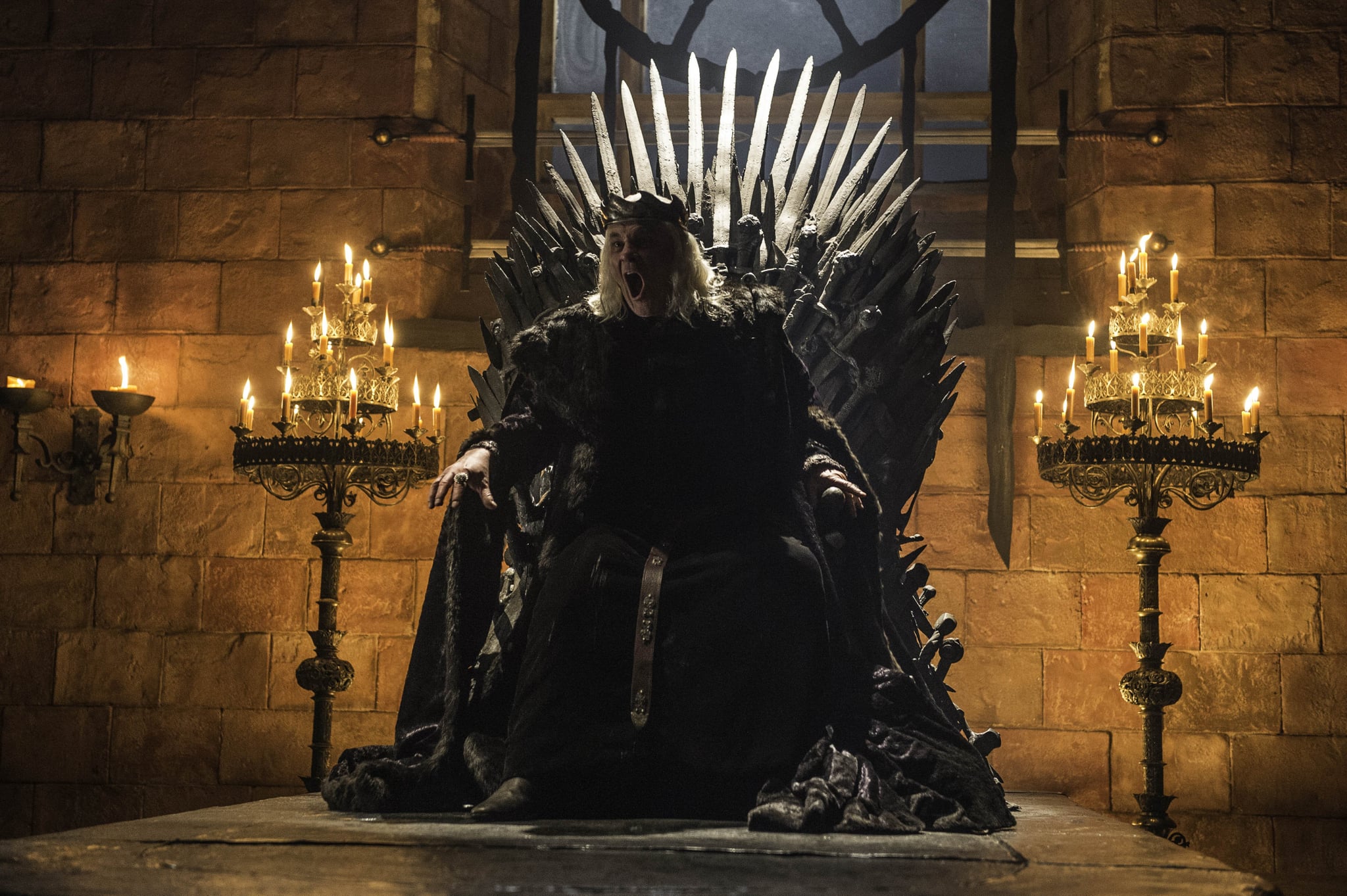
For the original Game of Thrones television series, practical considerations required a more contained design. The HBO prop was smaller, more symmetrical, and fashioned to fit within the constraints of a standing set. While still intimidating, it lacked the sheer scale of the literary version. However, with the release of House of the Dragon, the showrunners attempted to bridge this gap by adding hundreds of additional swords surrounding the base of the throne, reflecting a more "untidy" and expansive look consistent with the height of the Targaryen era. This change in 2026 is recognized as a successful retcon that aligns the visual media more closely with the source material's "dangerous" aesthetic.
The Symbolism of the "Dangerous Seat"
The Iron Throne functions as a character in its own right, often serving as a barometer for the fitness of the monarch sitting upon it. In Westerosi lore, the throne is said to "reject" those who are unworthy of rule. This is not necessarily magical, but rather a reflection of how a ruler’s temperament affects their physical interaction with the seat.
For example, King Aerys II Targaryen, often called "The Mad King," was frequently cut by the throne. Toward the end of his reign, he was covered in scabs and half-healed wounds, leading to his nickname "King Scab." Conversely, strong and composed rulers like Jaehaerys the Conciliator or Aegon I himself are rarely recorded as having been injured by the chair.
The symbolism extends to the following themes:
- The Blood Price of Peace: Every sword in the throne represents a life taken or a house humbled. It reminds the court that the King's Peace is built upon a foundation of conquest.
- Vulnerability: A king on the Iron Throne is elevated but also exposed. The sharp edges mean that a single lapse in posture or focus can result in injury, mirroring the political hazards of the court.
- The Burden of History: By sitting on the blades of his ancestors' enemies, a monarch is literally supported by the history of the realm, for better or worse.
Historical Sovereigns and Their Impact
Throughout the 283-year Targaryen dynasty and the subsequent Baratheon and Lannister eras, the Iron Throne has seen a diverse array of occupants. Each monarch's relationship with the seat defined their legacy.
| Monarch | Dynasty | Legacy on the Throne |
|---|---|---|
| Aegon I | Targaryen | The Creator; used the throne to unify the realm and establish the "King’s Justice." |
| Maegor the Cruel | Targaryen | Allegedly died on the throne; found with his wrists slit by the blades of the chair. |
| Jaehaerys I | Targaryen | The longest-serving monarch; his reign was the throne's era of greatest stability. |
| Aerys II | Targaryen | "The Mad King"; his rejection by the throne preceded the collapse of the dynasty. |
| Robert Baratheon | Baratheon | The Usurper; sat the throne but famously hated the duties associated with it. |
| Joffrey Baratheon | "Baratheon" (Lannister) | Used the throne as a tool of cruelty; his youth and instability were reflected in his awkward presence on it. |
| Cersei Lannister | Lannister | The first reigning Queen Regnant in the show's continuity; her tenure marked the throne's final days. |
The transition of the throne from Targaryen to Baratheon hands during Robert’s Rebellion was a pivotal moment in Westerosi history. It proved that the "divine right" of the dragon-lords could be shattered by steel, yet the throne itself remained the ultimate prize, regardless of who wore the crown.
The Iron Throne in Modern Pop Culture (2026)
By 2026, the Iron Throne has transcended its fictional origins to become a global brand. It has been featured in countless museum exhibits, touring "fan experiences," and high-end collectible markets. For the modern enthusiast, the throne represents the "peak" of the prestige television era.
Replicas and Collectibles
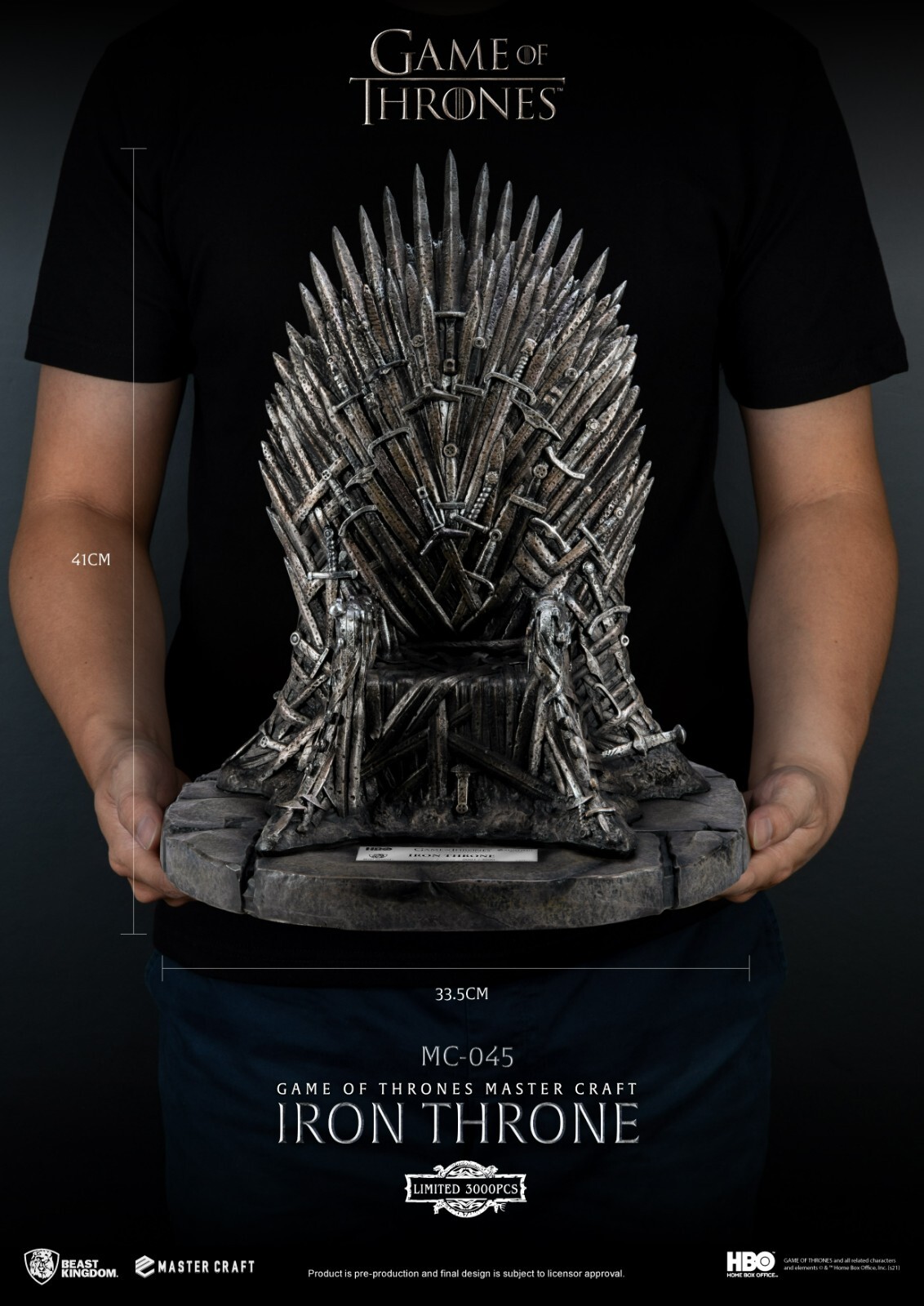
Official life-sized replicas of the Iron Throne have been sold for prices exceeding $30,000. These are typically made of fiberglass and resin rather than melted swords, but they capture the intricate detail of the HBO prop. In the world of high-end memorabilia, owning a "piece of the throne" or a scaled model is a status symbol among collectors of fantasy artifacts.
The "Destruction" Controversy
In the series finale of Game of Thrones, the Iron Throne was destroyed by the dragon Drogon following the death of Daenerys Targaryen. This narrative choice was highly symbolic—Drogon recognized that it was the "throne" (the desire for power) that had killed his mother, rather than a specific person. In the years since that finale, the destruction of the throne has remained a polarized topic among fans. Some view it as a necessary "breaking of the wheel," while others mourn the loss of the series' central icon.
Technical Specifications of the HBO Prop
While the fictional throne is made of iron swords, the production of the physical prop required significant engineering to be both safe for actors and visually convincing.
- Material Composition: The core of the throne was constructed from wood and high-density foam. The "swords" were then cast in resin or fiberglass and hand-painted to simulate the look of aged, scorched metal.
- Safety Modifications: Despite its sharp appearance, the edges of the prop swords were blunted. However, actors frequently reported that the chair was still genuinely uncomfortable to sit in for long periods, which helped them inhabit the "burdened" mindset of their characters.
- Visual Continuity: Between the filming of the original series and the various spin-offs, the prop underwent several refurbishments. In 2026, the primary screen-used throne from the original series is a centerpiece at the Warner Bros. Studio Tour in Belfast, Northern Ireland.
Frequently Asked Questions
Is the Iron Throne made of 1,000 swords?
While Aegon I is said to have used 1,000 swords, the actual number varies between the legends and the reality of the construction. In the books, it appears massive enough to contain that many, but in the television show, the number is visibly much lower. Characters like Littlefinger even mock the "thousand swords" myth, suggesting the count is closer to two hundred.
Why did Drogon melt the Iron Throne?
Drogon melted the throne after Daenerys Targaryen's death because he perceived it as the ultimate cause of her downfall. The throne represented the "wheel" of power and ambition that led to the destruction of King's Landing and Daenerys's own descent into tyranny. By melting it, the dragon symbolically ended the Targaryen pursuit of the seat.
Who was the last person to sit on the Iron Throne?
In the HBO television continuity, Cersei Lannister was the last monarch to officially sit on the Iron Throne as the sovereign ruler. Following the destruction of the Red Keep and the throne itself, the realm moved toward an elective monarchy, with Bran the Broken chosen as king, though he does not sit on a traditional "Iron Throne."
Can you buy a real Iron Throne?
Yes, official life-size replicas are available through specialized prop-replica companies and HBO-licensed distributors. These are high-fidelity models used for display. However, they are not made of real iron and do not possess the dangerous edges of the fictional version.
Where is the Iron Throne located in Westeros?
The Iron Throne is located in the Great Hall of the Red Keep, the royal castle in King's Landing. It sits upon a high dais, positioned so that the monarch looks down upon the petitioners and courtiers in the hall.
The Enduring Legacy of Aegon’s Seat
As we look back from the perspective of 2026, the Iron Throne remains the definitive symbol of the costs of ambition. It serves as a reminder that power is not merely a prize to be won, but a weight to be carried. The throne’s physical design—unyielding, sharp, and forged in fire—perfectly encapsulates the brutal political landscape of Westeros.
For writers, historians of fiction, and casual fans alike, the Iron Throne stands as a masterclass in world-building. It is an object that tells a story without saying a word, embodying the history of a continent and the flaws of the humans who strive to rule it. Whether it exists as a mountain of swords in a book or a scorched icon on a television screen, its message remains the same: the climb to the top is treacherous, but the seat at the summit is the most dangerous place of all.