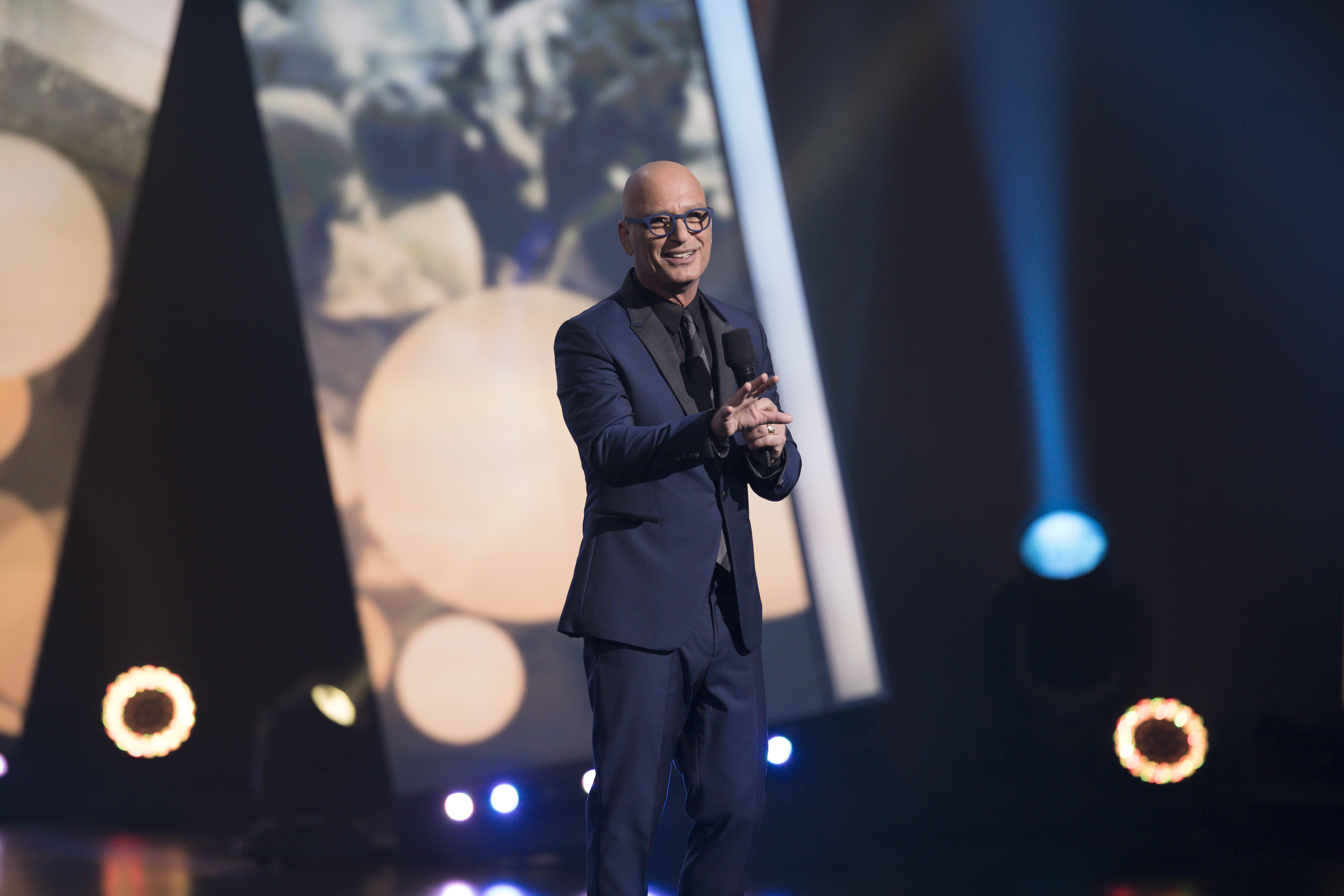
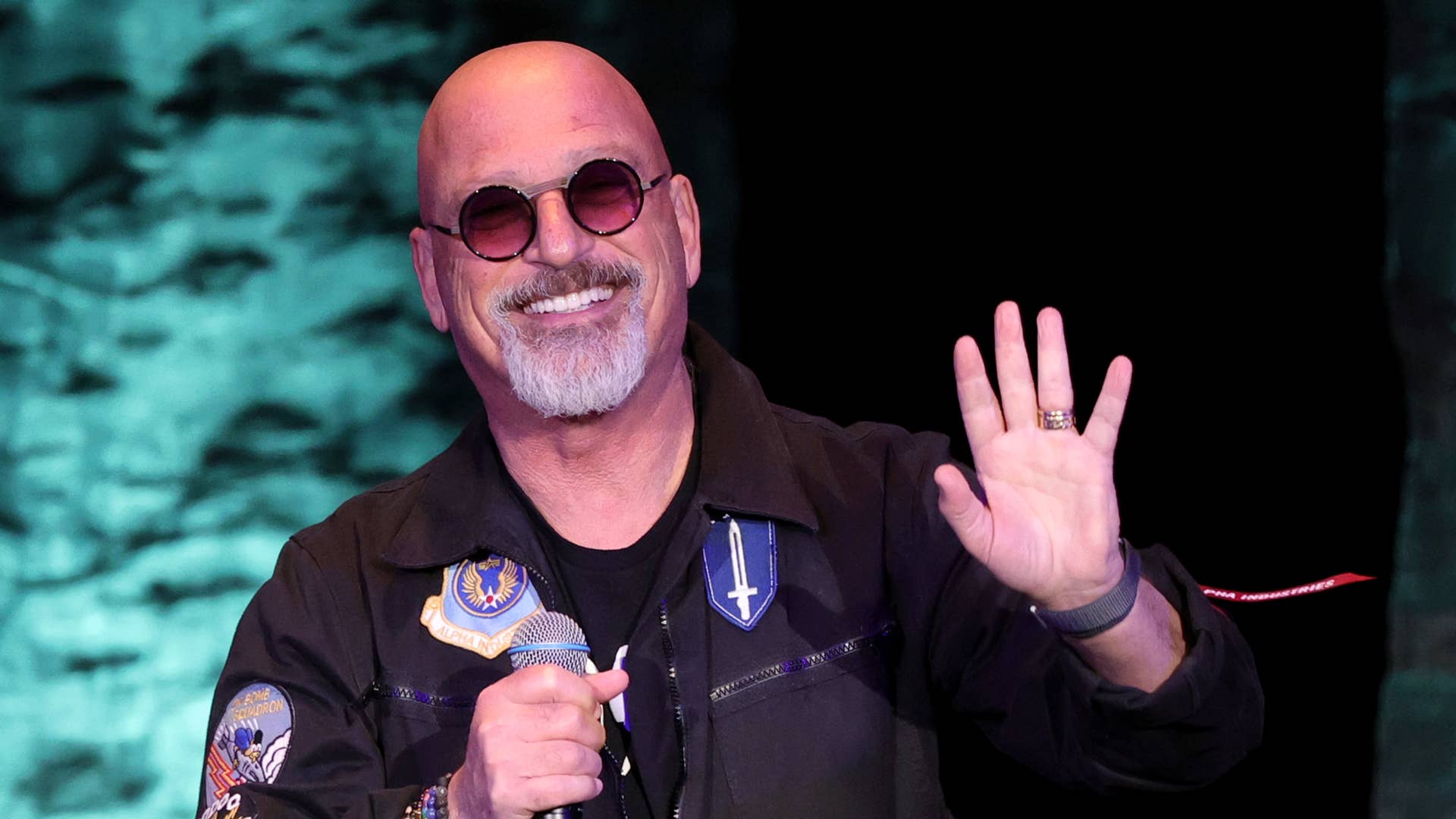
Howie Mandel is a Canadian-born entertainer whose career spans over four decades, evolving from a spontaneous stand-up comedian in the late 1970s to a ubiquitous television host, producer, and digital entrepreneur. By 2026, his legacy is defined by his record-breaking tenure as a talent judge, his advocacy for mental health, and his early adoption of social media as a primary engagement platform.
The Foundations of a Comedic Identity
The trajectory of Howie Mandel’s career began in the vibrant comedy scene of Toronto during the late 1970s. Mandel did not initially set out to be a professional performer; he was a carpet salesman who happened to participate in an open-mic night at the legendary Yuk Yuk’s. His improvisational style, which often relied on prop comedy and high-energy interactions with the audience, quickly gained traction. One of his most famous early bits involved placing a surgical glove over his head and inflating it with his nose, a surreal and physical brand of humor that became his early trademark.
In 1979, Mandel traveled to Los Angeles, where he performed at The Comedy Store. His timing was impeccable, as he was noticed by television producers during a period when stand-up was becoming a cornerstone of cable programming. This led to appearances on The Tonight Show Starring Johnny Carson and a role as a regular opening act for Diana Ross. These early years established Mandel as a performer who could bridge the gap between traditional vaudevillian physicality and the edgy, observational comedy that was beginning to dominate the 1980s.
His stand-up success was rooted in his ability to remain "in the moment." Unlike comics who relied on strictly scripted sets, Mandel’s shows were often chaotic and reactive. This unpredictability made him a favorite for late-night talk shows, where his manic energy provided a sharp contrast to the more reserved guests. Even as he transitioned into other media, Mandel never fully abandoned his roots, continuing to perform hundreds of stand-up dates annually well into the 2020s.
Breaking Into Dramatic Television: The St. Elsewhere Era
While many comedians of the 1980s were funneled into sitcoms, Mandel took a different path by joining the cast of the critically acclaimed medical drama St. Elsewhere in 1982. Playing Dr. Wayne Fiscus, Mandel demonstrated a surprising range that blended his natural wit with genuine dramatic pathos. The show ran for six seasons and is often cited as a pioneer of the "gritty" ensemble drama, providing Mandel with a level of mainstream legitimacy that few stand-up comics achieved at the time.
Dr. Fiscus was a unique character in the television landscape—a doctor who used humor as a coping mechanism within the bleak environment of St. Eligius hospital. This role allowed Mandel to showcase a softer, more vulnerable side, which would later resonate with the public when he began speaking openly about his personal life. The success of St. Elsewhere proved that Mandel was more than a "glove-on-the-head" comic; he was a versatile actor capable of carrying long-form narratives.
During his time on the show, Mandel also leaned into his talent for voice acting. In 1984, he provided the voice for Gizmo in the blockbuster film Gremlins, a role he reprised in the 1990 sequel. His high-pitched, endearing vocalizations for the character became iconic, further diversifying his professional portfolio. By the end of the 1980s, Mandel had successfully navigated three distinct lanes of entertainment: live performance, dramatic television, and major motion picture voice work.
The Animation Revolution and Bobby’s World
In the early 1990s, Mandel leveraged his comedic "Bobby" persona—a high-pitched, childlike voice he had used in his stand-up routines—to create the animated series Bobby’s World. Airing on FOX Kids from 1990 to 1998, the show was a massive success, both critically and commercially. Mandel served as the creator, executive producer, and the voice of several characters, including Bobby Generic and his father, Howard.
Bobby’s World was significant because it explored the imaginative internal life of a child, often tackling complex emotional themes through a lens of humor and fantasy. For Mandel, the show was a major business venture that established his capability as a creator and showrunner. It remained in syndication for years, introducing a new generation of fans to his brand of humor. The show’s longevity—spanning seven seasons and 84 episodes—solidified Mandel’s position as a powerhouse in children’s entertainment and intellectual property development.
The Pivot to Hosting: Deal or No Deal and America’s Got Talent
The mid-2000s marked a pivotal shift in Mandel’s career as he moved from acting and animation into the realm of unscripted television and game shows. In 2005, he accepted the role of host for the U.S. version of Deal or No Deal. Initially, Mandel was hesitant to take the job, fearing that hosting a game show might be seen as a "career killer" for a serious comedian and actor. However, the show became a cultural phenomenon.
Mandel’s hosting style was characterized by genuine empathy for the contestants and a heightened sense of tension. His catchphrase, "Deal or No Deal?", became a part of the global lexicon. The show's success led to a daytime version and several international specials, making Mandel one of the highest-paid hosts on television.
Following the success of Deal or No Deal, Mandel joined the judging panel of America’s Got Talent (AGT) in 2010, replacing David Hasselhoff. As of 2026, he is the longest-serving judge in the history of the franchise. His tenure on AGT has been defined by his honesty and his particular affinity for comedic and variety acts. His presence on the show has provided a stabilizing force through various cast changes, and his chemistry with fellow judges like Simon Cowell has been a central draw for the series.
Business Ventures and Production via Alevy Productions
Beyond his on-screen presence, Howie Mandel is a prolific businessman. Through his production company, Alevy Productions, he has developed and executive produced a wide array of projects, ranging from hidden-camera shows like Howie Do It to documentaries and specials. His approach to business is characterized by diversification; he rarely tethers his financial success to a single project.
In the 2020s, Mandel became a pioneer among "legacy" entertainers in the digital space. He recognized early on that platforms like TikTok and YouTube were not just for younger creators but were essential tools for maintaining relevance. By 2026, his digital footprint is massive, with millions of followers across social platforms where he shares a mix of behind-the-scenes content, comedic sketches, and segments from his podcast, Howie Mandel Does Stuff.
The podcast, which he co-hosts with his daughter, Jackelyn Shultz, represents a significant evolution in his business model. It allows him to own his content entirely, bypassing traditional networks and speaking directly to his audience. This venture has also allowed him to explore long-form conversations with other celebrities, often focusing on the realities of the entertainment industry and mental health.
Key Career Milestones and Roles
| Period | Project / Role | Category | Impact / Achievement |
|---|---|---|---|
| 1979–1980 | The Comedy Store / Yuk Yuk's | Stand-Up | Established his "Bobby" persona and glove-on-head bit. |
| 1982–1988 | St. Elsewhere (Dr. Wayne Fiscus) | Television Drama | Proved his range as a dramatic actor in an Emmy-winning series. |
| 1984 | Gremlins (Voice of Gizmo) | Feature Film | Created one of the most recognizable voices in cinema history. |
| 1990–1998 | Bobby's World (Creator/Voice) | Animation | Seven-season run; became a staple of 90s Saturday morning TV. |
| 2005–2019 | Deal or No Deal (Host) | Game Show | Revitalized his career and became a household name globally. |
| 2010–Present | America's Got Talent (Judge) | Reality TV | Longest-serving judge in the show's history (as of 2026). |
| 2021–Present | Howie Mandel Does Stuff | Digital/Podcast | Successful transition to independent digital media production. |
Advocacy and the Impact of Public Vulnerability
One of the most significant aspects of Howie Mandel’s career is his transparency regarding his struggles with Obsessive-Compulsive Disorder (OCD) and mysophobia (fear of germs). In an industry that historically rewarded an image of perfection, Mandel’s 2009 memoir, Here’s the Deal: Don’t Touch Me, was a watershed moment.
His decision to go public with his diagnosis was accidental (he revealed it during a Howard Stern interview), but he chose to lean into the advocacy role. By 2026, he is recognized as one of the most influential celebrity voices for mental health awareness. This advocacy has not only helped destigmatize OCD but has also humanized him to his audience, creating a deep level of trust and loyalty.
His business ventures have often intersected with his advocacy, as he has partnered with various mental health organizations and tech startups focused on psychological well-being. This "purpose-driven" aspect of his career has given him a level of longevity that transcends mere entertainment value.
Frequently Asked Questions
What was Howie Mandel's first major break in the United States?
Mandel's first major U.S. break occurred at The Comedy Store in Los Angeles in 1979. During a set, he was spotted by a producer for the game show Make Me Laugh, which led to several television appearances and eventually his casting in the dramatic series St. Elsewhere. This transition from the Toronto comedy scene to Hollywood was remarkably rapid, fueled by his unique improvisational style.
Is Howie Mandel still involved in stand-up comedy?
Yes, as of 2026, Mandel remains an active stand-up comedian. Despite his heavy filming schedules for television, he frequently tours across North America. He has often stated in interviews that stand-up is his "first love" and a necessary outlet for his creative energy. He views the live stage as the only place where he has total control over the narrative and the immediate feedback of the audience.
How did his OCD affect his role on Deal or No Deal?
Mandel’s mysophobia was a significant factor during his time on Deal or No Deal. He famously refused to shake hands with contestants, opting instead for a "fist bump." While this was initially seen as a quirky personality trait, it was later understood as a necessary boundary for his mental health. The producers of the show were supportive, and the fist bump eventually became an iconic part of the show's branding.
What is Alevy Productions?
Alevy Productions is the production company founded by Howie Mandel. It is responsible for developing a wide range of content, including the hidden-camera show Howie Do It, the reality series Mobbed, and various stand-up specials. The company serves as the primary vehicle for Mandel’s business interests, allowing him to maintain creative control over his projects and participate in the financial upside of his creations.
Has Howie Mandel ever returned to acting in scripted television?
Since St. Elsewhere, Mandel has made numerous guest appearances on scripted shows like The Big Bang Theory, Monk, and Superstore. However, he has largely focused on unscripted hosting and production roles since the mid-2000s. He has noted that the schedule of a series lead is demanding, and he currently prefers the flexibility afforded by his hosting duties and digital media ventures.
Strategizing for Career Longevity in Entertainment
For those looking to understand the "Mandel Model" of career success, the key takeaway is the importance of radical diversification. Mandel did not allow himself to be pigeonholed as a "prop comic" or a "game show host." By maintaining a presence in stand-up, drama, animation, hosting, and digital media simultaneously, he insulated himself against the natural ebbs and flows of any single industry sector.
In 2026, Mandel continues to be a relevant figure because he embraces change rather than resisting it. His transition from network television to TikTok and podcasting was not a sign of a fading career, but a strategic move to where the audience is migrating. To follow a similar path, professionals in the creative arts should prioritize owning their intellectual property and building a direct-to-consumer brand that is not entirely dependent on traditional gatekeepers.