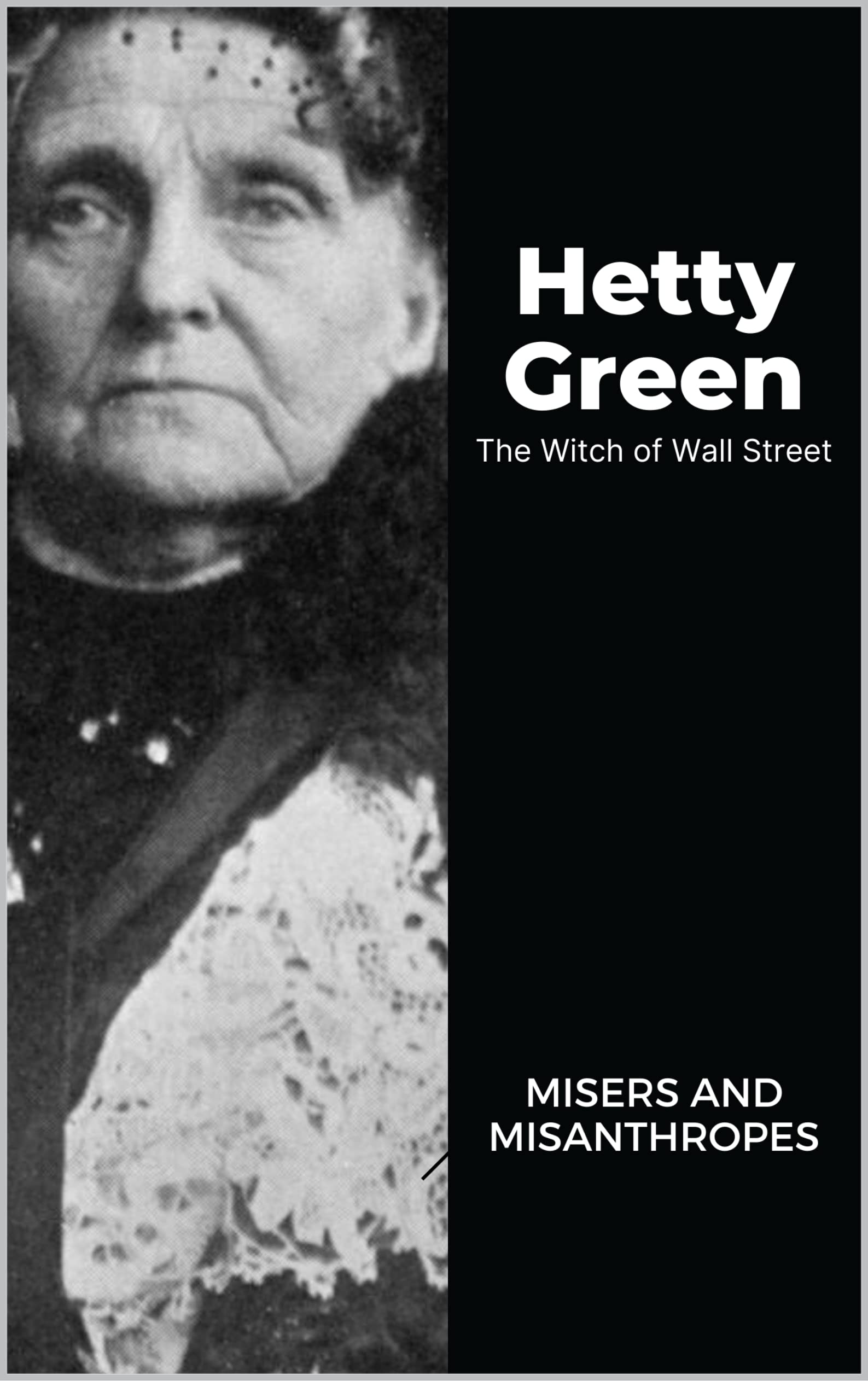
At the time of her death in 1916, Hetty Green’s net worth was estimated to be between $100 million and $200 million. Adjusted for inflation to 2026 values, this fortune is equivalent to approximately $3.2 billion to $5.8 billion, cementing her legacy as the most successful female financier in American history and one of the most disciplined value investors to ever operate on Wall Street.
Known colloquially as the "Witch of Wall Street," Henrietta "Hetty" Green was a figure of immense contradiction. While she lived a life of extreme parsimony—reportedly wearing the same black dress until it wore out and refusing to use heat or hot water—her financial acumen was unparalleled. She navigated the male-dominated world of 19th and early 20th-century finance with a ruthless focus on capital preservation and compound interest. To understand the scale of her wealth in 2026, one must look beyond the raw numbers and examine the strategic maneuvers that allowed her to outperform the titans of the Gilded Age.
The Financial Empire of Hetty Green: Calculating a Gilded Age Fortune
Determining the exact net worth of a historical figure like Hetty Green involves analyzing her diversified portfolio of real estate, government bonds, and railroad stocks. Unlike many of her contemporaries who engaged in speculative frenzies, Green’s wealth was built on the foundation of "old money" from the whaling industry, which she systematically transformed into a modern financial empire.
Upon the death of her father, Edward Mott Robinson, in 1865, Hetty inherited approximately $5 million. While a significant sum, it was her management of these funds that was extraordinary. She famously stated, "I buy when things are low and nobody wants them. I keep them until they go up and people are crazy to get them." This contrarian approach allowed her to survive and thrive during the numerous financial panics that wiped out other investors.
By the turn of the century, her holdings were so vast that she acted as a private central bank. During the Panic of 1907, when the U.S. financial system was on the verge of collapse, the City of New York turned to Hetty Green for a loan to keep the municipality afloat. She provided $1.1 million in exchange for short-term revenue bonds, a move that highlighted her liquidity in an era where even the largest banks were frozen.
The Investment Philosophy: How the "Witch of Wall Street" Built Her Wealth
Hetty Green’s investment strategy preceded the formal "value investing" schools of Benjamin Graham and Warren Buffett by several decades. Her success was rooted in three primary pillars: extreme liquidity, meticulous research, and a refusal to follow market trends.
Capital Preservation and Liquidity
Green maintained a massive cash reserve at all times. This was unusual in an era of high leverage. By holding cash, she was positioned to buy assets at a steep discount when the market crashed. Her preference for "hard" assets meant she owned thousands of acres of real estate in Chicago, New York, and across the Midwest, along with substantial holdings in the mortgage market.
Strategic Railroad and Bond Investments
She was a major stakeholder in the railroad industry, particularly the Texas & Pacific and the Erie Railroad. However, she was wary of the corporate drama and "stock watering" (issuing more shares than assets justified) prevalent at the time. She preferred government bonds—specifically Civil War-era "greenbacks"—which she bought when their value was depressed, correctly betting on the long-term stability of the United States government.
Risk Management and Due Diligence
Green was known to travel thousands of miles alone to inspect a property or a railroad line before investing. She did not rely on brokers or tips. Her legal mind was as sharp as her financial one; she spent much of her life in courtrooms defending her inheritance and her business interests, ensuring that no one could siphon off her capital through legal loopholes or predatory taxation.
Myths vs. Reality: The Truth Behind Her Frugality and Reputation
The "Witch of Wall Street" moniker was largely a creation of the sensationalist press of the era, fueled by her choice of attire and her refusal to conform to the social expectations of a wealthy woman. However, the stories of her miserliness often overshadowed her genuine financial genius.
One of the most persistent and tragic legends involves her son, Ned Green. The story claims that Hetty refused to pay for a doctor when Ned injured his leg, leading to its eventual amputation. Factual records suggest a more complex reality: while Hetty did attempt to seek treatment at a free clinic for the poor (a sign of her obsession with saving money), she eventually sought private medical care. The delay, combined with the limited medical technology of the 1880s, resulted in the loss of the leg. This incident fueled the public perception of her as a cold-hearted miser.
Her frugality was not merely a quirk; it was a psychological shield. Growing up in a Quaker household and witnessing the volatility of the whaling industry, she viewed every penny spent as a loss of potential compound interest. She famously did not have an office, instead using the floor of the Chemical Bank in New York to conduct her million-dollar transactions, thereby avoiding rent and overhead.
Comparative Wealth: Hetty Green vs. Modern Billionaires
To appreciate Green's wealth in 2026, we must compare her to modern figures using "relative output" or "share of GDP" metrics. While a $200 million fortune might seem small compared to the $200 billion net worths of modern tech moguls, her influence on the economy of 1916 was arguably greater.
| Feature | Hetty Green (1916) | Inflation-Adjusted (2026) | Modern Comparison Notes |
|---|---|---|---|
| Total Estimated Net Worth | $100M - $200M | $3.2B - $5.8B | Equivalent to a top-tier hedge fund manager today. |
| Primary Asset Class | Real Estate & Bonds | Real Estate & Debt | Similar to a "Value" Private Equity firm. |
| Liquidity Level | Extremely High | Multi-Billion Cash Position | Comparable to Berkshire Hathaway's cash hoard. |
| Real Estate Holdings | 6,000+ Properties | Diversified National Portfolio | One of the largest private landlords in history. |
| Annual Income | $5M - $10M | $150M - $300M | Purely from interest and dividends. |
In the context of 1916, there were no federal income taxes for much of her career (the 16th Amendment was ratified in 1913), meaning her wealth accumulation was much faster and more efficient than is possible for modern investors. She was essentially a one-woman institutional investment fund.
Legacy and Inheritance: What Happened to the Green Fortune?
When Hetty Green passed away in 1916, her fortune was divided between her two children, Ned and Sylvia. The fate of the money provides a stark contrast to the way it was earned.
Ned Green, who had been dominated by his mother for most of his life, became a world-class spendthrift. He invested in rare stamps, coins, yachts, and a massive estate in Massachusetts. He became a patron of early radio and aviation, effectively spending a significant portion of his half of the inheritance.
Sylvia Green Wilks, on the other hand, lived a much quieter life. When she died in 1951, her estate was valued at approximately $90 million (roughly $1 billion today). Since she had no heirs, the vast majority of the remaining Green fortune was donated to dozens of charities, hospitals, and educational institutions. Thus, the money that Hetty Green spent a lifetime ruthlessly accumulating and guarding was eventually dispersed into the public sector, benefiting the very society that had once mocked her.
Analyzing the 2026 Perspective on Her Financial Tactics
In 2026, Hetty Green is viewed less as a "witch" and more as a pioneer of female empowerment in the financial sector. Her ability to navigate a system designed to exclude women is a case study in resilience.
- Direct Control of Assets: She refused to place her money in trusts controlled by men, a common practice for women of her era. This allowed her to maintain 100% decision-making power.
- Tax Avoidance vs. Tax Evasion: She famously moved between apartments in New Jersey and New York to avoid establishing a permanent residence that would subject her to certain taxes—a precursor to modern tax residency strategies used by the ultra-wealthy.
- Debt Aversion: In an age where many "robber barons" were built on shaky debt structures, Green’s empire was unleveraged. This made her "un-killable" during market downturns.
Essential Facts for the Modern Investor
For those looking to apply Green’s principles in the current economic climate of 2026, her life offers several actionable lessons. She proved that wealth is not just about what you earn, but what you keep. Her focus on "unfashionable" assets and her willingness to wait for the right price are the hallmarks of successful long-term investing.
Common Questions Regarding Hetty Green's Wealth
Was Hetty Green actually the richest woman in the world?
Yes, during the late 19th and early 20th centuries, she was widely considered the wealthiest woman in the world. While European royalty held vast lands, Hetty Green’s wealth was unique because it was liquid, privately held, and managed entirely by her rather than through state or crown estates.
How did she make her first million?
Her first significant wealth came from an inheritance of $5 million from her father and aunt. However, she made her "first million" of independent profit by investing heavily in "greenbacks" (U.S. notes) during the Civil War. While others feared the Union might lose or the currency would be devalued, she bought them at a discount and saw them return to par value after the war.
Why was she called the "Witch of Wall Street"?
The nickname was primarily due to her appearance. Following the death of her father and later her husband, she wore black mourning clothes for the rest of her life. Her habit of appearing in the halls of banks looking like a character from a Gothic novel, combined with her sharp tongue and aggressive business tactics, led the press to give her the disparaging title.
Did she really eat only oatmeal heated on a radiator?
There is historical evidence that she practiced extreme frugality, including eating inexpensive food like oatmeal and pie. However, some stories were likely exaggerated by journalists. The core truth is that she viewed any personal expenditure as a waste of capital that could be better used for investment.
What was her most successful investment?
While she had many successes, her investments in Chicago real estate and the mortgage markets were perhaps her most stable and lucrative. She anticipated the growth of the American West and bought land and provided loans in developing areas long before they became prime real estate.
Strategic Takeaways for Wealth Preservation
If you are looking to emulate the financial stability of Hetty Green, the primary takeaway is the importance of counter-cyclical investing. In 2026, as in 1916, the temptation to follow the crowd into speculative "hot" sectors is high. Green’s success serves as a reminder that true, lasting wealth is built by buying undervalued assets, maintaining high liquidity, and ignoring the social pressures of the era.
To further explore her impact, modern investors should study the history of the Panic of 1907 and the role of private lenders in municipal finance. Hetty Green’s life remains the definitive example of how a disciplined individual can outperform an entire market by adhering to the fundamental principles of value and patience.