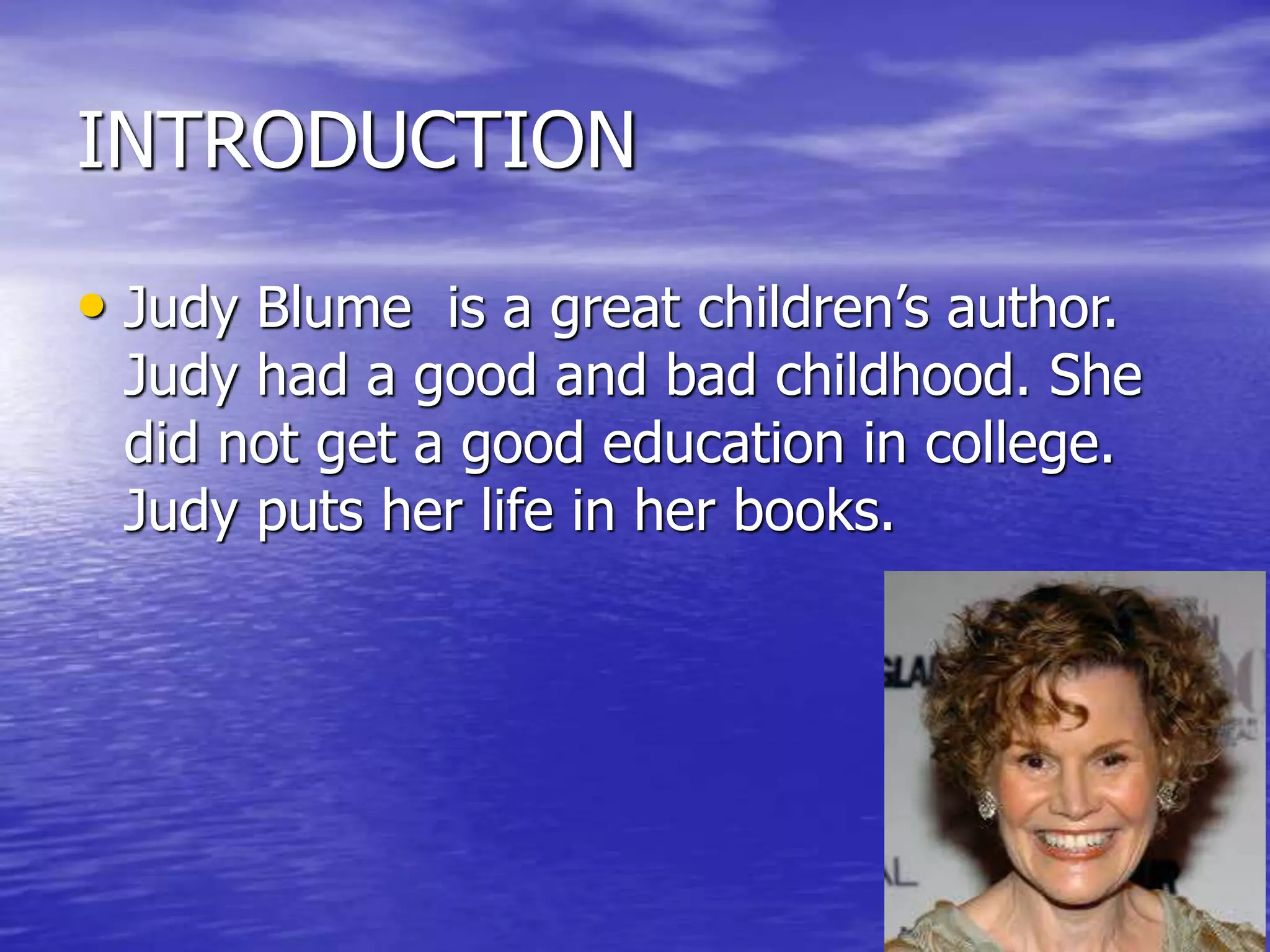
Judy Blume transformed modern literature by bringing unprecedented candidness, emotional realism, and vulnerability to children's, middle-grade, and young adult fiction. Since her publishing debut in 1969, Blume’s body of work has addressed previously taboo subjects—such as puberty, body image, sexuality, religion, and family dissolution—offering generations of young readers an empathetic, authentic voice.
The Evolution of Judy Blume's Literary Career
Judy Blume (born Judy Sussman in 1938 in Elizabeth, New Jersey) began her writing career in the late 1960s, a period when American children's literature was dominated by idealized narratives, clear moral lessons, and sanitized depictions of family life. Blume broke away from these conventions by capturing the raw, unedited internal monologues of young people navigating physical, emotional, and social transformations.
Her early publications, beginning with the illustrated children's book The One in the Middle Is the Green Kangaroo (1969) and her breakthrough middle-grade novel Are You There God? It's Me, Margaret. (1970), established a new standard for realistic fiction. Rather than lecturing her audience, Blume wrote from the perspective of her characters, acknowledging their anxieties, secret thoughts, and awkward experiences without judgment.
Key Timeline of Publishing Milestones:
- 1969: "The One in the Middle Is the Green Kangaroo" (Debut publication)
- 1970: "Are You There God? It's Me, Margaret." (Breakthrough middle-grade novel)
- 1972: "Tales of a Fourth Grade Nothing" (Launch of the beloved Fudge series)
- 1975: "Forever..." (Pioneering explicit YA novel about teenage relationships)
- 1978: "Wifey" (Transition into adult commercial fiction)
- 1998: "Summer Sisters" (New York Times bestselling adult novel)
- 2015: "In the Unlikely Event" (Historical adult fiction inspired by real events)
Over a career spanning more than five decades, Blume published over 20 books across multiple age categories, selling more than 85 million copies worldwide in over 30 languages. Her ability to pivot between humorous early-elementary series and groundbreaking young adult (YA) and adult fiction cements her position as one of the most versatile and influential American authors of the modern era.
Essential Middle-Grade and Young Adult Classics
Blume’s reputation rests largely on her groundbreaking middle-grade and YA novels written throughout the 1970s and early 1980s. These works defined the modern coming-of-age narrative.
Are You There God? It's Me, Margaret. (1970)
Centered on eleven-year-old Margaret Simon, this novel explores the dual anxieties of impending physical maturation and spiritual identity. Moving to a new suburb, Margaret navigates the physical developments of puberty alongside a private search for religious truth, speaking directly to God in unstudied personal prayers. Blume’s respectful, unvarnished depiction of menstruation, physical development, and interfaith family dynamics made the book an immediate touchstone for young readers.
The Fudge Series (1972–2002)
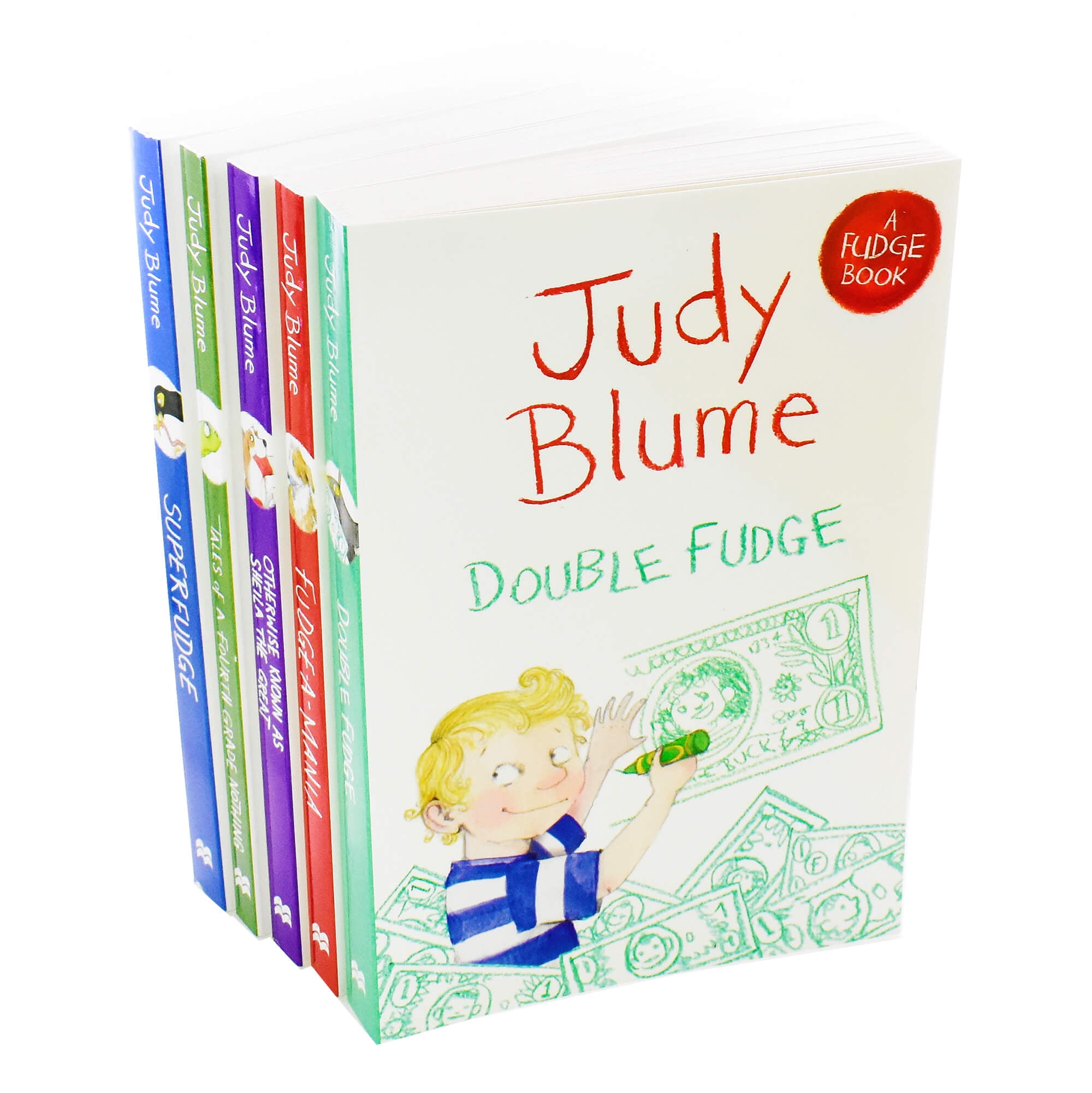
Beginning with Tales of a Fourth Grade Nothing (1972), Blume introduced Peter Hatcher and his chaotic younger brother, Farley Drexel "Fudge" Hatcher. Spanning five books—including Superfudge (1980), Fudge-a-Mania (1990), and Double Fudge (2002)—the series captures sibling rivalry, parental patience, and childhood frustration. Through Peter's pragmatic narrative voice, Blume treats the real grievances of childhood with humor and dignity.
Deenie (1973) and Blubber (1974)
In Deenie, Blume addresses body image, adolescent masturbation, and physical disability through a protagonist diagnosed with idiopathic scoliosis requiring a severe physical brace. In Blubber, Blume offers an unsparing look at peer bullying, mob mentality, and cruelty among fifth-grade girls. Notably, Blubber avoids tidy moral conclusions, forcing readers to confront how peer pressure drives ordinary children to participate in systemic social exclusion.
Forever... (1975)
Perhaps Blume’s most controversial YA novel, Forever... tells the story of high school seniors Katherine Danziger and Michael Wagner as they experience their first serious romantic and sexual relationship. Blume’s decision to portray teenage sexual activity as a natural, non-punitive aspect of growing up—complete with responsible discussions of birth control, consent, and emotional health—was unprecedented in mainstream young adult literature.
Tiger Eyes (1981)
Addressing darker, mature themes, Tiger Eyes follows fifteen-year-old Davey Wexler in the aftermath of her father’s violent murder during a store robbery. Moving with her grieving mother and brother to Los Alamos, New Mexico, Davey faces severe panic attacks, overwhelming grief, and identity loss. The novel remains widely praised for its psychological depth and authentic portrayal of adolescent grief processing.
Crossing Genres: Judy Blume's Adult Fiction
While best known for her children's and YA titles, Judy Blume established a parallel track as a bestselling writer of adult commercial fiction. Her adult novels examine female identity, sexual liberation, marriage, and long-term friendship.
- Wifey (1978): Blume’s adult debut centers on Sandy Pressman, a 1970s suburban housewife dissatisfied with her conventional marriage and restricted social role. The novel explores female sexual agency, suburban malaise, and self-discovery, proving Blume’s ability to capture adult women's emotional lives with the same honesty she applied to teenagers.
- Smart Women (1984): Set in Boulder, Colorado, this novel examines the complexities of divorce, single parenthood, middle-aged romance, and female friendship. Blume highlights the personal realignments experienced by women restructuring their lives after marital dissolution.
- Summer Sisters (1998): Spending more than five months on the New York Times bestseller list, Summer Sisters tracks the complex, decades-long friendship between Vix Leonard and Caitlin Somers from their teenage summers on Martha's Vineyard into adulthood. The book analyzes female intimacy, social class differences, envy, and how childhood bonds evolve over time.
- In the Unlikely Event (2015): Inspired by real-life events from Blume’s childhood in Elizabeth, New Jersey, this historical novel revolves around three commercial plane crashes that occurred in her hometown over a three-month period in the winter of 1951–1952. The narrative explores how collective trauma impacts a tight-knit community across multiple generations.
Central Themes That Redefined Realism in Fiction
Judy Blume’s enduring literary impact stems from her willingness to explore topics that traditional publishing had previously suppressed.
Normalizing Adolescent Development and Body Realism
Before Blume, literary depictions of puberty were often euphemistic or clinical. Blume normalized physical changes by grounding them in ordinary thoughts and daily behaviors. Her characters voice worries about growth spurts, physical symmetry, menstruation, wet dreams, and physical attraction. By treating adolescent physiology as a normal topic, Blume alleviated the isolation and shame many young readers experienced.
Candid Exploration of Mental Health and Grief
Blume frequently depicts young people managing severe stress, anxiety, and bereavement. In Tiger Eyes, Davey’s somatic symptoms—such as hyperventilation and debilitating stomach pain—illustrate the physical toll of psychological trauma. Similarly, in Then Again, Maybe I Won't (1971), Tony Miglione develops stomach ulcers due to family financial changes and unresolved anxieties surrounding emerging sexuality.
Socio-Relational Dynamics and Unfiltered Realism
Blume resists the temptation to create idealized child protagonists. Her characters display envy, selfishness, fear, and moral ambivalence. In Blubber, the protagonist Jill freedom-tests her own moral boundaries by participating in the harassment of a classmate, illustrating how peer environments influence individual behavior. This lack of didactic lecturing allows readers to draw their own ethical conclusions.
Core Thematic Pillars in Blume's Work:
- Physical Realism (Puberty, body development, sexual education)
- Socio-Emotional Integrity (Bullying, peer pressure, complex family dynamics)
- Psychological Truth (Grief, anxiety, somatic responses to trauma)
- Moral Autonomy (Absence of heavy-handed moralizing; authentic youth perspective)
Censorship, Challenges, and Free Speech Advocacy
Because of her refusal to sanitize adolescent experiences, Judy Blume became one of the most frequently challenged and banned authors in late 20th-century American public schools and libraries.
According to data compiled by the American Library Association (ALA), titles such as Forever..., Are You There God? It's Me, Margaret., Deenie, and Blubber repeatedly appeared on top challenged book lists throughout the 1980s, 1990s, and 2000s. Critics typically cited explicit depictions of sexuality, discussions of masturbation, raw language, and non-traditional perspectives on religion and parental authority as grounds for removal.
Common Historical Arguments for Censorship vs. Literary Reality:
- Argument: "Content is too sexually explicit for adolescents."
- Fact: Blume presents age-appropriate, realistic relationship health, birth control context, and honest emotional development.
- Argument: "Undermines parental authority or religious tradition."
- Fact: Characters engage in personal reflection, seeking spiritual identity and wrestling with family expectations.
- Argument: "Deals with inappropriate social topics (e.g., bullying, divorce)."
- Fact: Provides readers with healthy cognitive models to process grief, peer pressure, and changing family structures.
In response to these persistent challenges, Blume became an outspoken advocate for intellectual freedom. She edited the 1999 essay collection Places I Never Meant to Be: Original Stories by Censored Writers and partnered extensively with the National Coalition Against Censorship (NCAC) to defend students' right to read. Blume argued that banning books does not protect children from real-world issues; instead, it deprives them of a safe space to process complex realities through literature.
Contemporary Adaptations and Enduring Cultural Legacy
Blume’s work continues to exert a powerful influence on contemporary popular culture, contemporary publishing, and new media adaptations.
Major Screen Adaptations
While Blume guarded the film rights to her primary works for decades, recent years saw significant high-profile adaptations:
- Are You There God? It's Me, Margaret. (2023): Written and directed by Kelly Fremon Craig and produced by James L. Brooks, the feature film adaptation received widespread critical acclaim. Starring Abby Ryder Fortson as Margaret and Rachel McAdams as her mother, the film was praised for faithfully capturing the book's period detail, humor, and emotional warmth.
- Judy Blume Forever (2023): Directed by Davina Pardo and Tracy Droz Tragos, this documentary film traces Blume’s life, literary impact, and role in censorship debates. The film highlights her extensive correspondence with young readers who wrote letters seeking advice and comfort over several decades.
Influence on Modern Authors
Blume effectively created the modern young adult genre by expanding its boundaries. Authors such as Jacqueline Woodson, Raina Telgemeier, Jason Reynolds, and Beverly Cleary (in her later works) have credited Blume with pioneering authentic middle-grade and YA realistic fiction. By proving that young readers prefer honest stories over moral fables, she cleared the path for contemporary writers to tackle complex social issues without self-censorship.
Comprehensive Reading Guide: Major Works by Judy Blume
The following table provides a structured breakdown of Judy Blume's primary works, categorizing them by publication timeline, target audience, core themes, and historical significance.
| Book Title | Release Year | Primary Target Audience | Core Themes & Subject Matter | Literary & Cultural Significance |
|---|---|---|---|---|
| Are You There God? It's Me, Margaret. | 1970 | Middle Grade (Ages 9–12) | Puberty, body development, interfaith identity, personal faith | Established modern realistic middle-grade fiction; major cultural milestone |
| Then Again, Maybe I Won't | 1971 | Middle Grade (Ages 10–13) | Male puberty, class mobility, bodily changes, anxiety | Rare early focus on young male physical and emotional maturation |
| Tales of a Fourth Grade Nothing | 1972 | Elementary / Middle Grade | Sibling dynamics, family life, childhood frustration | Launched the multi-generational Fudge series |
| Deenie | 1973 | Middle Grade / YA | Physical disability (scoliosis), body image, self-discovery | Normalized physical health struggles and female self-exploration |
| Blubber | 1974 | Middle Grade (Ages 9–12) | Peer bullying, mob psychology, social dynamics | Unsparing look at childhood social dynamics without clean moral resolution |
| Forever... | 1975 | Young Adult (Ages 14+) | First love, adolescent sexuality, consent, birth control | Groundbreaking YA novel portraying healthy teenage sexual decisions |
| Starring Sally J. Freedman as Herself | 1977 | Middle Grade (Ages 9–12) | Post-WWII childhood, Jewish identity, trauma, imagination | Semi-autobiographical work capturing post-war childhood anxieties |
| Wifey | 1978 | Adult Fiction | Suburban dissatisfaction, female agency, sexual liberation | Successful debut in commercial adult fiction |
| Superfudge | 1980 | Elementary / Middle Grade | Family relocation, new siblings, childhood humor | Classic bestseller expanding Peter and Fudge's sibling relationship |
| Tiger Eyes | 1981 | Young Adult (Ages 12+) | Violent loss, grief processing, trauma recovery | Deep psychological exploration of loss and healing in young adults |
| Smart Women | 1984 | Adult Fiction | Post-divorce life, middle-aged romance, female friendship | Candid look at changing modern family structures |
| Summer Sisters | 1998 | Adult Fiction | Long-term female friendship, class differences, identity | Major bestseller analyzing decades-long female relationships |
| In the Unlikely Event | 2015 | Adult Historical Fiction | Community trauma, 1950s history, multi-generational memory | Historical fiction based on real aviation disasters in Blume's hometown |
Frequently Asked Questions
What was Judy Blume's first published book?
Judy Blume’s first published book was The One in the Middle Is the Green Kangaroo, released in 1969. It is an illustrated early-reader chapter book about a middle child named Freddy Dissel who struggles to find his unique identity between an older brother and a younger sister.
Why is Forever... considered a groundbreaking young adult novel?
Forever... (1975) was groundbreaking because it presented teenage sexual activity as a natural, healthy aspect of emotional development rather than a moral failure or a path to tragedy. Blume included candid conversations about birth control, sexual health, and consent, treating young adults with intellectual and emotional respect.
Has Judy Blume won any lifetime achievement literary awards?
Yes. Judy Blume has received numerous major honors, including the National Book Foundation's Medal for Distinguished Contribution to American Letters (2004) and the Library of Congress Living Legend Award in the Writers and Artists category (2000). She was also awarded the Margaret A. Edwards Award by the American Library Association in 1996 for her significant contribution to young adult literature.
What inspired Judy Blume to write In the Unlikely Event?
In the Unlikely Event (2015) was inspired by real events from Blume's youth in Elizabeth, New Jersey. Between December 1951 and February 1952, three separate commercial airplanes crashed in her hometown. Blume drew upon her memories of the anxiety, grief, and community resilience during those months to write the historical adult novel.
How did Judy Blume respond to her books being banned?
Blume became an active campaigner against literary censorship. She joined the board of the National Coalition Against Censorship (NCAC), edited a collection of stories by banned authors titled Places I Never Meant to Be, and frequently spoke out at library and educational events to advocate for intellectual freedom and young people's right to read candid books.
Navigating Judy Blume's Catalog: Recommended Reading Paths
For readers exploring Judy Blume's books for the first time or revisiting her work, choosing the right entry point depends on age group and genre interest:
Recommended Reading Paths:
- Path 1: Middle-Grade Realism (Ages 8-12)
- Step 1: "Tales of a Fourth Grade Nothing" (Lighthearted humor & family dynamics)
- Step 2: "Are You There God? It's Me, Margaret." (Coming-of-age & body development)
- Step 3: "Blubber" (Navigating peer relations & moral choices)
- Path 2: Young Adult Deep Dives (Ages 13+)
- Step 1: "Deenie" (Body image & self-acceptance)
- Step 2: "Tiger Eyes" (Processing loss & psychological healing)
- Step 3: "Forever..." (Relationships, intimacy & emotional maturity)
- Path 3: Adult Contemporary & Historical Fiction
- Step 1: "Summer Sisters" (Female friendship & dynamic relationships)
- Step 2: "Wifey" (Suburban life & personal identity)
- Step 3: "In the Unlikely Event" (Historical drama & collective memory)
By approaching her catalog through these structured paths, readers can appreciate how Judy Blume bridged the gap between childhood curiosity and adult self-discovery. Her commitment to truthfulness ensures that her novels remain as relevant, empathetic, and vital today as when they were first written.