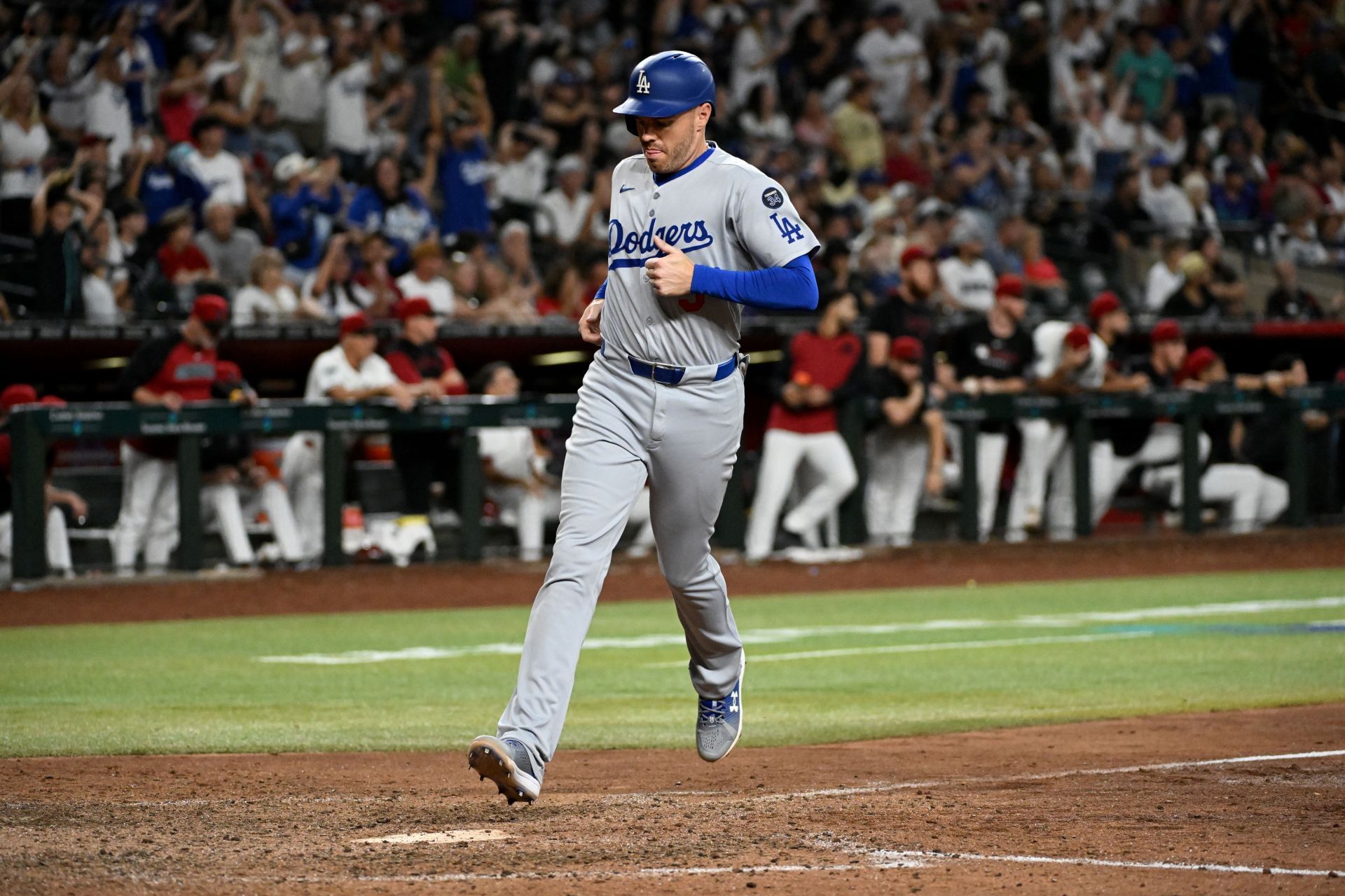
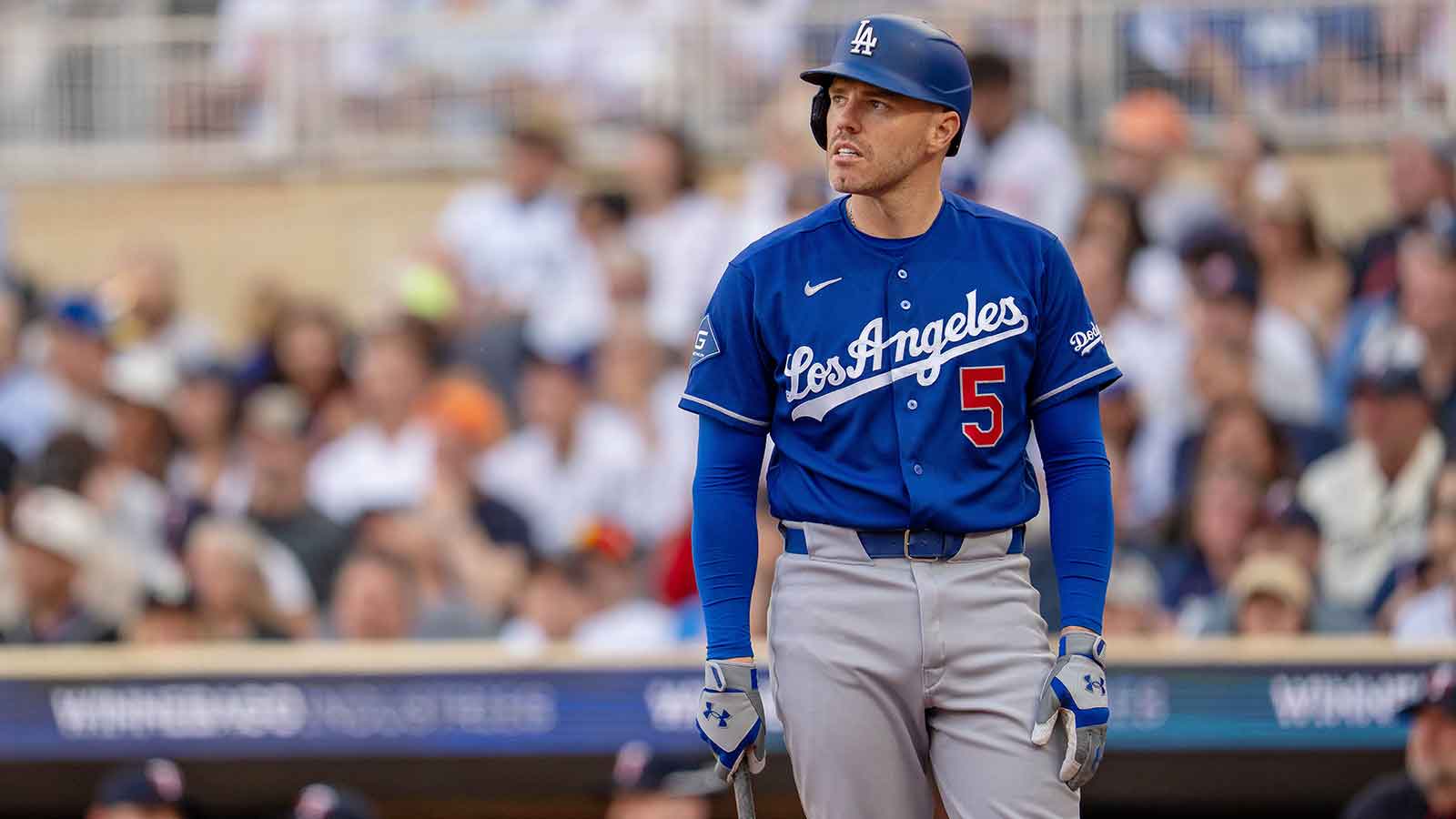
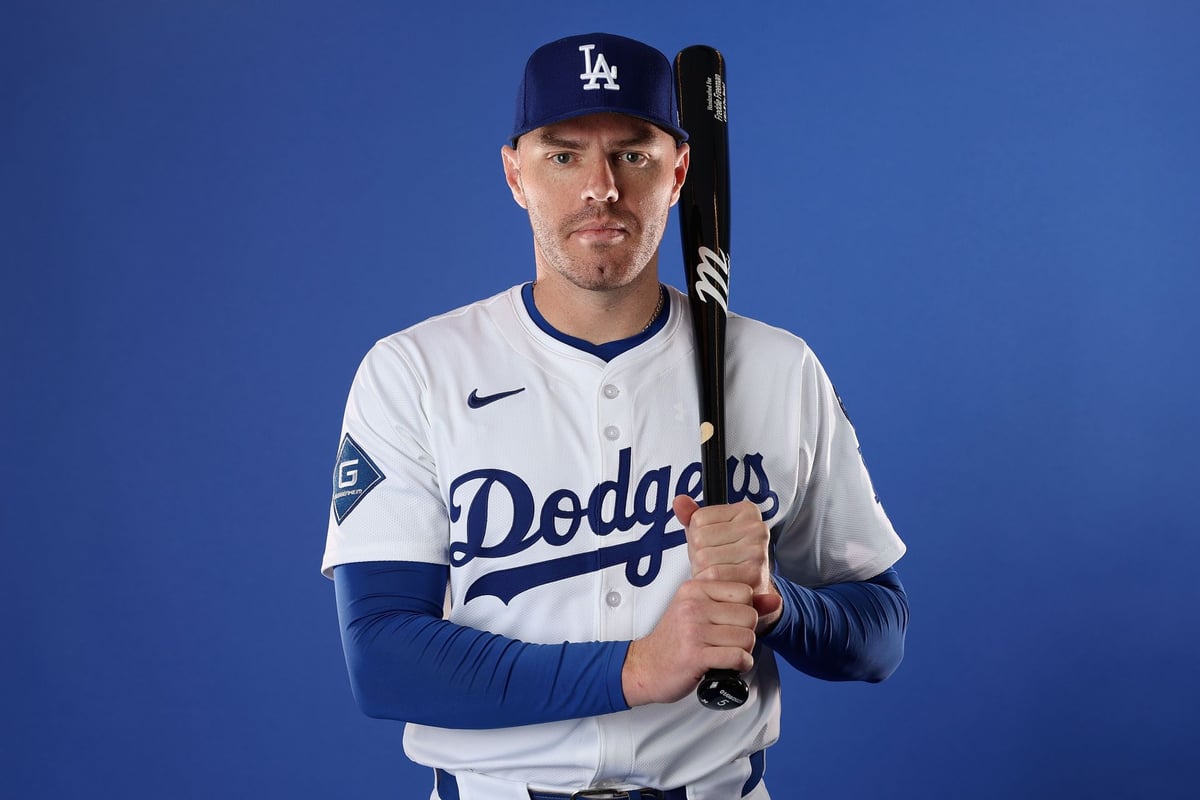
Freddie Freeman remains one of the most complete and valuable overall players in Major League Baseball. Signed to a six-year, $162 million contract with the Los Angeles Dodgers prior to the 2022 season, Freeman consistently generates elite offensive metrics, including an OPS near .900 and a high-volume durability that makes his contract an exceptional bargain for a superstar performer.
Freddie Freeman's Current Performance and Statistical Profile
To understand Freddie Freeman’s status in modern baseball, one must look at the remarkable consistency of his offensive output. Unlike hit-or-miss power hitters who rely strictly on home run volume, Freeman maintains an elite hitting foundation built on high batting averages, exceptional on-base skills, and elite line-drive power.
His traditional slash line consistently flirts with a .300 batting average, a .390 to .400 on-base percentage (OBP), and a slugging percentage (SLG) around .500. This operational baseline delivers an OPS (On-Base Plus Slugging) regularly exceeding .880, making him a perennial threat in the heart of any order. Beyond standard box score numbers, advanced sabermetrics further validate his ongoing dominance:
- Weighted Runs Created Plus (wRC+): Freeman consistently posts a wRC+ between 140 and 160. Because 100 represents league average, this indicates that Freeman produces offensive output roughly 40% to 60% better than the average MLB hitter.
- Plate Discipline and Contact Rates: Freeman boasts one of the most refined strike zone discipline profiles in the major leagues. He maintains a walk rate near 10% to 12% while keeping his strikeout rate around 15%, an extraordinarily low mark for a middle-of-the-order slugger in today's high-velocity pitching environment.
- Expected Metrics (xBA and xSLG): Statcast data consistently ranks Freeman in the highest percentiles for expected batting average (xBA), expected slugging (xSLG), and sweet-spot percentage. His ability to hit line drives to all fields insulates him against dramatic modern defensive shifts and pitching adjustments.
- Wins Above Replacement (WAR): Freeman regularly delivers between 4.5 and 6.5 bWAR/fWAR per full season. This volume of annual WAR generation places him firmly in the top tier of all position players across both the National and American Leagues.
His durability is equally integral to his statistical profile. Freeman routinely plays in 158 to 161 games per season, offering an exceptionally high floor of dependable daily production that few modern stars replicate.
The 6-Year, $162 Million Contract: Terms, Structure, and Deferrals
In March 2022, after spending twelve seasons with the Atlanta Braves, Freddie Freeman signed a six-year, $162 million free-agent contract with the Los Angeles Dodgers. The contract runs through the 2027 season, covering his age-32 through age-37 years.
While the headline average annual value (AAV) of the deal sits at $27 million per season, the financial mechanics of the contract are structured with significant salary deferrals:
Contract Length: 6 Years (2022–2027) Total Nominal Value: $162,000,000 Base Annual Salary: $27,000,000 Deferred Compensation: $57,000,000 total ($9.5M deferred annually) Competitive Balance Tax (CBT) Hit: ~$23.6 Million AAV
Under the agreement, the Dodgers defer $9.5 million of Freeman’s $27 million annual salary each season from 2022 through 2027. The $57 million in total deferred money will be paid out without interest between 2040 and 2054. Because of the present-day net value discounting rules applied under Major League Baseball's Collective Bargaining Agreement, the official luxury tax (Competitive Balance Tax) hit for the Dodgers is approximately $23.6 million per year rather than the full $27 million.
This financial structure provided immediate accounting flexibility for Los Angeles, allowing the club to keep its overall CBT payroll lower while securing a franchise cornerstone. For Freeman, it provided a guaranteed long-term payout structure extending decades into his retirement.
Evaluating On-Field Value vs. Financial Cost
Evaluating whether a player is "worth" their contract requires measuring their dollar-per-WAR contribution against the current market rate for free agents. In recent years, one win above replacement on the open market has been valued between $8 million and $10 million.
At an effective CBT hit of roughly $23.6 million per season, Freeman only needs to produce approximately 2.5 to 3.0 WAR annually to break even on his financial commitment. Because he consistently produces between 4.5 and 6.5 WAR per year, Freeman generates massive surplus value for the Dodgers.
When placed alongside other elite first basemen and veteran sluggers around Major League Baseball, the value of Freeman's contract becomes even clearer:
- Matt Olson (Atlanta Braves): Signed an 8-year, $168 million extension ($21 million AAV). While slightly cheaper per year and younger, Olson's profile carries more strikeout volatility compared to Freeman's elite contact and OBP skills.
- Paul Goldschmidt (St. Louis Cardinals): Signed a 5-year, $130 million extension ($26 million AAV). Goldschmidt enjoyed an MVP season in 2022, but experienced a sharper age-related decline in subsequent seasons.
- Bryce Harper (Philadelphia Phillies): Signed a 13-year, $330 million contract ($25.3 million AAV). Harper provides similar superstar offensive production while transitioning to first base, though on a much longer operational contract timeline.
Freeman’s contract represents one of the most efficient mega-deals in recent baseball history. Rather than paying for past performance, the Dodgers paid for prime late-career output, and Freeman has overdelivered on that investment.
Comprehensive Overview: Production and Contract Metrics
The following matrix provides a breakdown of Freddie Freeman’s financial contract specifications alongside his established operational baseline and performance metrics.
| Metric / Contract Element | Operational Data & Specifications | Strategic Context & Impact |
|---|---|---|
| Contract Duration | 6 Years (2022–2027) | Covers ages 32 through 37 |
| Total Contract Value | $162,000,000 | Fully guaranteed contract |
| Average Annual Value (AAV) | $27,000,000 | Nominal baseline annual compensation |
| Effective CBT Luxury Tax Hit | ~$23.6 Million | Discounted due to $57M in total deferred payments |
| Deferred Payout Schedule | $9.5M per year paid 2040–2054 | Substantially lowers present-day team tax burden |
| Average Annual War Generation | 4.5 – 6.5 bWAR / fWAR | Exceeds the standard $8M/WAR baseline efficiency |
| Base Hitting Baseline | ~.300 BA / .390 OBP / .500 SLG | Ranks consistently among top 5% of MLB hitters |
| Offensive Index (wRC+) | 140 – 160 wRC+ | Produces 40% to 60% more runs than league average |
| Fielding & Position Value | Above-average at First Base | Positive Outs Above Average (OAA) and Defensive Runs Saved (DRS) |
| Durability Profile | 158–161 games played per year | Leads MLB in plate appearances and operational stability |
Clutch Performance and Postseason Impact
Regular season statistics establish a player’s financial floor, but postseason heroism dictates their ultimate legacy and franchise value. Freeman has cemented his place as one of the most dependable postseason performers of his generation.
His career milestone moment arrived during the 2024 World Series with the Los Angeles Dodgers. Playing through severe physical ailments—including a sprained ankle—Freeman delivered a historical performance that earned him the 2024 World Series Most Valuable Player award.
Key postseason highlights include:
- Game 1 Walk-Off Grand Slam: In the bottom of the 10th inning of Game 1 of the 2024 World Series, Freeman hit the first dramatic walk-off grand slam in World Series history, setting the tone for the entire championship series.
- Consecutive Home Run Record: Freeman set a Major League record by hitting a home run in six consecutive World Series games (dating back to his final two World Series games with the Atlanta Braves in 2021 through the first four games of the 2024 series).
- Run Production: He tied the record for most RBIs in a single World Series with 12, driving the Dodgers to a championship victory.
This championship impact transforms a contract that was already financially efficient into a historic success. Freeman was brought to Los Angeles to win championships, and his postseason output delivered on that promise completely.
Aging Curve and Future Outlook
As Freeman navigates the second half of his contract, the primary question facing analysts is how his game will age through his mid-to-late 30s.
Most baseball players experience a sharp decline in bat speed and contact quality after age 34. However, Freeman’s unique skill set offers several reasons for optimism:
- Short, Compact Swing Mechanics: Freeman does not rely on maximum physical effort or violent rotational torque to generate power. His inside-out swing path allows him to handle high velocity inside while driving outside pitches to the opposite-field gap.
- Plate Discipline Doesn't Age Poorly: Pitch recognition and strike zone awareness are among the last skills to erode. Even as raw physical reflexes slow down, Freeman’s ability to draw walks and lay off out-of-zone pitches keeps his on-base percentage high.
- Positional Stability: First base carries less physical wear and tear on the body than shortstop, center field, or catching. Freeman's conditioning and light defensive burden lower his risk of catastrophic soft-tissue injuries.
While his stolen base numbers or extra-base hit totals may naturally soften late in the deal, Freeman is projected to remain an above-average MLB hitter through the end of his contract in 2027.
Frequently Asked Questions
Is Freddie Freeman a Future Hall of Famer?
Yes. With over 2,200 hits, 330+ home runs, an NL MVP award (2020), two World Series titles (2021, 2024), a World Series MVP (2024), and multiple All-Star selections, Freeman is on a clear track for the National Baseball Hall of Fame. His career WAR and offensive metrics align closely with past first basemen enshrined in Cooperstown.
How much money did Freddie Freeman defer in his Dodgers contract?
Freddie Freeman deferred $57 million of his $162 million contract. The Dodgers pay him $17.5 million per year in present salary while deferring $9.5 million per season, which will be paid out in equal installments from 2040 through 2054 without interest.
Why did Freddie Freeman leave the Atlanta Braves for the Dodgers?
Freeman became a free agent after the 2021 season when negotiations between his agency and the Braves stalled over contract length. The Braves subsequently acquired first baseman Matt Olson via trade from the Oakland Athletics, prompting Freeman to sign a six-year deal with his hometown Los Angeles Dodgers.
What is Freddie Freeman’s average annual salary and luxury tax hit?
Freeman’s contract carries a average annual value (AAV) of $27 million. However, due to the $57 million in deferred money, the present value of the deal reduces the Dodgers' Competitive Balance Tax (CBT) hit to approximately $23.6 million annually.
The Verdict: Assessing Freddie Freeman's Ultimate Franchise Worth
Freddie Freeman represents the modern standard for elite baseball performance, contract efficiency, and franchise leadership. His statistics consistently place him among the top overall hitters in Major League Baseball, backed by elite strike zone control, high-volume durability, and middle-of-the-order run production.
From a financial perspective, the six-year, $162 million deal has proven to be a masterpiece for the Los Angeles Dodgers. The contract's deferred structure provides essential luxury tax relief, while Freeman's on-field performance generates massive surplus value over the cost of his annual salary. When combined with his legendary, championship-defining clutch play—highlighted by his historic 2024 World Series MVP performance—Freeman is not just good; he stands as one of the single best investments in modern Major League Baseball history.