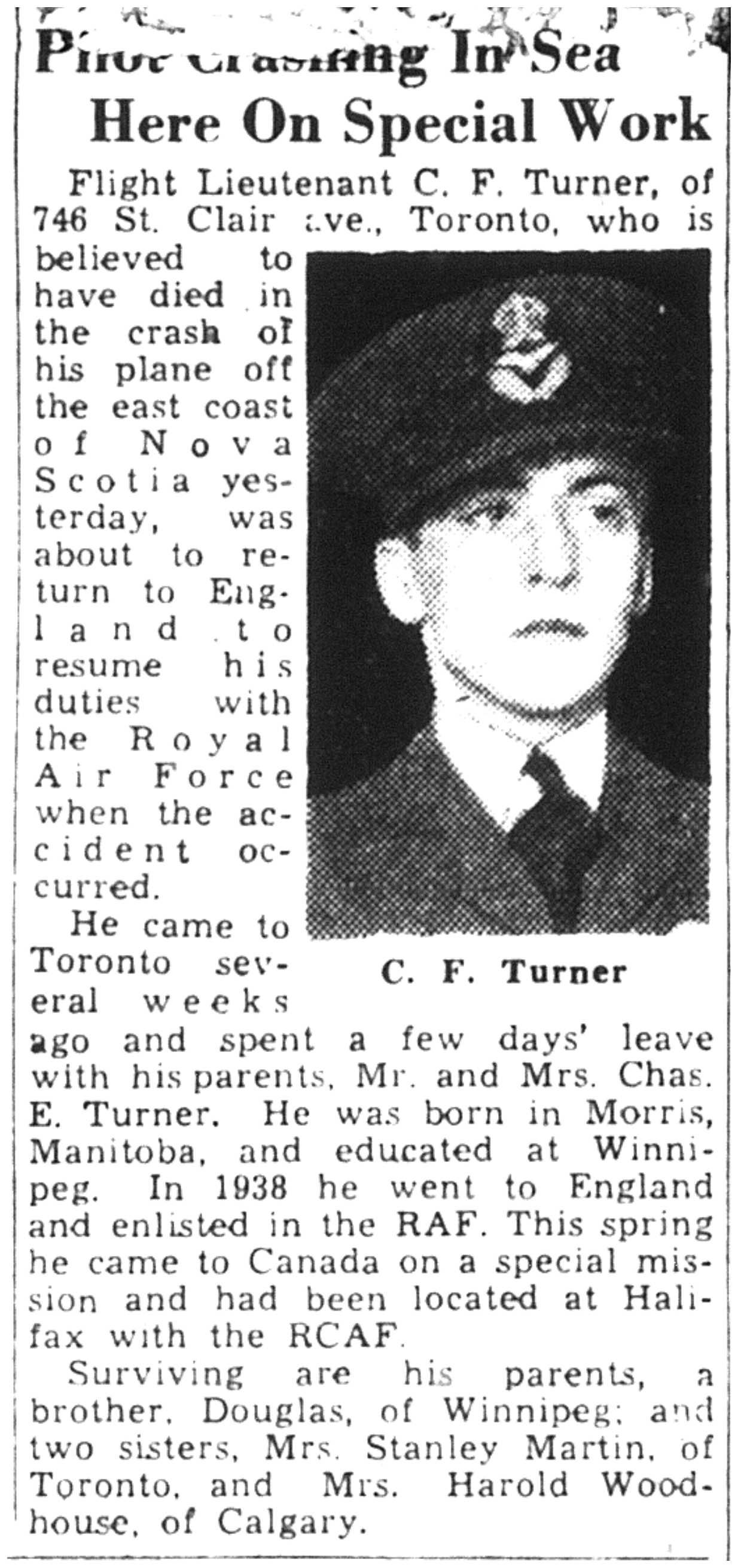
Fred Turner was the operational genius who transformed McDonald’s from a small American chain into a global juggernaut. As the hand-picked successor to Ray Kroc, he codified the standards of quality, service, and cleanliness that defined the modern fast-food industry through his creation of Hamburger University and the legendary Operations Manual.
While Ray Kroc is often celebrated as the visionary salesman who discovered the McDonald brothers’ concept, it was Fred Turner who built the engine that allowed that vision to scale. Joining the company in 1956 as one of its first employees, Turner rose from a grill operator to Chairman and CEO, leaving an indelible mark on global business management. His insistence on extreme consistency and operational rigor created a blueprint that nearly every franchise-based business follows in 2026.
The Early Years and the Encounter with Ray Kroc
Fred Turner’s journey began in Des Moines, Iowa, where he was born in 1933. After serving in the U.S. Army and attending Drake University, Turner sought a path in the burgeoning post-war economy. In 1956, he met Ray Kroc, who had recently founded the McDonald’s System, Inc. Turner originally intended to become a franchisee, but Kroc, recognizing Turner’s innate understanding of efficiency and discipline, convinced him to join the corporate team instead.
Turner’s first role was as a trainee at the original Des Moines location. He did not start in an office; he started at the grill. This "boots on the ground" experience was foundational. It allowed him to identify the friction points in food preparation and customer service. By the time he moved into a leadership role, he possessed a granular understanding of every lever in the restaurant's operation. Kroc famously viewed Turner as the son he never had, and the two formed a partnership where Kroc handled the big-picture expansion while Turner engineered the internal mechanics.
Codifying Consistency: The Operations Manual
In the late 1950s, franchising was often a chaotic endeavor. Quality varied wildly from one location to another, threatening the brand's reputation. Fred Turner solved this by drafting the first formal McDonald’s Operations and Training Manual in 1958. Originally a modest 75-page document, it eventually grew into a comprehensive "bible" of fast-food management.
The manual was revolutionary because it removed subjectivity from the business. It dictated the exact temperature for frying potatoes, the precise thickness of a hamburger patty, and the specific sequence for cleaning a milkshake machine. Turner understood that the secret to McDonald’s success was not just the taste of the food, but the predictability of the experience. Whether a customer was in Illinois or, eventually, Tokyo, the French fries had to taste exactly the same. This obsession with standardization became known as the "Turner Way."
The Founding of Hamburger University
To ensure that the manual’s instructions were followed to the letter, Turner founded Hamburger University in 1961. Initially located in the basement of a McDonald’s in Elk Grove Village, Illinois, the institution was designed to train franchisees and managers in the "science" of QSC&V: Quality, Service, Cleanliness, and Value.
Under Turner’s guidance, Hamburger University became a legitimate global training hub. It wasn't just about flipping burgers; it was about supply chain management, chemistry (understanding the starch content of potatoes), and leadership psychology. Today, with campuses worldwide, the institution remains a testament to Turner’s belief that a global brand is only as strong as its local management. By professionalizing the role of the restaurant manager, Turner elevated the fast-food industry from a "summer job" sector to a serious career path.
Leadership Era: Expanding the Global Footprint
Fred Turner became the President of McDonald’s in 1968 and succeeded Ray Kroc as CEO in 1973. During his tenure as CEO (1973–1987) and later as Chairman, he oversaw an unprecedented era of growth. When he took the helm, McDonald’s had roughly 2,500 locations; by the time he stepped down as Chairman in 2004, that number exceeded 31,000.
Turner’s leadership style was characterized by a "hands-on" approach. He frequently visited restaurants unannounced, checking the bins for wasted food or testing the crispness of the fries. He was a champion of the "win-win" philosophy in franchising, ensuring that the corporation only succeeded if the individual franchisees were profitable. This created a loyal network of operators who felt like partners rather than subordinates.
Menu Innovation Under Turner
While Turner was an operations specialist, he was also a shrewd judge of product innovation. He recognized that the menu needed to evolve to capture different day-parts and demographics. Several of the most iconic products in fast-food history were launched or scaled under his leadership:
- The Egg McMuffin (1972/1975): Turner supported the rollout of breakfast, which transformed the economics of the restaurants by utilizing the equipment during morning hours.
- The Happy Meal (1979): He oversaw the national launch of a product that targeted the "family" unit, securing brand loyalty from a young age.
- The Chicken McNugget (1983): This was perhaps the most significant menu shift of the 1980s, providing a portable, non-beef protein option that required complex supply chain coordination—a task Turner relished.
Strategic Milestones and Career Timeline
Fred Turner’s career is a roadmap for executive longevity and impact. The following table summarizes his key contributions and the progression of his roles within the organization.
| Period | Role | Primary Impact / Achievement |
|---|---|---|
| 1956–1957 | Trainee / Grill Man | Learned the foundational mechanics of the restaurant floor. |
| 1958 | Operations Architect | Wrote the first McDonald's Operations and Training Manual. |
| 1961 | Founder | Established Hamburger University to standardize manager training. |
| 1968–1973 | President | Modernized internal corporate structures for national scaling. |
| 1973–1987 | CEO | Expanded the chain into dozens of international markets. |
| 1977–2004 | Chairman | Provided long-term strategic oversight and preserved corporate culture. |
| 2004–2013 | Honorary Chairman | Served as a mentor and "culture carrier" for new leadership. |
Disambiguation: Other Figures Named Fred Turner
While the McDonald’s executive is the most prominent search intent for "Fred Turner," it is important to distinguish him from other notable individuals to ensure accuracy in research.
- Fred Turner (Stanford Professor): A professor of Communication at Stanford University, known for his work on the relationship between digital technology and American culture, specifically his book From Counterculture to Cyberculture.
- Frederick Turner (Poet/Scholar): A British-born American poet and philosopher who has written extensively on "Natural Classicism" and evolutionary biology.
- Fred Turner (Athlete): Various athletes in minor leagues or historical sports contexts carry this name, though they lack the global business footprint of the McDonald's executive.
This article focuses exclusively on Fred L. Turner, the McDonald’s executive, as his impact on global commerce and the "service economy" remains a primary subject of study in business schools as of 2026.
The Turner Legacy: QSC&V and Global Standards
The core of Fred Turner's legacy is the acronym QSC&V: Quality, Service, Cleanliness, and Value. While Ray Kroc coined the phrase, Turner turned it into a measurable science. He understood that in a service economy, "quality" is not an abstract concept—it is the result of thousands of small, repeatable actions performed correctly.
His influence extended beyond the kitchen. Turner was instrumental in the growth of the Ronald McDonald House Charities (RMHC). He viewed the success of the business as inextricably linked to the well-being of the communities it served. By the time of his passing in 2013, he had helped build a corporate culture that balanced ruthless efficiency with a sense of social responsibility.
In 2026, many of the world’s most successful logistical companies—from e-commerce giants to modern healthcare systems—utilize the "standardization of labor" principles that Turner perfected. He proved that you could provide high-quality products at a massive scale without losing the essence of the original brand.
Frequently Asked Questions
What was Fred Turner’s relationship with Ray Kroc?
Ray Kroc was the founder and visionary leader of McDonald's, and Fred Turner was his first operational protégé. Kroc famously referred to Turner as the son he never had. While Kroc focused on real estate and brand growth, Turner focused on the "how-to" of the business. Their partnership is considered one of the most successful in American corporate history, as their skills perfectly complemented each other.
Did Fred Turner invent the Big Mac?
No, Fred Turner did not invent the Big Mac. The sandwich was created by Jim Delligatti, a franchisee in Uniontown, Pennsylvania, in 1967. However, Turner was responsible for the operational systems that allowed the Big Mac to be produced consistently in thousands of locations worldwide. He ensured the supply chain could handle the specific ingredients (like the special sauce) and that the kitchen flow could accommodate a double-decker burger without slowing down service.
Is Hamburger University still active today?
Yes, Hamburger University is very much active. It has expanded from its original Illinois location to include seven global campuses, including Tokyo, London, Sydney, Munich, São Paulo, and Shanghai. It is recognized as one of the premier corporate training facilities in the world, with many of its courses being eligible for college credit in various jurisdictions.
Why was the Operations Manual so important to McDonald’s success?
The Operations Manual was essential because it ensured brand consistency. Before Turner, franchises often deviated from the original concept, leading to poor quality and customer confusion. Turner’s manual codified every detail, from how long to toast a bun to how many pickles go on a burger. This meant a customer could walk into any McDonald’s and know exactly what to expect, which built immense brand trust and loyalty.
How did Fred Turner impact the modern fast-food industry?
Turner basically invented the "fast-food engine." Before him, restaurants were largely artisanal or disorganized. He introduced the concepts of mass-production efficiency into the kitchen (the "Speedy Service System"). Nearly every modern quick-service restaurant (QSR) uses a version of the training and operational models that Turner pioneered in the 1950s and 60s.
Applying the "Turner Way" to Modern Business
For entrepreneurs and managers in 2026, Fred Turner’s life offers a masterclass in scalable excellence. The primary lesson is that vision without a process is just a dream. If you are looking to scale a service or product, your first step should be to "codify your grill." This means documenting your successful processes so they can be replicated by others without your direct supervision.
Turner’s success also highlights the importance of internal promotion. By starting at the grill and working his way to the boardroom, he ensured that the leadership of the company always understood the reality of the front-line worker. To follow in his footsteps, organizations should prioritize building training institutions—their own "Hamburger Universities"—to preserve their culture and standards as they grow.