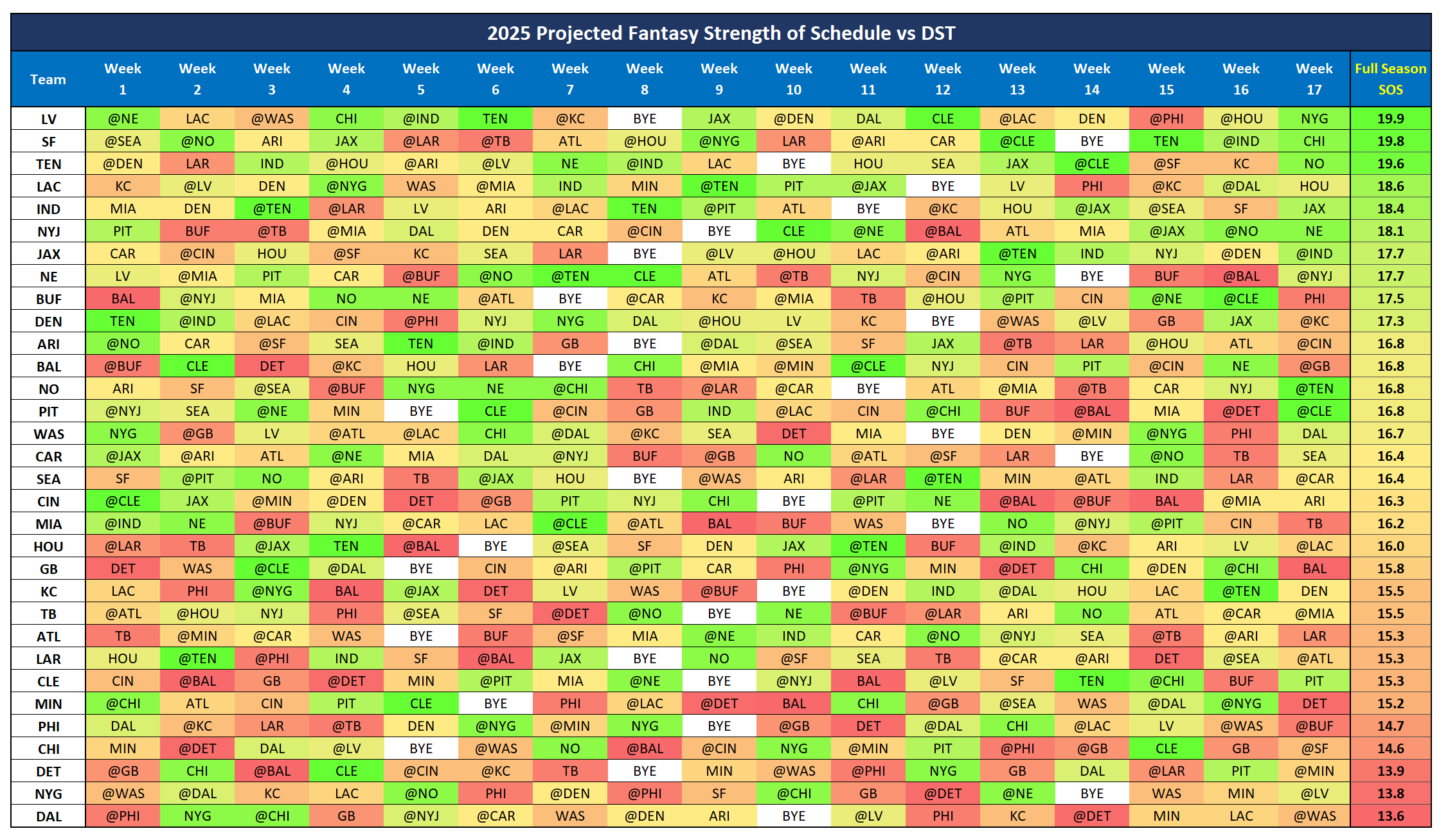
This analysis focuses exclusively on Defense/Special Teams (D/ST) units for season-long and DFS fantasy football formats for the 2026 NFL Season opener. It accounts for the latest roster shifts, 2026 rookie class impacts, and the continued evolution of the league's dynamic kickoff rules.
The 2026 NFL landscape has shifted significantly following a 2025 season defined by the resurgence of the "Cover 2" shell and high-frequency blitzing from unconventional packages. As we enter Week 1, the primary objective for fantasy managers is to identify defensive units facing unstable quarterback situations, porous offensive lines, or teams transitioning to new offensive schemes. In fantasy football, defensive scoring is historically more correlated with the incompetence of the opposing offense than the inherent skill of the defense itself. By leveraging Vegas implied totals, adjusted sack rates, and historical Week 1 volatility, we can categorize the 32 NFL defenses into actionable tiers.
The Evolution of Defensive Dominance in the 2026 Season
The 2026 season marks a critical juncture in defensive philosophy. Following the league-wide adoption of hybrid-safety roles to combat the "explosive play" era of the early 2020s, defenses have become faster and more versatile. Special teams have also seen a statistical uptick in relevance. With the 2026 kickoff rules now in their third iteration, return specialists have found more lanes, making "Special Teams" half of the D/ST equation more than just a tiebreaker.
High-performing units in 2026 are those that prioritize "Pressure-to-Sack" (P2S) ratios. It is no longer enough to simply pressure the quarterback; the elite fantasy defenses are those featuring interior pass rushers capable of collapsing the pocket instantly, forcing the hurried check-downs that lead to Pick-Six opportunities. As we look at the Week 1 slate, several powerhouse units return nearly 90% of their starting production, while others are navigating the "Year 1" transition of new defensive coordinators who brought aggressive, high-variance schemes from the collegiate ranks.
Comprehensive Week 1 D/ST Rankings and Statistical Projections
The following table provides a breakdown of the top-performing units for Week 1 of the 2026 season. These rankings incorporate "Projected Points Against," "Vegas Spread," and "Anticipated Turnover Margin."
| Rank | Team Unit | Opponent | Tier | Implied Total | Key Metric: Adjusted Sack Rate |
|---|---|---|---|---|---|
| 1 | New York Jets | vs. New England | Elite | 16.5 | 9.4% |
| 2 | Houston Texans | vs. Indianapolis | Elite | 19.0 | 8.8% |
| 3 | Detroit Lions | @ Chicago | High End | 20.5 | 8.2% |
| 4 | Baltimore Ravens | vs. Pittsburgh | High End | 17.5 | 7.9% |
| 5 | San Francisco 49ers | @ Arizona | High End | 21.0 | 7.5% |
| 6 | Chicago Bears | vs. Detroit | Strong | 22.0 | 7.2% |
| 7 | Dallas Cowboys | vs. NY Giants | Strong | 18.5 | 8.5% |
| 8 | Seattle Seahawks | vs. LA Rams | Streamer | 23.5 | 6.8% |
| 9 | Philadelphia Eagles | @ Washington | Streamer | 20.0 | 7.1% |
| 10 | Kansas City Chiefs | vs. Las Vegas | Streamer | 19.5 | 6.5% |
| 11 | Pittsburgh Steelers | @ Baltimore | Situational | 21.5 | 8.1% |
| 12 | Cleveland Browns | vs. Cincinnati | Situational | 22.5 | 7.8% |
Tier 1: The Lockdown Elites
The New York Jets enter 2026 as the gold standard for fantasy defenses. Their Week 1 matchup against a New England squad still oscillating between a bridge veteran and a developmental sophomore quarterback provides the highest floor in the league. The Jets' secondary remains the most disciplined unit in football, specializing in "man-match" principles that frustrate young signal-callers. Expect a high volume of sacks and at least two turnover opportunities as New England struggles to move the chains in a hostile road environment.
The Houston Texans have ascended to the elite tier thanks to the maturation of their front four. By 2026, their edge rushing duo has become the most feared tandem in the AFC South. Facing an Indianapolis Colts offense that remains high-variance due to its aggressive vertical passing game, the Texans are primed for "havoc plays"—fumbles and interceptions resulting from forced throws. When playing at home, the Texans' turf speed advantage significantly boosts their special teams return projections.
High-Value Streaming Targets for Week 1
Streaming is the most statistically sound strategy for the D/ST position, and Week 1 of 2026 offers several "diamond in the rough" options for managers who ignored the position until the final round of their drafts.
The Seattle Seahawks Strategy The Seahawks have undergone a tactical shift under their current defensive leadership, focusing on a "simulated pressure" system that confuses veteran quarterbacks. Hosting the Rams in Week 1 is a favorable spot; while the Rams remain competitive, their offensive line depth has been a recurring concern. Seattle is often available in over 60% of leagues and offers top-5 upside if they can capitalize on the loud home environment to force procedural penalties and third-and-long situations.
The Philadelphia Eagles Opportunity Often overlooked due to their mid-tier finish in 2025, the Eagles restructured their linebacker corps for 2026 to better handle mobile quarterbacks. Facing a Washington team that is implementing a new "Air Raid" variant, the Eagles' defensive line should find consistent paths to the quarterback. This is a classic "pressure-cooker" game where the defensive front can rack up 4+ sacks even if the score remains relatively close.
Evaluating Matchup Vulnerability: Offensive Lines to Target
To find the best fantasy defense, one must find the worst offensive lines. In 2026, the league has seen a widening gap between the "Haves" and "Have-Nots" regarding pass protection.
- New York Giants: Despite heavy investment in the 2025 draft, the Giants' right side remains a liability. The Dallas Cowboys (Ranked 7th) are an excellent play here, as their pass-rush win rate specifically against right tackles was the highest in the NFC last season.
- Las Vegas Raiders: Transitioning to a more developmental offensive line strategy, the Raiders are vulnerable to the interior pressure generated by Chris Jones and the Kansas City Chiefs.
- Washington Commanders: A high-volume passing offense behind a mediocre line is a recipe for fantasy defensive points. Even if Washington scores, the "Sack + Interception" floor for the opposing Eagles makes them a safe play.
Technical Analysis: The Metric of "Expected Points Added" (EPA)
When analyzing Week 1, we must look at "Defensive EPA per Play" from the previous season's final six weeks, adjusted for personnel changes. In 2026, the Baltimore Ravens and Detroit Lions lead the league in "Negative Play Rate"—the percentage of defensive snaps that result in a loss of yards for the offense.
The Ravens, in particular, utilize a "creeper" pressure system where any of the 11 players could be the fourth rusher. This makes them nearly "quarterback-proof" in terms of fantasy floor. Even against a divisional rival like Pittsburgh, the Ravens' ability to limit "Success Rate" (the percentage of plays that gain at least 50% of required yards on first down) ensures they won't be blown out, keeping their fantasy scoring stable.
Strategic Comparison: Drafting Elite vs. Weekly Streaming
Is it worth spending a 10th-round pick on a top-tier unit like the Jets, or should you wait until the 16th round for a streamer?
- Drafting Elite (e.g., Jets, Texans):
- Pros: High weekly floor, less time spent on the waiver wire, elite individual talent (Sauce Gardner, Will Anderson Jr.) can score touchdowns independently of matchups.
- Cons: High opportunity cost (missing out on 2026 breakout WRs), difficult to drop during their Bye Week, susceptible to "trap games" against high-scoring offenses.
- Weekly Streaming (e.g., Seahawks, Eagles):
- Pros: Maximum flexibility, ability to play the "Vegas Odds" every week, zero draft capital invested.
- Cons: High risk of "duds" if the matchup doesn't pan out, requires active management of the waiver wire, might lose out on the best streamer to a league-mate with higher waiver priority.
Step-by-Step Checklist for Finalizing Your Week 1 D/ST Starter
- Check the Vegas Over/Under: Aim for games with a total below 44 points. Lower scores generally correlate with higher defensive fantasy output.
- Analyze the "Spread": Favor home favorites. Teams playing from behind are forced to pass, leading to more sack and interception opportunities for the winning team's defense.
- Verify Weather Conditions: Early September can bring tropical storms or extreme heat. High wind (20+ mph) is the single best weather metric for boosting D/ST scores.
- Confirm Return Specialists: Check if your D/ST uses a starting-caliber skill player for returns. In 2026, several teams have shifted to using "Specialist-Only" roles which are more efficient at finding the end zone under the new kickoff rules.
- Monitor Injuries: Ensure the defensive unit isn't missing its primary "Green Dot" wearer (the linebacker or safety who calls the plays), as this often leads to communication breakdowns and "blown coverage" touchdowns.
Frequently Asked Questions regarding Week 1 Defense Strategy
Which defense is the absolute best "sleeper" for Week 1 of 2026? The Seattle Seahawks are the premier sleeper pick for the 2026 opener. Their improved defensive line depth and the "12th Man" home-field advantage against a Rams team with a fluctuating offensive line provide a high ceiling for a unit that is likely undrafted in most 10-team leagues.
How do the 2026 kickoff rules affect D/ST scoring? The 2026 rules have stabilized return averages, making the "Special Teams" portion of the D/ST score more predictable. Units with top-tier returners now see a 15-20% increase in "Big Play" potential compared to the 2023-2024 seasons, meaning you should break ties between two defenses by favoring the one with the better return specialist.
Should I ever start a defense that is a Vegas underdog? Generally, no. Underdogs are less likely to benefit from "game script" turnovers (sacks/picks forced when an opponent is trailing and desperate). However, a high-sack unit like the Steelers can be an exception if the opposing quarterback has a high "Pressure-to-Sack" invitation rate.
What is the "Rule of 3" for streaming defenses? The "Rule of 3" suggests looking ahead at the next three weeks of the schedule. If a Week 1 streamer like the Eagles also has favorable matchups in Week 2 and Week 3, they are a high-priority "hold," saving you valuable waiver wire moves early in the season.
How much does a Defensive Coordinator change impact Week 1 rankings? Significantly. In 2026, we've seen that defenses with new coordinators often struggle with "alignment and assignment" in the first half of Week 1. Avoid units with brand-new coaching staffs unless they are facing an equally disorganized offense.
As you finalize your rosters for the 2026 season opener, remember that the D/ST position is about playing the percentages. Prioritize units like the Jets and Texans if you have them, but do not be afraid to pivot to a high-upside streamer like the Seahawks or Eagles if the matchup dictates it. Success in Week 1 is often found by simply betting against the most vulnerable offensive lines in the league.