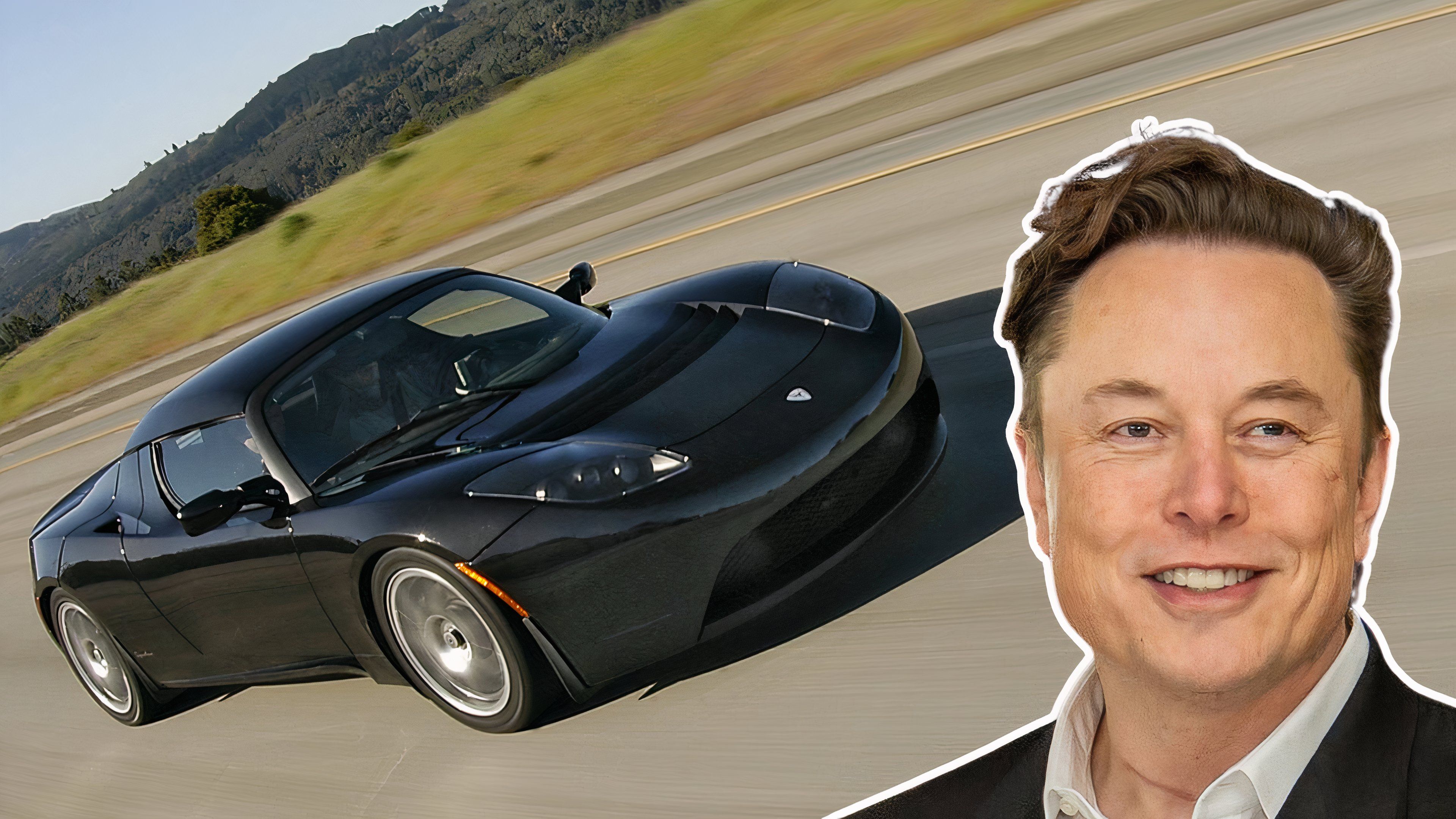
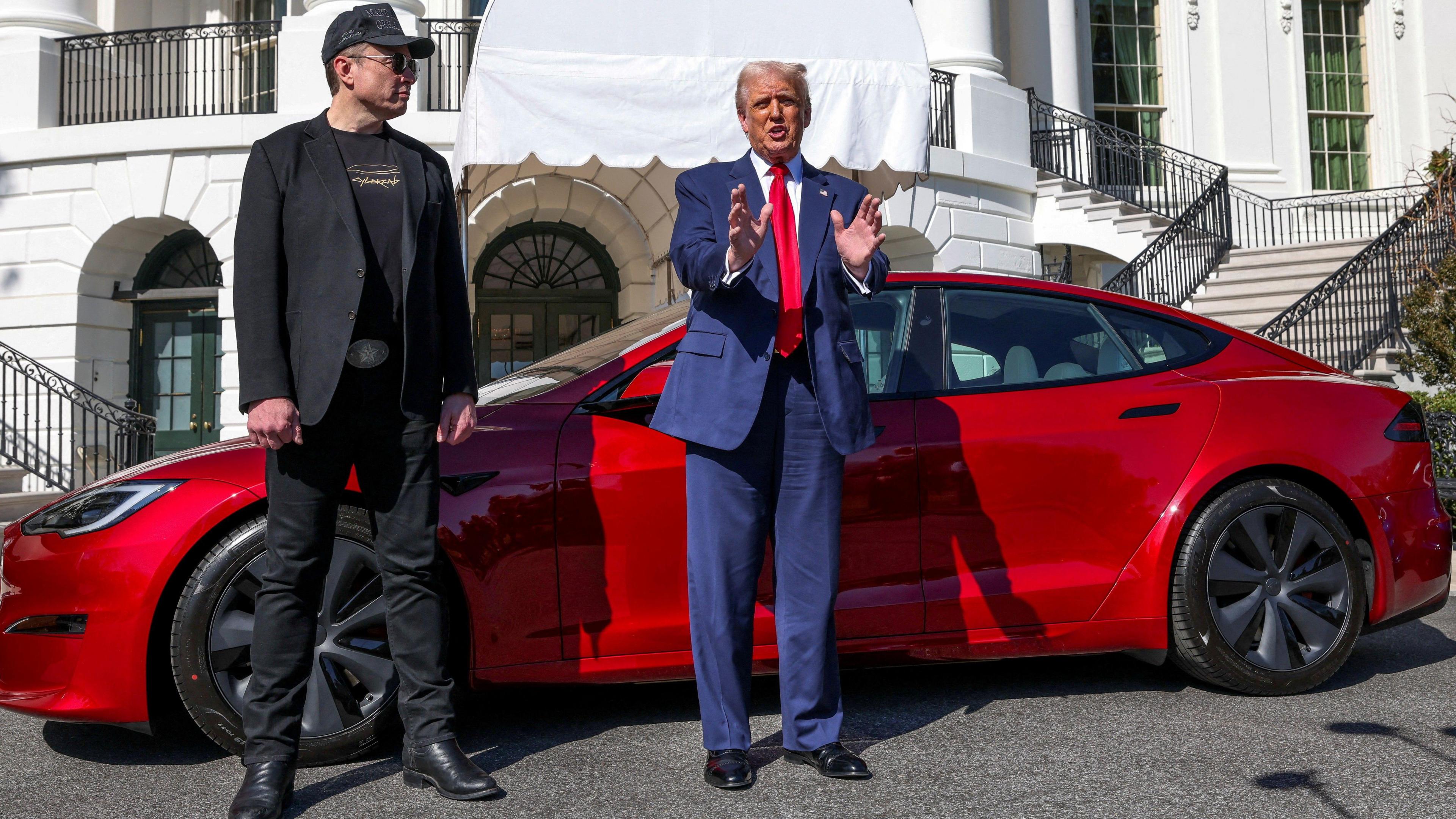
Elon Musk’s relationship with cars spans from humble beginnings in a 1978 BMW to the creation of the world’s most valuable automotive brand. His personal collection includes historical icons like the McLaren F1 and the "Wet Nellie" Lotus Esprit, while his professional legacy is defined by the Tesla S, 3, X, Y, and Cybertruck models.
The Evolution of Elon Musk’s Personal Car Collection
Long before he was the CEO of Tesla, Elon Musk was a car enthusiast with a penchant for both engineering marvels and classic aesthetics. His personal history with vehicles serves as a roadmap of his financial trajectory, from his first struggling startup to his status as a global tech titan.
The Humble Beginnings: 1978 BMW 320i
Musk’s first car, purchased in 1994 for roughly $1,400, was a used 1978 BMW 320i. At the time, Musk was running his first company, Zip2. The car was far from the high-performance machines he would later own; it famously had a broken four-speed transmission and a door that could only be opened from the outside. Eventually, one of the wheels fell off, marking a symbolic end to his journey with internal combustion entry-level luxury.
The Classic Aesthetic: 1967 Jaguar E-Type
After receiving an initial bonus from Zip2, Musk decided to purchase a 1967 Jaguar E-Type. He often recounts how he had seen the car in a book of classic convertibles as a youth and vowed to buy one if he ever had the money. Despite its legendary beauty, the E-Type was notoriously unreliable. Musk has joked that the car broke down on the way home from the dealership, providing an early lesson in the frustrations of traditional automotive engineering and perhaps fueling his desire for more reliable, simplified electric drivetrains.
The Supercar Era: McLaren F1
The most famous vehicle in Musk’s personal history is undoubtedly the McLaren F1. Purchased for approximately $1 million after the sale of PayPal to eBay, the McLaren F1 was the fastest production car in the world at the time. Musk used it as a daily driver in Silicon Valley, logging thousands of miles.
The car met a dramatic end in 2000 when Musk, while driving with Peter Thiel, attempted to show off the car’s acceleration. He hit an embankment, launched the car into the air, and totaled it. Crucially, the vehicle was uninsured. While Musk was unhurt, the accident remains a pivotal moment in his automotive history, representing both the peak of his "gearhead" phase and the beginning of his shift toward creating his own vehicles.
The Intersection of Film and Reality: The "Wet Nellie" Lotus Esprit
In 2013, Musk made headlines by purchasing the "Wet Nellie" Lotus Esprit S1 submarine car from the 1977 James Bond film The Spy Who Loved Me. He bought the prop at an auction in London for nearly $1 million.
The purchase was not merely for nostalgia; Musk expressed disappointment that the car could not actually transform into a functional submarine as it did in the movie. He famously stated his intention to upgrade it with a Tesla electric powertrain and attempt to make it transform for real. While the project has remained largely a private endeavor, the design influence of the Lotus Esprit—sharp angles and a low-slung, "folded paper" aesthetic—is clearly visible in the design language of the Tesla Cybertruck.
Tesla’s 2026 Vehicle Lineup: The Cars Musk Built
As of 2026, the vehicles produced by Elon Musk’s company, Tesla, have redefined the global automotive market. These cars are often referred to as "Elon Musk cars" by the general public, and they represent the fulfillment of his "Master Plan" to transition the world to sustainable energy.
The Flagship Duo: Model S and Model X
The Model S remains the cornerstone of Tesla’s high-end performance. In 2026, the Model S Plaid continues to set benchmarks for production sedan acceleration. It serves as the technological showcase for Tesla’s tri-motor setup and carbon-sleeved rotors.
The Model X, known for its "Falcon Wing" doors, serves the luxury SUV segment. By 2026, the Model X has seen several structural battery pack updates, improving its range and reducing overall weight. Both vehicles use a 17-inch cinematic display and the latest iteration of the steering yoke (or optional wheel), emphasizing Musk’s vision of the car as a mobile gaming and entertainment hub.
The Mass-Market Leaders: Model 3 and Model Y
The Model 3 and Model Y are the primary drivers of Tesla’s volume. In 2026, these vehicles benefit from the "Highland" and "Juniper" refreshes, respectively. These updates brought:
- Improved Aerodynamics: Reducing drag coefficients to extend range without increasing battery size.
- Acoustic Glass: Significantly quieter cabins, addressing one of the early criticisms of the platforms.
- Ventilated Seating: Standardizing luxury features across the Long Range and Performance trims.
The Cultural Icon: Tesla Cybertruck
By 2026, the Cybertruck has moved from a niche, low-volume product to a common sight on global roads. Its stainless steel exoskeleton and 48-volt electrical architecture represent a radical departure from traditional truck manufacturing. The Cybertruck is perhaps the most "Elon" of all the cars, embodying his preference for first-principles engineering and futuristic, sci-fi aesthetics. It features steer-by-wire technology, which eliminates the physical steering column in favor of digital actuators, a move Musk championed to improve maneuverability.
Comparative Specifications of Modern Tesla Vehicles (2026)
The following table provides a snapshot of the primary "Musk cars" available for purchase in 2026, focusing on their core performance and utility metrics.
| Vehicle Model | Trim Level | Range (Est. EPA) | 0-60 MPH | Starting Price (2026 USD) |
|---|---|---|---|---|
| Model 3 | Long Range | 345 Miles | 4.2 sec | $46,000 |
| Model Y | Performance | 285 Miles | 3.5 sec | $53,000 |
| Model S | Plaid | 396 Miles | 1.99 sec | $89,000 |
| Model X | Plaid | 330 Miles | 2.5 sec | $94,000 |
| Cybertruck | AWD | 340 Miles | 4.1 sec | $79,000 |
| Roadster 2.0 | Founders | 620 Miles | 1.9 sec | $250,000 |
Note: Prices and ranges are subject to regional variations and ongoing software optimizations.
The Quest for the "Unboxed" Platform: The Next-Gen Vehicle
In 2026, much of the focus regarding "Elon Musk cars" has shifted toward the next-generation platform, often referred to internally as the "Robotaxi" or the "unboxed" manufacturing process. This platform is designed to be produced at a significantly lower cost than the Model 3.
The "unboxed" process involves building sub-assemblies of the car simultaneously in different areas of the factory and joining them together only at the final stage. This reduces the factory footprint by 40% and allows for much faster production cycles. This vehicle represents Musk’s ultimate goal: an affordable, autonomous electric car that can operate in a ride-sharing fleet, potentially making individual car ownership obsolete for many.
Technological Pillars: FSD and the 48V Architecture
To understand the cars Elon Musk designs, one must understand the underlying technology that separates them from traditional EVs.
Full Self-Driving (Supervised)
By 2026, Tesla’s FSD (Full Self-Driving) has transitioned through several major "v12" and "v13" iterations. Unlike competitors who rely on Lidar and high-definition maps, Musk has insisted on a vision-only approach. The cars use a suite of external cameras and a powerful onboard computer (HW4 or HW5) to process neural networks in real-time. This philosophy stems from Musk’s belief that since roads were designed for humans (who use vision), AI should use the same input.
The 48-Volt Revolution
The Cybertruck introduced a 48-volt electrical system, a move that Musk has encouraged the rest of the industry to follow. Traditional cars use a 12-volt system, which requires thick, heavy wiring to deliver enough power to various components. By quadrupling the voltage, the current is reduced, allowing Tesla to use much thinner wiring. This saves weight, reduces cost, and enables more sophisticated electronic control systems throughout the vehicle.
Frequently Asked Questions
Which car does Elon Musk drive daily?
As of 2026, Elon Musk is most frequently seen driving a Tesla Cybertruck or a Model S Plaid. Occasionally, he is spotted in the second-generation Roadster prototype. While he owns several historical vehicles, his daily transit is almost exclusively in Tesla products to test the latest FSD software builds personally.
Does Elon Musk still own the McLaren F1?
No. After the famous uninsured crash in 2000, the car was eventually repaired and sold. While it was a defining vehicle of his early success, his focus shifted entirely to electric propulsion, and he has since championed the idea that internal combustion engines are obsolete technology.
Where is the Tesla Roadster that Elon Musk sent to space?
The original 2008 Tesla Roadster, driven by a mannequin named "Starman," was launched into space in February 2018 via the SpaceX Falcon Heavy rocket. In 2026, it continues its elliptical orbit around the sun, occasionally passing near the orbits of Mars and Earth. It remains the only production car ever launched into deep space.
Is there an affordable "Elon Musk car" under $30,000?
Tesla has been working on a next-generation "unboxed" platform aimed at a lower price point, often speculated to be around $25,000. While the Model 3 was the first "affordable" Tesla, the 2026 focus is on a specialized Robotaxi and a compact vehicle that utilizes the massive cost savings from the new manufacturing process.
Why did Elon Musk buy the Bond submarine car?
Musk bought the Lotus Esprit "Wet Nellie" because he was a fan of the James Bond films and was fascinated by the engineering challenge of making a car that could actually function as a submarine. It serves as an inspiration for the unconventional engineering seen in the Cybertruck.
Accessing the Musk Automotive Legacy
For those looking to engage with the "Elon Musk car" ecosystem in 2026, the path depends on whether your interest is historical or practical.
If you are interested in his personal history, museums like the Petersen Automotive Museum in Los Angeles frequently host exhibits featuring his past vehicles, including the space-bound Roadster’s twin and early prototypes of the Model S.
For those looking to experience the modern lineup, the best next step is to schedule a "Demo Drive" through the Tesla mobile app. In 2026, these sessions often include a demonstration of the latest FSD capabilities, allowing users to experience the "vision-only" autonomy that Musk has spent over a decade developing. Whether purchasing a Model 3 for its efficiency or a Cybertruck for its utility, owning these vehicles is the most direct way to interact with Musk’s vision for the future of transport.