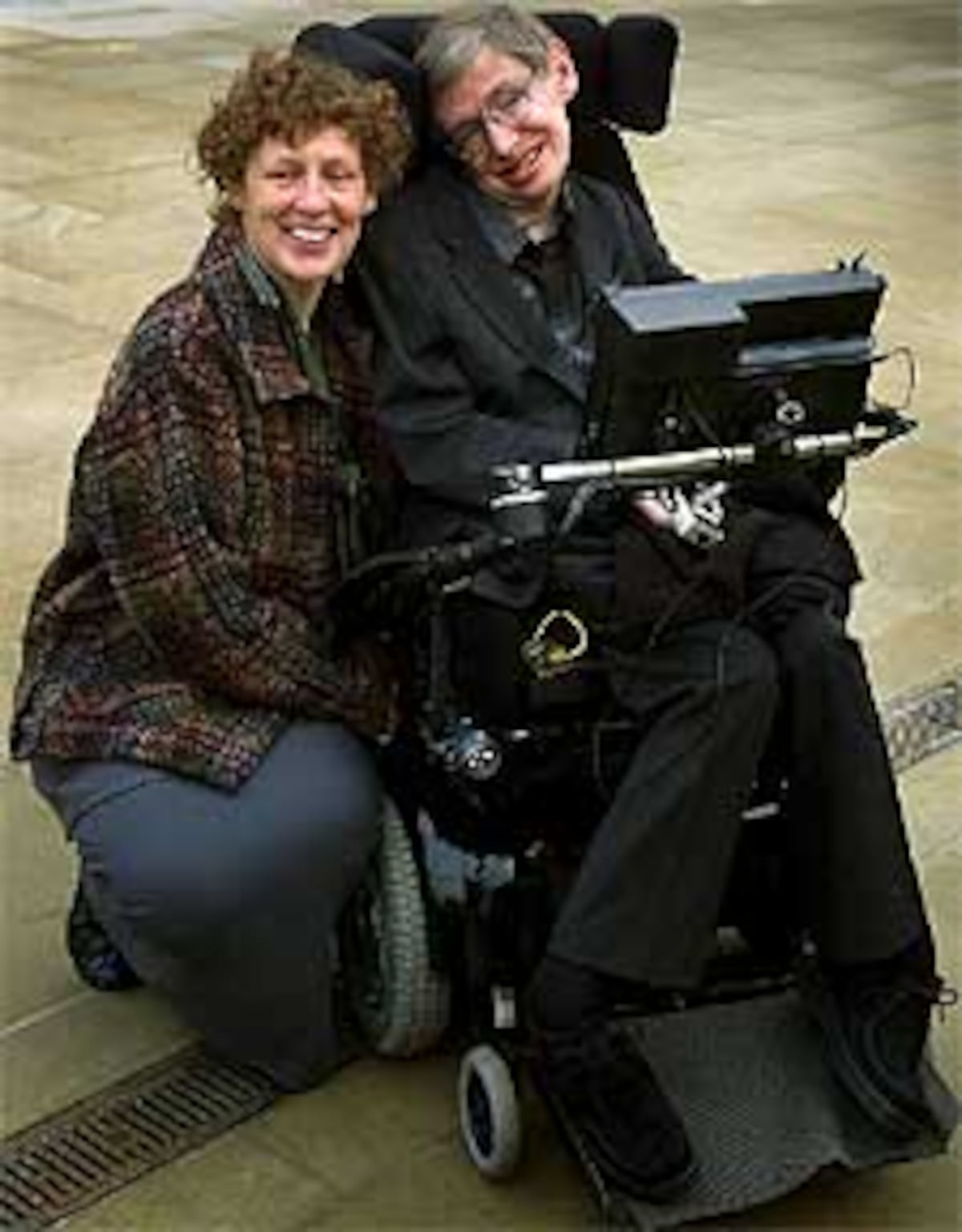
Elaine Mason was a British nurse best known as the second wife of the world-renowned theoretical physicist Stephen Hawking. Their relationship, which spanned from their marriage in 1995 until their divorce in 2006, remains one of the most discussed chapters of Hawking’s personal life due to her dual role as his primary caregiver and the public allegations of mistreatment that shadowed their union.
The Origins of the Connection: From Caregiver to Spouse
The connection between Elaine Mason and Stephen Hawking began in a professional capacity. By the mid-1980s, Hawking’s health—compromised by Amyotrophic Lateral Sclerosis (ALS)—required 24-hour nursing care. Mason was one of the many nurses hired to provide this intensive support. At the time, Hawking was still married to his first wife, Jane Wilde, though their relationship had become increasingly strained under the combined weight of Hawking's global fame and the physical demands of his condition.
Mason quickly became a central figure in Hawking’s inner circle. Unlike other members of the nursing staff, she was noted for her strong personality and her ability to manage the complex equipment that kept Hawking alive and communicating. By 1990, the professional relationship shifted. Hawking left the family home he shared with Jane Wilde to live with Mason. This transition was a seismic shift in his personal life, marking the end of a 25-year marriage that had seen him through his doctoral studies and his rise to international stardom.
The bond between Hawking and Mason was finalized legally in September 1995, shortly after Hawking's divorce from Jane was finalized. Their wedding was a private affair, but it signaled a new era in which Mason moved from being an employee to the most influential person in Hawking’s private and professional orbit.
The David Mason Link: Engineering Hawking’s Voice
A critical but often overlooked connection in this narrative is Elaine Mason’s first husband, David Mason. David Mason was an electronic engineer who played a pivotal role in Stephen Hawking's ability to communicate. He was the engineer who adapted the DECtalk speech synthesizer into a portable system that could be mounted on Hawking's wheelchair.
This technological advancement allowed Hawking to select words on a screen using a hand-held switch (and later a cheek muscle), which were then spoken by the synthesizer. It is a profound historical irony that the man who gave Hawking his "voice" was the husband of the woman who would later become Hawking's second wife. This connection highlights the tight-knit circle of medical and technical professionals that surrounded Hawking during the 1980s.
A Decade of Marriage: 1995 to 2006
The marriage between Elaine Mason and Stephen Hawking lasted eleven years. During this period, Mason was frequently seen by Hawking's side at public events, academic conferences, and international tours. She assumed total control over his daily routine, medical appointments, and travel arrangements.
Supporters of Mason argue that she provided the rigorous, disciplined care necessary to keep Hawking healthy during a period where his physical vulnerabilities were at their peak. Hawking himself often defended the marriage, stating that she saved his life on multiple occasions through her quick medical interventions during respiratory crises.
However, this period was also defined by a perceived isolation. Friends and colleagues of Hawking noted that he became less accessible during his years with Mason. The physicist’s children—Robert, Lucy, and Timothy—reportedly found it increasingly difficult to spend time with their father without Mason’s presence or oversight. This friction created a divide that would not fully heal until after the marriage ended.
Public Controversy and Police Investigations
The most significant "key facts" regarding Elaine Mason involve the allegations of physical abuse that surfaced in the early 2000s. These claims did not originate from Hawking himself, but rather from other members of his nursing staff and his children.
In 2004, the Cambridgeshire Police launched a formal investigation into allegations that Hawking had been subjected to various forms of mistreatment, including being left in the sun to the point of heatstroke and suffering unexplained fractures and gashes. The media coverage of these events was intense, painting a picture of a vulnerable genius at the mercy of a volatile caregiver.
Despite the gravity of the claims, the investigation was ultimately dropped. The primary reason for this was Stephen Hawking’s own refusal to cooperate with the police. Hawking issued a firm statement through his representatives: "I firmly and wholeheartedly reject the allegations that I have been abused." He maintained that his injuries were the result of his physical frailty and the inherent risks of living with ALS. Without a statement from the alleged victim, the police concluded that there was no evidence to proceed with criminal charges.
Comparing the Two Marriages: Jane Wilde vs. Elaine Mason
To understand the impact Elaine Mason had on Hawking’s life, it is helpful to compare her tenure with that of his first wife, Jane Wilde. The two women represented very different eras of Hawking’s journey.
| Feature | Jane Wilde Hawking | Elaine Mason |
|---|---|---|
| Duration of Marriage | 1965–1995 (30 years) | 1995–2006 (11 years) |
| Initial Connection | Met as students at St. Albans/Cambridge | Met through professional nursing care |
| Children with Hawking | Three (Robert, Lucy, Timothy) | None |
| Public Perception | Seen as the "Saint" who sacrificed for him | Seen as a controversial and protective figure |
| Post-Divorce Status | Remained in Hawking's life; wrote memoirs | Remained largely private and out of the public eye |
| Key Contribution | Supported his early career and raised his family | Managed his critical care during his mid-to-late career |
While Jane Wilde’s relationship with Hawking was rooted in a shared history before his illness became debilitating, Elaine Mason’s relationship was forged within the context of his extreme disability. This fundamental difference influenced the power dynamics of each marriage.
Friction with the Hawking Children
The relationship between Elaine Mason and Hawking's children was notoriously difficult. Lucy Hawking, in particular, was vocal about her concerns regarding her father’s welfare. The children felt that Mason sought to alienate them from their father to maintain total control over his estate and his personal life.
The tension reached a peak during the police investigations of 2004. The children’s advocacy for their father’s safety was often at odds with Hawking’s own insistence on his privacy and his defense of Elaine. When the marriage finally ended in divorce in 2006, there was a visible reconciliation between Hawking and his children. In the final decade of his life, Hawking was frequently photographed with his children and grandchildren, a contrast to the more secluded years of his second marriage.
Media Portrayal and Cultural Legacy
The story of Elaine Mason reached a global audience through the 2014 film The Theory of Everything, based on Jane Wilde’s memoir Travelling to Infinity: My Life with Stephen. While the film focuses primarily on the relationship between Stephen and Jane, it depicts the arrival of Elaine Mason (played by actress Maxine Peake) as a turning point that leads to the dissolution of the first marriage.
The film portrays Mason as a more assertive, perhaps even manipulative, presence compared to the weary Jane. This portrayal solidified a specific public image of Mason as the "outsider" who disrupted the Hawking family unit. However, biographers often note that the reality was likely more nuanced, involving a man who desired autonomy and a nurse who provided the level of care that allowed him to survive well into his 70s.
Life After Stephen Hawking: The 2026 Perspective
Since her divorce from Stephen Hawking in 2006, Elaine Mason has maintained a remarkably low profile. As of 2026, she has not published a memoir or granted significant interviews regarding her time with the physicist. This silence has allowed the public narrative to be shaped largely by Jane Wilde’s writings and the various unauthorized biographies of Hawking.
Following the divorce, Mason returned to her life away from the spotlight. When Stephen Hawking passed away in March 2018, the world mourned a scientific giant. While Jane Wilde and the Hawking children were central to the funeral and the subsequent interring of his ashes at Westminster Abbey, Mason was not a public participant in these commemorations.
Her legacy remains inextricably linked to the debate over Hawking's personal autonomy. Was she a devoted wife who saved him from medical crises, or was she a controlling presence who isolated a disabled man? The truth likely exists in a complex middle ground that only the two of them fully understood.
Frequently Asked Questions
Did Elaine Mason get any money after the divorce?
The details of the 2006 divorce settlement were kept strictly private. However, it is widely believed that a financial arrangement was reached that allowed Mason to live comfortably while ensuring that the bulk of Hawking's substantial estate, derived from his book royalties and awards, remained with his children and his charitable interests.
Why did Stephen Hawking divorce Elaine Mason?
No specific public reason was ever given for the divorce. The legal proceedings were described as "amicable" in official statements. Observers have speculated that the pressure of the 2004 police investigation and the ongoing family friction may have contributed to the breakdown of the marriage, but neither party ever confirmed these theories.
Is Elaine Mason still a nurse?
Following her marriage to Hawking, Elaine Mason did not return to the public nursing workforce in a high-profile capacity. By 2026, she is of retirement age and has lived a private life in the United Kingdom, away from the medical and scientific communities she once inhabited.
Was Elaine Mason ever charged with a crime?
No. Despite the formal investigation by the Cambridgeshire Police in 2004 regarding allegations of assault, no charges were ever filed. The investigation was closed due to a lack of evidence and Hawking’s refusal to make a complaint or cooperate with the authorities.
What happened to David Mason?
David Mason, Elaine's first husband, continued his work in engineering after their divorce. His contribution to assistive technology remains a significant footnote in the history of science, as the voice he helped create became one of the most recognizable "personalities" in the world through Stephen Hawking.
Understanding the Human Side of Scientific Icons
When examining the life of a figure like Stephen Hawking, it is easy to focus solely on his contributions to cosmology and physics. However, the facts surrounding his marriage to Elaine Mason serve as a reminder of the profound human vulnerabilities that exist even in the most brilliant minds.
For those researching this topic, it is important to distinguish between the confirmed historical facts—such as the marriage dates, the police investigation, and the David Mason connection—and the subjective accounts provided in memoirs and films. Understanding Elaine Mason’s role requires looking past the "villain" or "hero" archetypes and recognizing her as a central, complex figure in the survival of one of the 20th century’s most important thinkers. To gain a complete picture, readers should consult both Jane Wilde Hawking’s Travelling to Infinity and Kitty Ferguson’s biography Stephen Hawking: An Unfettered Mind, which offer differing perspectives on this turbulent period.