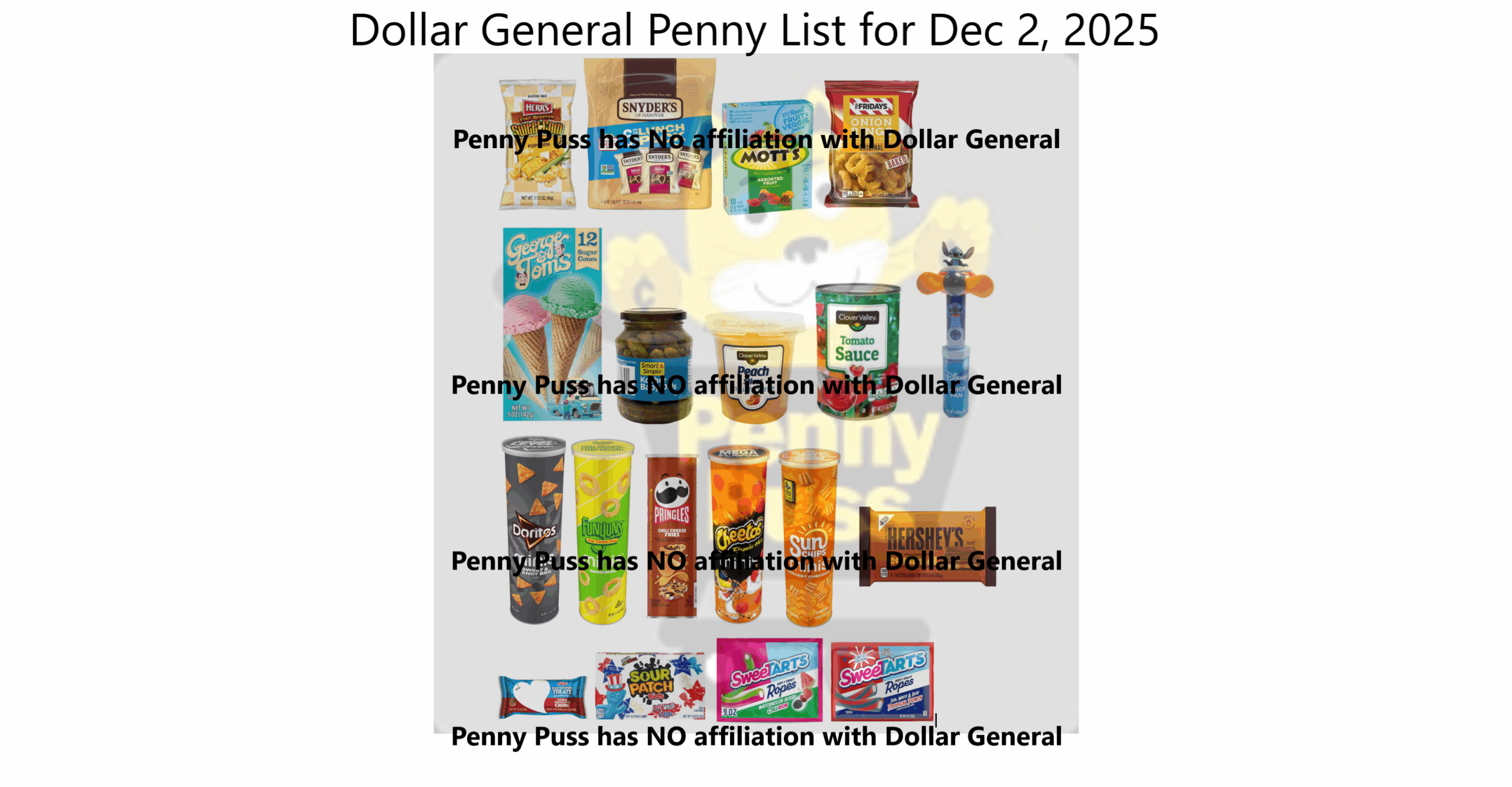
The phenomenon of the Dollar General penny item refers to specific inventory units that have been marked down in the corporate system to a price of exactly $0.01. This guide serves as an educational framework for understanding the 2026 retail liquidation cycle and the technical reality behind these inventory status changes.
Understanding the Retail Lifecycle and System Updates
At its core, the Dollar General penny program is an automated inventory management process. When items reach the end of their lifecycle—due to seasonal rotation, discontinuations, or damaged packaging—the corporate central inventory system adjusts the price to a placeholder value to trigger manual removal by store staff.
In 2026, the retail environment has become significantly more efficient. Store employees receive daily or weekly "Planogram" updates and "Clearance" directives via their handheld HHT (Handheld Terminal) devices. When a product hits the system's "penny status," it is technically meant to be pulled from the floor and processed for disposal or vendor return. The challenge for the modern bargain hunter is identifying these items before they are physically removed from the sales floor.
The Technical Reality of Dollar General Inventory Systems
Unlike standard discount retailers, Dollar General utilizes a proprietary database that operates on a centralized pricing server. This means that a penny item status is pushed store-wide simultaneously.
- The Sync Window: Data refreshes typically occur between 7:00 AM and 9:00 AM local time on Tuesday mornings.
- Database Latency: Discrepancies between the shelf price tag and the POS (Point of Sale) system are common. The scanner price is the absolute truth in the retail environment.
- Staff Compliance: Since 2026 internal policies emphasize strict inventory control, store managers are incentivized to remove these items. If an item rings up as one cent, the system is technically functioning, but the item should have been removed from the shelf.
Strategic Workflow for Navigating Penny Items
To engage with this process effectively, shoppers must adopt a professional, unobtrusive methodology. Respecting store policies is mandatory to ensure the sustainability of your access.
- Verification Phase: Utilize a scanning tool via the official Dollar General mobile application to verify the current price of an item. If the scanner shows "0.01," you have identified an active penny item.
- Identification Phase: Focus on seasonal aisles (Easter, Christmas, Summer, Back-to-School). These categories represent the highest volume of periodic markdowns.
- Execution Phase: Bring the item to the register. If the POS reflects the one-cent price, proceed with the transaction. If the item scans at a higher price, do not argue with staff; the item has likely been pulled or the system has been updated.
- Professionalism: Always maintain a polite demeanor. If a store associate informs you that an item is not for sale, accept the decision immediately.
Data Comparison: Standard Clearance vs. Penny Items
The following table outlines the distinct differences between standard clearance protocols and the penny system for the 2026 fiscal year.
| Feature | Standard Clearance | Penny Item Status |
|---|---|---|
| Price Point | 50% to 70% off | Exact $0.01 |
| Physical Status | Displayed on clearance end-caps | Subject to immediate removal |
| Intent | Consumer value proposition | Internal system liquidation |
| Availability | High, visible to all shoppers | Rare, often hidden or mis-shelved |
| Staff Action | Encouraged to sell | Mandated to discard/reclaim |
Common Pitfalls and Operational Realities
Many shoppers mistakenly believe that a "Master Penny List" exists that applies to every store in the country. This is inaccurate. While the corporate markdown schedule is national, individual store inventory levels vary wildly based on local sales volume and regional supply chain logistics.
- Inventory Discrepancies: A product might be a penny at Store A, but not at Store B, because Store B has not yet sold through its current stock levels or received the latest planogram update.
- The "Hidden" Factor: Penny items are frequently pushed to the back of shelving units during stock rotation. If you do not see them, it is often because the items are no longer present in the store's active inventory count.
- Employee Discretion: Store managers have the authority to pull items that they believe are intended for the penny cycle. Expecting to find specific high-value items is a common cause of frustration.
Frequently Asked Questions
Are all Dollar General stores required to participate in the penny program?
Yes, the penny system is a corporate-wide inventory liquidation protocol that applies to all official Dollar General locations. However, the presence of these items depends entirely on whether the specific store has completed the mandatory shelf-clearing process directed by corporate headquarters.
Can I ask a store clerk to help me find penny items?
Generally, no. Store associates are tasked with removing these items from the sales floor, not assisting customers in locating them. Asking for help with penny items often results in negative interactions and may lead to store management limiting your access to the facility.
Why do some items ring up as a penny but the cashier refuses to sell them?
When an item rings up for a penny, it signifies that the item is past its scheduled shelf life and should have been removed. If a cashier refuses the sale, they are following internal loss-prevention protocols meant to clear the inventory for return to the vendor or authorized disposal.
Is there a reliable source for the "daily" penny list?
There is no official, sanctioned daily list published by the retailer. Most information circulating online is crowdsourced by community members, which means it may be inaccurate or outdated by the time you reach the store. Always verify prices using your own scanning device.
How often does the penny list change?
The list typically updates on a weekly basis, aligned with the store’s Tuesday morning inventory reset. While some items may remain at one cent for several days, the most desirable stock is usually identified and removed by staff within 24 to 48 hours of the price change.
Expert Recommendations for 2026
To maximize your efficiency, focus on observing the physical state of the seasonal aisles rather than chasing unreliable internet rumors. The most successful shoppers in this niche are those who visit stores during off-peak hours, maintain a low profile, and treat the process as a supplementary hobby rather than a primary source of goods. Always prioritize the rules set by store management, as the privilege of shopping at these locations relies on maintaining a respectful and non-disruptive presence. If you find that a particular location is consistently empty of markdown items, it is a sign of high operational efficiency—move to a different territory rather than attempting to bypass staff procedures.