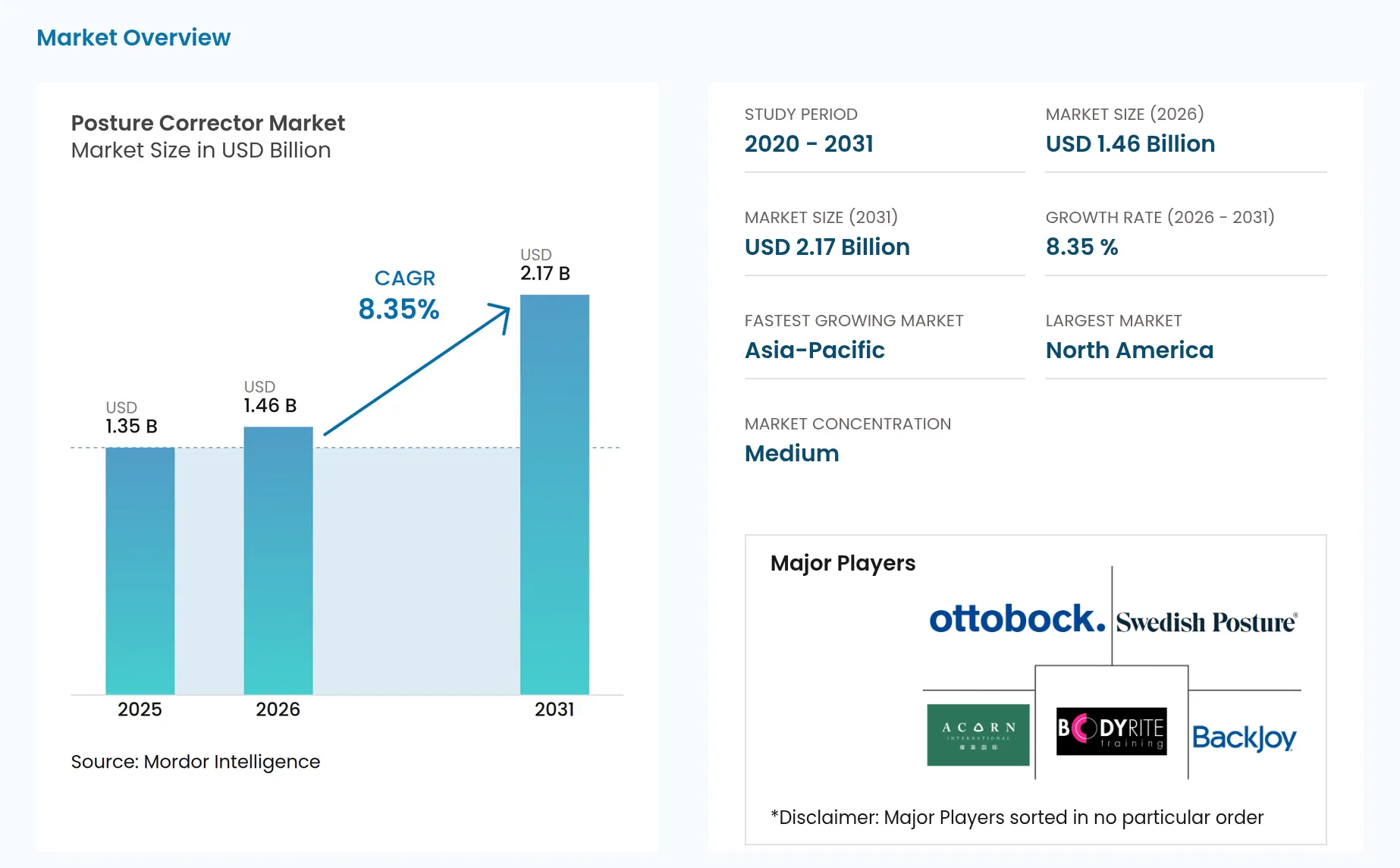
As of 2026, the global digital posture corrector market is valued at approximately $2.15 billion, driven by the permanent shift toward hybrid work and the rising incidence of "tech neck." Leading brands such as Upright, Posture360, and a new wave of AI-integrated apparel firms dominate the landscape. The investment outlook remains bullish as these technologies transition from standalone gadgets to integrated components of enterprise wellness programs and medical-grade diagnostic ecosystems.
The Evolution of Posture Management in a Digital-First World
The concept of posture correction has undergone a radical transformation over the last decade. What began as simple elastic braces and harnesses has evolved into a sophisticated sub-sector of the "Internet of Medical Things" (IoMT). By 2026, digital posture correctors are defined by their use of biofeedback, micro-electro-mechanical systems (MEMS), and artificial intelligence to provide real-time corrective data to the user.
The market's expansion is not merely a result of consumer vanity but a response to a global health crisis. Chronic musculoskeletal disorders (MSDs) are currently the leading cause of disability worldwide. In the corporate sector, the cost of absenteeism and reduced productivity due to back and neck pain has forced employers to look at digital posture correction as a high-ROI preventative measure. Unlike traditional braces, which can lead to muscle atrophy by doing the work for the body, digital variants focus on neuromuscular training—teaching the brain and muscles to maintain alignment through haptic alerts and visual data.
Market Size and Regional Growth Dynamics
The global market for digital posture correctors has maintained a robust Compound Annual Growth Rate (CAGR) of 13.8% between 2021 and 2026. This growth is bifurcated into two primary segments: hardware-based wearables and software-based computer vision solutions.
Regional Breakdown
North America remains the largest market, accounting for nearly 40% of global revenue. This is attributed to high healthcare spending, a dense population of remote knowledge workers, and the presence of major tech innovators in Silicon Valley and Toronto. However, the Asia-Pacific region is the fastest-growing segment. Rapid urbanization in India and China, coupled with a massive increase in smartphone penetration among younger demographics, has created a surge in demand for affordable posture-tracking devices.
Segment Performance
- Wearable Sensors: These small devices, often adhered to the upper back or clipped to clothing, remain the top revenue generators. Their accuracy in measuring spinal curvature in 3D space makes them the preferred choice for clinical applications.
- Smart Apparel: A rapidly emerging segment where sensors are woven directly into "smart shirts." This segment has seen a 25% year-over-year increase in 2026 as users seek more discrete solutions than adhesive sensors.
- AI Vision Software: Utilizing laptop and smartphone cameras to monitor posture without any wearable hardware. This segment is particularly popular in the B2B corporate wellness space due to the low cost of deployment.
Leading Brands and Competitive Analysis
The competitive landscape in 2026 is characterized by a mix of early pioneers and diversified health-tech conglomerates.
Upright Technologies
Upright continues to hold the largest market share in the consumer segment. Their Upright GO series has become synonymous with the category. In 2026, their focus has shifted toward "Upright Ecosystems," where the device data integrates directly with digital physical therapy platforms, allowing users to share their progress with healthcare providers.
Posture360
Posture360 has successfully pivoted toward the enterprise and industrial markets. Their products are often integrated into "smart uniforms" for warehouse workers and healthcare professionals. Their proprietary PostureSense technology is highly regarded for its ability to distinguish between "active movement" and "poor static posture," reducing the frequency of annoying false-positive vibrations.
Swedish Posture
A leader in the European market, Swedish Posture has gained ground by combining traditional ergonomic design with digital modules. They offer a "hybrid" approach, where digital sensors can be attached to high-quality physical supports, providing both immediate relief and long-term biofeedback training.
Zen (The AI Contender)
Zen has disrupted the market with its software-only approach. By using advanced computer vision, Zen’s software monitors a user’s sitting habits via their webcam. In 2026, Zen has secured major contracts with Fortune 500 companies looking to provide posture support to thousands of employees without the logistical overhead of shipping physical hardware.
| Brand | Primary Product Type | Target Audience | Key Feature (2026) |
|---|---|---|---|
| Upright | Adhesive Wearable | Individual Consumers | Biofeedback + Digital PT Integration |
| Posture360 | Smart Apparel / IoT | Industrial & B2B | Real-time ergonomics for labor-intensive roles |
| Swedish Posture | Hybrid (Brace + Sensor) | Clinical / Recovery | Physical support with digital monitoring |
| Zen AI | Software / Vision | Remote Workers / B2B | No-hardware tracking via webcam |
| Alignmed | Neurobands (Digitalized) | Athletes / Medical | Neural mapping and muscle activation |
Technical Advancements Driving the 2026 Market
The technical depth of these devices has increased significantly. In 2026, we are seeing the mainstreaming of three specific technologies:
- Multi-Modal Biofeedback: Early devices only vibrated when a user slouched. Current high-end models use varied haptic patterns to indicate how a user is misaligned (e.g., a specific vibration for a forward head tilt versus another for lumbar slumping).
- Machine Learning Personalization: Modern posture correctors no longer use a "one-size-fits-all" angle for what constitutes a slouch. Instead, they spend the first 48 hours of use "learning" the user's unique spinal anatomy and range of motion to create a personalized corrective baseline.
- Long-Range Low Power (LoRa) Connectivity: For industrial applications, devices now stay connected across large warehouses without needing to be tethered to a smartphone, allowing managers to monitor ergonomic safety across a whole fleet of workers in real-time.
Investment Outlook and Venture Capital Trends
The investment outlook for the digital posture corrector market is exceptionally positive for the 2026–2030 cycle. Investors are moving away from seeing these as "fitness trackers" and are instead classifying them as "Preventative Health Infrastructure."
M&A Activity
Strategic acquisitions are on the rise. We are seeing major health insurance providers acquiring posture-tech startups to integrate their data into "active prevention" insurance plans. If a policyholder can prove via digital logs that they are maintaining good posture and completing corrective exercises, they may be eligible for lower premiums—a trend similar to the "safe driver" discounts in auto insurance.
Venture Capital Focus
VC firms are currently prioritizing companies that offer "Posture-as-a-Service" (PaaS). This subscription-based model provides the hardware for free but charges for the AI-driven insights, professional coaching, and integration with broader health platforms. This ensures recurring revenue, which is highly attractive to late-stage investors.
Risks to Consider
Potential investors should be aware of "feature absorption." As companies like Apple and Samsung continue to enhance the sensors in their smartwatches and earbuds (which can already detect head position), standalone posture sensors must provide significantly more value to remain relevant. The survival of independent brands depends on their ability to offer medical-grade accuracy and specialized physical therapy integration that generic wearables cannot match.
Strategic Integration for Enterprise Wellness
For organizations looking to implement these solutions, the "deployment phase" has become more standardized in 2026. Experts recommend a three-tier approach:
- Assessment: Using AI-vision software to establish a baseline of employee musculoskeletal health across the organization.
- Intervention: Providing high-risk employees (those with existing pain or high-sedentary roles) with medical-grade wearables like Upright or Posture360.
- Gamification: Integrating posture data into corporate wellness challenges to encourage long-term habit formation rather than short-term usage.
Future Recommendations for Consumers and Investors
If you are a consumer looking to enter the market in 2026, the recommendation is to prioritize software ecosystem over hardware aesthetics. A device is only as good as the corrective plan it generates. Look for brands that offer integration with Apple Health, Google Fit, or dedicated physical therapy apps.
For investors, the most significant opportunities lie in Smart Fabrics and Computer Vision. The "friction" of wearing a separate device is the biggest hurdle to user retention. Companies that can hide the technology in everyday clothing or eliminate it through camera-based tracking will likely see the highest growth in the coming five years.
The digital posture corrector market is no longer a niche curiosity; it is a vital pillar of the modern ergonomic landscape. As the boundary between work and home continues to blur, the demand for technology that protects our physical well-being from our digital habits will only continue to intensify.