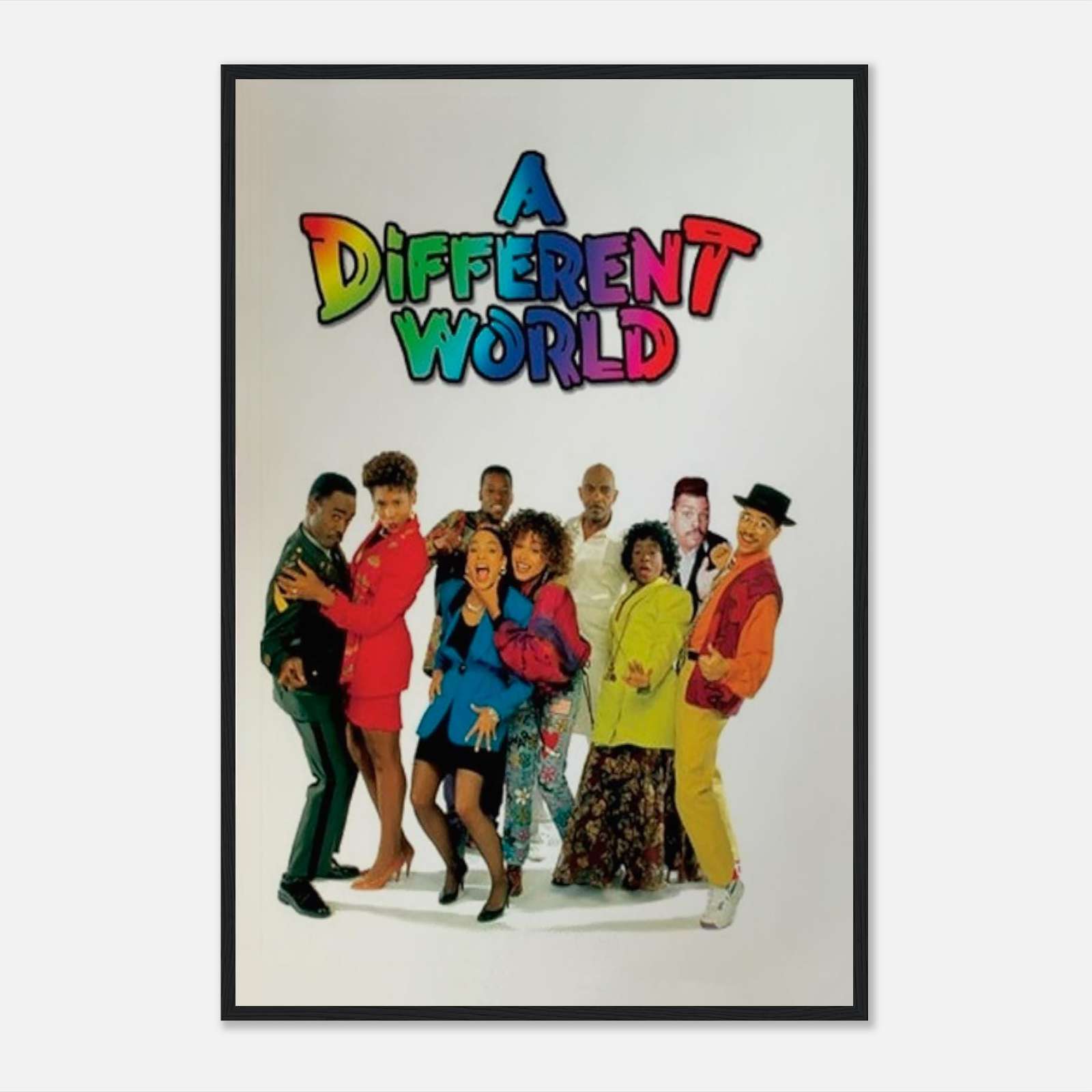
A Different World is a seminal American television sitcom that originally aired on NBC from 1987 to 1993 for six seasons and 144 episodes. Spun off from The Cosby Show, the series follows students at Hillman College, a fictional Historically Black College or University (HBCU) in Virginia, exploring youth culture, higher education, social activism, and romantic relationships.
Show Overview and Historical Evolution
Created as a spin-off to extend the reach of NBC's Thursday night comedy lineup, A Different World initially centered on Denise Huxtable (played by Lisa Bonet) as she transitioned from her Brooklyn family home to campus life at Hillman College. During its premiere season in 1987–1988, the show captured high Nielsen ratings primarily due to its lead-in placement, but its initial creative direction focused heavily on traditional sitcom tropes with limited focus on the distinct realities of Black higher education.
A major creative shift occurred between Seasons 1 and 2. Following Lisa Bonet’s departure from the main cast, producer and director Debbie Allen took creative control as showrunner. Drawing directly from her personal experiences as a graduate of Howard University, Allen re-anchored the show’s setting, tone, and character dynamics to reflect authentic HBCU culture. Under Allen’s leadership, the narrative pivoted from a single-character focus to an ensemble cast anchored by Southern belle Whitley Gilbert (Jasmine Guy) and mathematics prodigy Dwayne Wayne (Kadeem Hardison).
This pivot revitalized the series both critically and socially. A Different World shifted from standard situational comedy into an influential platform that tackled complex political, economic, and cultural topics. Over its six-season run, the show examined issues such as campus activism, date rape, racial discrimination, the Persian Gulf War, the 1992 Los Angeles uprisings, and the HIV/AIDS epidemic. By blending sharp comedic timing with authentic institutional grounding, the series set a precedent for youth-oriented ensemble television.
Key Characters and Ensemble Dynamics
The longevity and resonant impact of A Different World stemmed from its multidimensional character development and the chemistry of its ensemble cast. Rather than relying on monolithic portrayals, the series showcased a broad spectrum of socioeconomic backgrounds, political philosophies, and personal aspirations within the student body and faculty.
| Character | Actor | Primary Role / Key Traits |
|---|---|---|
| Whitley Gilbert | Jasmine Guy | Wealthy art history major from Atlanta |
| Dwayne Wayne | Kadeem Hardison | Math prodigy; famous flip-up glasses |
| Ron Johnson | Darryl M. Bell | Dwayne's best friend; aspiring mogul |
| Kim Reese | Charnele Brown | Pre-med student from urban background |
| Freddie Brooks | Cree Summer | Idealistic, free-spirited activist |
| Colonel Taylor | Glynn Turman | Strict ROTC instructor and professor |
| Jisa Pitts | Dawnn Lewis | Pragmatic student; Whitley's roommate |
| Lena James | Jada Pinkett | Tough, creative freshman from Baltimore |
Whitley Gilbert and Dwayne Wayne
The central romantic arc between Whitley Gilbert and Dwayne Wayne remains one of television's most celebrated courtships. Whitley began the series as a spoiled, class-conscious heir to an aristocratic Atlanta family, while Dwayne was an ambitious engineering and math student known for his signature flip-up sunglasses. Over six seasons, their relationship evolved from comedic friction to mutual professional support and marriage, illustrating mature personal growth alongside academic achievement.
Kim Reese, Freddie Brooks, and Ron Johnson
The broader student body provided diverse perspectives on post-secondary challenges:
- Kim Reese (Charnele Brown): A pre-med student working multiple jobs to fund her education, representing working-class determination and academic excellence.
- Freddie Brooks (Cree Summer): An environmentally conscious political activist whose worldview frequently prompted discussions on systemic injustice, vegetarianism, and indigenous rights.
- Ron Johnson (Darryl M. Bell): Dwayne’s charismatic roommate who constantly sought entrepreneurial schemes, later maturing into business ownership and sound financial management.
Faculty and Leadership Figures
The presence of strong faculty members grounded student storylines in institutional structure. Characters like Colonel Bradford Taylor (Glynn Turman), a stern ROTC instructor and military veteran, and Lettie Bostic (Mary Alice), the wise dorm director, provided mentorship, boundary setting, and historical perspective to the young adults navigating independence.
Major Themes and Cultural Impact on HBCUs
Beyond its rating success, A Different World exerted a measurable impact on American higher education and public policy awareness throughout the late 1980s and 1990s. It was among the first prime-time network television programs to portray higher education through an unapologetically Black institution, normalizing college attendance for generations of viewers.
Real-World Boost to HBCU Enrollment
Historical enrollment data from the National Center for Education Statistics (NCES) indicates a substantial increase in matriculation at Historically Black Colleges and Universities during the broadcast run of A Different World. Real institutions like Howard University, Spelman College, Morehouse College, and Hampton University reported record applicant volumes during the late 1980s and early 1990s. Viewers across the United States cited the show's realistic representation of stepping, homecomings, campus leadership, and academic rigor as a primary motivation for applying to HBCUs.
- The Cosby Show
- Spin-off, 1987: A Different World
- Season 1: Denise Huxtable Focus
- Traditional sitcom format
- Focus on individual transition
- Seasons 2–6: Debbie Allen Era
- Authentic HBCU environment
- Ensemble cast & social themes
- Nationwide surge in HBCU applications
- Season 1: Denise Huxtable Focus
- Spin-off, 1987: A Different World
Direct Address of Social Issues
Under Debbie Allen’s direction, the show confronted taboo topics directly, often ahead of contemporary broadcast standards:
- HIV/AIDS Awareness: In the landmark Season 5 episode "If I Should Die Before I Wake," guest starring Tisha Campbell as a student diagnosed with HIV, the series educated prime-time audiences on virus transmission, stigma, and safe practices.
- Date Rape and Consent: The Season 4 episode "No Means No" tackled acquaintance rape on college campuses, earning widespread acclaim for its clear, uncompromising stance on consent and legal responsibility.
- Racial Discrimination and Class Divides: Episodes frequently highlighted colorism, financial inequality within the Black community, corporate hiring biases, and the systemic impacts of apartheid in South Africa.
- Civil Unrest: In the Season 6 two-part episode "Honeymoon in LA," the show addressed the immediate fallout of the 1992 Los Angeles verdict and subsequent riots through the eyes of young adults witnessing urban unrest firsthand.
Season-by-Season Guide and Viewing Summary
The following summary provides an overview of the structural and narrative progression across the show's six-year run.
| Season | Year Range | Primary Focus & Narrative Arc | Standout Episodes / Milestones |
|---|---|---|---|
| Season 1 | 1987–1988 | Denise Huxtable adjusts to dorm life at Hillman; introduction of Whitley, Dwayne, and Jisa. | "Pilot", "If Chosen I May Not Run" |
| Season 2 | 1988–1989 | Debbie Allen takes over as showrunner; focus shifts to Whitley and Dwayne; introduction of Kim and Freddie. | "If You Like Pina Coladas", "No Means No" |
| Season 3 | 1989–1990 | Dwayne and Whitley's friendship deepens; students take on off-campus jobs and leadership roles. | "For Whom the Bull Tolls", "A Bedtime Story" |
| Season 4 | 1990–1991 | Dwayne and Whitley begin dating; serious exploration of career ambitions and graduate school plans. | "Good White People", "Love, Hillman Style" |
| Season 5 | 1991–1992 | Climax of the Dwayne-Whitley romance; critical episodes on HIV awareness and campus activism. | "If I Should Die Before I Wake", "Save the Best for Last" |
| Season 6 | 1992–1993 | Newlywed life for Dwayne and Whitley; introduction of new freshman class including Lena James; series finale. | "Honeymoon in LA", "When One Door Closes..." |
Top Essential Episodes for Viewers
For new audiences or those revisiting the series, several episodes define the artistic and cultural peak of A Different World:
- "No Means No" (Season 2, Episode 17): A powerful episode where Freddie is pressured by a popular athlete, leading to a crucial discussion on sexual consent and institutional accountability.
- "If I Should Die Before I Wake" (Season 5, Episode 10): Guest starring Tisha Campbell, this episode confronted the HIV/AIDS crisis head-on, earning high praise from public health organizations for its educational accuracy.
- "Save the Best for Last" (Season 5, Episodes 24 & 25): The iconic two-part season finale featuring the dramatic interruption of Whitley’s wedding to politician Byron Douglas by Dwayne Wayne.
- "Honeymoon in LA" (Season 6, Episodes 1 & 2): Filmed in the aftermath of the 1992 Los Angeles unrest, exploring the emotional and political dynamics of urban uprisings from multiple generational perspectives.
How to Watch A Different World in 2026
Viewing options for A Different World remain widely accessible across digital streaming services, cable syndication networks, and physical home media formats.
Digital Streaming Options
- Subscription Streaming: The complete six seasons of A Different World are available on major subscription platforms, including Max (formerly HBO Max) and TV One's digital app, subject to regional licensing agreements.
- Free Ad-Supported Streaming Television (FAST): Networks such as Pluto TV, Tubi, and Amazon Freevee regularly feature scheduled syndication blocks or dedicated linear streaming channels carrying the series.
- Digital Purchase: Individual episodes and complete season sets can be purchased in standard definition (SD) or high definition (HD) on digital storefronts including Apple TV, Amazon Prime Video, and Fandango at Home.
Physical Media and Syndication
For collectors and physical media advocates, official multi-disc DVD box sets of all six seasons are distributed by Mill Creek Entertainment and UrbanWorks Entertainment. Cable television networks such as TV One, BET, and Bounce TV also broadcast daily reruns in syndication across North American markets.
Frequently Asked Questions
Why did Lisa Bonet leave A Different World after Season 1?
Lisa Bonet departed the series following the first season primarily due to her pregnancy. Show creators decided that having an unwed pregnant main character did not fit the desired direction for the Huxtable family brand at that time on NBC. Bonet returned to The Cosby Show after giving birth, which allowed A Different World to reshape its format into an ensemble piece centered on Hillman College as a whole.
Is Hillman College a real school?
No, Hillman College is a fictional institution created for The Cosby Show and A Different World, visually located in Virginia. However, its culture, historic architecture, traditions, step shows, and academic environments were based closely on real-world HBCUs such as Howard University, Spelman College, Morehouse College, and Hampton University.
Who directed and produced most of A Different World?
While Bill Cosby created the characters and concept, renowned actress, dancer, and director Debbie Allen took over as main director, producer, and showrunner starting in Season 2. Allen transformed the series by hiring writers with direct HBCU experience, updating the wardrobe to match real campus fashion, and incorporating real political and social discussions into the script.
Where can I stream all seasons of A Different World in 2026?
In 2026, all six seasons can be streamed on subscription platforms such as Max, as well as free ad-supported streaming platforms like Tubi or Pluto TV, depending on current distribution rights. Viewers can also buy digital season passes on Apple TV and Amazon Prime Video.
How many seasons and episodes of A Different World were produced?
The series produced a total of 144 episodes across 6 seasons, original airing on NBC between September 24, 1987, and July 9, 1993.
Experiencing and Preserving the Legacy of Hillman College
To fully appreciate the historical weight and artistic quality of A Different World, viewers should approach the series not merely as nostalgic late-80s/early-90s entertainment, but as a deliberate effort to document Black academic life.
If introducing the show to new generations, start with Season 2 to observe how Debbie Allen’s creative intervention redirected the show toward authentic institutional issues. Complementing a viewing session with real-world research into Historically Black Colleges and Universities provides valuable context for how A Different World shaped modern collegiate culture, media representation, and social commentary across American television.