The Targaryen family tree traces the three-century royal dynasty of Westeros, spanning from Aegon the Conqueror’s unification of the Seven Kingdoms to the fall of King Aerys II and the surviving heirs, Daenerys Targaryen and Jon Snow (Aegon Targaryen). Characterized by sibling intermarriage, dragon-riding ancestry, and devastating succession wars like the Dance of the Dragons and the Blackfyre Rebellions, the bloodline connects nearly every major historical conflict in George R.R. Martin’s A Song of Ice and Fire universe and its television adaptations.
The Foundations of House Targaryen: Conquest to the Early Kings
The Targaryen dynasty established its foothold in Westeros long before Aegon’s Conquest. Originating as one of forty noble dragonlord families in the Valyrian Freehold, House Targaryen relocated to the island fortress of Dragonstone twelve years before the Doom of Valyria, guided by the prophetic visions of Daenys the Dreamer. This foresight saved the family from absolute destruction, leaving them as the world's sole surviving dragonlords.
Aegon I Targaryen, later known as Aegon the Conqueror, reshaped the continent by landing on the mainland with his two sister-wives, Visenya and Rhaenys, and their three dragons: Balerion the Black Dread, Vhagar, and Meraxes. The conquest unified six of the Seven Kingdoms under a single monarch, establishing the Iron Throne and the Targaryen bloodline as the supreme political and military authority in Westeros.
- Aegon I (The Conqueror)
- With Rhaenys:
- Aenys I
- Jaehaerys I & Alysanne
- Aenys I
- With Visenya:
- Maegor I (The Cruel)
- With Rhaenys:
The generational split began immediately with Aegon’s two sons, born of different wives. Aenys I, son of Rhaenys, was soft-spoken and physically delicate, succeeding his father as the second king on the Iron Throne. His reign was marred by religious uprisings led by the Faith Militant, who viewed Valyrian incestuous customs as abhorrent. Upon Aenys’s premature death, his ruthless half-brother Maegor I (Maegor the Cruel), son of Visenya, usurped the crown from Aenys’s eldest son, Prince Aegon the Uncrowned.
Maegor’s reign was characterized by brutal warfare, the construction of the Red Keep, and systematic persecution of religious orders and rivals alike. Because Maegor died without leaving a surviving heir, the royal line defaulted back to the descendants of Aenys I through his younger surviving son, Jaehaerys.
The Golden Era and the Seeds of Division: Jaehaerys I to Viserys I
The long, fifty-five-year reign of King Jaehaerys I, known as the Conciliator or the Old King, represents the pinnacle of Targaryen power, stability, and cultural development. Marrying his sister, Queen Alysanne Targaryen, Jaehaerys produced thirteen children. However, this prolific reproductive success created unprecedented genealogical complexity and legal questions surrounding royal succession.
Tragedy thinned the ranks of Jaehaerys’s eldest sons. Prince Aemon, the eldest surviving heir, died in battle, leaving behind a single female child, Princess Rhaenys. Following Aemon's death, Jaehaerys named his second son, Prince Baelon the Spring Prince, as heir over Rhaenys. When Baelon also died unexpectedly before his father, the realm faced a succession crisis between two primary claims:
- The Primogeniture Claim (Line of Aemon): Represented by Princess Rhaenys Targaryen (and later her son, Laenor Velaryon), asserting that the throne should pass through the eldest son's offspring regardless of gender.
- The Male-Preference Proximity Claim (Line of Baelon): Represented by Prince Viserys Targaryen, the eldest son of Baelon, asserting that the royal succession must pass through an unbroken male line.
To avoid open civil war, Jaehaerys convened the Great Council of 101 AC at Harrenhal. The assembled lords of Westeros voted overwhelmingly in favor of Prince Viserys. This decision established a crucial, albeit informal, legal precedent: no woman could inherit the Iron Throne, nor could the crown pass through a female descendant if a viable male heir existed.
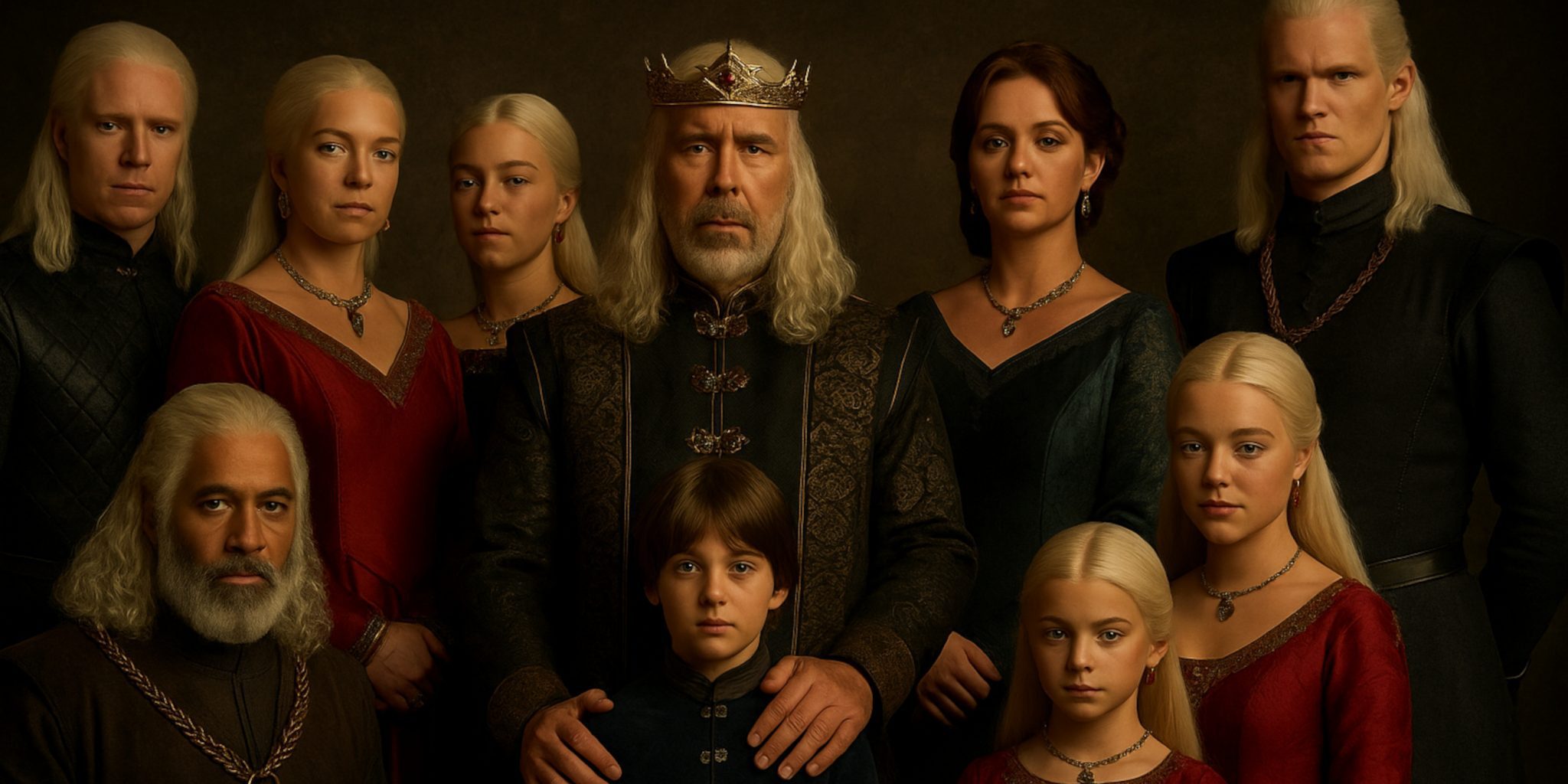
Viserys I succeeded his grandfather in a period of peace and financial prosperity. However, his decision to name his daughter, Princess Rhaenyra Targaryen, as his official heir following the death of his first wife, Aemma Arryn, directly contradicted the precedent of 101 AC. When Viserys subsequently remarried Alicent Hightower and fathered multiple sons—most notably Prince Aegon—the bloodline split into two fierce political factions: the "Blacks" supporting Rhaenyra, and the "Greens" supporting Alicent’s eldest son.
The Dance of the Dragons: Rhaenyra, Daemon, and the Hightower Lineage
The civil war known as the Dance of the Dragons (129–131 AC) shattered Targaryen power and decimated the world's remaining dragon population. The conflict pitted sister against brother and cousin against cousin, fundamentally restructuring the royal family tree.
- Viserys I
- With Aemma Arryn:
- Rhaenyra (Blacks)
- With Laenor (Parentage disputed):
- Jacaerys, Lucerys, Joffrey Velaryon
- With Daemon:
- Aegon III, Viserys II
- With Laenor (Parentage disputed):
- Rhaenyra (Blacks)
- With Alicent Hightower:
- Aegon II, Helaena, Aemond, Daeron (Greens)
- With Aemma Arryn:
Rhaenyra Targaryen’s bloodline expanded through two distinct marriages:
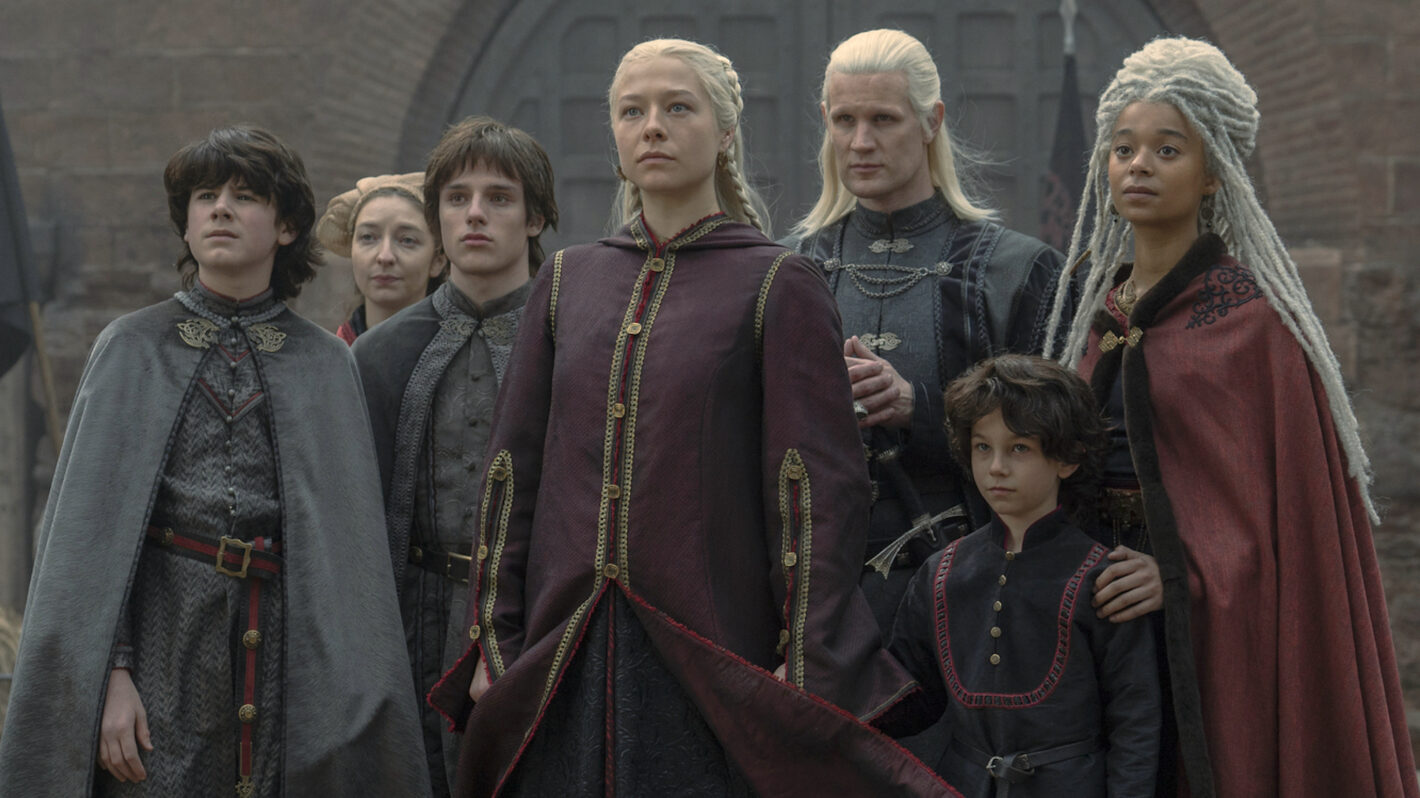
- Marriage to Ser Laenor Velaryon: Produced three sons—Jacaerys, Lucerys, and Joffrey Velaryon. Rumors persisted throughout the realm that their biological father was Ser Harwin Strong, leading the Green faction to denounce them as illegitimate. All three sons died during the civil war without leaving heirs.
- Marriage to Prince Daemon Targaryen: Rhaenyra’s uncle, the rogue prince Daemon, married her after the deaths of Laenor Velaryon and Laena Velaryon. Their union yielded two sons who survived the war: Prince Aegon (later King Aegon III) and Prince Viserys (later King Viserys II).
On the Green side, King Aegon II married his sister Helaena Targaryen, producing Prince Jaehaerys, Princess Jaehaera, and Prince Maelor. The horrific casualties of the war eliminated every male heir of the Green branch. Aegon II died poisoned, without surviving male issue, leaving the throne to his nephew, Rhaenyra’s eldest surviving son with Daemon: King Aegon III (known as the Dragonbane).
Because Aegon III was a child traumatized by the war, his younger brother Viserys—who had been presumed dead in Essos but was later ransomed back—served as Hand of the King. The entire subsequent Targaryen bloodline following the Dance of the Dragons descends exclusively through the combined union of Rhaenyra Targaryen and Daemon Targaryen.
The Blackfyre Rebellions and the Post-Dance Succession
Following Aegon III’s reign, his sons Daeron I (the Young Dragon) and Baelor I (the Blessed) both died without children. The crown then passed to their uncle, Viserys II, who ruled briefly before his son, Aegon IV (known as Aegon the Unworthy), inherited the Iron Throne.
Aegon IV’s reign triggered more than half a century of recurring civil wars due to his volatile personal choices and legitimation of his illegitimate children on his deathbed.
- Aegon IV (The Unworthy)
- With Queen Naerys:
- Daeron II (The Good, w/ Mariah Martell)
- Maekar I
- Aegon V (Egg)
- Maekar I
- Daeron II (The Good, w/ Mariah Martell)
- Great Bastards:
- Daemon I Blackfyre, Aegor Rivers, Brynden Rivers, Shiera Seastar
- With Queen Naerys:
Aegon IV favored his natural son Daemon Waters, gifting him the ancestral Valyrian steel sword Blackfyre. Upon his deathbed in 184 AC, Aegon IV legitimized all his natural children, creating a category known as the Great Bastards. Daemon adopted the name Daemon I Blackfyre and established House Blackfyre, claiming that the true heir, Prince Daeron (later King Daeron II), was an illegitimate child of Queen Naerys and Ser Aemon Targaryen (the Dragonknight).
This dispute catalyzed five separate Blackfyre Rebellions:
- Daeron II’s Royal Branch: Maintained control of the Iron Throne. Daeron II married Mariah Martell of Dorne, successfully incorporating Dorne into the Seven Kingdoms through marriage alliance rather than conquest. His line produced Maekar I, whose youngest son became King Aegon V.
- The Blackfyre Cadet Branch: Daemon I Blackfyre’s descendants fled to Essos after their defeat at the Redgrass Field, forming the Golden Company and repeatedly launching invasions across generations until the male line was eradicated in the War of the Ninepenny Kings by Ser Barristan Selmy.
King Aegon V (famously known as "Egg" from the Tales of Dunk and Egg novellas) inherited the throne unexpectedly through a series of unusual deaths and a Great Council in 233 AC. Aegon V attempted to integrate House Targaryen more closely with the smallfolk and arranged marriages for his children with major Great Houses. However, his children broke these betrothals out of love, weakening the monarchy's political alliances shortly before the catastrophic Tragedy at Summerhall in 259 AC, where Aegon V and his eldest son Prince Duncan perished trying to hatch dragon eggs.
The Final Generations: From Summerhall to Robert's Rebellion
The tragic fire at Summerhall altered the succession, bringing Jaehaerys II to the throne briefly, followed by his son, King Aerys II Targaryen, later known as the "Mad King." Aerys II married his sister, Rhaella Targaryen, fulfilling a prophecy that the "Prince That Was Promised" would be born from their specific lineage.
- Aerys II (The Mad King) and Rhaella
- Rhaegar
- With Elia Martell:
- Rhaenys, Aegon VI
- Secret Union with Lyanna Stark:
- Aegon Targaryen (Jon Snow)
- With Elia Martell:
- Viserys
- Daenerys
- Rhaegar
Aerys II and Rhaella’s union yielded three children who survived into adulthood:
- Prince Rhaegar Targaryen: The Crown Prince and heir apparent. Rhaegar married Princess Elia Martell of Dorne, fathering Princess Rhaenys and Prince Aegon. Rhaegar’s subsequent elopement with Lyanna Stark of Winterfell ignited Robert’s Rebellion (182–183 AC). Rhaegar was slain by Robert Baratheon at the Battle of the Trident, while his wife Elia and their two young children were murdered during the Sack of King’s Landing.
- Prince Viserys Targaryen: Fled to Essos alongside his pregnant mother, Queen Rhaella, after the fall of King’s Landing. Viserys crowned himself exiled king, living as the "Beggar King" until he was killed in Vaes Dothrak by Khal Drogo.
- Princess Daenerys Targaryen: Born on Dragonstone during a raging storm, earning her the title "Stormborn." She grew up in exile, eventually hatching three dragons (Drogon, Rhaegal, and Viserion), conquering cities in Slaver's Bay, and returning to Westeros to reclaim her ancestral throne.
Crucially, Rhaegar’s relationship with Lyanna Stark produced a secret legitimate male heir. Before his death, Rhaegar annulled his marriage to Elia Martell and married Lyanna in a private ceremony in Dorne. Lyanna died giving birth to a son, whom she entrusted to her brother, Eddard Stark. Ned raised the child as his baseborn son under the name Jon Snow.
In reality, Jon Snow is Aegon Targaryen, the last surviving male-line descendant of House Targaryen and the rightful heir to the Iron Throne under traditional Westerosi succession laws.
Key Lineages in the Targaryen Dynasty: A Comparative Breakdown
The following table summarizes the primary branches, generational pivots, and historical legacies that defined the Targaryen bloodline from conquest to the modern era.
| Era / Generation | Dominant Figures | Spousal Unions | Primary Lineage / Offspring | Historical & Succession Significance |
|---|---|---|---|---|
| The Conquest | Aegon I, Visenya, Rhaenys | Visenya Targaryen, Rhaenys Targaryen | Aenys I (via Rhaenys), Maegor I (via Visenya) | Established the Iron Throne; created initial conflict between older brother and military usurper. |
| The Golden Age | Jaehaerys I, Alysanne | Alysanne Targaryen | Prince Aemon, Prince Baelon, Princess Alyssa, +10 others | Established legal succession precedent via Great Council of 101 AC favoring male-preference proximity. |
| Dance of the Dragons | Rhaenyra, Daemon, Aegon II | Ser Laenor Velaryon, Prince Daemon, Alicent Hightower | Aegon III, Viserys II (via Rhaenyra & Daemon); Aegon II's line (extinguished) | Destroyed dragons; eliminated Green branch; all future Targaryens descend from Rhaenyra and Daemon. |
| Blackfyre Era | Aegon IV, Daeron II, Daemon I Blackfyre | Naerys Targaryen, Mariah Martell, Rohanne of Tyrosh | Daeron II (Royal line), Daemon Blackfyre (Legitimized cadet branch) | Triggered five civil wars over bastard legitimacy; permanently shifted royal defense politics. |
| Restoration & Decline | Aegon V, Jaehaerys II, Aerys II | Betha Blackwood, Shaera Targaryen, Rhaella Targaryen | Aerys II, Rhaella Targaryen; Prince Duncan (disinherited) | Broken noble betrothals weakened house support; ended in Summerhall tragedy and the Mad King's rule. |
| Modern Era | Rhaegar, Daenerys, Jon Snow (Aegon) | Elia Martell, Lyanna Stark, Khal Drogo | Rhaenys, Aegon (slain); Jon Snow (secret legitimate heir) | Fall of the dynasty; birth of modern dragons; resolution of the prophecy of the Prince That Was Promised. |
Book Lore vs. Television Adaptations: Essential Genealogical Differences
While HBO’s television universe (Game of Thrones and House of the Dragon) accurately captures the broad strokes of Targaryen history, several genealogical streamlinings and changes were made for screen adaptation clarity:
- Omission of King Jaehaerys II: In George R.R. Martin’s book lore, King Aerys II is the son of King Jaehaerys II and the grandson of Aegon V. In the Game of Thrones television show timeline, Jaehaerys II was removed entirely; Aerys II is presented as the direct son of Aegon V (Egg).
- The Identity of Young Griff: In the novel A Dance with Dragons, a young man claiming to be Prince Aegon Targaryen (son of Rhaegar and Elia Martell) is alive in Essos, having been secretly swapped with a lowborn baby by Varys prior to the Sack of King’s Landing. This character, known as "Young Griff," was completely omitted from the television series.
- House Velaryon's Heritage: In the television series House of the Dragon, House Velaryon is depicted with Black ethnicity to provide distinct visual clarity between the Targaryen and Velaryon households. In book lore, both families are described with identical Valyrian traits: pale skin, silver-gold hair, and purple eyes.
- Naming of Rhaegar's Sons: In the Game of Thrones show finale arc, Rhaegar’s son with Lyanna Stark is revealed to be named Aegon Targaryen. In book continuity, Rhaegar already had an elder legitimate son named Aegon with Elia Martell. Fans note it is highly unusual for a father to name two legitimate sons Aegon, leading to speculation that his true Valyrian name in the unreleased books may differ.
Frequently Asked Questions
How are Daenerys Targaryen and Jon Snow related?
Daenerys Targaryen is Jon Snow’s biological aunt. Jon Snow (born Aegon Targaryen) is the legitimate son of Prince Rhaegar Targaryen, who was Daenerys’s older brother. Because Rhaegar and Daenerys were siblings, Jon belongs to the subsequent generation, making Daenerys his father's younger sister.
Why did the Targaryens practice intra-family marriage so frequently?
The Targaryens practiced sibling and cousin marriage primarily to keep their Valyrian bloodline pure, preserving the magical genetic traits necessary to bond with and ride dragons. Historically, Valyrian dragonlord families believed that mixing their blood with non-dragonriding houses weakened their control over dragons. Additionally, intra-family marriage prevented competing Great Houses from claiming rights to the Iron Throne.
Who is the legitimate heir to the Iron Throne through the Targaryen line?
Under standard Westerosi male-preference primogeniture laws, Jon Snow (Aegon Targaryen) is the legitimate heir to the Iron Throne over Daenerys Targaryen. As the legitimate surviving son of Prince Rhaegar Targaryen—who was the Crown Prince and eldest son of King Aerys II—Jon’s claim takes precedence over Rhaegar’s younger sister, Daenerys.
How does the House of the Dragon family tree connect to Game of Thrones?
House of the Dragon takes place roughly 170 to 200 years before the events of Game of Thrones. The main characters of House of the Dragon—Rhaenyra Targaryen and her uncle-husband Daemon Targaryen—are the direct ancestors of both Daenerys Targaryen and Jon Snow. Every Targaryen king who reigned after the Dance of the Dragons descends directly from Rhaenyra and Daemon’s union.
What was the Great Council of 101 AC, and why did it matter?
The Great Council of 101 AC was a massive assembly called by King Jaehaerys I to let the lords of Westeros vote on the royal succession. The council chose Prince Viserys over Princess Rhaenys and her son Laenor. This established a precedent that male lines take priority over female lines in royal succession, which later served as the core legal argument used by the Greens to challenge Princess Rhaenyra's claim to the throne.
Tracing the Targaryen Lineage Accurately
When exploring the Targaryen family tree, tracking generational lines requires isolating key historical pivot points rather than reading the tree strictly sequentially. Because Targaryens frequently married siblings, aunts, uncles, and cousins, traditional tree charts collapse into dense, interconnected loops.
To trace any character's ancestry reliably:
- Identify the Post-Dance Anchor: Start by recognizing that all modern Targaryens descend exclusively through King Aegon III or King Viserys II (the sons of Rhaenyra and Daemon). Any claims tracing back to Aegon II or the Hightower branch ended in 131 AC.
- Separate Royal from Legitimized Branches: Distinguish clearly between the legitimate royal line of King Daeron II and the cadet branches formed by legitimized natural children, such as House Blackfyre or the Rivers lineages.
- Account for Canonical Differences: Maintain a clear distinction between book continuity (A Song of Ice and Fire, Fire & Blood) and television universe continuity (Game of Thrones, House of the Dragon), particularly regarding omitted monarchs like Jaehaerys II and character consolidations.
Understanding these structural anchors provides a clear lens through which to analyze the shifting political alliances, war motives, and prophetic bloodlines that define the lore of Westeros.