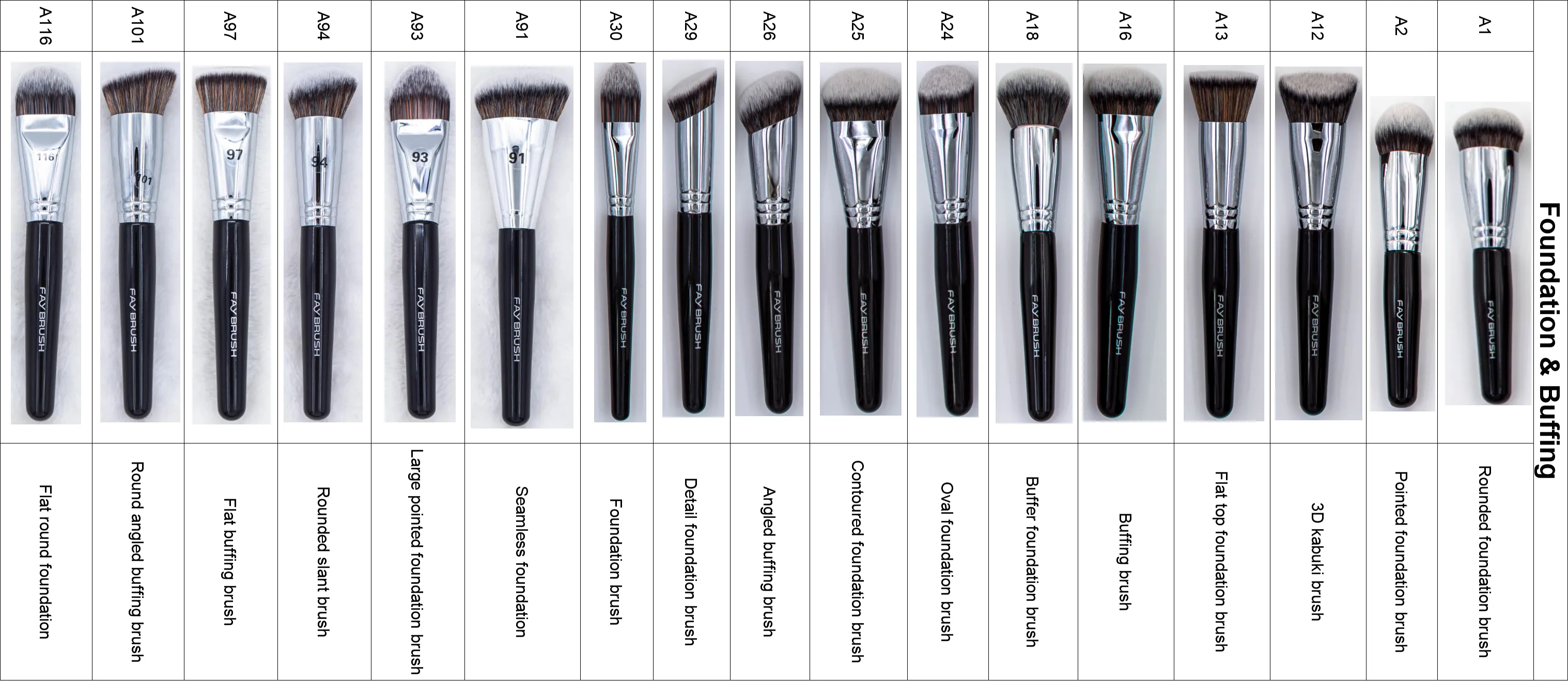
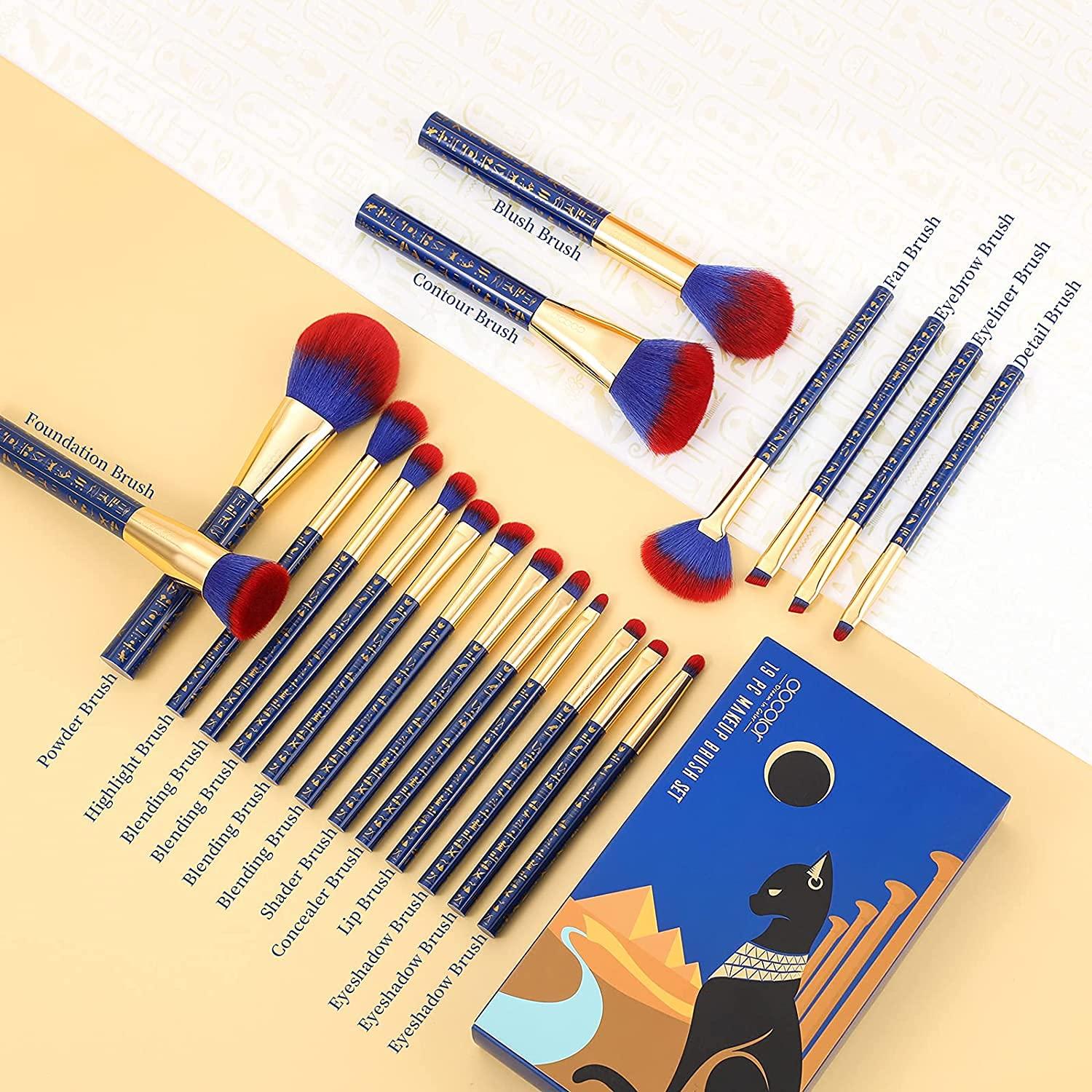
A makeup cat brush—professionally referred to as a cat's tongue or filbert brush—is a flat cosmetic applicator featuring a dense base, gently curved shoulders, and a tapered, oval tip. Engineered primarily for liquid and cream formulas, it enables precise product placement, smooth layering, and controlled edge work across foundation, concealer, and detailed eyeshadow applications.
Understanding the Cat Tongue Silhouette and Architecture
The term "cat brush" in cosmetics refers to the specific shape of the brush head, which mirrors the smooth, tapered oval of a feline’s tongue. Known historically in fine arts as a filbert shape, this silhouette bridges the gap between flat chisel brushes and round dome brushes. The unique geometric profile provides two distinct application surfaces: the broad, flat face for sweeping coverage over larger areas, and the thin, curved outer tip for sharp lines and detailed cornering.
- Tapered Oval Tip (Precision work, clean edges)
- Curved Shoulders (Smooth blending transition)
- Flat Body (High product payoff & broad coverage)
- Double-Crimped Ferrule (Secures bristles)
- Ergonomic Handle
The construction of a premium cat tongue makeup brush relies heavily on ferrule crimping and bristle density. The ferrule—the metal band connecting the bristles to the handle—flattens the hair bundle tightly into a compressed row. This structural flattening keeps the bristles stiff enough to push viscous products like heavy concealers or liquid foundations without buckling, while the tapered tips ensure soft contact with the skin.
While novelty cat-paw or feline-themed cosmetic brushes exist in retail markets, the professional beauty industry standard exclusively uses "cat tongue" to designate this indispensable utility shape. Understanding this distinction ensures artists and enthusiasts select high-performance tools designed for ergonomic control and superior cosmetic finish rather than decorative appeal.
Categorizing Cat Makeup Brushes by Size and Purpose
Cat tongue brushes are manufactured in distinct scale tiers, each optimized for specific face zones, formula viscosities, and application techniques. Selecting the appropriate size prevents product waste and eliminates application streaks.
- Large Cat Tongue: Full-Face Foundation
- Medium Cat Tongue: Concealer & Contour
- Micro Detail Cat: Spot & Lip Lining
1. Large Flat Foundation Cat Brushes
The large foundation cat brush features long, resilient bristles spanning roughly 0.75 to 1 inch in width. Its expansive surface area allows swift, uniform distribution of liquid foundation, tinted moisturizers, and barrier primers. Because the flattened face holds formula on the surface rather than absorbing it into the core, this size delivers maximum coverage per drop of foundation.
2. Medium Concealer and Cream Contour Brushes
Sized between 0.3 to 0.5 inches in width, medium cat tongue brushes are the gold standard for targeted color correction, under-eye brightening, and cream cheek contouring. The tapered edge nestles cleanly into the inner tearduct area, around the nostrils, and under the lower lash line. The increased density of this mid-size variant allows for firm stippling to hide hyperpigmentation without disturbing underlying skin prep.
3. Small Detail and Eyeshadow Filberts
Micro cat tongue brushes (ranging from 0.1 to 0.25 inches) offer micro-precision for cut-crease eye looks, lip line shaping, and targeted blemishes. The curved edge acts as a natural guide along the lip contour or eyelids, allowing cream eye primers, glitter glues, and gel liners to lay down with absolute symmetry.
Fiber Chemistry: Synthetic vs. Natural Bristles
The performance of a cat tongue brush depends heavily on its fiber composition. Because this shape is primarily designed to maneuver wet, emollient, and liquid matrices, material choice fundamentally changes how product transfers to the skin.
| Fiber Selection Matrix | Characteristics |
|---|---|
| SYNTHETIC (Taklon / Nylon / PBT) | • Non-porous surface structure: Zero liquid absorption• High tensile strength: Maintains sharp edge with heavy creams• Easy to sanitize: Resists bacterial trap from oils |
| NATURAL (Sable / Goat / Pony) | • Microscopic cuticles: Absorbs and holds liquid formulas• Softer flex pattern: Better for dry powder dispersion• Requires gentle care: Cuticles degrade with liquid solvents |
Synthetic Filaments (Taklon, Nylon, PBT)
Modern synthetic bristles—predominantly high-grade Polybutylene Terephthalate (PBT) and Taklon—are non-porous. Synthetic filaments feature smooth, sealed exteriors that prevent liquid foundation and cream concealer from soaking into the internal fiber structure. This lack of absorption ensures that nearly 100% of the picked-up product transfers onto the face. Synthetic fibers also offer higher tensile resilience, retaining their firm, flat shape even when saturated with heavy creams or waxes.
Natural Animal Hair (Sable, Goat, Squirrel)
Natural animal hairs possess microscopic outer cuticles. When used with liquid or oil-based cosmetics, these cuticles absorb moisture, causing the fibers to swell, clump, and trap product inside the hair shaft. This leads to uneven coverage, difficult cleaning, and premature shedding due to trapped moisture in the ferrule base. Consequently, natural hair cat brushes should be reserved almost exclusively for dry powder eyeshadow blending, press-and-roll shimmer placement, or soft powder detailing.
Step-by-Step Master Application Techniques
To achieve a seamless, airbrushed finish with a cat tongue brush, artists must move beyond simple "painting" strokes. Executing proper mechanical control prevents visible brush lines and uneven texture.
- STEP 1: Load Edge — Apply product to tip of bristles
- STEP 2: Paint & Sweep — Spread product in long strokes
- STEP 3: Press & Stipple — Press flat side to erase streak lines
Step 1: Dispense and Load Correctly
Never dip a cat tongue brush directly into a foundation bottle or concealer pot. Dispense a small amount of formula onto a clean metal mixing palette or the back of your hand. Palette loading allows control over product volume: coat only the lower third of the bristle tip, spreading the liquid evenly across both sides of the brush to avoid saturating the base ferrule.
Step 2: The Glide-and-Sweep Method for Base Application
Hold the brush handle at a 30-to-45-degree angle relative to the skin. Starting from the center of the face (where coverage requirements are typically highest—around the nose and forehead), move outward using downward, directional strokes. Sweeping downward aligns with natural facial vellus hair (peach fuzz), preventing the hair from standing up and creating unwanted texture.
Step 3: The Stippling Press to Eliminate Streaks
Linear sweeping alone can leave subtle streak marks caused by individual bristle tracks. To eliminate these marks, immediately flatten the body of the brush against the skin and use a rapid, tapping motion (stippling). Tapping compresses the liquid formula into the skin pores and micro-lines, creating an even layer without lifting the product underneath.
Step 4: Edge Carving and Detail Finishing
Turn the brush perpendicular (at a 90-degree angle) to utilize its narrow edge. Use this sharp profile to carve clean borders around eyebrows, sharpen winged eyeliner edges, or define the lip line before applying lipstick.
Cat Tongue Brush Selection and Specification Matrix
The table below outlines optimal brush specifications for various cosmetic applications, helping you choose the right tool for your routine.
| Brush Subtype | Fiber Material | Primary Formula Pairings | Ideal Application Technique | Key Mechanical Benefit |
|---|---|---|---|---|
| Large Foundation Cat | Smooth Synthetic (Taklon/PBT) | Liquid Foundation, BB Creams, Primers | Downward sweeping followed by flat patting | Full face coverage with minimal product loss |
| Medium Concealer Cat | Straight Synthetic | Cream Concealer, Color Correctors | Firm targeted stippling and patting | Strong opacity over hyperpigmentation |
| Cut Crease / Detail Cat | Firm Micro-Synthetic | Eye Primers, Gel Formulas, Glitters | Precision pressing along edge vector | Razor-sharp border creation without color bleed |
| Cream Contour Cat | Dense Synthetic Blend | Liquid Bronzer, Cream Contour Stick | Angle-edge carving and upward flat blending | Sculpts cheekbones with high structural control |
| Powder Filbert / Eye | Natural Sable or Goat | Pressed Powders, Shimmer Eyeshadows | Rolling and pressing motion | High pigment packing without fallout |
Proper Sanitization, Care, and Shape Preservation
Synthetic cat tongue brushes accumulate cream lipids and skin oils quickly, creating a breeding ground for bacteria if left unwashed. Maintaining the precise edge of a cat brush requires structured cleaning methods.
- CORRECT DRYING ANGLE:
- Handle (High)
- Ferrule
- Bristles (Low)
- Prevents water from seeping inward and dissolving ferrule glue.
Washing Frequency and Cleansers
- Daily Use / Professional Work: Deep clean synthetic cat brushes after every use (or every 2–3 days for personal use) using an alcohol-free, solid brush soap or gentle conditioning cleanser.
- Dissolving Waxes: Silicone-heavy foundations and long-wear concealers bond tightly to synthetic fibers. Use an oil-based brush cleanser or solid cleansing balm first to break down persistent polymers before rinsing with warm water.
Step-by-Step Washing Technique
- Hold the brush pointing downward under lukewarm running water. Avoid getting water above the ferrule join.
- Work the wet bristles gently into a solid brush soap using circular motions on a silicone cleaning pad or palm.
- Rinse thoroughly under downward running water until the runoff is clear.
- Gently squeeze excess water out by sliding your thumb and index finger from the ferrule base to the bristle tips.
Reshaping and Drying Protocol
To preserve the sharp, flat profile of the cat tongue:
- Pinch the moist bristles flat between two fingers, ensuring the sides curve inward smoothly without stray hairs bowing outward.
- Never dry brushes standing vertically in a cup; gravity will draw water into the ferrule, dissolving the internal adhesive and causing shedding or wood handle swelling.
- Lay brushes flat on a dry towel or place them in ventilated mesh brush guards tilted slightly downward.
Troubleshooting Common Application Errors
Even high-quality cat tongue brushes can yield suboptimal results if misapplied. Here is how to fix common application issues:
Visible Brush Line Streaks
- Cause: Using too much liquid product, using a dry or dirty brush, or applying with excessive vertical pressure.
- Correction: Reduce the amount of product loaded onto the brush tip. Apply using gentle, sweeping strokes, then flip the brush flat to pat and press the product into the skin.
Patchy Spot Concealing
- Cause: Dragging the brush across delicate skin, which wipes away the concealer instead of setting it.
- Correction: Switch from a dragging motion to a soft press-and-lift motion. Allow the cream to sit on the skin for 15 seconds to warm before using the flat of the brush head to blend the perimeter edges outward.
Flare-Out and Fraying of Bristles
- Cause: Storing the brush loosely in a makeup bag, drying it upside down, or using hot water that softens the ferrule glue.
- Correction: Always use lukewarm or cool water when cleaning. Wrap damp bristles in a mesh brush sleeve to dry, forcing the fibers back into their original tapered shape.
Selecting the Right Cat Brush for Your Beauty Routine
Building an effective brush collection depends on your preferred makeup formulas and routine complexity.
- For Minimalist Everyday Wear: A single medium synthetic cat tongue brush is the most versatile option. It can apply under-eye concealer, spot-treat blemishes, blend cream blush, and carve out clean lip lines.
- For High-Coverage Foundation Routines: Pair a large synthetic foundation cat brush with a soft damp cosmetic sponge. Use the cat brush to quickly lay down an even layer of product across the face without absorbing liquid, then press over the skin with the sponge to remove excess product.
- For Detailed Eye and Cut-Crease Artistry: Invest in two micro-detail synthetic filbert brushes. Keep one dedicated to wet primers, cut-crease concealers, and glitter adhesives, and use the second dry brush for clean-up and crisp border sharpening.
Investing in high-density synthetic fibers, double-crimped nickel or aluminum ferrules, and ergonomic wooden or resin handles ensures your cat tongue brushes maintain their precise shape and performance over time.
Frequently Asked Questions
What makes a cat tongue brush different from a flat foundation brush?
While both are flat, a standard foundation brush often has a straight chisel edge, whereas a cat tongue brush features curved shoulders tapering to a smooth oval point. This rounded tip allows for smoother blending, precise working around facial contours, and edge-carving capabilities that straight brushes lack.
Can I use a synthetic cat tongue brush with powder eyeshadow?
Yes, but synthetic fibers will pick up and disperse loose powder pigment less efficiently than natural hair brushes. If using synthetic cat brushes with powders, press and roll the flat face of the brush onto the eyelid rather than sweeping, as sweeping synthetic bristles can cause loose powder fallout.
Why is my cat tongue brush shedding bristles?
Shedding occurs primarily when water enters the ferrule during washing and dissolves the glue holding the hair bundle together. Always wash brushes angled downward, use lukewarm water, and dry them flat or slightly inclined downward to keep water away from the ferrule base.
How do I prevent my foundation from looking cakey when using a cat brush?
Caking is usually caused by overloading product onto the brush. Apply small drops of foundation to a palette first, work a thin layer into the bristle tips, and build coverage in sheer layers. Finish by patting the flat body of the brush over the skin to blend out any excess product.
Is a cat tongue brush suitable for cream contouring?
Yes. The thin edge of a medium cat tongue brush is ideal for placing precise lines of cream contour along the nose bridge, jawline, and hollows of the cheeks. The flat side of the brush can then be used to blend the product upward into the skin for a sculpted appearance.