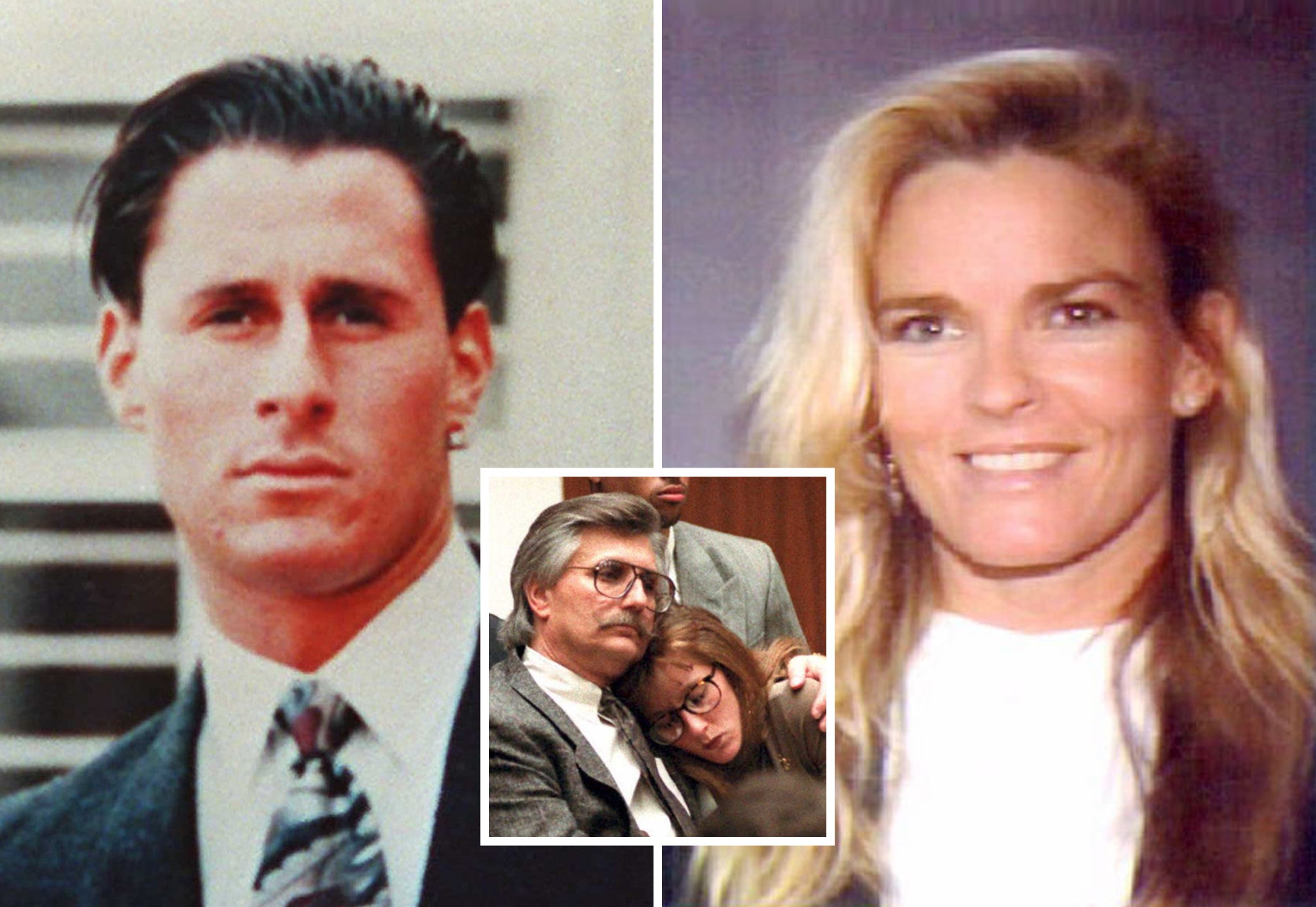
The death of Nicole Brown Simpson on June 12, 1994, remains a foundational case study in American jurisprudence, forensic science, and the intersection of celebrity culture with the criminal justice system. As we observe the 32nd anniversary in 2026, the case at 875 South Bundy Drive continues to provide essential lessons for legal professionals, domestic violence advocates, and forensic analysts. This analysis examines the technical evidence, the bifurcated outcomes of the criminal and civil trials, and the enduring impact on Los Angeles County’s legal protocols.
Investigative Scope and Disambiguation This report focuses exclusively on the homicide investigation of Nicole Brown Simpson and Ronald Goldman, the subsequent "Trial of the Century," and the evolution of forensic and domestic violence legislation resulting from this specific historical event. It does not address unrelated biographical works except where they serve as primary source evidence for the 1994 investigation.
The Crime Scene at 875 South Bundy Drive: Technical Reconstruction
The events of June 12, 1994, began with the discovery of two victims outside a condominium in the Brentwood neighborhood of Los Angeles. Nicole Brown Simpson and her friend, Ronald Goldman, were found with multiple sharp-force injuries. From a 2026 forensic perspective, the crime scene management by the Los Angeles Police Department (LAPD) serves as a "what-not-to-do" guide for modern evidence preservation.
The technical failure of the initial investigation centered on the chain of custody. Blood samples collected at the scene were not immediately logged into the property division, a lapse that allowed the defense to argue evidence planting. Furthermore, the use of a single pair of gloves by investigators across multiple areas of the scene created a risk of cross-contamination that would be unthinkable under current 2026 ISO/IEC 17025 forensic laboratory standards.
Timeline of the Night of June 12, 1994
- 6:30 PM: Nicole Brown Simpson dines with her family at Mezzaluna in Brentwood.
- 8:00 PM: Nicole and her children return to her condominium.
- 9:45 PM: Ronald Goldman leaves Mezzaluna to return a pair of glasses Nicole’s mother had left behind.
- 10:15 PM – 10:40 PM: The estimated window of the homicides based on ear-witness accounts of a "plaintive wail" from a dog.
- 12:10 AM (June 13): The bodies are discovered by a neighbor walking their dog.
- 2:10 AM: Detectives Vannatter, Lange, Phillips, and Fuhrman arrive at the Bundy scene.
Forensic DNA Analysis: The 1995 Standard vs. 2026 Capabilities
The O.J. Simpson trial was the first major televised case to rely heavily on DNA evidence. In 1995, the prosecution presented DNA matches with astronomical probabilities—some as high as 1 in 170 million. However, the technology used, primarily RFLP (Restriction Fragment Length Polymorphism) and early PCR (Polymerase Chain Reaction) testing, was poorly understood by the general public and the jury.
In 2026, forensic DNA analysis has evolved to include Rapid DNA and Next-Generation Sequencing (NGS), which can identify phenotypic traits and biogeographical ancestry from minute, degraded samples. Had the Bundy Drive evidence been processed with 2026 technology, the "statistical noise" that the defense exploited would likely have been negated by the sheer precision of modern sequencing, which can distinguish between identical twins in some specialized cases.
Comparison of Evidence and Judicial Outcomes
| Evidence Category | Criminal Trial (1995) Impact | Civil Trial (1997) Impact | 2026 Forensic Validity |
|---|---|---|---|
| Blood Evidence (DNA) | Discredited due to chain-of-custody gaps | Accepted as conclusive proof of presence | High (if collected via modern protocols) |
| The "Extra" Glove | Famous "fit" demonstration led to doubt | Demonstrated as likely to shrink from moisture | High (biometrics/trace DNA) |
| Bruno Magli Shoeprints | Denied by defendant; lack of photo proof | Proven via 30+ photos of defendant wearing them | Absolute (digital gait analysis) |
| Socio-Political Context | High (Post-1992 LA Riots atmosphere) | Lower (Focus on preponderance of evidence) | Contextualized (Historical lens) |
| Standard of Proof | Beyond a Reasonable Doubt (Acquittal) | Preponderance of Evidence (Liability) | Standard Legal Framework |
The Legal Dichotomy: Why the Criminal and Civil Outcomes Differed
One of the most frequent questions in 2026 remains how a defendant can be found "not guilty" in a criminal court but "liable" for the same deaths in a civil court. This is not a failure of the system, but rather a reflection of the different technical standards required by California law.
In the criminal trial (People v. Simpson), the burden of proof rested on the prosecution to prove guilt "beyond a reasonable doubt." The defense team, led by Johnnie Cochran, successfully shifted the focus from the physical evidence to the integrity of the LAPD. By highlighting the racial animus of Detective Mark Fuhrman, the defense created enough "reasonable doubt" to secure an acquittal.
Conversely, the civil trial (Goldman v. Simpson) operated under the "preponderance of evidence" standard. This means the jury only had to believe it was "more likely than not" (51% certainty) that the defendant was responsible. Furthermore, in the civil trial, the defendant was compelled to testify, unlike in the criminal trial where he exercised his Fifth Amendment right. His testimony, particularly regarding the size 12 Bruno Magli shoes, was heavily scrutinized and ultimately contributed to the $33.5 million judgment against him.
The Evolution of Domestic Violence Legislation Post-1994
The death of Nicole Brown Simpson was a watershed moment for domestic violence awareness. Prior to 1994, domestic "disturbances" were often viewed as private family matters. The public release of Nicole’s 911 calls from 1989 and 1993 revealed a pattern of abuse that the legal system had failed to adequately address.
By 2026, California’s domestic violence protocols have undergone massive transformations:
- Mandatory Arrest Policies: Officers are now required to identify the "primary aggressor" and make an arrest in domestic calls where injury is apparent.
- Evidence-Based Prosecution: Prosecutors can now move forward with cases even if the victim is unwilling to testify, using 911 tapes, medical records, and prior police reports.
- The Nicole Brown Simpson Act: This led to more robust funding for shelters and the establishment of dedicated domestic violence units within the LAPD and District Attorney’s offices.
Expert Insight: Managing High-Profile Forensic Investigations in 2026
For modern investigators, the Simpson case serves as the ultimate training manual for high-stakes litigation. If a similar crime occurred today in Brentwood, the procedural response would be drastically different:
- Immediate Scene Lockdown: No unauthorized personnel (including high-ranking detectives not directly assigned to the forensic team) would be permitted inside the perimeter.
- 3D Laser Scanning: The entire Bundy Drive exterior would be mapped using LiDAR to create a virtual crime scene, preserving the spatial relationship of every blood drop and piece of debris.
- Real-Time Chain of Custody: Evidence would be logged via blockchain-secured digital systems, providing an unalterable timestamp and GPS location for every sample collected.
- Body-Worn Camera Documentation: Every interaction and discovery would be recorded, eliminating the "he-said, she-said" disputes regarding how evidence was handled.
Analysis of Investigative Failures: A Technical Audit
The failure to secure a criminal conviction is often attributed to the "CSI Effect" (though the term came later), where juries expect perfect science. In 1995, the science was there, but the delivery was flawed.
Technical Failure: The EDTA Contamination Theory The defense argued that the presence of EDTA (a preservative used in lab vials) in blood stains on the back fence indicated that the blood was planted from a vial. While the levels were consistent with background environmental levels, the prosecution failed to explain this technical nuance effectively to a non-scientific jury. In 2026, environmental toxicology is a standard part of forensic testimony to prevent such misinterpretations.
Procedural Failure: The Glove Demonstration Allowing a defendant to try on evidence (the leather gloves) in a controlled environment where they have an incentive to make them not fit is considered a catastrophic tactical error. Modern litigation strategy strictly forbids "live" demonstrations that cannot be replicated under peer-reviewed conditions.
Frequently Asked Questions
What was the official cause of death for Nicole Brown Simpson?
Nicole Brown Simpson died from multiple incised wounds and sharp-force trauma, specifically a catastrophic wound to the neck. The autopsy, performed by the Los Angeles County Coroner's office, determined that the injuries were so severe they resulted in near-decapitation, occurring rapidly after the initial struggle.
Why wasn't O.J. Simpson tried again after the civil verdict?
The Fifth Amendment of the U.S. Constitution protects individuals from "Double Jeopardy," meaning they cannot be tried twice for the same crime by the same sovereign entity. Since he was acquitted in criminal court, he could not be prosecuted again for murder, regardless of the outcome of the civil trial or any subsequent evidence.
Where is the Bundy Drive condo located today in 2026?
The property at 875 South Bundy Drive still exists, though the address was officially changed years ago to discourage "dark tourism." The famous gate and walkway where the victims were found have been remodeled, and the residence remains a private home in the Brentwood area of Los Angeles.
Did the DNA evidence actually prove O.J. Simpson was at the scene?
From a technical standpoint, the DNA evidence was overwhelming. Blood with O.J. Simpson's genetic markers was found at the Bundy scene, and blood from both victims was found in his Ford Bronco and on a sock in his bedroom. In 2026, this would be considered a "closed-loop" forensic link, though the 1995 jury focused on the process of collection rather than the result of the tests.
How did this case change the LAPD?
The case forced a total overhaul of the LAPD's Scientific Investigation Division (SID). It led to the construction of a state-of-the-art regional crime lab and the implementation of strict "double-blind" testing protocols to ensure that bias or administrative errors do not compromise high-profile investigations.
Conclusion and Strategic Takeaways
The death of Nicole Brown Simpson remains a permanent fixture in the study of American law and forensics. As of 2026, we view this case not just as a tragedy, but as the catalyst for the modernization of the U.S. justice system. The shift from anecdotal testimony to rigorous, sequence-based forensic data, and the movement from "domestic privacy" to "victim protection," are the lasting legacies of this investigation. For legal professionals and forensic strategists, the Bundy Drive case is a reminder that the integrity of the process is just as vital as the accuracy of the science.