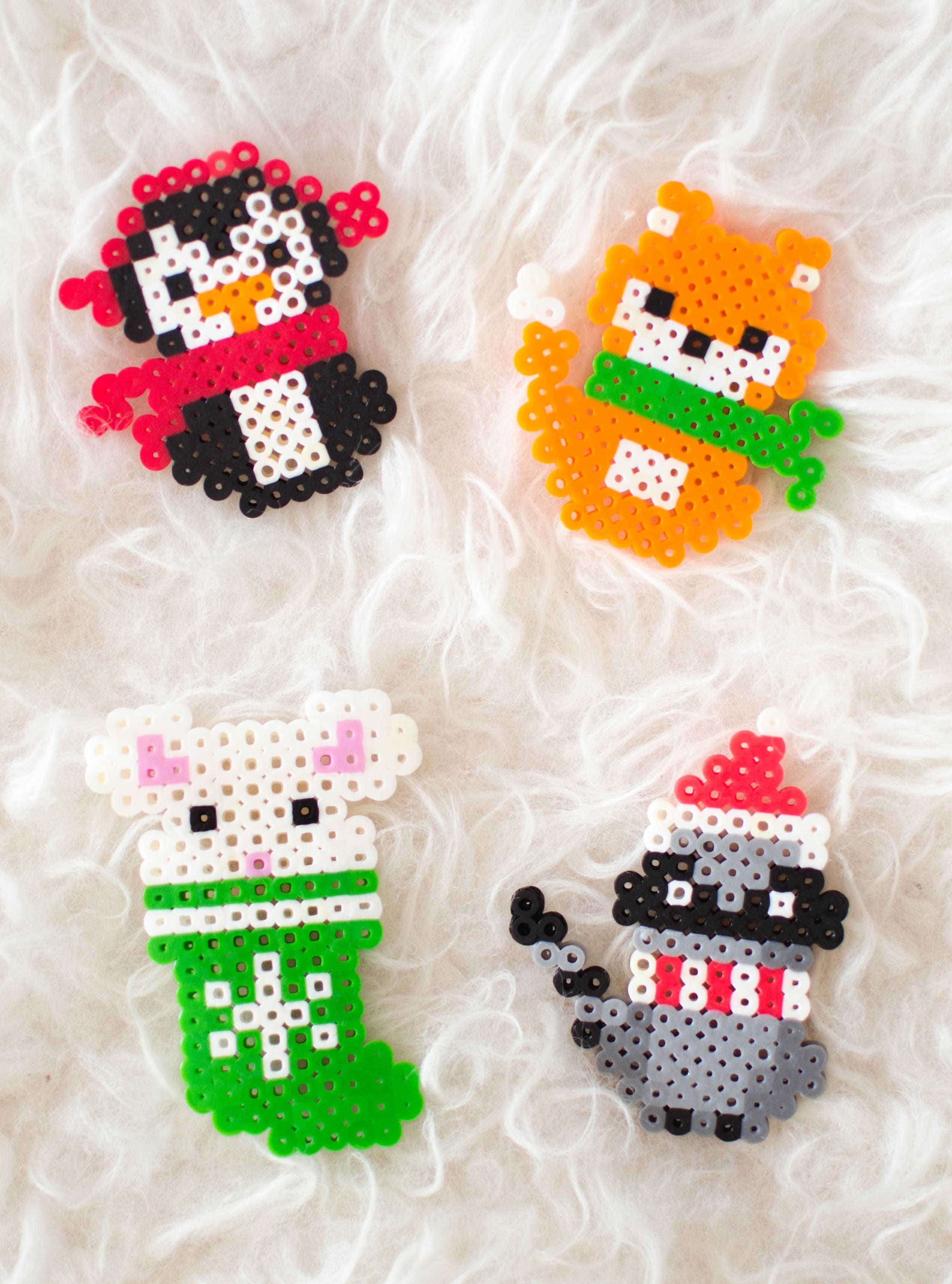
Perler bead artistry, also known as fuse bead crafting, has evolved significantly by 2026, transitioning from a childhood pastime into a sophisticated medium for pixel art, home decor, and intricate wearable accessories. Mastering the craft requires an understanding of bead geometry, heat application dynamics, and structural integrity. This guide serves as the definitive resource for designers looking to elevate their patterns through precision, color theory, and advanced finishing techniques.
Understanding Perler Bead Technical Specifications
To achieve professional-grade results, one must understand the standardization of the beads themselves. By 2026, the market has stabilized around three primary bead sizes, each requiring distinct pegboard configurations.
- Mini Beads (2.6mm): These represent the gold standard for high-detail imagery. They require tweezers and a steady hand but offer the highest resolution for complex, photorealistic designs.
- Midi Beads (5.0mm): The industry standard for beginners and intermediate artists. These are compatible with the widest range of pegboard patterns and offer the best balance between ease of use and visual clarity.
- Biggie Beads (10.0mm): Designed primarily for early childhood development and accessibility, these are unsuitable for detailed "cute" patterns but excellent for simplified geometric shapes.
Essential Tools and Workspace Requirements
Success in 2026 requires more than just beads and a pegboard. Professional creators maintain a standardized workstation to ensure consistent fusion and pattern accuracy.
- Heat-Resistant Parchment Paper: Only use professional-grade silicone-coated parchment. Avoid wax paper, which can melt onto the beads and ruin the finish.
- Precision Tweezers: Choose stainless steel, fine-tip tweezers to prevent hand fatigue during long design sessions.
- Heavy-Duty Flat Iron: Ensure your iron has a consistent temperature control dial. Steam settings must remain OFF to prevent uneven melting caused by moisture.
- Acrylic Pressing Weights: After fusing, placing a heavy, flat object like a tempered glass pane or a stack of heavy books on the project prevents curling as it cools.
Strategic Color Theory for Cute Aesthetic Patterns
The term "cute" in the 2026 pixel art community typically refers to a specific palette range known as "Pastel Core" or "Kawaii Aesthetic." To achieve this, your pattern design must rely on intentional color combinations rather than random distribution.
| Color Palette Strategy | Primary Hues | Application Use Case |
|---|---|---|
| Soft Pastel | Light Pink, Mint, Periwinkle | Ideal for animal faces and floral motifs. |
| High-Contrast Neon | Electric Lime, Hot Pink, Cyan | Best for retro-inspired pop art accessories. |
| Monochromatic Gradient | Deep Blue to Sky Blue | Effective for creating depth in simple objects. |
| Earth Tones | Sage Green, Terracotta, Cream | Used for rustic, nature-inspired decorative coasters. |
The Physics of the Perfect Fuse: 2026 Best Practices
Achieving a uniform, professional fuse is the most technical aspect of perler bead craft. Improper heat management is the leading cause of failed projects, specifically "over-melting" where bead holes close entirely or "under-melting" where the piece falls apart.
Mastering The Circular Motion When applying the iron, do not press down firmly in one spot. Instead, apply light, consistent pressure and move the iron in slow, circular motions across the surface. This ensures that heat is distributed evenly across the entire surface area of the pattern. Continue this motion until the beads are fused but the centers remain open and circular.
Troubleshooting Common Structural Failures
Even seasoned artists face structural issues. Below are the most common problems and their corresponding professional solutions in 2026:
- The Warped Board Effect: If your pegboard becomes warped, it is usually due to holding the iron too close to the plastic pins. Never let the iron touch the pegs directly. If warping occurs, the board must be replaced as it will cause future patterns to be uneven.
- Bead Popping: This occurs when the plastic hasn't reached the glass transition temperature uniformly. Re-iron the affected area using a small, circular motion with a piece of fresh parchment paper.
- Poor Adhesion: If your pieces are falling apart after cooling, you likely did not apply enough heat or the iron temperature was too low. Ensure your iron is set to a medium heat level and check the manufacturer's specific grade of plastic, as some transparent beads require slightly more heat than opaque ones.
Frequently Asked Questions for Pixel Artists
What is the best way to keep beads organized by color? The most efficient method is using clear, modular containers with individual compartments. Professional organizers in 2026 often label these by brand and color code to ensure consistency in future projects.
Can I mix different brands of fuse beads in the same pattern? While possible, it is not recommended for professional-level results. Different brands have slightly different melting temperatures, which can cause uneven surface textures when fused.
How do I prevent the edges of my perler project from curling? Curling happens because the outer beads cool faster than the inner beads. To combat this, keep the heavy weight on the project for at least ten minutes after removing the heat.
Are there specialized pegboards for non-square patterns? Yes, 2026 sees a wide array of hexagonal and circular boards. These are essential for creating organic shapes like flowers or radial patterns, reducing the amount of trimming needed.
Is it possible to display perler art vertically? Certainly. Use mounting putty for lightweight projects or adhesive magnets for metal surfaces. For larger pieces, framing them in shadow boxes provides both structural support and protection from dust.
Scaling Your Craft for 2026 Market Demands
If you are looking to move beyond hobbyist crafting, focus on the "perler-as-a-service" model. By creating customizable patterns—such as pet portraits or personalized name keychains—you add significant value to your work. Ensure that every project you produce in 2026 follows strict quality control: checking for symmetry, ensuring the fuse is consistent across the entire surface, and trimming any excess plastic burrs from the edges before delivery. By standardizing your workflow, you ensure that your creations remain durable, professional, and visually appealing in an increasingly competitive creative landscape.