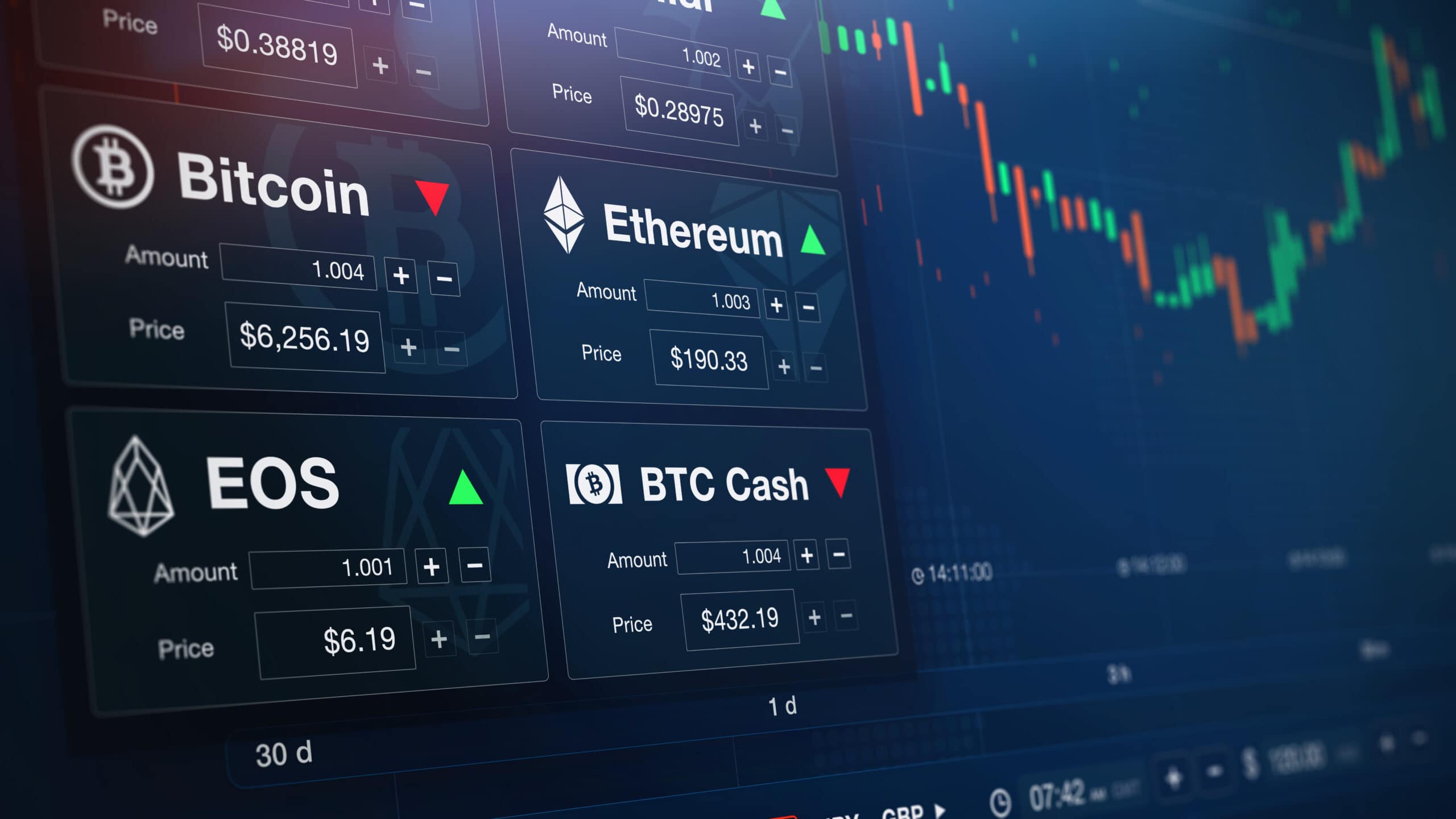
Crypto trading is the act of speculating on cryptocurrency price movements through a brokerage account or buying and selling the underlying coins via an exchange. By 2026, this practice has evolved from a niche hobby into a sophisticated financial discipline involving spot markets, derivatives, and automated algorithmic strategies managed across decentralized and centralized platforms.
The digital asset landscape in 2026 is characterized by increased institutional participation, clearer regulatory frameworks, and advanced technological infrastructure. To trade successfully, one must move beyond simple speculation and master the interplay of technical analysis, fundamental evaluation, and rigorous risk management. Whether you are seeking to hedge against inflation or capitalize on high-volatility price swings, understanding the mechanics of the modern crypto market is the first step toward proficiency.
Prerequisites for Entering the Crypto Market
Before executing a single trade, a participant must establish a foundation that satisfies both technical requirements and legal obligations. In 2026, the regulatory environment is far more defined than in previous years, requiring traders to be more diligent regarding compliance and security.
The first prerequisite is identity verification (KYC). Most reputable centralized exchanges (CEXs) operating globally now adhere to strict Anti-Money Laundering (AML) standards. You will typically need a government-issued ID, proof of residence, and, in some jurisdictions, a tax identification number. Skipping this step often limits your ability to withdraw fiat currency or access advanced trading pairs.
Secondary to compliance is security infrastructure. Relying solely on an exchange's security is no longer considered a best practice. Active traders utilize Multi-Factor Authentication (MFA)—specifically hardware-based keys like YubiKeys—and maintain separate hardware wallets (Cold Storage) for long-term holdings. In 2026, Multi-Party Computation (MPC) wallets have also become standard for retail traders seeking a balance between the security of cold storage and the accessibility of hot wallets.
Finally, an entry-level understanding of blockchain mechanics is essential. You must understand the difference between networks (e.g., Ethereum Mainnet vs. Layer 2s like Arbitrum or Optimism) to avoid losing funds during transfers. Sending tokens to the wrong network remains one of the most common ways new traders lose capital permanently.
Core Trading Mechanisms: Spot vs. Derivatives
Crypto trading is generally divided into two primary categories: spot trading and derivatives trading. Each serves a different purpose and carries a distinct risk profile.
Spot trading is the most straightforward form. When you buy Bitcoin on the spot market, you take immediate ownership of the asset. You profit if the price rises above your purchase price. This is the preferred method for long-term investors (often called "HODLers") and those who wish to use their crypto in the decentralized finance (DeFi) ecosystem, such as for lending or staking.
Derivatives trading includes futures, options, and perpetual swaps. These instruments allow you to speculate on the price of an asset without actually owning it.
- Futures Contracts: Agreements to buy or sell an asset at a predetermined price on a specific future date. These are often used for hedging or utilizing leverage.
- Perpetual Swaps: A type of derivative unique to crypto that has no expiry date. They use a "funding rate" mechanism to keep the contract price aligned with the spot price.
- Options: These give you the right, but not the obligation, to buy or sell at a specific price. They are highly complex and used by advanced traders to manage volatility risk.
Leverage is a common feature in derivatives, allowing you to control a large position with a small amount of capital. However, while leverage can amplify gains, it equally amplifies losses, leading to "liquidation" if the market moves against your position by even a small percentage.
Analytical Frameworks: Technical and Fundamental Analysis
Successful trading in 2026 relies on a dual-pronged approach to market analysis. Relying on "gut feelings" is a recipe for capital depletion in an environment dominated by high-frequency trading bots and institutional algorithms.
Technical Analysis (TA)
Technical analysis involves studying historical price charts and volume data to predict future movements. Modern TA in 2026 focuses heavily on Order Flow Trading and Liquidity Maps. Traders look for "liquidity pockets" where large numbers of stop-loss orders are likely sitting, as price often gravitates toward these areas. Common indicators like the Relative Strength Index (RSI), Moving Average Convergence Divergence (MACD), and Bollinger Bands remain relevant but are often used in conjunction with AI-driven sentiment analysis tools that scan social media and news feeds in real-time.
Fundamental Analysis (FA)
Fundamental analysis in crypto differs significantly from the stock market. Instead of quarterly earnings reports, crypto traders look at On-Chain Metrics. This includes daily active addresses, transaction volume, "Total Value Locked" (TVL) in protocols, and the "MVRV Ratio" (Market Value to Realized Value). Understanding the tokenomics—how a token is distributed, its inflation rate, and its utility within its ecosystem—is vital. A project with great technology but poor tokenomics (e.g., massive upcoming token unlocks for early investors) will likely see its price stagnate or drop regardless of its utility.
Choosing the Right Trading Platform
The choice of platform determines your fees, available assets, and level of control. By 2026, the gap between centralized and decentralized options has narrowed in terms of user experience, but the underlying risks remain different.
| Feature | Centralized Exchanges (CEX) | Decentralized Exchanges (DEX) | Hybrid Exchanges (HEX) |
|---|---|---|---|
| Control of Funds | Custodial (Exchange holds keys) | Self-Custodial (You hold keys) | Partial / Smart Contract |
| Execution Speed | Ultra-fast (Off-chain) | Fast (Layer 2 dependent) | High |
| Privacy | Low (Full KYC required) | High (Wallet-based) | Moderate |
| Regulatory Safety | High (Regulated entities) | Low (Code-based) | Emerging |
| Asset Variety | Vetted assets only | Almost any token | Large Selection |
| Common Examples | Coinbase, Binance, Kraken | Uniswap, dYdX, GMX | Various 2026 startups |
Centralized Exchanges are ideal for beginners because they offer customer support, easy fiat on-ramps (linking your bank account), and high liquidity. Decentralized Exchanges, however, are preferred by those who value privacy and sovereignty, as they allow trading directly from a hardware wallet without an intermediary.
Risk Management: Protecting Your Capital
In crypto trading, "return of capital" is more important than "return on capital." The volatility of the 2026 market means that a single black swan event or a bad trade can wipe out an entire portfolio if proper safeguards aren't in place.
The most critical tool is the Stop-Loss Order. This is an automated instruction to sell an asset when it reaches a certain price, preventing further losses. A common rule among professional traders is the "1% Rule," where they never risk more than 1% of their total account balance on a single trade. For example, if you have $10,000, your stop-loss should be set such that if it is triggered, you only lose $100.
Diversification is another pillar of risk management. While it is tempting to "all-in" on a trending meme coin or a new Layer 1 blockchain, the most resilient traders spread their exposure across established assets like Bitcoin and Ethereum, mid-cap utility tokens, and stablecoins. Furthermore, keeping a portion of your portfolio in yield-bearing stablecoins provides a "dry powder" reserve to buy the dip during market corrections.
Finally, traders must be wary of Exchange Risk. The 2022 collapse of FTX remains a historical lesson in 2026. Protraders avoid keeping their entire net worth on any single exchange. They use exchanges for active trading and move profits to private, non-custodial wallets regularly.
Common Pitfalls and Troubleshooting
Even with a solid plan, traders often encounter hurdles. Recognizing these early can prevent significant financial setbacks.
- Over-leveraging: The allure of 50x or 100x leverage is strong, but it is effectively gambling. Most successful traders in 2026 rarely exceed 3x to 5x leverage, if they use it at all.
- Chasing "FOMO": Fear Of Missing Out often leads traders to buy at the "top" of a price spike. If an asset has already increased by 30% in a day, the optimal entry point has likely passed.
- Ignoring Network Fees: On networks like Ethereum, "gas fees" can become prohibitively expensive during high volatility. Always calculate the cost of the trade relative to the expected profit. Using Layer 2 solutions or alternative chains like Solana can mitigate this.
- Security Lapses: Phishing attacks are more sophisticated in 2026, often using AI-generated voices or videos. Always verify URLs and never share your "Seed Phrase" (the master key to your wallet) with anyone, including supposed customer support.
If you find that your trades are consistently being "front-run" (where someone else gets a better price just before you on a DEX), you may need to adjust your Slippage Tolerance or use a platform that offers MEV (Maximal Extractable Value) protection.
Executing Your First Trade: A Step-by-Step Approach
Once you have your security and platform ready, follow this sequence to begin trading:
- Deposit Funds: Start by transferring fiat currency (USD, EUR, etc.) to your chosen CEX or purchasing a stablecoin (like USDC or USDT) via a regulated on-ramp.
- Select a Trading Pair: Choose an active pair, such as BTC/USDC. Ensure the pair has high liquidity to avoid price slippage.
- Analyze the Chart: Look for support and resistance levels. In 2026, many traders wait for a "retest" of a broken resistance level before entering a position.
- Choose Order Type:
- Market Order: Fills immediately at the current price. Use this only if you need to enter/exit quickly.
- Limit Order: Fills only at a specific price you set. This is preferred for precise entries and lower fees.
- Set Protection: Immediately place your stop-loss and take-profit orders.
- Monitor and Document: Keep a trading journal. Record why you took the trade, the emotions you felt, and the outcome. This is the only way to improve systematically over time.
Frequently Asked Questions
Is crypto trading legal in 2026?
Yes, in most major economies, crypto trading is legal but strictly regulated. Nations have implemented frameworks like the Markets in Crypto-Assets (MiCA) regulation in Europe and similar SEC/CFTC guidelines in the United States. Traders are generally required to report gains for capital gains tax purposes. Always check your local jurisdictional laws as some countries maintain bans or heavy restrictions.
How much money do I need to start trading?
You can start with as little as $10 to $50 on most exchanges. However, keep in mind that transaction fees can consume a significant percentage of small balances. For meaningful practice, many experts recommend starting with an amount that is significant enough to make you care about the outcome but not so large that losing it would impact your standard of living.
Can I use trading bots for crypto?
By 2026, algorithmic and AI-driven trading bots are widely available to retail traders. These can help execute strategies 24/7 and remove emotional bias. However, they are not "set and forget" tools. They require constant monitoring and adjustment to keep up with changing market regimes, as a bot designed for a trending market will perform poorly in a range-bound market.
What is the difference between a "Wallet" and an "Exchange"?
An exchange is a marketplace where you trade assets; a wallet is a tool for storing the digital keys to those assets. If you leave your coins on an exchange, the exchange controls the keys (custodial). If you move them to a personal wallet, you control the keys (non-custodial). The phrase "Not your keys, not your coins" remains the golden rule of crypto safety.
How are crypto trades taxed?
In 2026, most tax authorities treat every trade (including crypto-to-crypto trades) as a taxable event. You must calculate the fair market value in your local currency at the time of the trade and determine the capital gain or loss. Many exchanges now provide automated tax reporting forms, but using specialized crypto tax software is highly recommended for active traders.
Establishing a Sustainable Trading Routine
To transition from a novice to a consistent trader, you must view crypto trading as a business rather than a game. The 2026 market moves fast, and staying informed is a full-time requirement. Start by narrowing your focus to 3–5 high-liquidity assets rather than trying to track hundreds of "altcoins."
Your next step should be to build a "Watchlist" and observe the price action for at least a week without placing a trade. This "paper trading" or observation period helps you understand the specific volatility patterns of your chosen assets. Finally, ensure your physical and mental environment is conducive to decision-making; trading while tired, stressed, or distracted is the fastest way to make expensive mistakes. Continuous education through reputable sources and staying updated on global macroeconomic trends—such as central bank interest rates—will provide the context needed to navigate the crypto markets successfully.