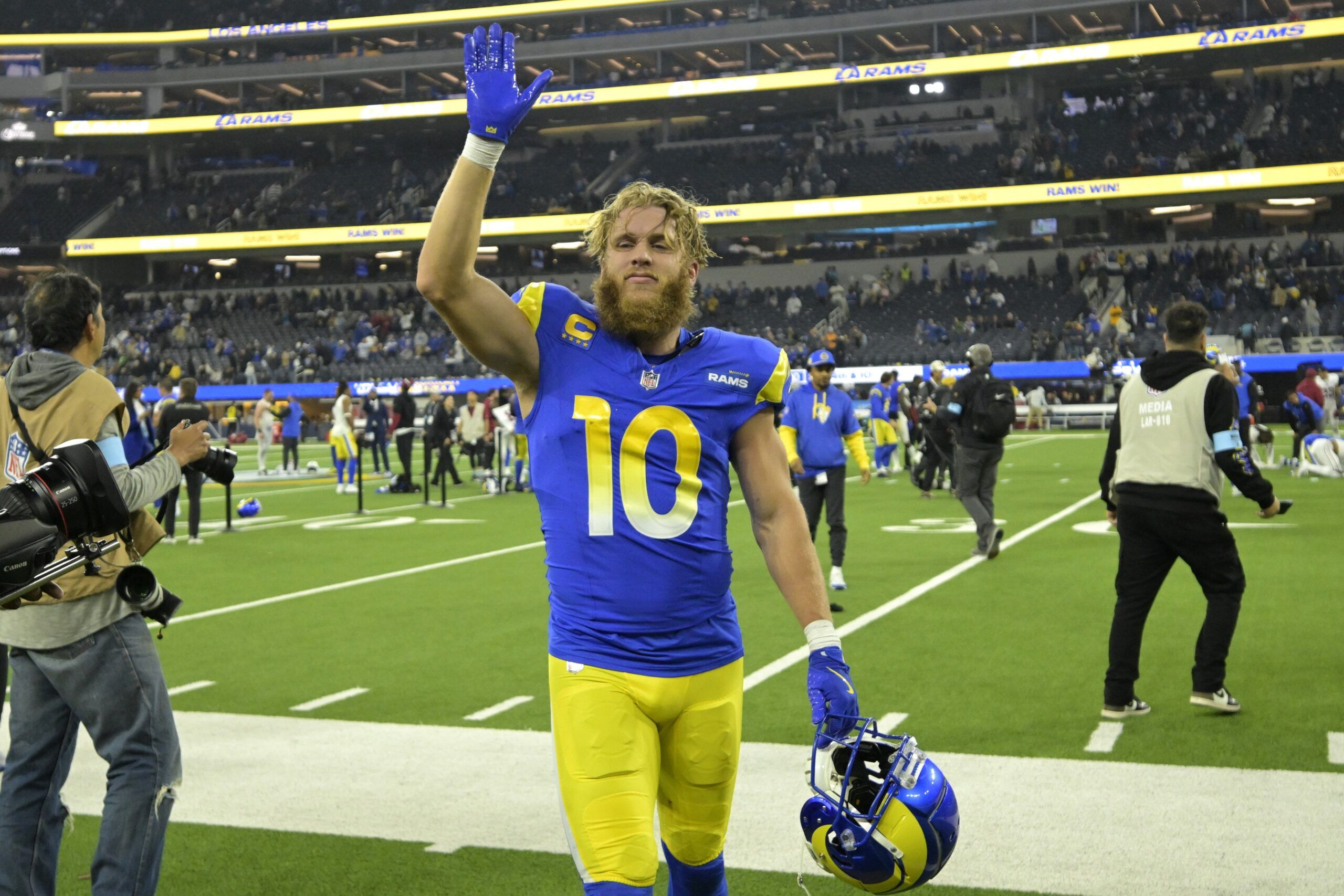
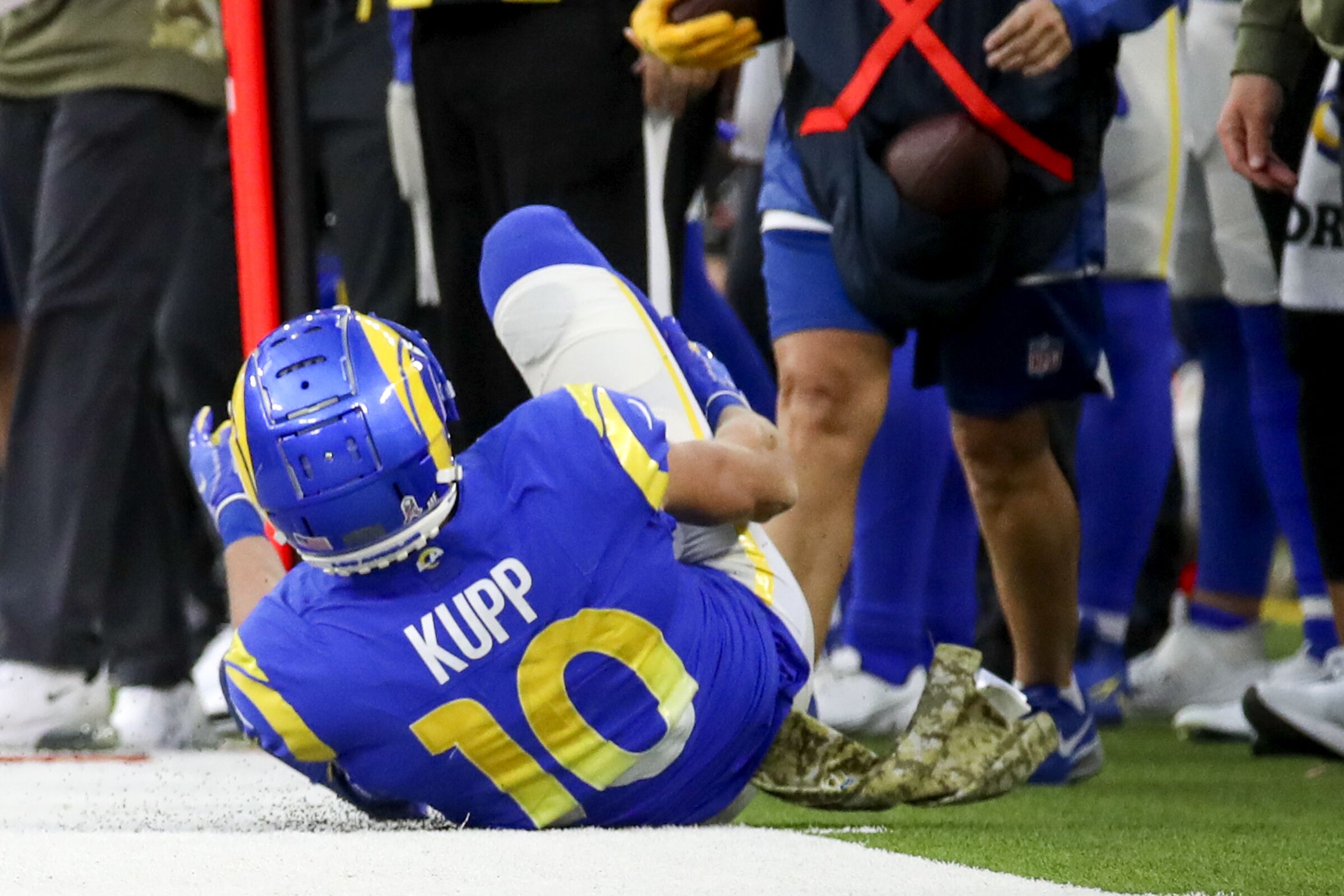
Cooper Kupp has established himself as one of the most prolific and technically refined wide receivers in the National Football League (NFL). Since entering the league in 2017, Kupp has redefined the expectations for the slot receiver position, blending elite route-running precision, exceptional situational awareness, and a high-volume statistical profile that culminated in a historic "Triple Crown" season and a Super Bowl MVP performance.
Early Career and Collegiate Development
Cooper Kupp’s path to the NFL began at Eastern Washington University, where he displayed the foundational traits that would later define his professional success. As a standout in the Big Sky Conference, Kupp shattered multiple Football Championship Subdivision (FCS) records, amassing 428 receptions, 6,464 receiving yards, and 73 touchdowns over his four-year collegiate career. These numbers were not merely the result of superior athleticism; they reflected a profound understanding of defensive coverage schemes, a trait he meticulously refined under the guidance of his coaches.
His success at the collegiate level signaled to NFL scouts that his game was highly transferable. Despite questions regarding his raw speed compared to track-star prospects, his testing numbers at the 2017 NFL Combine—specifically his agility drills like the 3-cone drill—highlighted the lateral quickness necessary to thrive in the complex middle-of-the-field traffic of the professional game.
The Professional Breakthrough
Selected by the Los Angeles Rams in the third round of the 2017 NFL Draft, Kupp immediately integrated into head coach Sean McVay’s offensive system. McVay, known for high-tempo, formation-diverse play-calling, required a receiver who could process information rapidly and make nuanced adjustments to route stems based on pre-snap reads.
Kupp’s primary value lies in his "option route" capability. In the Rams' scheme, Kupp is often tasked with reading the leverage of the defensive back in real-time. If the defender plays inside leverage, Kupp breaks outward; if the defender plays off-coverage, he settles into open space. This symbiotic relationship between quarterback and receiver requires an advanced degree of intellectual preparation, often described by analysts as "quarterback-level processing" from a wide receiver position.
The Historic 2021 Season: A Benchmark for Excellence
The 2021 NFL season remains the definitive chapter in Kupp’s career. He became only the fourth player in the Super Bowl era to achieve the receiving "Triple Crown," leading the league in receptions (145), receiving yards (1,947), and receiving touchdowns (16). Beyond the raw totals, the efficiency of his production was unprecedented.
Kupp’s ability to perform in high-leverage situations was confirmed during the Rams' postseason run. His performance in Super Bowl LVI, where he recorded 92 receiving yards and two touchdowns—including the game-winning score—cemented his status as a critical engine of the Rams' championship success. His play during this period forced defensive coordinators to rethink how to neutralize slot-heavy personnel groupings, frequently drawing double-teams that opened opportunities for other teammates.
Technical Skillset and Positional Nuance
Kupp’s success is anchored in a set of technical attributes that distinguish him from traditional "X" receivers who rely primarily on vertical speed. His game can be broken down into three primary pillars:
- Route Geometry: Kupp utilizes subtle shifts in his gait and body language to deceive defenders. By maintaining a neutral posture during the initial phase of his route, he forces the defensive back to wait until the final moment to commit to a direction.
- Zone Identification: His ability to find "dead zones" in zone-coverage schemes is elite. He understands the depth and timing of linebackers and safeties, allowing him to navigate underneath coverage while maintaining a clear path for the quarterback.
- Post-Catch Vision: Unlike many receivers who immediately look for contact, Kupp possesses a high level of spatial awareness regarding oncoming defenders. He consistently optimizes his body position to maximize yards after the catch (YAC), using precise footwork to navigate through congestion.
Comparative Performance Metrics
To understand Kupp’s consistency, it is useful to compare his production profile against standard high-performing receivers in the modern NFL.
| Attribute | Traditional Slot Receiver | Cooper Kupp Profile |
|---|---|---|
| Primary Route Tree | Shallow/Intermediate | Full Field/Option-Based |
| YAC Strategy | Speed-Dependent | Vision/Footwork-Dependent |
| Coverage Adjustment | Limited | Pre-Snap & Post-Snap Read |
| Role Flexibility | Positional Specialist | Formation Versatile |
Managing Physicality and Durability
As an athlete who relies on frequent changes of direction and high-contact scenarios over the middle of the field, Kupp has encountered periods of physical attrition. Throughout his career, he has navigated various soft-tissue injuries and ankle issues that have necessitated careful load management.
In the 2026 landscape, the focus for veteran players like Kupp involves a strict adherence to recovery protocols and nuanced snap-count management. The Rams’ organization utilizes biometric data to monitor his workload during practice, ensuring he maintains peak explosive capability for game days. This data-driven approach is essential for maintaining his performance level as he navigates the later stages of his career, prioritizing efficiency over pure volume.
Frequently Asked Questions
How does Cooper Kupp's route-running style differ from deep-threat receivers?
Kupp’s route-running is predicated on deception and situational options rather than pure vertical separation. While deep threats rely on speed to beat man coverage, Kupp uses subtle body feints and real-time reads of defensive leverage to create separation, allowing him to be effective regardless of the coverage scheme.
What makes the "option route" so effective for a receiver?
The option route places the responsibility of the route’s direction on the receiver based on the defender's positioning. This makes the route inherently unpredictable for the defender because there is no pre-determined break point; the receiver reacts to the defender's movement, ensuring that the receiver is almost always moving into the defender's blind spot or away from their coverage leverage.
Why is Cooper Kupp so effective in the Red Zone?
His effectiveness in the Red Zone stems from his ability to execute tight-window adjustments. In shortened fields, space is at a premium; Kupp’s ability to use his frame to shield the ball and his quickness to navigate small windows allows him to maintain a high conversion rate in high-pressure, high-density areas.
How has the Rams' offensive system changed to accommodate his skillset?
The Rams' system under Sean McVay has continuously evolved to emphasize formation versatility. By moving Kupp across the field—from the slot to the perimeter and even into the backfield—the offense creates mismatches that force defenses to reveal their coverage shells, allowing the quarterback to make more informed decisions before the snap.
What is the most important factor in maintaining his performance as a veteran?
Load management and tactical alignment are the most critical factors. By limiting unnecessary wear during practice and focusing on high-value, high-impact plays during games, Kupp extends his career longevity while retaining the explosiveness required to win against younger, faster defensive backs.
Recommendations for Further Study
For those interested in the tactical application of NFL wide receiver play, analyzing the "All-22" coach’s film for Rams games is the most effective approach. By focusing exclusively on Kupp’s footwork at the line of scrimmage and his head movement during route stems, one can observe the mechanics of his success. Additionally, reviewing post-game press conferences where he discusses the "why" behind his route adjustments provides insight into the cognitive processing required for high-level wide receiver play.