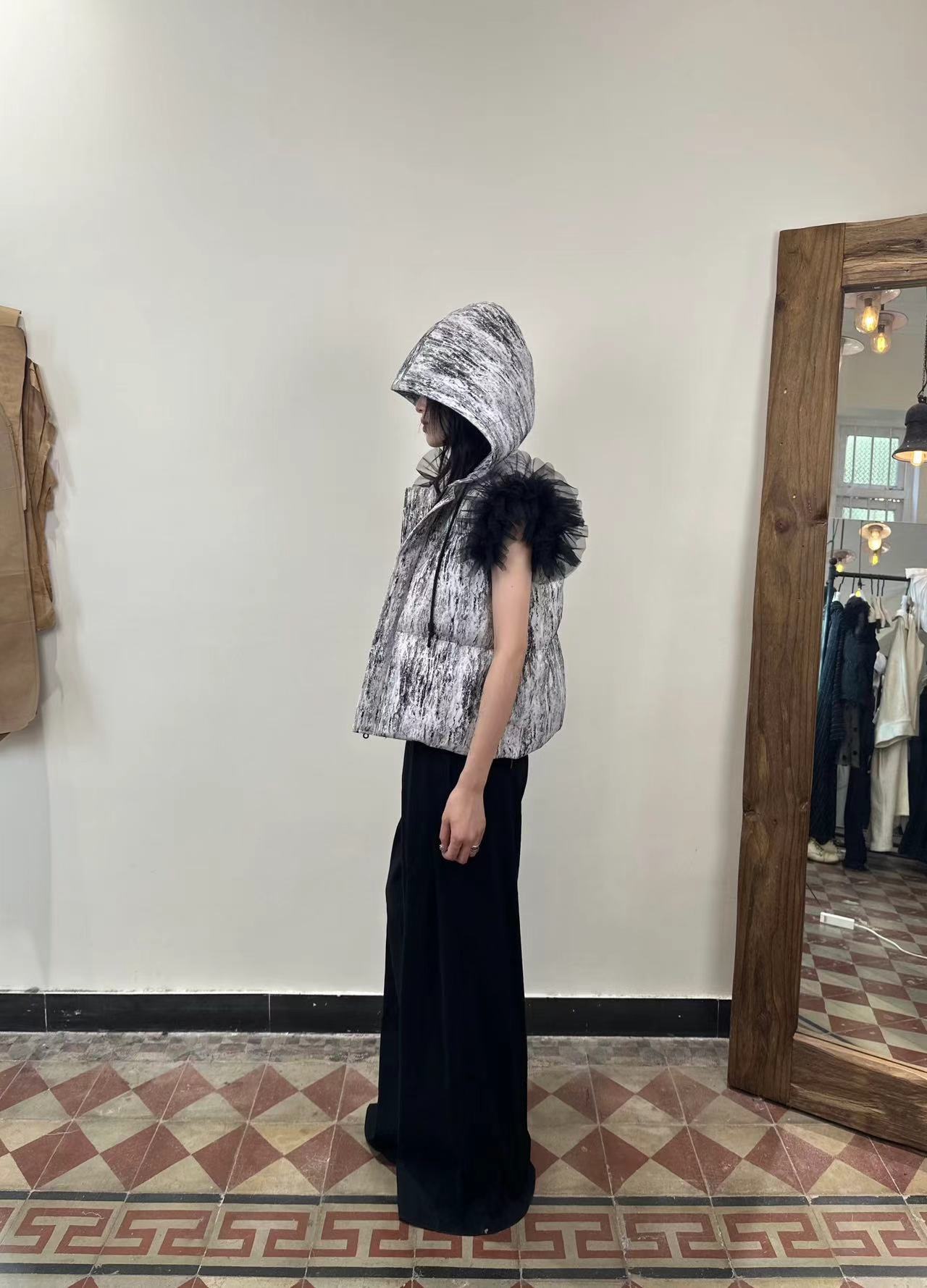
The vest with ruffle sleeves is a versatile hybrid garment that combines the structured torso of a vest with decorative frilled or fluttered trim around the armholes. Offering a balance of tailored framing and feminine volume, this piece serves as both an accent layer over long sleeves and an independent warm-weather top across diverse style aesthetics.
Architectural Breakdown and Design Mechanics
The defining characteristic of the ruffle sleeve vest—often categorized alongside flutter-sleeve knitwear or cap-sleeve vest tops—is its structural departure from standard sleeveless tailoring. While a traditional vest terminates cleanly at the armscye (the armhole seam), a ruffle sleeve vest introduces gathered, pleated, or layered fabric flounces along the armhole perimeter. This construction creates the visual effect of a short sleeve while retaining the open side clearance and layering flexibility of a vest.
From a pattern-making perspective, the ruffle component varies significantly based on standard sewing and design techniques:
- Set-in Flounces: The ruffle is stitched directly into the armhole seam, extending outward over the deltoid muscle. This provides structural projection and holds its shape independently of body movement.
- Extended Shoulder Cap Ruffles: The body of the vest extends slightly past the natural shoulder line, with a soft, gathered frill appended to the edge. This design creates a dropped, soft shoulder silhouette.
- Multi-Tiered Frills: Two or more overlapping layers of fabric are attached around the armscye, generating depth, texture, and dramatic visual volume.
- Pleated vs. Gathered Trims: Sunray or box-pleated trims offer a geometric, preppy aesthetic, whereas gathered ruffles yield a softer, romantic, or bohemian drape.
Neckline configurations heavily dictate how the garment balances the shoulder volume. V-neck variations elongate the neck and torso, counteracting the shoulder-broadening effect of prominent ruffles. Crewneck and high-collared knit variations create a compact, structured upper frame, whereas square or sweet-heart necklines emphasize the collarbone while aligning with the vintage charm of the ruffled arms.
Fabric Classifications and Structural Behavior
The choice of textile determines the shape, drape, and seasonal suitability of a ruffle sleeve vest. Designers utilize both woven and knit fabrications to achieve vastly different structural outcomes.
- Heavy Knit / Cable
- High volume retention
- Structured silhouette
- Ideal for winter layering
- Lightweight Woven / Poplin
- Soft, fluid movement
- Breathable warmth balance
- Ideal for standalone summer wear
Heavy Knits and Sweater Vests
Sweater vest variations crafted from cotton yarns, wool blends, alpaca, or synthetic acrylic ribs offer significant structural memory. In chunky sweater knits, the ruffle trim naturally holds an upright or outward projection due to the density of the yarn. Cable-knit bodies paired with rib-stitched ruffled edges create a rich textural contrast. These garments are primarily intended for cool-weather layering, providing core torso warmth while allowing full arm mobility.
Lightweight Woven Cottons and Linens
Woven cotton poplin, linen, and broderie anglaise (eyelet fabric) are standard materials for warm-weather interpretations. In these variations, the ruffle sleeve is soft, breathable, and fluid. Woven styles often feature delicate gathering along the shoulder seam, creating a subtle cap-sleeve effect that shields the top of the shoulder from sun exposure while maintaining airflow around the underarm.
Tailored Suiting Fabrics
Constructed from wool gabardine, polyester-viscose blends, or crisp twill, tailored suiting vests with shoulder ruffles bridge contemporary workwear and expressive design. Unlike soft knits or casual cottons, tailored variants feature structured seams, front button plackets, and welt pockets. The ruffle is usually crisp and minimal, added to the armhole to soften the strict geometry of classic menswear-inspired waistcoats.
Utility Denim and Canvas Formations
Rigid fabrics such as cotton denim, canvas, or heavy linen yield utility-inspired vests with raw-edge or structured ruffles. These pieces highlight contrast: rugged double-stitched seams and metal shank buttons combined with feminine shoulder volume. The rigidity of denim causes the ruffle to stand out horizontally, making the shoulder silhouette more pronounced.
Proportional Dynamics and Silhouette Balancing
Understanding visual proportion is essential when integrating a ruffle sleeve vest into a balanced outfit. Because flutter and ruffle details direct immediate visual focus to the upper frame, the garment alters the perceived silhouette of the wearer.
| Body Frame Characteristic | Visual Impact of Ruffle Sleeve | Recommended Styling Adjustment |
|---|---|---|
| Narrow Shoulders | Adds structural width and volume to upper frame. | Pair with fitted, streamlined bottoms to maintain proportion. |
| Broad Shoulders | Emphasizes shoulder width if ruffles project horizontally. | Select soft, cascading ruffles with V-neck cutouts to elongate frame. |
| A-Line / Pear Silhouette | Balances wider hips by adding shoulder volume. | Tuck vest into high-waisted trousers or A-line skirts. |
| Petite Frame | Large ruffles can overwhelm a smaller torso. | Choose micro-frills or single-layer trimmed armholes in cropped cuts. |
Managing Upper-Body Volume
For individuals with narrow shoulders, a ruffle sleeve vest acts as an architectural enhancer, broadening the shoulder line and creating the illusion of a more pronounced hourglass shape. Conversely, for broad-shouldered body frames, stiff or horizontally flared ruffles can add unwanted bulk. Opting for soft, cascading ruffles made of lightweight Rayon or silk-blend fabrics allows the frill to drape downward against the arm rather than extending outward.
Hemline Selection and Torso Alignment
- Cropped Length: Terminating at or above the natural waist, cropped ruffle vests emphasize high-waisted bottoms and create a compact upper torso ratio.
- Mid-Hip Length: The classic sweater vest length hits at the mid-hip. When paired with ruffled sleeves, this length works best tucked in or worn over slim base layers to prevent a boxy profile.
- Longline & Tunic Length: Longline variations extend past the hips. The ruffled shoulders offset the vertical length of the garment, preventing it from appearing overly rectangular.
Multi-Seasonal Styling Strategies
The ruffle sleeve vest transitions across seasons depending on fabric weight and base-layer selection.
- Spring / Summer
- Worn standalone
- Paired with linen shorts
- Tucked into flared denim
- Autumn / Winter
- Layered over crisp shirt
- Paired over turtleneck
- Worn under structured coat
Spring and Warm-Weather Outfitting
During spring and summer, lightweight woven or fine-gauge knit ruffle vests are commonly worn as standalone tops.
- Casual Daytime: A white broderie anglaise ruffle sleeve top paired with straight-leg light-wash denim and leather slides creates a classic casual look.
- Resort Wear: A linen ruffle-sleeve vest paired with matching wide-leg linen trousers yields a monochrome ensemble that balances volume on both top and bottom.
- Transitional Heat: A fine-knit cotton vest worn without an undershirt provides visual texture while remaining cool.
Autumn and Winter Layering Techniques
In cooler climates, the garment serves as a functional core-warmer and dramatic middle layer.
- The Collared Shirt Overlay: Layering a ruffle sleeve sweater vest over a crisp, button-down poplin shirt creates a textured look. The shirt sleeves emerge from under the vest's armhole frills, creating a tiered sleeve effect.
- Turtleneck Base: A fitted, solid-color turtleneck worn beneath a dark-toned sweater vest with ruffled shoulders allows the shoulder architectural detail to stand out against the sleek sleeve underneath.
- Tailored Outerwear Considerations: When wearing a coat or blazer over a ruffle sleeve vest, fabric density must be evaluated. Stiff outer jackets may crush knit or woven ruffles. Opt for coats with relaxed shoulder cuts or soft-drape trench coats to protect the ruffle shape.
Comparative Analysis of Vest Variations
To choose the right garment for a given wardrobe, consider how construction elements differ across popular vest archetypes featuring ruffle sleeves.
| Style Variant | Primary Fabric | Structure & Drape | Ideal Layering Options | Silhouette Effect |
|---|---|---|---|---|
| Knit Sweater Vest | Cotton, Wool, Alpaca | Medium to high structure; yarn density holds ruffle shape | Button-down shirts, fitted long-sleeve tees, turtlenecks | Expands shoulder frame slightly; builds cozy texture |
| Woven Poplin Top | 100% Cotton, Linen | Soft to medium drape; fluid ruffle movement | Standalone piece; fine micro-mesh undershirts | Softens shoulder line; light, breezy vertical profile |
| Tailored Suiting Vest | Poly-viscose, Wool Gabardine | High structure; crisp, pressed edges | Tailored blouses, sheer long-sleeve base layers | Frames upper torso; creates a sharp, hourglass waist |
| Bohemian Quilted Vest | Printed Cotton, Batting | Dense, padded structure; minimal drape | Chunky sweaters, romantic bishop-sleeve tops | Adds midsection volume; broadens shoulders distinctly |
Fit Assessment and Garment Selection Criteria
Achieving an optimal fit with a ruffle sleeve vest requires attention to measurements beyond standard bust and waist sizes.
Armhole Depth and Underarm Clearance
Because the ruffle detail surrounds the armhole, the depth of the armscye determines comfort and modesty.
- For Standalone Wear: Ensure the bottom of the armhole sits no more than 1 to 1.5 inches below the armpit to prevent gapping and undergarment exposure.
- For Layering Purposes: A dropped armhole (2 to 4 inches below the armpit) is necessary to accommodate wide sleeves from underlying blouses or heavy knitted tops without bunching.
Ruffle Scale and Projection
The width of the ruffle itself alters garment functionality:
- Micro-Ruffles (0.5 to 1.5 inches): Offer subtle texture, fit easily under jackets, and suit conservative office environments.
- Statement Flounces (2 to 4+ inches): Direct immediate attention to the shoulders, function best as outer layers, and suit creative or social settings.
Shoulder Seam Placement
Check where the internal armhole seam sits on the shoulder point. If the shoulder seam sits inside the natural shoulder point, the ruffle will drape inward toward the neck. If the seam sits at or beyond the shoulder point, the ruffle will extend horizontally, broadening the shoulder line.
Care, Maintenance, and Fabric Longevity
Ruffled components are prone to distortion, flattening, and edge fraying if improperly maintained. Follow these care protocols based on textile type:
Maintaining Knit Ruffles
- Washing: Wash knit sweater vests inside out in a mesh laundry bag on a delicate cycle using cold water. This prevents the gathered stitches along the shoulder from stretching out under agitator tension.
- Drying: Never hang a wet knit vest by the shoulders; the weight of the water will stretch the armholes out of shape and flatten the ruffles. Dry flat on a clean towel.
- Storage: Fold sweater vests and store them flat. Hanging knit vests on slim wire hangers causes "shoulder bumps" that distort the ruffle lay.
Restoring Woven Ruffle Edge Structure
- Steaming vs. Ironing: A garment steamer is preferred for ruffled garments. Steam relaxes the fibers and restores fluff and volume to gathers without flattening them. If using a flat iron, press from the inner seam outward toward the edge of the ruffle using gentle steam, preserving any intentional pleats.
- Starch Application: For crisp cotton poplin or linen ruffles, a light spray of fabric starch during ironing restores crispness to frills that have flattened over time.
Frequently Asked Questions
How do you prevent armhole gapping when wearing a ruffle sleeve vest without an undershirt?
Armhole gapping occurs when the armscye is cut too deep or wide for standalone wear. To mitigate this, select tailored or woven styles designed specifically as sleeveless tops rather than layering vests. Alternatively, wear a coordinating camisole, bandeau, or bralette underneath, or have a tailor take in the side seam directly below the armhole to pull the ruffle snug against the torso.
Can a vest with ruffle sleeves be worn in formal or professional work environments?
Yes, provided the garment is crafted from structured materials like fine-gauge merino wool, crisp cotton, or tailored suiting fabrics. Opt for micro-ruffles or tailored shoulder caps in neutral palettes such as navy, charcoal, black, or cream. Pair the vest with tailored high-waisted trousers or a pencil skirt, ensuring the overall silhouette remains polished rather than overly casual.
What is the best way to layer a ruffle sleeve sweater vest over a collared shirt?
Choose a button-down shirt with slim or classic-fit sleeves so fabric does not bunch under the vest's armholes. Ensure the vest features a V-neck or generous crewneck so the shirt collar sits flat over the vest's neckline. Allow the shirt's crisp sleeves to extend out from beneath the vest's ruffled armholes, creating an intentional, multi-layered cuff and shoulder detail.
How do you iron or steam the ruffled shoulders to maintain their volume?
Use a garment steamer while the vest hangs on a padded hanger. Direct the steam along the underside of the ruffle while lifting the frill gently with your hand to push volume upward. If using a traditional iron, avoid pressing the ruffle flat against the ironing board; instead, use the tip of the iron to press between the gathered pleats from the seam outward.
Does a ruffle sleeve vest suit broad-shouldered body types?
It can suit broad shoulders if the design features are chosen carefully. Broad-shouldered individuals should look for soft, fluid fabrics like rayon, silk, or lightweight fine knits that allow the ruffle to cascade flat against the upper arm rather than projecting outward. Deep V-neck cuts also draw visual attention downward away from the shoulder line.
Practical Checklist for Selecting and Integrating a Ruffle Sleeve Vest
When incorporating a ruffle sleeve vest into your wardrobe, follow this step-by-step evaluation process to ensure optimal utility and aesthetic fit:
- Define Primary Function: Determine whether the garment will be worn primarily standalone during warm months or layered over blouses and turtlenecks in cold weather.
- Evaluate Armhole Cutouts: If layering, verify that the armhole circumference is large enough to prevent underlying fabrics from binding. If wearing alone, check that undergarments remain covered.
- Assess Fabric Memory: Test the ruffle trim by squeezing it gently. High-quality knits and structured wovens bounce back into shape, whereas flimsy synthetics may remain crumpled.
- Balance Outfits with Proportional Bottoms: Pair high-volume, dramatic ruffled tops with streamlined lower garments such as slim trousers, pencil skirts, or straight-leg denim to keep the overall silhouette grounded.
- Establish Correct Storage Practices: Allocate shelf space for folding knit variants, or use padded hangers for woven versions to prevent the shoulder frills from crushing in a crowded closet.