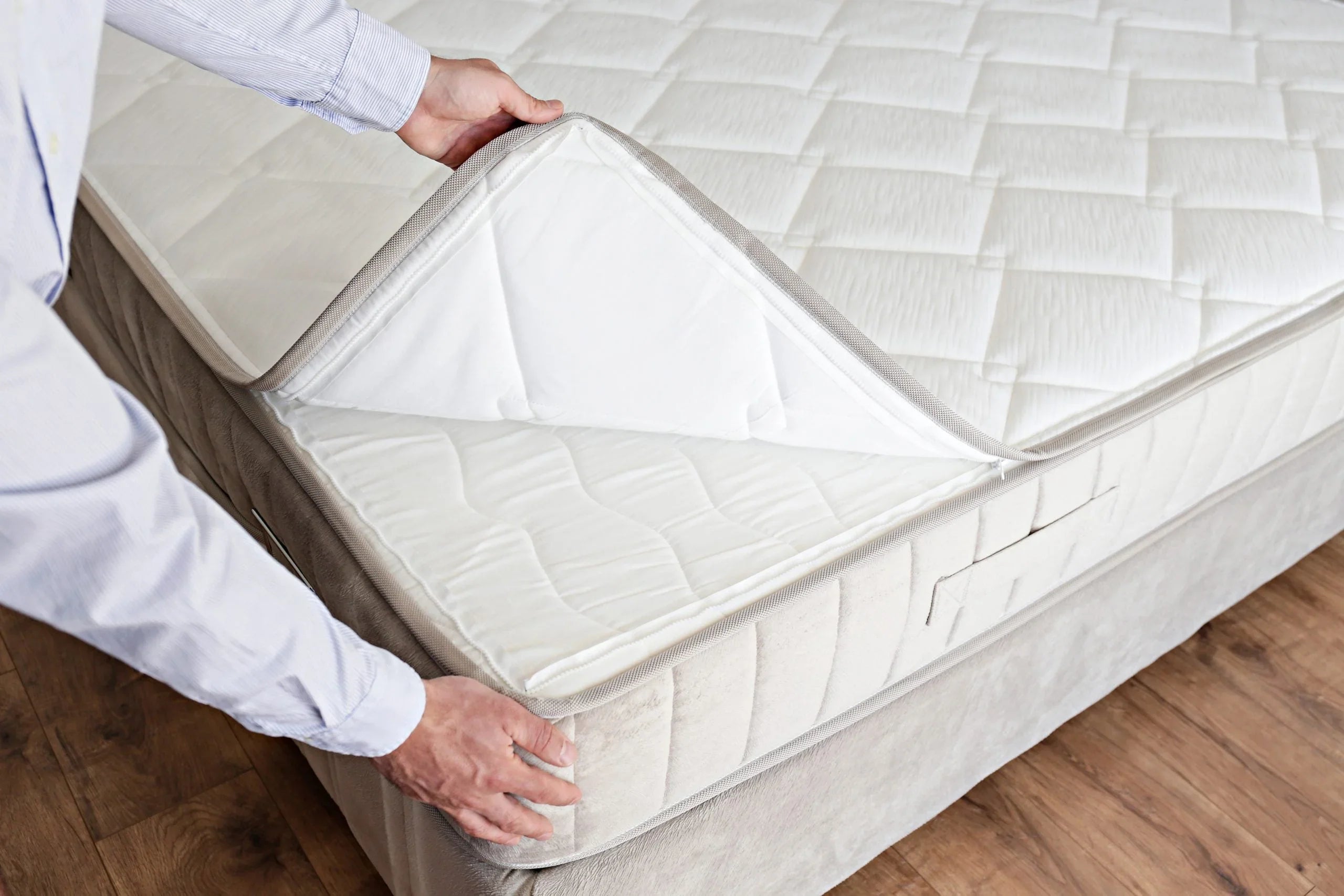
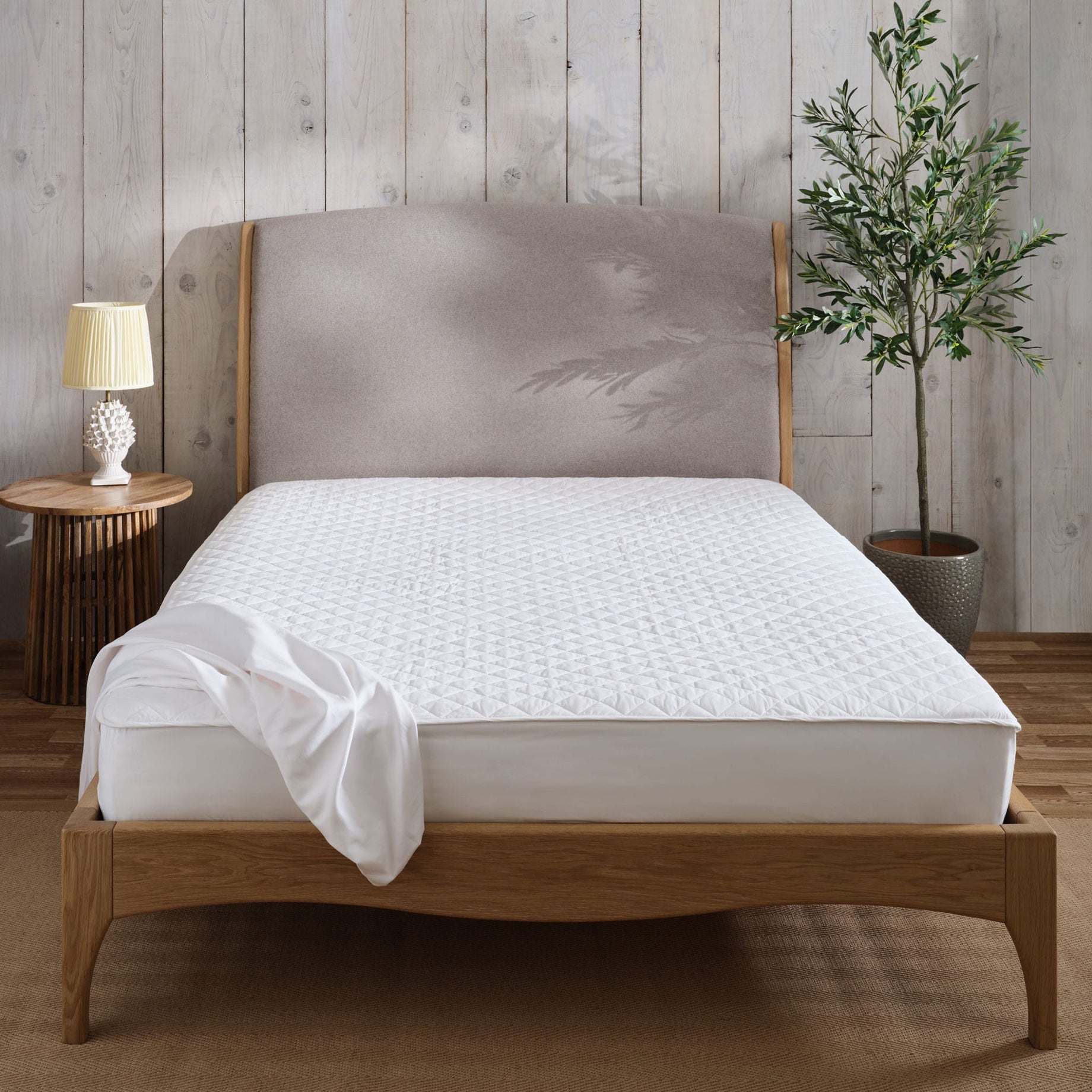
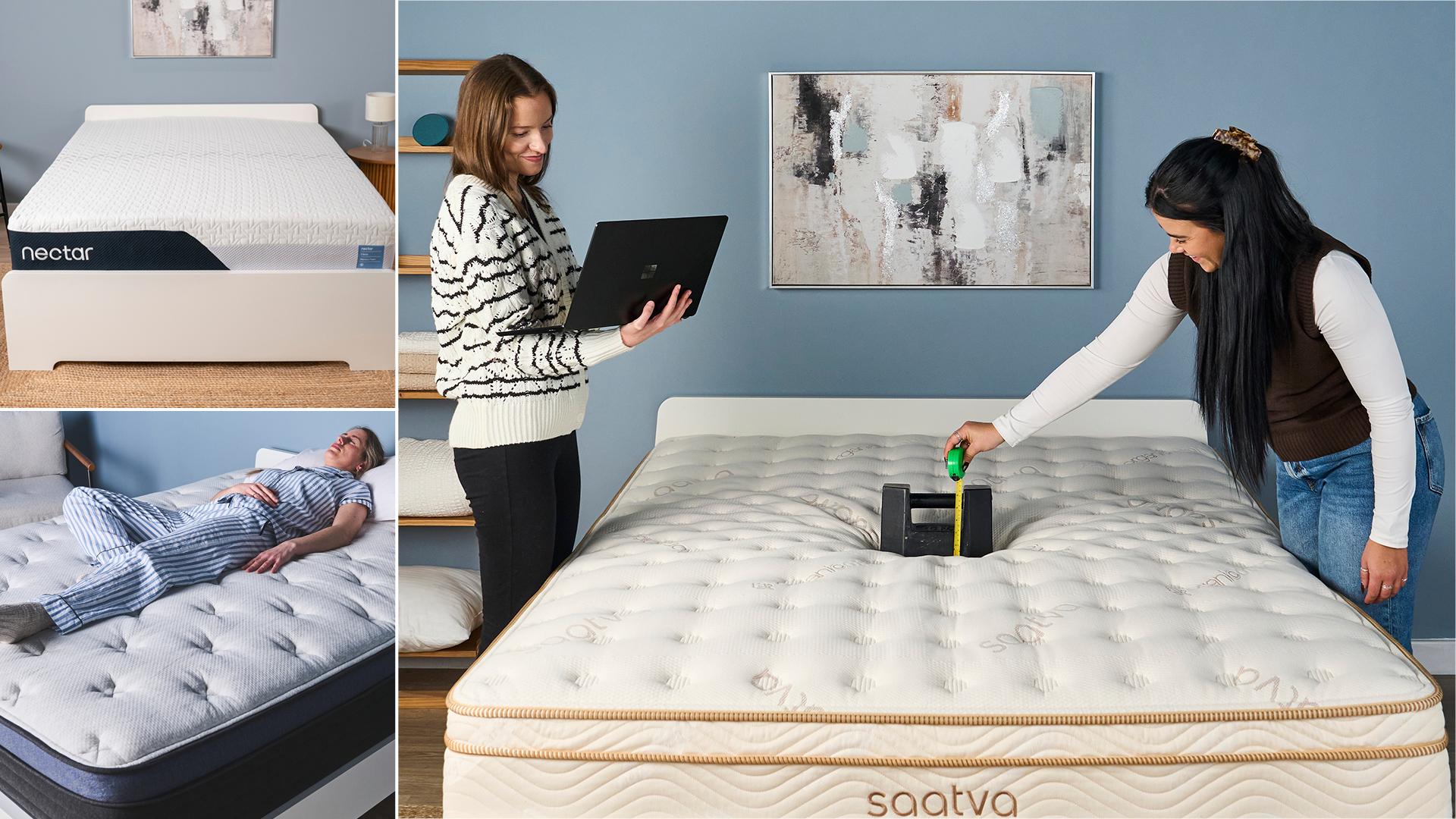
A quality mattress pad is a quilted or padded layer that fits over a mattress like a fitted sheet, adding subtle surface cushioning while protecting the bed from daily wear, sweat, and minor spills. Unlike thick mattress toppers that fundamentally alter bed firmness, a premium mattress pad refines surface comfort, improves breathability, and extends mattress lifespan without compromising underlying support.
Mattress Pad vs. Topper vs. Protector: Understanding the Differences
Navigating sleep accessories requires distinguishing between three commonly confused bedding layers: mattress pads, mattress toppers, and mattress protectors. While all three rest between the mattress and the fitted bottom sheet, their engineering and primary functions differ significantly.
- Mattress Pads: Typically measuring between 0.5 inches and 1.5 inches in thickness, a mattress pad features a quilted fiber or down fill held in place by fabric casing. It secures to the mattress via an elasticized skirt or heavy-duty corner anchor bands. The main intent of a pad is dual-purpose: adding a moderate layer of plush comfort while absorbing surface moisture and shielding the mattress surface from friction.
- Mattress Toppers: Ranging from 2 to 4 inches in depth, toppers are dense slabs of memory foam, latex, or high-density polyfoam (and occasionally thick baffled down). They are engineered to radically alter the support profile of an existing mattress—making a firm bed significantly softer or reviving an aging mattress that lacks contouring.
- Mattress Protectors: Unpadded and razor-thin, protectors are designed almost exclusively as barrier layers. Utilizing polyurethane backings or tightly woven synthetic membranes, they safeguard mattresses against liquids, dust mites, bed bugs, and allergens. They add virtually no physical cushioning.
Choosing a quality mattress pad makes the most sense when your underlying mattress provides proper spinal alignment and support, but requires minor surface softening, improved temperature regulation, or enhanced hygiene management.
Core Fill Materials and Performance Characteristics
The interior fill of a mattress pad dictates its feel, breathability, durability, and maintenance requirements. Manufacturers employ both natural and synthetic fibers, each delivering distinct thermal and tactile properties.
| Fill Material | Breathability | Loft & Plushness | Washability |
|---|---|---|---|
| Cotton | High | Low to Moderate | Machine Washable |
| Down | High | Exceptional (Plush) | Dry Clean / Delicate |
| Down Alternative | Moderate | Moderate to High | Machine Washable |
| Wool | Exceptional | Moderate (Resilient) | Dry Clean / Special |
| Memory Foam (Padded) | Low to Moderate | High (Contouring) | Spot Clean Only |
1. Organic and Conventional Cotton
Cotton fill is renowned for its exceptional breathability and moisture-wicking capabilities. Pure cotton pads do not trap body heat, making them an excellent choice for hot sleepers or warm climates. Cotton pads offer a flatter, crisper profile rather than cloud-like plushness. They compact slightly over time but withstand frequent machine laundering exceptionally well. Look for combed cotton or organic cotton certified by standards such as the Global Organic Textile Standard (GOTS).
2. Natural Down and Feather Blends
Down pads utilize the soft, quill-free undercoating of ducks or geese to achieve superior loft and luxurious softness. Down provides natural thermoregulation, insulating in cold conditions while allowing air circulation when temperatures rise. However, pure down pads require delicate care, periodic fluffing, and professional dry cleaning or commercial front-load washing to prevent fill clump compression. Buyers should look for Responsible Down Standard (RDS) certification to ensure humane sourcing practices.
3. Down Alternative (Polyester Microfiber)
Down alternative pads use fine synthetic microfibers (usually polyester) engineered to mimic the loft and springiness of natural down. These pads are hypoallergenic, budget-friendly, and simple to launder in standard home washing machines. While high-grade micro-denier polyester can match the feel of low-to-mid fill power down, synthetic fills tend to retain more body heat than natural fibers and may compress permanently after several years of heavy use.
4. Natural Wool
Wool is nature's premier thermoregulating fiber. A wool mattress pad absorbs up to 30% of its weight in moisture without feeling damp, actively evaporating sweat to keep sleepers dry and comfortable in summer while trapping warm air pockets in winter. Wool fibers possess inherent springiness, resisting flattening far better than cotton. Additionally, wool naturally resists dust mites, mold, and flame propagation without chemical treatments.
5. Memory Foam and Gel-Infused Micro-Quilting
Some contemporary mattress pads incorporate thin layers of shredded or sheet memory foam quilted directly into the top cover. These hybrid pads deliver localized pressure relief around the hips and shoulders while remaining thinner and lighter than a dedicated 3-inch foam topper. Gel infusions or open-cell foam structures are frequently added to offset memory foam’s natural tendency to retain heat.
Fabric Shells, Weaves, and Construction Quality
The longevity and comfort of a mattress pad depend heavily on the outer fabric shell (the ticking) and the structural quilting patterns used to keep the fill evenly distributed.
Shell Fabrics and Thread Counts
The outer shell encloses the fill material and rests directly below your bottom sheet. Superior shells utilize 100% long-staple cotton, bamboo-derived rayon, or linen.
- Percale Weave: A plain one-over-one-under weave that produces a matte, crisp finish with high airflow. Ideal for hot sleepers.
- Sateen Weave: A three-over-one-under weave resulting in a silkier, smoother hand-feel and slight sheen. Slightly warmer than percale.
- Thread Count Realities: For mattress pad shells, a thread count between 250 and 400 is optimal. Excessively high thread counts (above 600) often use multi-ply threads that reduce air permeability, causing heat retention and stiffer fabric.
Stitching and Quilting Patterns
Without structural stitching, interior fill shifts toward the edges or bunches into uncomfortable lumps during sleep and laundering. High-grade pads rely on specific construction techniques:
- Baffle-Box Construction: Internal fabric walls (baffles) connect the top and bottom shells, creating three-dimensional chambers. This design allows high-loft fills like down and down alternatives to expand fully without shifting.
- End-to-End Box Stitching: Stitched square pockets sewn flat through both top and bottom layers. While it locks fill securely in place, it offers slightly less loft expansion than true baffle-box construction.
- Diamond and Channel Quilting: Decorative continuous stitching lines. Channel stitching allows manual movement of fill along long channels, while diamond quilting provides uniform distribution across smaller grid segments.
Skirt Construction and Pocket Depth
A mattress pad must stay anchored without shifting, bunching, or slipping during nocturnal movement.
- Full Stretch Skirts: High-quality pads feature a knitted fabric skirt made of polyester-spandex or heavy cotton knit that stretches smoothly around all four sides of the mattress. Look for fully elasticized hem bands (at least 0.5 to 1 inch wide) around the entire bottom perimeter.
- Anchor Straps: Budget options or ultra-thick wool pads sometimes use thick elastic bands attached to the four corners. While easy to put on, anchor straps offer less side-wall protection and can lose elasticity over time.
- Pocket Depth Allowance: Standard mattresses range from 10 to 14 inches deep, but pillow-top models can exceed 18 inches. Always check that the pad’s skirt depth explicitly accommodates your mattress height plus any added toppers.
Key Factors to Consider When Shopping for a Mattress Pad
Selecting the ideal mattress pad requires matching your specific sleep requirements, physical environment, and maintenance capability against product specifications.
| Primary Need | Recommended Fill | Ideal Shell Fabric | Key Feature |
|---|---|---|---|
| Hot Sleeper | Cotton or Wool | Crisp Cotton Percale | High Breathability |
| Allergy Sufferer | Down Alternative | Tight-Weave Cotton | Machine Wash Hot |
| Firmness Softening | High-Loft Down/Alt | Cotton Sateen | Baffle-Box Design |
| Easy Maintenance | Synthetic Microfiber | Poly-Cotton Blend | Wash & Dry Safe |
- Thermal Performance: If nighttime overheating causes night sweats or restless turning, prioritize natural fibers (cotton, wool, or linen). Avoid solid polyurethane backings or unventilated synthetic fills unless they feature specialized phase-change cooling materials.
- Allergy and Asthma Triggers: Dust mites thrive in warm, humid bedding environments. Hypoallergenic down alternative pads or washable organic cotton pads engineered to withstand hot-water laundering (130°F / 54°C or higher) help eradicate allergen build-up effectively.
- Noise and Tactile Motion: Sub-par pads containing low-grade synthetic waterproof linings often produce a crinkling plastic noise when you change sleeping positions. Quality pads use soft, whisper-quiet micro-porous linings or dense woven fabrics to eliminate noise.
- Care and Maintenance Feasibility: Oversized king or California king down-filled pads can absorb immense amounts of water, exceeding the weight limits of standard home washing machines. Verify whether a prospective pad requires commercial-capacity washers, dry cleaning, or simple home care.
Care, Maintenance, and Longevity Optimization
Proper care preserves the loft, elasticity, and hygienic integrity of a mattress pad over its operational lifespan, which typically ranges from 3 to 5 years depending on usage and construction quality.
Routine Cleaning Protocols
- Washing Frequency: Clean your mattress pad every 2 to 3 months under standard conditions. If you suffer from severe allergies, sleep with pets, or sleep without a top sheet, increase laundering frequency to every 3 to 4 weeks.
- Detergent Selection: Use a mild, liquid neutral detergent. Avoid fabric softeners, as cationic surfactants coat natural fibers like cotton and down, drastically reducing their breathability and moisture-wicking capabilities.
- Water Temperature: Use warm or cool water for standard washing. Use hot water only if the manufacturer tag permits it and deep allergen sanitization is required.
Drying and Loft Restoration
- Low Heat Settings: Dry synthetic and down pads on low or air-fluff heat settings. High heat can melt synthetic microfibers, damage inner waterproofing linings, or shrink cotton shells.
- Drying Balls: Place 2 to 4 wool dryer balls or clean tennis balls into the dryer drum. As they tumble, they break up clumps of damp fill, fully restoring original loft and volume.
- Complete Moisture Removal: Ensure the pad is 100% dry before placing it back on the bed. Trapped interior moisture within dense down or cotton fills creates an ideal breeding ground for mold, mildew, and lingering odors.
Frequently Asked Questions
Will a quality mattress pad fix a sagging, uncomfortable mattress?
No, a mattress pad cannot fix an indentation or structurally compromised mattress. Mattress pads are thin layers designed for surface tuning, light protection, and minor plushness. Structural sagging indicates that the internal coil system or core foam base has degraded, requiring a true mattress replacement or, temporarily, a firm, high-density 3-inch foam topper.
Can I use a mattress pad together with a waterproof mattress protector?
Yes. When layering bedding, place the waterproof protector directly on the mattress first to seal out liquids, micro-organisms, and dust mites. Place the cushioned mattress pad on top of the protector, followed by your fitted sheet. This layering order preserves the plush feel of the pad while keeping the mattress fully protected underneath.
What thread count should I look for in a mattress pad cover?
Look for a thread count between 250 and 400. This range provides an optimal balance of soft surface hand-feel, structural durability to contain interior fills, and sufficient air permeability for temperature regulation. Thread counts exceeding 500 often trap heat due to overly tight fabric weaves.
Are down alternative mattress pads as warm as real down?
High-density down alternative fills can retain comparable amounts of warmth, but they lack the dynamic moisture-wicking and breathability of real goose or duck down. As a result, synthetic down alternative pads may feel warmer or slightly stuffier to hot sleepers compared to natural down or wool.
How do I stop my mattress pad from sliding off the corners?
Sliding usually occurs when the pad's skirt is too shallow for the mattress or when the elastic perimeter has worn out. Ensure your pad's skirt depth matches or exceeds your total mattress thickness by at least 2 inches. Pads featuring deep knit skirts with wide, continuous elastic hem bands stay anchored far better than pads utilizing simple four-corner elastic straps.
How to Select the Ideal Mattress Pad for Your Bed
To choose the perfect mattress pad, assess your primary sleep objective rather than buying based on price alone:
- Measure Your Mattress Depth: Use a tape measure to record your mattress height from the base edge to the top crown, including any existing toppers. Match this dimension against the pad’s listed skirt capacity to guarantee a secure fit.
- Identify Your Thermal Profile: If you wake up hot or sweating, choose an unlined 100% cotton or wool mattress pad with a percale shell. If thermal insulation and cloud-like softness are your goals, choose a baffle-box down or premium microfiber pad.
- Review Care Requirements: Confirm that your home laundry machine can comfortably accommodate the pad size you intend to purchase, particularly for queen, king, and California king dimensions.
- Check Safety and Material Certifications: Verify that the materials meet independent environmental and safety standards such as OEKO-TEX Standard 100, Global Organic Textile Standard (GOTS), or Responsible Down Standard (RDS) to ensure freedom from harmful chemical residues.
EDITORIAL CATEGORY METADATA: