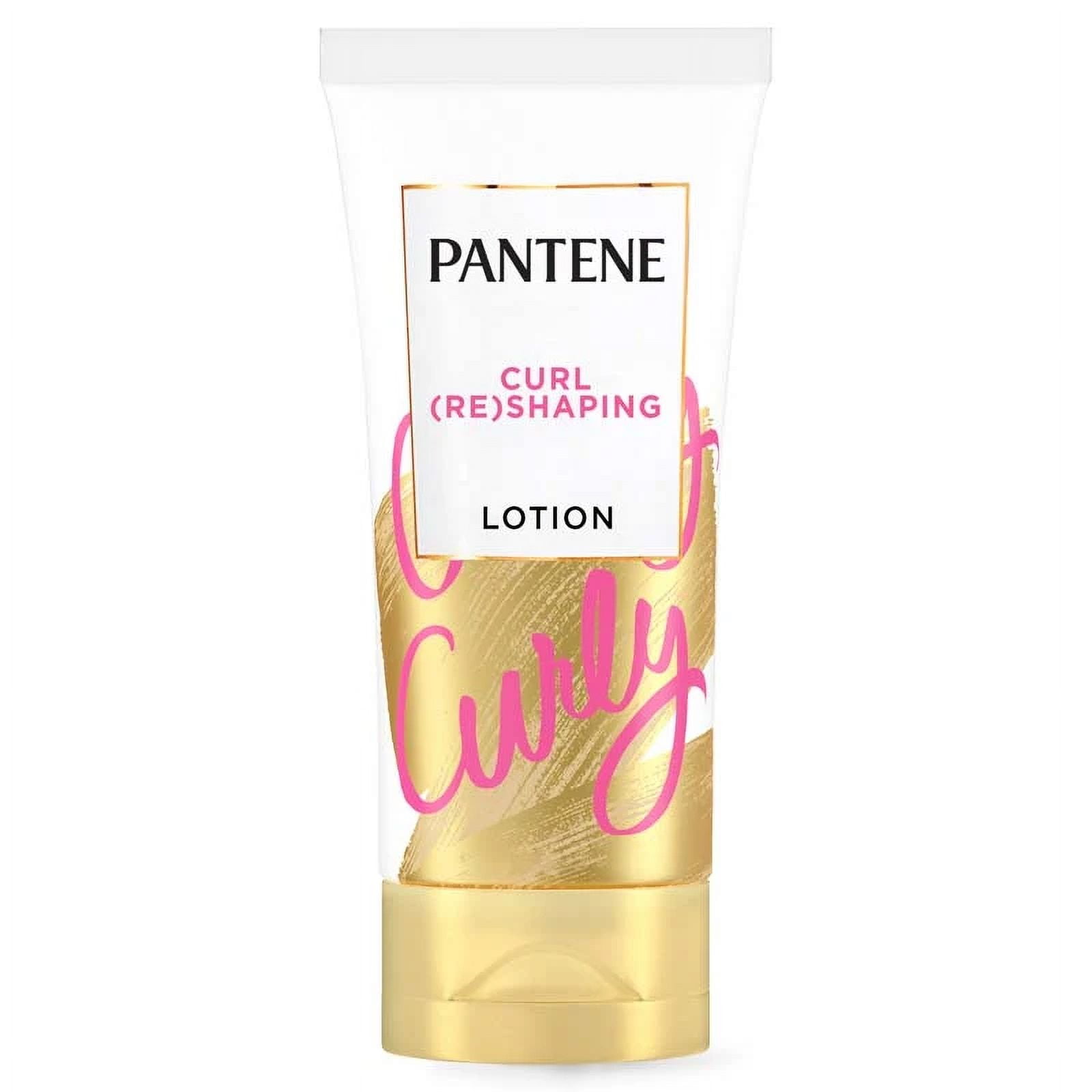
Hair lotion for curls is a lightweight, water-based emulsion formulated to hydrate, soften, and define textured hair without weighing down natural curl patterns. By blending hydrating humectants with light plant oils and conditioning agents, curl lotions penetrate the hair shaft to reduce frizz, restore flexibility, and provide light hold across wavy, curly, and coily textures.
Understanding Hair Lotion and Its Role in Curl Care
Naturally curly hair is inherently prone to dryness. Because the spiral structure of textured hair prevents natural sebum produced by the scalp from traveling efficiently down the hair shaft, curls often suffer from moisture loss, structural fragility, and persistent frizz. Hair lotion serves as a vital intermediate styling and conditioning product designed specifically to address these mechanical challenges.
Technically, a hair lotion is an oil-in-water emulsion. It contains a higher ratio of water to oil than heavy curl creams or raw butter blends, allowing it to deliver deep hydration without suffocating the hair fiber. Unlike rinse-off conditioners that primarily act on the outer cuticle layer during washing, a curl lotion is engineered as a leave-in treatment. It deposits moisture deep within the cortex while coating the exterior with a thin, flexible film that seals in hydration and smoothes raised cuticles.
For individuals with low-porosity hair or fine-textured strands, heavy styling creams often lead to limp, greasy, or flat curls. Hair lotions solve this issue by offering a balance between liquid leave-in sprays—which may not provide enough moisture or lipid replenishment—and dense butter-based styling products. Incorporating a high-performance lotion into a curl care routine helps maintain elasticity, enhances natural clump formation, and protects hair against ambient humidity changes throughout the day.
Key Ingredients in Formulating Effective Curl Lotions
The performance of a hair lotion depends entirely on its chemical formulation. Understanding ingredient classes allows users to select products optimized for their specific structural needs rather than relying on marketing claims.
Essential Hydrators and Humectants
Humectants are hygroscopic substances that attract water molecules from the surrounding atmosphere into the hair shaft. They form the foundation of any hydrating hair lotion:
- Glycerin: A classic, highly effective humectant that draws moisture into the hair. However, in extreme humidity, it can pull excessive water into the hair shaft and cause swelling, whereas in extremely dry conditions, it may draw moisture out of the hair.
- Aloe Vera Leaf Juice: A lightweight film-former and natural humectant that soothes the scalp while providing smooth, non-greasy moisture.
- Agave Nectar and Honey: Natural sugar complexes that offer humectant benefits alongside light, natural hold to help lock in curl formation.
- Panthenol (Pro-Vitamin B5): A low-molecular-weight ingredient that penetrates the cuticle layer, improving hair shaft elasticity and structural strength.
Nourishing Emollients and Oils
Emollients lubricate the hair shaft, smooth out rough cuticles, and minimize friction between individual strands, reducing breakage and tangling. Hair lotions use lighter botanical oils to avoid overburdening the curl structure:
- Jojoba Oil: Structurally similar to natural human sebum, jojoba oil absorbs quickly, offering friction reduction without greasy residue.
- Argan Oil: Rich in fatty acids and Vitamin E, argan oil smoothes the hair shaft and adds natural sheen without flattening curls.
- Sweet Almond Oil: A medium-weight oil that softens dry strands and improves tensile strength.
- Grapeseed Oil: An exceptionally lightweight emollient ideal for fine curls or low-porosity hair types prone to product accumulation.
Structural Modifiers and Film-Formers
To help curls maintain their shape, high-grade lotions incorporate mild film-forming polymers and fatty alcohols:
- Cetearyl Alcohol and Cetyl Alcohol: Fatty alcohols that act as emulsifiers and emollients. Unlike drying simple alcohols (such as isopropyl alcohol), fatty alcohols soften the hair fiber and impart a smooth, creamy texture.
- Hydrolyzed Proteins (Wheat, Silk, Keratin, or Soy): Small protein molecules that temporary patch microscopic gaps in damaged hair cuticles, enhancing structural integrity and bounce.
- Polyquaterniums (e.g., Polyquaternium-11 or Polyquaternium-37): Conditioning polymers that provide lightweight styling memory, static control, and hold without the crispiness associated with traditional hair gels.
Hair Lotion vs. Other Curl Styling Products
Selecting the appropriate product requires clear distinctions between hair lotion and alternative styling formulations. While all aimed at managing textured hair, these products differ significantly in water-to-oil ratios, viscosity, and primary intended functions.
| Product Category | Primary Function | Texture / Viscosity | Best Hair Types | Hold Level |
|---|---|---|---|---|
| Hair Lotion | Daily hydration, light definition, softness | Light to medium liquid emulsion | Fine-to-medium Type 2, 3, and low-porosity Type 4 | Light, touchable hold |
| Leave-In Conditioner | Base hydration, detangling, moisture priming | Thin, aqueous liquid or light spray | All hair types (Types 2–4) | None to minimal hold |
| Curl Cream | Deep moisture, heavy clump formation, frizz control | Thick, rich, butter-like cream | Medium-to-coarse Type 3 and high-porosity Type 4 | Medium, flexible hold |
| Styling Gel | Structure setting, cast formation, long-term definition | Viscous gel or jelly | Types 2, 3, and 4 (layered over hydrators) | High to maximum hold |
| Styling Mousse / Foam | Volume enhancement, flash drying, wave styling | Aerated foam | Type 2 waves, fine Type 3 curls | Medium to high hold |
Selecting Hair Lotion by Curl Pattern and Porosity
Hair texture classification (Types 2 to 4) provides a baseline, but hair porosity—the hair’s ability to absorb and retain moisture—is the critical factor in determining how a hair lotion performs.
- Low Porosity
- Tight cuticles • Easily weighed down
- Use liquid-based, humectant lotions
- Medium Porosity
- Balanced cuticles • Retains moisture
- Use balanced emollient formulations
- High Porosity
- Raised cuticles • Loses moisture fast
- Use protein-enriched, heavy lotions
Type 2 (Wavy Hair)
Waves are easily weighed down by heavy oils and butters. A lightweight hair lotion rich in aloe vera, water, and panthenol provides definition and tames flyaways without pulling down the wave structure. Look for formulas labeled as "weightless" or "volumizing."
Type 3 (Curly Hair)
Type 3 curls (ranging from loose spirals to tight corkscrews) require balanced moisture and moderate hold. A mid-weight hair lotion containing jojoba oil, argan oil, and light plant extracts works exceptionally well. It can be used alone for soft, natural definition or layered beneath a styling gel for multi-day hold.
Type 4 (Coily Hair)
Coily and kinky textures (4A, 4B, 4C) feature tight zig-zag patterns and delicate structural bend points, making them extremely susceptible to dryness and mechanical breakage. For Type 4 hair, a hair lotion functions best as a moisturizing base in layered styling routines (such as the LCO method: Liquid, Cream, Oil). Formulations containing shea butter extracts, coconut water, and hydrolyzed proteins help maintain inner hydration.
Adjusting for Hair Porosity
- Low-Porosity Hair: The cuticle layer is tightly closed, making it difficult for moisture to enter. Choose high-water, low-oil hair lotions containing penetrating humectants like glycerin. Avoid heavy, protein-dense lotions, which can build up on the surface and cause stiffness.
- Medium-Porosity Hair: The cuticle layer is balanced. Standard hair lotions containing a mix of hydration and light oils work effectively with minimal adjustment.
- High-Porosity Hair: Gaps and tears in the cuticle layer allow moisture to enter easily but escape rapidly. High-porosity curls benefit from rich hair lotions containing silk or wheat proteins to patch cuticle damage, paired with heavier sealing oils like avocado or olive oil to lock in hydration.
Application Techniques for Maximum Definition and Volume
The method used to apply hair lotion impacts curl definition, volume, and longevity. For optimal results, follow a deliberate, step-by-step application process.
Step 1: Prep and Moisture Control
Always apply hair lotion to clean, damp, or soaking-wet hair. Water acts as the vehicle that carries the lotion's hydrating ingredients into the cortex. Squeeze out excess water with a micro-fiber towel or t-shirt to prevent diluting the product, but avoid drying the hair completely before application.
Step 2: Sectioning the Hair
Divide hair into four to six equal sections using non-snagging clips. Sectioning ensures even distribution of the lotion from roots to ends, preventing dry patches and uneven definition.
Step 3: Distribution Techniques
Depending on the desired curl outcome, apply a quarter-sized amount of lotion per section using one of the following methods:
- Praying Hands Method (For Smoothing and Frizz Reduction): Rub the lotion between palms, then sandwich a section of hair between flattened hands, sliding from mid-lengths to ends. This smoothes raised cuticles and seals moisture into the strand.
- Raking and Shingling (For Maximum Clumping and Definition): Comb the lotion through sections using fingers like a wide-tooth comb. For extreme definition, isolate smaller sub-sections (shingling) and smooth the product down from root to tip, allowing curls to snap back into their natural pattern.
- Scrunching (For Enhancing Waves and Volume): After distributing product through the length, cup the ends of the hair in your palms and push upward toward the scalp, squeezing gently to encourage curl pattern formation.
Step 4: Layering and Drying
If additional hold is needed, layer a light gel or styling foam over the hair lotion. Dry hair using a diffuser attached to a blow dryer on low heat and medium speed to set the curl shape, or air-dry completely without touching the hair to prevent friction-induced frizz.
Troubleshooting Common Hair Lotion Issues
Even high-quality products can produce poor results if applied incorrectly or paired with incompatible formulas. Here is how to diagnose and resolve common issues:
1. Product Flaking and White Residue
- Cause: Incompatibility between the hair lotion and other styling products (such as gels or leave-in sprays), causing polymers to precipitate out of solution.
- Solution: Perform a hand test before styling. Mix a small drop of hair lotion and a small drop of your gel in the palm of your hand. If the mixture turns cloudy, clumps, or forms small balls, the formulations are chemically incompatible and should not be layered together.
2. Limp, Flat, or Greasy Curls
- Cause: Using a lotion containing oils that are too heavy for your hair density, or over-applying product directly to the scalp and roots.
- Solution: Focus application strictly on the mid-lengths and ends of the hair shaft. Switch to a lighter, water-first lotion formulation that relies on aloe vera or coconut water rather than heavy plant oils.
3. Rapid Moisture Loss and Mid-Day Frizz
- Cause: Applying lotion to dry hair, or using a pure humectant lotion in extremely low-humidity environments without an occlusive sealant.
- Solution: Apply lotion to wet hair to lock in ambient moisture. If living in an arid climate, seal the hair lotion with a few drops of a non-greasy sealing oil (such as jojoba or squalane) to establish a protective barrier against evaporation.
Frequently Asked Questions
Can hair lotion be used daily on curly hair?
Yes, lightweight hair lotions can be used daily or every few days to refresh dry curls between wash cycles. To refresh, lightly mist the hair with water to reactivate leftover product, then smooth a small amount of lotion over frizzy areas.
What is the primary difference between a hair lotion and a leave-in conditioner?
While both products provide leave-in moisture, leave-in conditioners are primarily formulated to detangle hair and restore baseline pH levels after shampooing. Hair lotions have a slightly higher viscosity and contain light film-forming polymers and emollients designed to provide subtle styling memory, frizz control, and curl shape retention.
Does hair lotion cause product build-up on the scalp?
Hair lotion can cause build-up if applied directly to the scalp or if it contains non-water-soluble silicones and heavy waxes. To prevent scalp irritation and clogged follicles, apply hair lotion starting one to two inches away from the root, and clean the hair periodically with a clarifying shampoo.
Can hair lotion replace styling gel in a curl routine?
Hair lotion can replace styling gel if your goal is soft, touchable curls with natural volume and light hold. However, if you require firm, long-lasting curl definition, weather protection, or multi-day hold, a styling gel should be applied over the hair lotion to lock the style in place.
Optimizing Your Daily Curl Care Routine
To get the most benefit from a hair lotion, integrate it into a balanced care regimen tailored to your structural hair needs:
- Assess Your Base Needs: Evaluate your hair's density, porosity, and curl diameter to choose between a light, aqueous lotion or a richer, oil-infused formulation.
- Maintain Baseline Cleanliness: Clarify your hair every two to four weeks using a gentle, sulfate-free clarifying cleanser to remove accumulated emollients, minerals, and film-forming polymers.
- Adjust by Season: Shift your hair lotion selection depending on environmental changes. Use protein-rich, sealed formulations during humid summer months, and switch to humectant-rich, deep-hydrating lotions during dry winter conditions.
By understanding ingredient functions, matching products to your porosity, and using precise application methods, hair lotion can help maintain soft, hydrated, and well-defined curls.