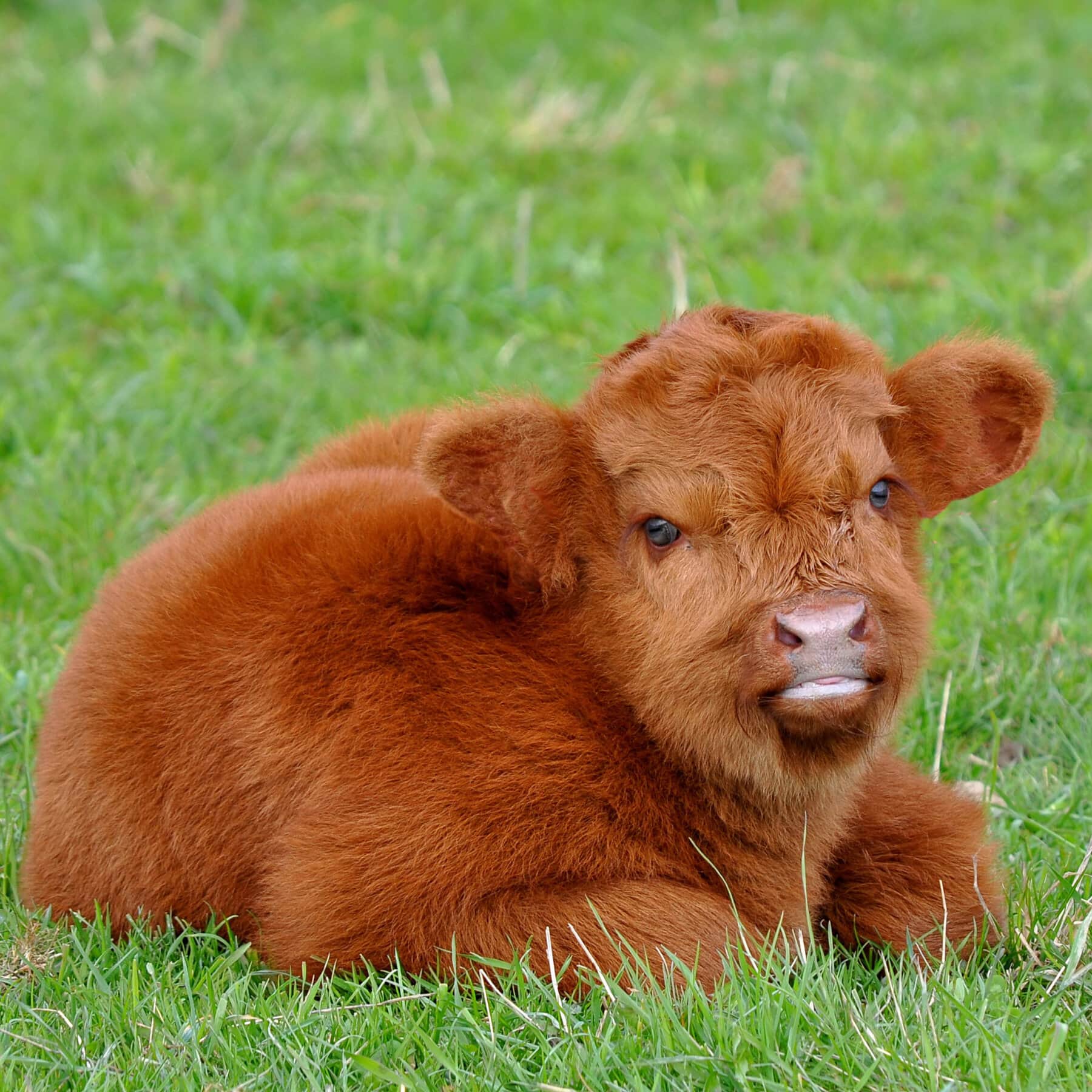
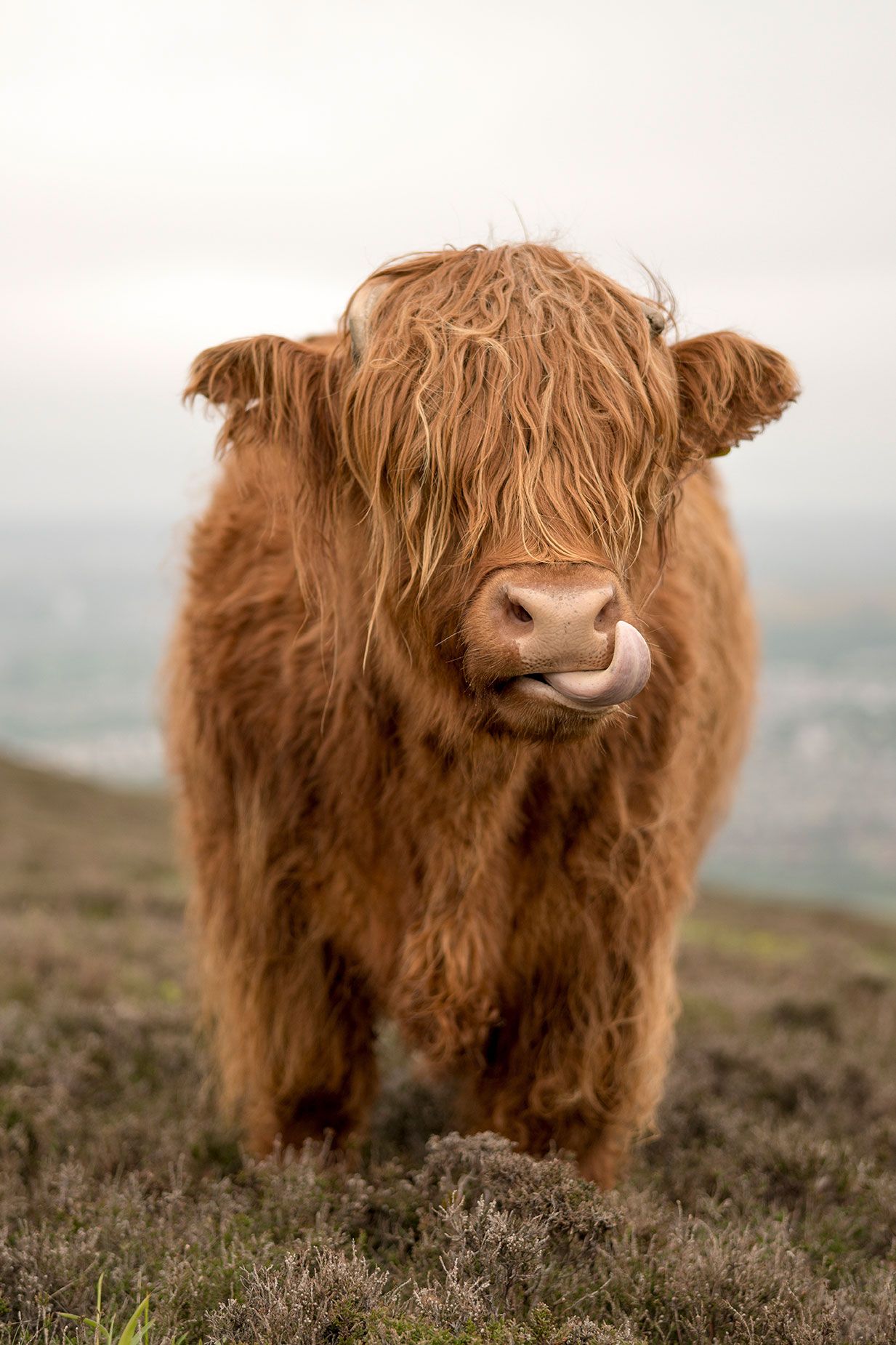
Fluffy cow breeds refer to cattle that possess naturally dense, double-layered woolly coats—such as Scottish Highlands and Belted Galloways—as well as commercial show cattle styled through specialized wash, blow-dry, and fitting techniques. Choosing the right fluffy breed requires evaluating climate compatibility, land acreage, shelter infrastructure, and whether the primary goal is grass-fed beef, pasture maintenance, show competition, or homesteading.
What Makes a Cow "Fluffy"? Genetics vs. Professional Grooming
The term "fluffy cow" gained widespread public popularity through social media photos featuring plush, teddy-bear-like cattle. However, in the agricultural world, extraordinary coat fullness stems from one of two sources: natural genetic adaptation or high-intensity livestock show grooming.
Understanding "Fluffy" Cattle
- Natural Genetics
- Double-layered coat
- Long guard hair
- Dense downy undercoat
- Cold/wet adaptation
- Ex: Highland, Galloway
- Professional Fitting
- Daily rinsing & drying
- High-velocity blowers
- Hair-growing oils
- Show adhesives/foams
- Ex: Angus, Hereford
Natural Genetic Adaptations
Breeds native to cold, wet, or mountainous environments evolved thick coats to survive harsh winters without needing excess subcutaneous fat. A natural double coat consists of two distinct layers:
- Outer Guard Hair: Long, coarse hair that sheds rain, snow, and mud, keeping the animal dry.
- Undercoat: A dense, woolly layer soft to the touch that traps air against the skin, providing thermal insulation.
Naturally fluffy breeds lose large portions of their undercoat during spring shedding (known as "blowing coat"), adapting naturally to warmer summer temperatures before regrowing their dense coat in autumn.
Professional Show Fitting
In commercial beef cattle shows, breeders prepare standard short-haired or medium-haired breeds (such as Angus, Hereford, Club Calves, and Maine-Anjou) to appear exceptionally wide, blocky, and plush. Fitting involves a rigorous grooming regimen:
- Daily Rinsing and Blowing: Calves are rinsed with cold water daily and dried using high-velocity livestock blow-dryers to train hair follicles to stand upright rather than lie flat.
- Conditioning and Oils: Specialized coat conditioners, hair restorers, and plant-based oils stimulate thick hair follicle density.
- Show-Day Adhesives: Fitters use specialized clear adhesives, leg foams, and tail-head sprays to sculpt hair, creating an artificially uniform, plush silhouette for evaluation in the ring.
Top Naturally Fluffy Cattle Breeds
Several established heritage and specialty cattle breeds naturally produce thick, woolly coats. Understanding the traits, sizes, and care requirements of each helps buyers select animals suited to their land and operational capabilities.
Naturally Fluffy Cattle Breeds
| Scottish Highland | Belted Galloway | Highpark | South Devon |
|---|---|---|---|
| Iconic long horns | Distinct white belt | Cream/white coat | Curly red coat |
| Ultra-hardy dual layer winter coat | Naturally polled | Compact size | Large frame |
| Excellent beef | Hobby farm favorite | Gentle giant |
1. Scottish Highland Cattle
The Scottish Highland is the definitive naturally fluffy breed. Originating in the rugged Scottish Highlands and Western Isles, these cattle have survived harsh winds, freezing rain, and poor forage for centuries.
- Coat Profile: Highlands feature the longest hair coat of any cattle breed, reaching up to 13 inches in length. Their double coat includes a greasy outer guard hair layer that repels moisture and a dense, downy undercoat for thermal efficiency.
- Physical Traits: Wide, sweeping horns, medium frame size, short legs, and a broad forehead covered by a heavy fringe of hair called a "dossan."
- Temperament: Exceptional maternal instincts, generally docility when handled regularly, though wide horns demand respect and adequate chute infrastructure.
- Best Used For: Conservation grazing, brush management, high-margin grass-fed beef, and cold-climate homesteads.
2. Galloway and Belted Galloway
Originating in the historic Galloway region of southwestern Scotland, Galloway cattle are renowned for their weather resistance and beef quality. The "Belted Galloway" (or "Beltie") is a striking color variant featuring a bright white belt encircling a black, dun, or red torso.
- Coat Profile: A soft, wavy, or curly double coat featuring dense under-down and longer outer hair. Galloways shed water easily and resist severe cold without shivering.
- Physical Traits: Naturally polled (hornless), medium-framed, deep-bodied, and muscular.
- Temperament: Calm, quiet, and highly adaptable to group herd management.
- Best Used For: High-efficiency grass finishing, rotational grazing programs, and cold-weather pasture management where hornless cattle are preferred.
3. Highpark Cattle
Highpark cattle are a popular crossbreed developed primarily by crossing Scottish Highlands with White Park or American Park cattle. While not an ancient purebred registry in the traditional commercial sense, they have become a staple on hobby farms, agritourism operations, and small homesteads.
- Coat Profile: Long, fluffy, medium-to-dense double coat inherited from the Highland lineage, often paired with striking color points.
- Physical Traits: White or off-white body with contrasting dark "points" on the ears, muzzle, eyes, hooves, and teats (black or red points). Size varies widely depending on whether standard or miniature parentage was used.
- Temperament: Selected primarily for small-farm management, Highparks are typically calm and approachable when socialized early.
- Best Used For: Agritourism, small acreage properties, educational farms, and specialty livestock breeding.
4. South Devon
Known as the "Gentle Giants" of England, South Devon cattle are the largest of the native British breeds. While their coat is not as long as a Highland's, they possess a characteristically thick, soft, woolly, and often curly coat that gives them a fluffy appearance, particularly as calves and young stock.
- Coat Profile: Dense, fine, pale red to dark red woolly coat.
- Physical Traits: Large frame, broad back, strong bone structure, available in both horned and polled lines.
- Temperament: Exceptionally quiet, calm, and manageable in small pastures or large commercial herds.
- Best Used For: Commercial beef operations, crossbreeding programs, and homestead dual-purpose setups requiring docile, large-frame animals.
5. Dexter Cattle (Winter Coat Phase)
Native to Ireland, Dexter cattle are a miniature-to-small dual-purpose breed. While summer coats remain sleek, winter coats develop into thick, velvety cushions that shield them from extreme dampness and cold.
- Coat Profile: Short to medium-length hair that grows remarkably dense, soft, and woolly during cold weather.
- Physical Traits: Compact body (typically 38 to 44 inches tall at the shoulder), available in black, red, or dun color patterns.
- Temperament: Intelligent, curious, and easily trained to halter or milk.
- Best Used For: Micro-homesteads, small-acreage intensive grazing, household milk production, and small-cut freezer beef.
Comparison of Popular Fluffy Cow Breeds
The following table summarizes key operational parameters for primary fluffy cattle breeds to assist in herd planning and pasture allocation.
| Breed Name | Average Mature Weight (Cows / Bulls) | Horn Status | Coat Characteristics | Primary Utility | Ideal Climate Range |
|---|---|---|---|---|---|
| Scottish Highland | 1,000 – 1,300 lbs / 1,500 – 2,000 lbs | Horned | Ultra-long double coat (10–13" outer, dense down inner) | Grass-fed beef, brush clearing, heritage breeding | Cold, sub-zero, wet, moderate temperate |
| Belted Galloway | 1,000 – 1,500 lbs / 1,700 – 2,300 lbs | Naturally Polled | Wavy/curly double coat, moisture-repellent | Grass-finished beef, commercial crossbreeding | Cold, wet, wind-swept temperate zones |
| Highpark | 500 – 1,100 lbs (mini to standard) | Varied (Horned/Polled) | Plush, medium-long hair with distinct point markings | Agritourism, small farms, pet/livestock sales | Temperate to cold regions |
| South Devon | 1,500 – 1,800 lbs / 2,200 – 2,600 lbs | Horned or Polled | Thick, soft, curly pale-red woolly coat | Commercial beef production, maternal lines | Temperate to cold-moderate regions |
| Dexter | 600 – 800 lbs / 800 – 1,000 lbs | Horned or Polled | Compact, dense velvety winter coat | Smallholder milk, homestead freezer beef | Adaptable; cold-hardy to warm-moderate |
| Groomed Show Steers | 1,200 – 1,450 lbs (at show weight) | Polled or Dehorned | Short-to-medium hair trained upright with adhesives | Livestock show competition, youth 4-H/FFA | Environmentally controlled show barns |
The Art of Show Fitting: Achieving the "Plush" Look
For producers raising commercial beef breeds (such as Angus, Shorthorn, or Hereford crosses) for exhibition, achieving a fluffy look requires daily management rather than relying solely on genetics.
Daily Show Fitting Routine
Cool Washing
- Rinsing cold water daily to stimulate hair growth response
High-Velocity Blowing
- Cool air drives moisture out and trains follicles to stand upright
Deep Combing & Training
- Scotch comb pulls hair upward at a 45° angle to build fullness
Environmental Temperature Control: Show stock are housed in insulated barns equipped with high-powered fans or evaporative coolers (often called "cool rooms") kept around 60°F (15°C) to trick the animal's body into growing a heavy winter coat during summer months.
Cold Rinsing and Drying: Animals are washed or cold-rinsed once or twice daily. High-velocity livestock blowers drive moisture away from the skin while forcing the hair shaft to grow upward at a 45-degree angle rather than lying flat against the hide.
Combing and Hair Training: Operators comb the coat forward and upward using steel Scotch combs while drying. This daily training breaks down natural hair oil patterns and encourages maximum volumetric expansion.
Conditioning Solutions: Plant-based leave-in conditioners containing tea tree oil, canola oil, or specialized hair-stimulating compounds are blown directly into the root zone to prevent coat breakage, dryness, and skin scaling.
Final Fitting Application: On show days, fitters dry the hair completely, brush leg hair upward to add visual bone thickness, apply hair builders (colored or clear cellulose fibers), and set the profile with livestock hairsprays and tail adhesives.
Essential Care and Management for Heavy-Coated Cattle
While thick coats offer cold resistance, they present distinct herd management challenges in warm seasons, muddy pastures, and parasite-heavy environments.
Year-Round Heavy-Coat Care Priorities
| Heat Stress Control | Mud & Grooming Upkeep | Parasite Management |
|---|---|---|
| • 100+ sq ft shade/head | • Spring comb-outs | • Pour-on insecticides |
| • Cool water wallows | • Burr removal | • Daily lice checks |
| • Nighttime grazing | • Matting prevention | • Pasture rotation |
Heat Stress Prevention
Heavy-coated cattle struggle to dissipate thermal loads in regions with high heat and humidity. When ambient temperatures exceed 85°F (30°C), particularly with high solar radiation:
- Shade Infrastructure: Provide access to solid-roof shade structures or heavy tree canopies offering at least 40–50 square feet of shaded ground per mature animal.
- Water Access: Ensure unrestricted access to fresh, cool drinking water. Mature cattle consume between 12 and 25 gallons of water per day, a requirement that spikes during hot weather.
- Wallows and Misters: Highland and Galloway cattle appreciate shallow pond access or low-pressure misters placed under shade structures to facilitate evaporative cooling when summer coat shedding is delayed.
Grooming and Shedding Support
During spring shedding, heavy-coated breeds shed their undercoats in large clumps. Unmanaged, this loose hair mats against the skin, trapping moisture, manure, and bacteria.
- Spring Comb-Outs: Use heavy-duty shedding blades or curry combs to strip out loose undercoats on smaller herds.
- Burr and Vegetation Control: Keep pastures free of burdock, cockleburs, and wild blackberry canes. These plants catch long hair, causing painful matting that requires manual cutting or shearing to resolve.
External Parasite Control
The thick hair canopy provides ideal shelter for lice (Damalinia bovis), ticks, and horn flies, making surface-level inspections challenging.
- Lice Inspection: Check animals in late winter by parting the long hair down the spine and around the neck. Look for scaliness, bald patches from rub sites, or visible parasites.
- Insecticide Delivery: Use systemic pour-on insecticides or dusting bags placed over waterer entrances. Standard liquid sprays often fail to penetrate heavy double coats down to the hide level.
Choosing the Right Breed for Your Land and Purpose
Selecting the ideal fluffy cow breed depends on property infrastructure, available acreage, climate zone, and operational goals.
Breed Selection Decision Tree
- Cold/Wet Environment
- Highland
- Galloway
- Select for winter hardiness & brush
- Small Acreage/Hobby
- Highpark
- Dexter
- Select for small frame & calm disposition
Climate and Geographic Location
In northern latitudes, high altitudes, or regions with damp, cold winters, naturally double-coated breeds like Highlands and Galloways excel. They maintain body condition on lower-quality winter forage because they expend less energy burning internal calories for warmth. In southern regions with prolonged heat and high humidity, keeping purebred Highlands requires significant shade management, water infrastructure, or shearing.
Acreage and Pasture Density
- Large Acreage / Rough Terrain: Highland cattle browse effectively on woodlots, brush land, and hilly terrain, consuming coarse weeds and invasive saplings that commercial cattle reject.
- Limited Acreage (1–5 Acres): Mini-Highlands, Highparks, or Dexter cattle reduce soil compaction, consume less total dry matter tonnage annually, and fit standard small-farm handling facilities easily.
Handling Facilities and Horn Management
Prospective owners must evaluate handling facilities before purchasing horned breeds. Standard cattle sweeps, squeeze chutes, and livestock trailers designed for hornless commercial cattle can trap broad-horned animals like adult Scottish Highlands. If retrofitting wide-sweep chutes is impractical, choose polled options like Belted Galloways or polled Dexter lines.
Frequently Asked Questions
Do naturally fluffy cows stay fluffy all year long?
No, naturally fluffy breeds like Scottish Highlands and Galloways shed their dense downy undercoats every spring in response to increasing day length and warming temperatures. While their outer guard hairs remain relatively long, their coat profile is sleeker during summer. They regrow their full fluffy appearance each autumn.
Can Highland cattle thrive in hot climates like Texas or Florida?
Highland cattle can adapt to warm regions, but they require substantial management support. Owners in warm climates must provide continuous shade, free-flowing ventilation, ponds or mud wallows, and cool drinking water. Many southern owners clip or shear their cattle's coats in early spring to prevent summer heat stress.
What is the average price of a fluffy cow?
Prices vary significantly based on breed purity, horn status, registration status, coat color, and physical size. Standard registered Highland or Belted Galloway heifers generally range between $2,500 and $5,000. Miniature fluffy breeds, Highparks, and micro-micro selections often command higher prices, ranging from $5,000 to over $10,000 due to specialty pet and agritourism demand.
Are fluffy cow breeds safe around children and pets?
Breed temperament varies by handling history and individual genetics. Breeds like Highlands, Belted Galloways, and South Devons are generally docility-selected, making them calm around humans. However, any mature cattle weighing 1,000 to 2,000 pounds can accidentally cause injuries. Broad horns require cautious handling around children and household pets.
What is the difference between a naturally fluffy cow and a show-fitted steer?
A naturally fluffy cow possesses genetic double-coating adaptations (long guard hair and woolly undercoat) inherited from native heritage breeds. A show-fitted steer is a standard commercial beef animal (such as an Angus or Hereford cross) groomed daily with cool washing, high-velocity blow-drying, hair growth oils, and sculptable show adhesives to look artificially fluffy for competitions.
Next Steps for Prospective Cattle Keepers
To build a healthy herd of thick-coated or fluffy cattle, follow these initial steps:
- Assess Climate & Infrastructure: Measure summer temperatures and shade coverage on your pasture. Ensure your handling gates, chutes, and trailers accommodate horned or heavy-framed stock.
- Consult Regional Breeders: Visit active breeding farms during spring shedding and winter hair growth phases to observe coat maintenance, seasonal feed demands, and handling requirements firsthand.
- Establish Handling & Care Plans: Secure a veterinarian experienced with heritage cattle, design a parasite control schedule tailored to double coats, and establish adequate water access points across all rotational pastures.