Finding the ideal full-figure bra requires balancing precise band measurement, correct cup depth, and supportive engineering designed for larger busts. A properly fitted full-figure bra transfers weight away from the shoulder straps onto a structured back band, eliminating digging straps, wire discomfort, tissue spillage, and posture strain while providing optimal lift, shape, and all-day stability.
Understanding the Full-Figure Bra: Definitions and Garment Anatomy
In the apparel industry, the term "full figure" refers specifically to bras designed with larger band sizes (typically size 38 and above) paired with full cup capacities (typically D cup and above). This differs from "full bust," which refers to individuals with smaller underbust frame sizes (such as 28 to 34 bands) combined with high-volume cup sizes (such as F through K cups). A full-figure bra addresses both frame width and cup volume, demanding specialized structural architecture to distribute weight comfortably across the ribcage.
Standard fashion bras often rely on thin elastics and cosmetic shoulder straps, which fail under heavy bust tissue. In contrast, a high-performance full-figure bra functions like an engineered suspension system. Understanding its technical components helps buyers identify high-quality garments:
- The Band and Wings: The wide panels extending from the cups around the back. In full-figure garments, the band provides up to 80 percent of the bra’s total support. High-performance wings use multi-way stretch power mesh (powernet) to maintain tension without stretching out prematurely.
- The Center Gore (or Bridge): The triangular section between the cups that rests against the sternum. In a well-fitting wired bra, the gore should "tack"—meaning it sits flat against the breastbone—separating the breasts and grounding the bra's frame.
- The Cradle (or Frame): The fabric base directly beneath and surrounding the cups. A reinforced cradle stabilizes the underwires and prevents the cups from shifting downward under weight.
- Side Boning: Flexible vertical stays inserted into the side seams of the wings. Boning prevents the fabric from rolling, bunching, or buckling along the ribcage.
- The Apex: The deepest point of the cup where the tissue projects the most. Proper cup construction aligns the garment's apex with the body's natural bust apex.
Step-by-Step Measurement and Sizing Principles
Accurate bra sizing requires measuring two key points on the torso using a flexible fabric measuring tape. Because sizing conventions vary between manufacturers and geographic regions, standardized measurements establish a reliable baseline.
- STEP 1: UNDERBUST MEASUREMENT
- Measure snug around ribcage directly beneath bust.
- Exhale fully during measurement.
- STEP 2: OVERBUST MEASUREMENT
- Measure loosely around fullest part of the bust.
- Keep tape parallel to floor; do not compress tissue.
- STEP 3: CALCULATE DIFFERENCE
- Overbust Inches - Underbust Inches
- 1" = A | 2" = B | 3" = C | 4" = D | 5" = DD
1. Determining Band Size
Wrap the measuring tape snugly around your ribcage directly beneath the breast tissue. The tape must remain level across your back, parallel to the floor. Exhale completely to get the smallest natural torso measurement.
If your underbust measurement is an even number, that number is generally your base band size. If it is an odd number, rounding up to the nearest even integer usually provides a more comfortable starting band size, though some full-figure designs with high elastic tension require rounding down for adequate support.
2. Determining Cup Size
Measure around the fullest part of your bust while wearing an unlined, non-padded bra. Ensure the tape glides across the nipples (apex) and stays straight across your back without compressing the breast tissue. For pendulous breast tissue, leaning forward at a 90-degree angle allows tissue to hang naturally, yielding a more accurate volumetric calculation.
Subtract your underbust measurement from your overbust measurement. Each full inch of difference corresponds to one cup letter progression:
- 1 inch difference = A cup
- 2 inches difference = B cup
- 3 inches difference = C cup
- 4 inches difference = D cup
- 5 inches difference = DD (E in UK sizing)
- 6 inches difference = DDD / F
- 7 inches difference = G
Sizing System Discrepancies (US vs. UK vs. EU)
A frequent point of confusion in full-figure bra shopping is the variation between international sizing scales above a D cup. United States manufacturers often use irregular lettering after DDD (such as DDDD, G, H, I, J), whereas United Kingdom sizing follows a standardized double-letter sequence (D, DD, E, F, FF, G, GG, H, HH, J, JJ, K).
| Difference (Inches) | US Cup Size | UK Cup Size | EU Cup Size |
|---|---|---|---|
| 4" | D | D | D |
| 5" | DD | DD | E |
| 6" | DDD / F | E | F |
| 7" | G | F | G |
| 8" | H | FF | H |
| 9" | I | G | I |
| 10" | J | GG | J |
Knowing your equivalent UK size is beneficial because British lingerie brands historically offer a wider selection of technical full-figure and full-bust designs with consistent volumetric scaling. Research published through the National Center for Biotechnology Information demonstrates that proper breast support significantly reduces forces on the thoracic spine and alleviates upper-body pain associated with larger cup volumes.
Essential Full-Figure Bra Styles and Structural Comparisons
Selecting the right style depends on your body shape, tissue density, and outer clothing requirements. Full-figure garments are engineered across several distinct silhouette types.
- FULL-COVERAGE BRA: Max containment | High gore | Prevents spillage
- BALCONETTE BRA: Horizontal cup line | Wide straps | Natural lift
- PLUNGE BRA: Angled cups | Low center gore | Ideal for low necklines
- WIRELESS / COMFORT: Wide bottom band | Molded cups | Medium support
Full-Coverage Bras
Full-coverage bras feature cups that enclose almost the entire breast tissue, ending high on the chest wall. They are equipped with tall center gores and wide side wings. This style prevents soft breast tissue from spilling out over the top edge of the cup and provides the highest degree of everyday stability.
Balconette (Shelf / Demi) Bras
Balconette bras feature a lower, horizontally cut cup line and wide-set shoulder straps. They lift breast tissue from the bottom upward, creating a rounded profile without covering the top third of the chest. Balconettes work exceptionally well for individuals with firm breast tissue or wide-set breasts.
Plunge Bras
Plunge styles feature low-cut center gores and angled cups that slant downward toward the sternum. Instead of pushing tissue straight up, plunge bras push tissue inward toward the center of the chest. In full-figure plunge designs, the gore is short, but the cups are often reinforced along the outer edge to prevent the breasts from slipping out toward the center.
Wireless (Soft Cup) Bras
Modern full-figure wireless bras abandon underwires in favor of molded foam cups, wide elastic underbands, internal slings, and high-density supportive textiles like spacer fabric. While they offer slightly less definitive separation than wired counterparts, high-quality wireless bras deliver substantial comfort without underwire pressure on the ribs.
High-Impact Sports Bras
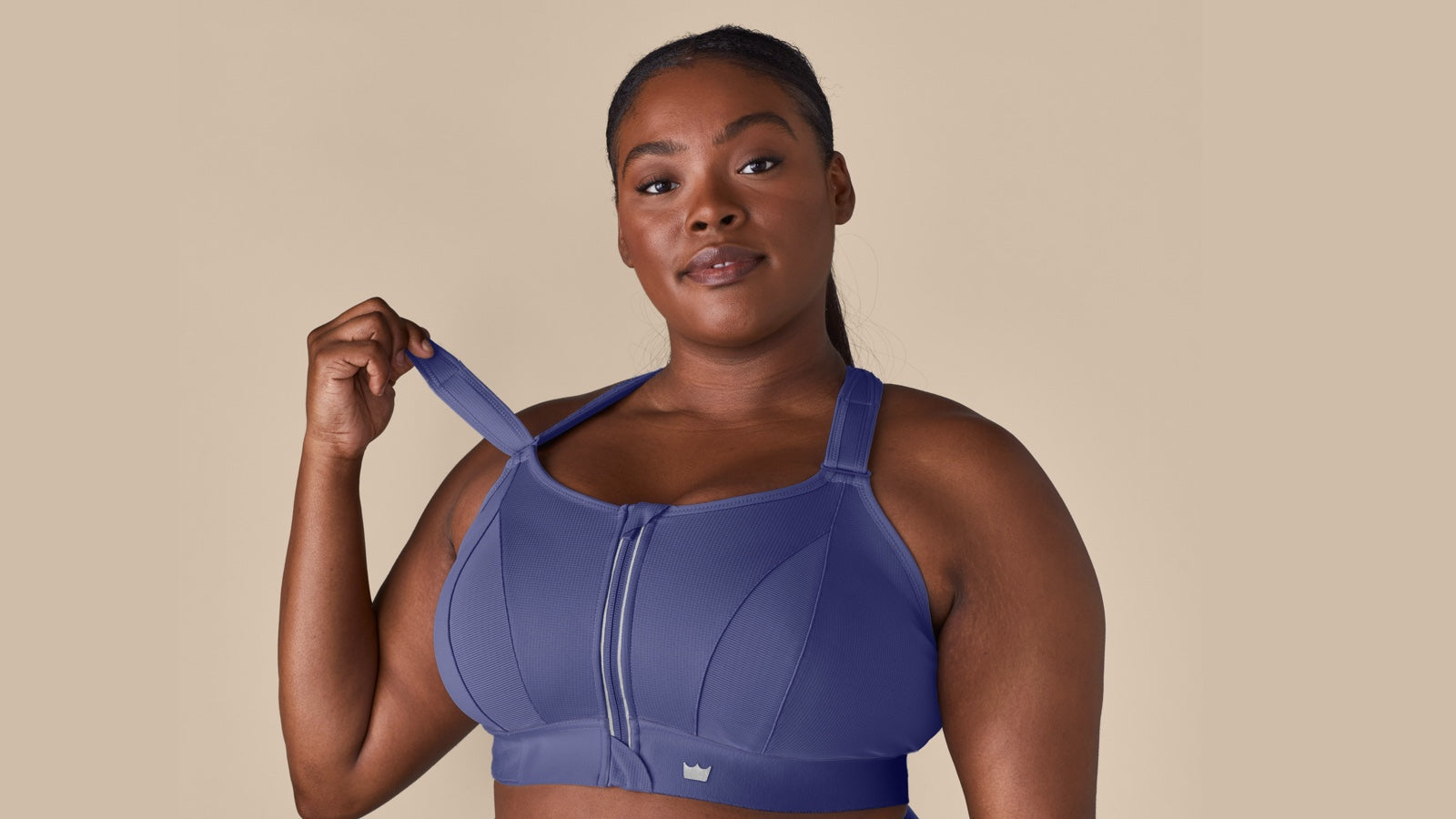
Full-figure sports bras use either encapsulation (separating each breast into individual structured cups) or compression (holding the breasts tightly against the chest wall). Encapsulation sports bras are superior for high cup volumes, as they control breast movement in three dimensions—vertical, lateral, and anterior-posterior—preventing strain on the Cooper's ligaments during physical activity.
Style Comparison Matrix
| Bra Style | Core Support Mechanism | Ideal Breast Shape / Tissue Type | Best Outerwear Pairing |
|---|---|---|---|
| Full Coverage | Multi-panel seamed cups, tall center gore | Soft tissue, full top/bottom volume, pendulous shape | T-shirts, sweaters, tailored button-down shirts |
| Balconette | Bottom-up lift, vertical seams, wide wire placement | Shallow top volume, firm tissue, broad chest roots | Square-neck tops, wide crewnecks, open necklines |
| Plunge | Angled side support, low center bridge | Close-set breasts, full outer volume | V-neck tops, low-cut dresses, wrap tops |
| Wireless / Soft Cup | Wide elastic base band, internal side slings | Sensitive skin, ribs prone to pressure, lower activity | Loungewear, casual clothing, work-from-home wear |
| Encapsulation Sports | Rigid outer frame, individual molded cups | Heavy volume requiring multi-directional control | Athletic wear, high-impact exercise, active work |
Technical Engineering Features in High-Support Bras
When evaluating garments, look for specific construction elements that separate high-grade full-figure lingerie from basic commercial garments.
- ANATOMY OF FULL-FIGURE SUPPORT:
- Wide Shoulder Strap
- Multi-Panel Seam
- Encased Underwire
- Wide Power-Mesh Wing (3-4 Hook Closure)
Seamed Cups vs. Molded Foam Cups
- Molded (Seamless) Cups: Formed from a single piece of heat-shaped foam or synthetic fabric. While they present a smooth silhouette under tight clothing, molded foam has physical limits—it cannot easily be contoured to hold heavy tissue inward, often flattening or pushing tissue out toward the armpits.
- Seamed (Cut-and-Sew) Cups: Constructed from two, three, or four distinct fabric panels sewn together. Seamed cups provide superior structural integrity, lift, and shaping. A 3-part cup with a vertical bottom seam and a diagonal top seam naturally projects the bust forward while holding the sides firm. A side-support panel (4-part cup) pulls tissue from the armpit area into the front center of the garment.
Hook-and-Eye Band Closures
Full-figure bras should feature at least 3 to 4 rows of vertical hooks and eyes. The width of the back closure ensures that the band does not dig into the back muscles or twist under movement. Always fit a new bra on the outermost (loosest) hook row. As the elastic gradually relaxes over months of wear, you can move the fastening inward to maintain consistent tension.
Strap Width and Placement
Straps should be wide, padded across the shoulder apex, and resistant to excessive stretching. In high-support bras, the front half of the shoulder strap is often made from non-stretch fabric, while the back half contains adjustable elastic. Centered strap designs ("leotard back" or "U-back") prevent straps from slipping off sloping or narrow shoulders.
Troubleshooting Common Full-Figure Bra Fitting Problems
Proper fit requires continuous adjustment as body weight, muscle tone, and age naturally alter tissue distribution. Below are common signs of fit failure and their practical solutions.
Issue 1: Shoulder Straps Digging Into Skin
- Root Cause: The band size is too large. When the back band is loose, it slides up the back, causing the entire weight of the bust to hang from the shoulder straps.
- Correction: Reduce your band size by one step (e.g., from 40DD to 38E). Remember that when you drop a band size, you must step up one cup size to maintain the same cup volume (known as sister sizing).
Issue 2: Spillage or "Quad-Boobing"
- Root Cause: The cups are volumetrically too small, forcing breast tissue to spill over the top edge or out near the armpits.
- Correction: Increase your cup size by at least one to two letters while keeping your band size constant (e.g., move from 38DD to 38F). Ensure that all breast tissue is scooped into the cup from the sides during fitting.
Issue 3: Center Gore Floating Away from Chest
- Root Cause: The cups are too shallow or too small, pushing the entire bra structure away from your body so the underwire cannot sit flat on the sternum.
- Correction: Increase the cup size until the center bridge tacks against the sternum without pressing painfully into the tissue.
Issue 4: Underwires Poking or Pinching
- Root Cause: Either the cup size is too small (causing the end of the wire to press directly onto breast tissue in the armpit) or the wire width is too narrow for your breast root.
- Correction: Try a larger cup size to extend the wire arc further back toward the mid-axillary line, ensuring the wire frames the breast tissue entirely without sitting on it.
Fabric Care, Maintenance, and Garment Longevity
Full-figure bras contain heavy-duty elastane (Spandex/Lycra) fibers and rigid poly-nylon structural linings. Proper maintenance extends garment performance and retains elastic memory.
- WASH: Hand wash in cool water with gentle soap.
- ROTATE: Rest bra for 24-48 hours between wears.
- DRY: Press out water with towel; air dry flat.
- STORE: Lay un-nested; never fold molded cups.
1. Washing Protocols
- Hand Washing: Soak garments in cold water using an alcohol-free, low-foaming liquid lingerie wash. Gently squeeze water through the cups and bands without wringing or twisting the underwires.
- Machine Washing (Alternative): If using a washing machine, place bras inside a zip-up mesh wash bag. Use only the gentle/delicate cycle with cold water and a neutral detergent. Never use fabric softeners, as they coat elastane fibers, degrading their elasticity and stretch recovery.
2. Drying and Storage
- Never Use Heat Dryers: Heat degrades elastane, causes plastic-coated metal underwires to snap, and warps molded foam cups.
- Air-Drying: Press excess water out of the bra by placing it between two clean towels. Hang the bra by its center gore over a drying rack, or lay it flat. Never hang a wet bra by its shoulder straps, as the weight of wet fabric stretches them permanently.
- Storage: Store bras flat in a drawer. Avoid folding molded foam cups inside out ("popping" one cup into the other), as this creases the foam and destroys the smooth outer profile.
Frequently Asked Questions
What is the primary difference between full-bust and full-figure bras?
Full-bust bras cater to individuals with smaller underbust frame sizes paired with high cup volumes (such as a 30G or 32H). Full-figure bras are designed specifically for individuals with both a larger band size (typically 38 and above) and larger cup volumes (D cup and above), incorporating wider side wings, heavier power-mesh fabrics, and broader back closures to support greater total torso mass.
How often should a full-figure bra be replaced?
Under regular wear, a high-quality full-figure bra lasts between 6 to 12 months. Signs that a garment needs replacement include a loose band that slides up even on the tightest hook setting, stretched-out shoulder straps that will no longer stay adjusted, wavy or exposed underwires, and loss of fabric memory in the side wings.
Can a wireless bra provide sufficient support for larger cup sizes?
Yes, modern wireless bras can provide strong daily support if they are constructed with multi-panel seamed fabric, wide bottom bands, high-density side slings, and non-stretch inner linings. While wireless models offer a softer, more rounded profile than wired designs, high-performance soft cups provide reliable comfort for daily activities.
Why do underwires break or poke through fabric in full-figure bras?
Underwires typically break or wear through their fabric casings when the bra band is too loose or the cup size is too small. If the band moves against the body throughout the day, the constant friction wears down the channel stitching. Additionally, forced strain from wearing a cup size that is too small places outward pressure on the metal wire tips, eventually forcing them through the seam.
How many bras should be in a standard daily rotation?
A functional rotation consists of at least three to four everyday bras. Alternating days allows the elastane fibers in the band and wings 24 to 48 hours to relax and return to their natural state, significantly extending the lifespan of each garment compared to wearing the same bra on consecutive days.
Strategic Next Steps for Building Your Lingerie Wardrobe
Building a functional, comfortable lingerie collection relies on accurate measurement and selecting styles tailored to your routine.
- Take Baseline Measurements: Record your underbust and overbust measurements using a flexible tape, following the leaning method for accurate volumetric calculation.
- Audit Your Existing Wardrobe: Discard garments with warped underwires, stretched bands, or cups that cause tissue spillage.
- Establish a Core Rotation: Invest in three core styles to cover essential needs:
- Two seamed, full-coverage or balconette bras in neutral colors for daily wear.
- One smooth molded or spacer-foam bra for t-shirts and clingy knit fabrics.
- One encapsulation-style sports bra for physical activity and active movement.
- Verify the Fit on Delivery: When trying on new bras, always perform the "scoop and swoop" technique—pulling all lateral breast tissue forward into the cup—and ensure the band rests level across your back on the widest hook setting before adjusting the shoulder straps.