This guide pertains exclusively to undergraduate and graduate financial aid processes at Columbia University in the City of New York. Applicants seeking information regarding other institutions, such as Columbia College Chicago or Columbia University (Missouri), should verify specific institutional deadlines via their respective financial aid portals, as requirements vary significantly by location and governing body.
Navigating the financial aid landscape at an Ivy League institution requires precision, adherence to strict federal and institutional deadlines, and a deep understanding of the CSS Profile and FAFSA synchronization. For the 2026-2027 academic year, Columbia University maintains a commitment to meeting the full demonstrated financial need of its undergraduate students. However, missing a deadline can result in a reduction of institutional grant eligibility or a delay in the disbursement of funds.
Understanding the 2026-2027 Financial Aid Cycle
Financial aid at Columbia is determined by a holistic review of family financial circumstances. The process relies on two primary data points: the Free Application for Federal Student Aid (FAFSA) and the College Scholarship Service (CSS) Profile.
For the 2026-2027 cycle, applicants must understand that while federal data is processed through the FAFSA, Columbia’s institutional aid—which often constitutes the bulk of a student's package—is primarily influenced by the CSS Profile. You must submit these forms in accordance with the university’s specific admission round.
Key Deadlines for Undergraduate Applicants
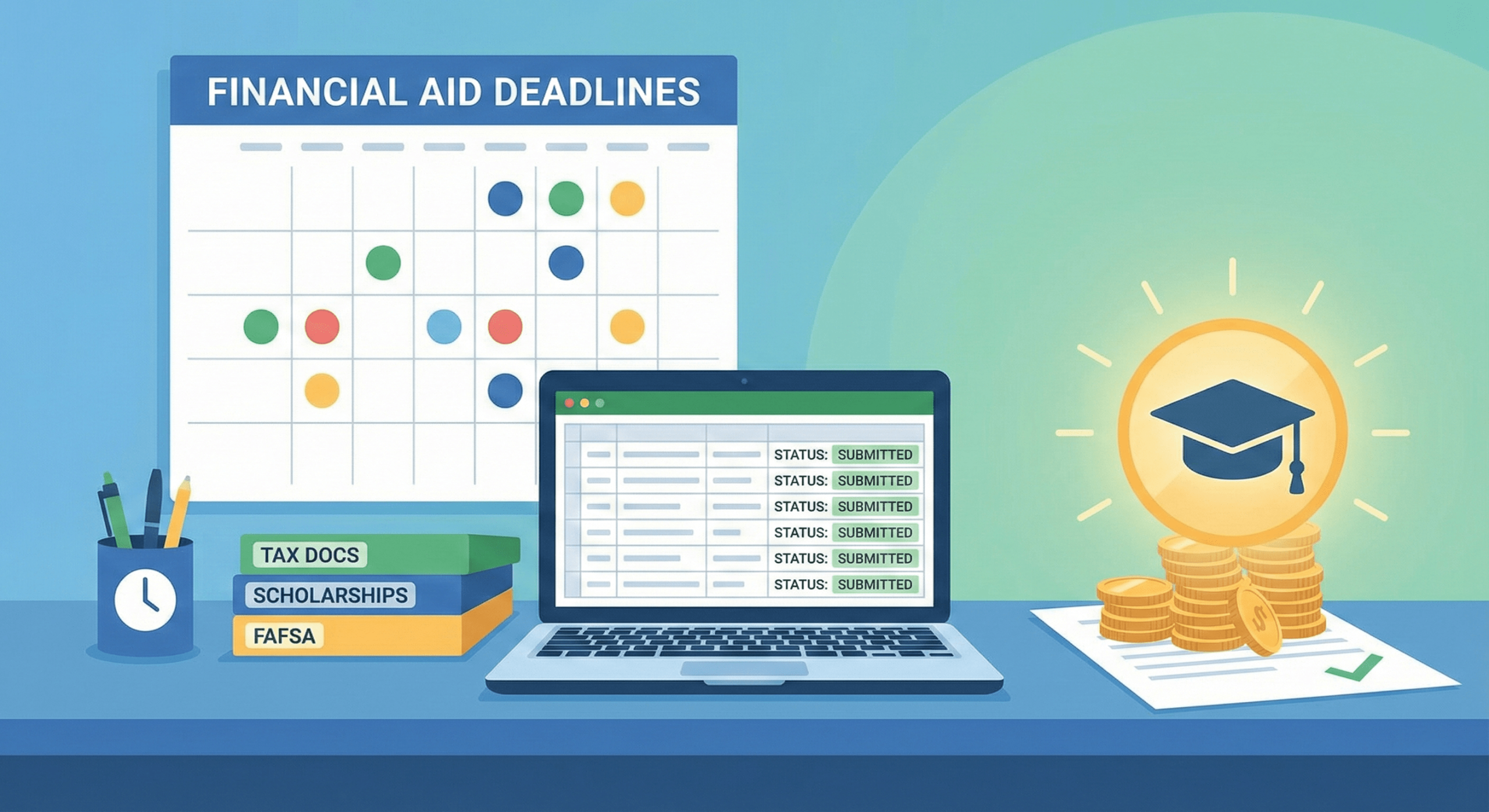
The following table outlines the priority filing deadlines for the 2026-2027 academic year. Note that these are "on-time" deadlines; documents submitted after these dates may face processing delays that impact initial award notifications.
| Admission Round | FAFSA Deadline | CSS Profile Deadline | Notification Timeline |
|---|---|---|---|
| Early Decision | November 1, 2025 | November 1, 2025 | Mid-December 2025 |
| Regular Decision | February 15, 2026 | February 15, 2026 | Late March 2026 |
| Transfer Students | March 15, 2026 | March 15, 2026 | Late May 2026 |
Important Compliance Note
Institutional Document Submission Candidates are required to upload all supporting tax documents via the IDOC (Institutional Documentation Service) portal once the initial applications are submitted. Failure to link these documents will stall your file review indefinitely. Ensure all W-2 forms, federal tax returns, and verification worksheets for the 2024 tax year are uploaded in a clear, legible PDF format.
Strategic Steps for a Successful Financial Aid Application
Securing the maximum possible aid package requires more than just meeting the deadline. It requires technical accuracy in data entry and proactive communication with the Columbia Financial Aid Office.
- Verify Your Data: Ensure your FAFSA information matches your CSS Profile data exactly. Discrepancies in reported assets, income, or household size frequently trigger verification requests, which stop the aid determination process.
- Handle Non-Custodial Parent Forms: If your parents are divorced or separated, Columbia typically requires a Non-Custodial Parent Profile. Ensure the non-custodial parent has access to their own College Board account to complete this requirement by the deadline.
- Monitor the Financial Aid Portal: Once your application is received, Columbia will grant you access to a secure student portal. This portal serves as your single source of truth for missing items, award status, and verification requirements.
- Report External Scholarships: If you receive private scholarships, you are contractually obligated to report these to the financial aid office. While these may reduce your "self-help" component (work-study or loans) before impacting your institutional grant, failure to disclose them can lead to over-award situations that necessitate the return of funds.
Nuances of Institutional vs. Federal Aid
It is essential to distinguish between the types of aid Columbia offers. Federal aid is governed by Department of Education formulas, while Columbia’s internal funds are based on their specific "Need Analysis" methodology.
Understanding the Methodology
Columbia’s methodology often accounts for home equity and business assets differently than the federal government. Do not be surprised if your Expected Family Contribution (EFC) or Student Aid Index (SAI) appears higher on the CSS Profile than it does on the FAFSA. The university uses the more comprehensive Profile to ensure that aid is distributed equitably across the student body based on their internal assessment of your family's financial capacity.
Handling Changes in Circumstances
The 2026-2027 filing cycle uses 2024 tax data (the "prior-prior" year). If your family’s financial situation has changed significantly since 2024—such as job loss, medical catastrophe, or a change in marital status—you should submit an "Appeal for Reconsideration" form. This is not a request for more aid; it is a request for a professional judgment review based on current, verified financial reality.
Comparison of Common Financial Aid Filings
| Document | Primary Purpose | Agency | Deadline Sensitivity |
|---|---|---|---|
| FAFSA | Federal loans/Pell Grants | Department of Education | High |
| CSS Profile | Institutional Grants | College Board | Extreme |
| IDOC | Tax Verification | College Board | High |
| W-2/1099 Forms | Proof of Income | IRS / Employer | Moderate |
Frequently Asked Questions
What happens if I miss the February 15, 2026 deadline for Regular Decision?
Missing the deadline does not automatically disqualify you, but it significantly reduces your chance of receiving a full aid package on time. Late applications are processed on a rolling basis, meaning you may not receive your financial aid offer until after your admission decision has been rendered.
Does Columbia meet 100% of demonstrated need for all students?
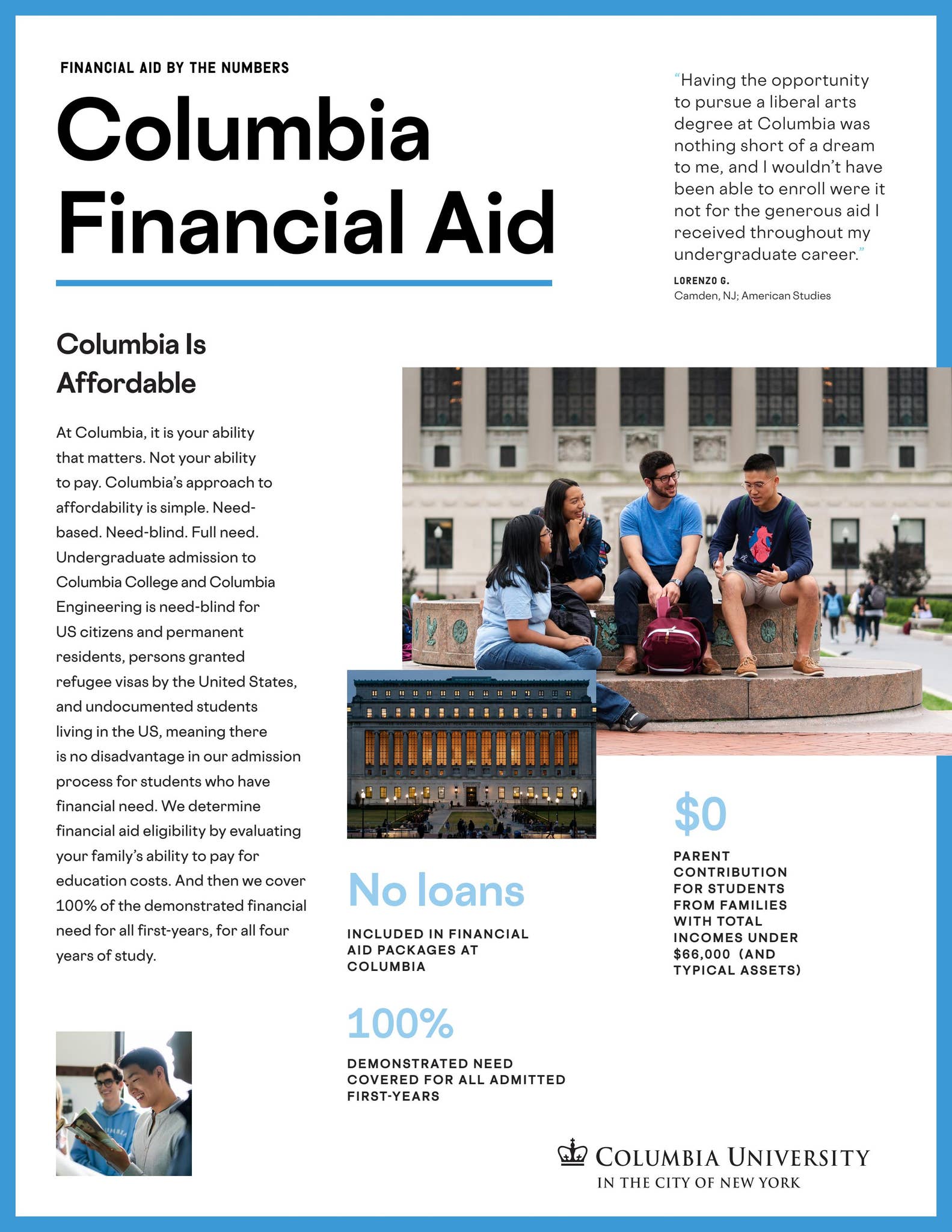
Yes, Columbia University is committed to meeting 100% of the demonstrated financial need for all admitted undergraduate students, including international students, for the duration of their four-year degree, provided the student maintains satisfactory academic progress.
Do I need to re-apply for financial aid every year?
Yes, you must submit a new FAFSA and CSS Profile annually. While your award is generally stable, changes in family income or the number of siblings enrolled in undergraduate college will necessitate a recalculation of your aid package for each academic year.
Can international students apply for the same financial aid as domestic students?
Yes, Columbia practices need-blind admission for all applicants, including international students. If you apply for aid as an international student, your financial situation will not negatively impact your chances of admission.
What is the Student Aid Index (SAI) and how does it affect my award?
The SAI is a number derived from your FAFSA data that indicates the amount a family can reasonably be expected to contribute toward education costs. Columbia subtracts this from the total Cost of Attendance (COA) to determine your remaining "Need."
Expert Tips for Managing Your Aid Package
To maintain optimal standing, treat your financial aid office interaction like a professional business transaction. Always include your Columbia ID (PID) number on all correspondence. If you are uploading documents to IDOC, check that the pages are oriented correctly and that no sensitive information (like full Social Security numbers, if not requested) is unnecessarily exposed.
If you are a student planning for the 2026-2027 term, ensure you have gathered your 2024 tax documentation well in advance of the winter holidays. This allows you to resolve any technical issues with the CSS Profile or FAFSA systems before the peak-traffic periods in January and February. By preparing early, you ensure your financial aid offer arrives in sync with your admissions notification, providing you with the data necessary to make an informed enrollment decision.
For additional guidance, visit the official Columbia University Student Financial Services website to access their interactive "Net Price Calculator," which can provide a preliminary estimate of your aid package based on current 2026 guidelines.