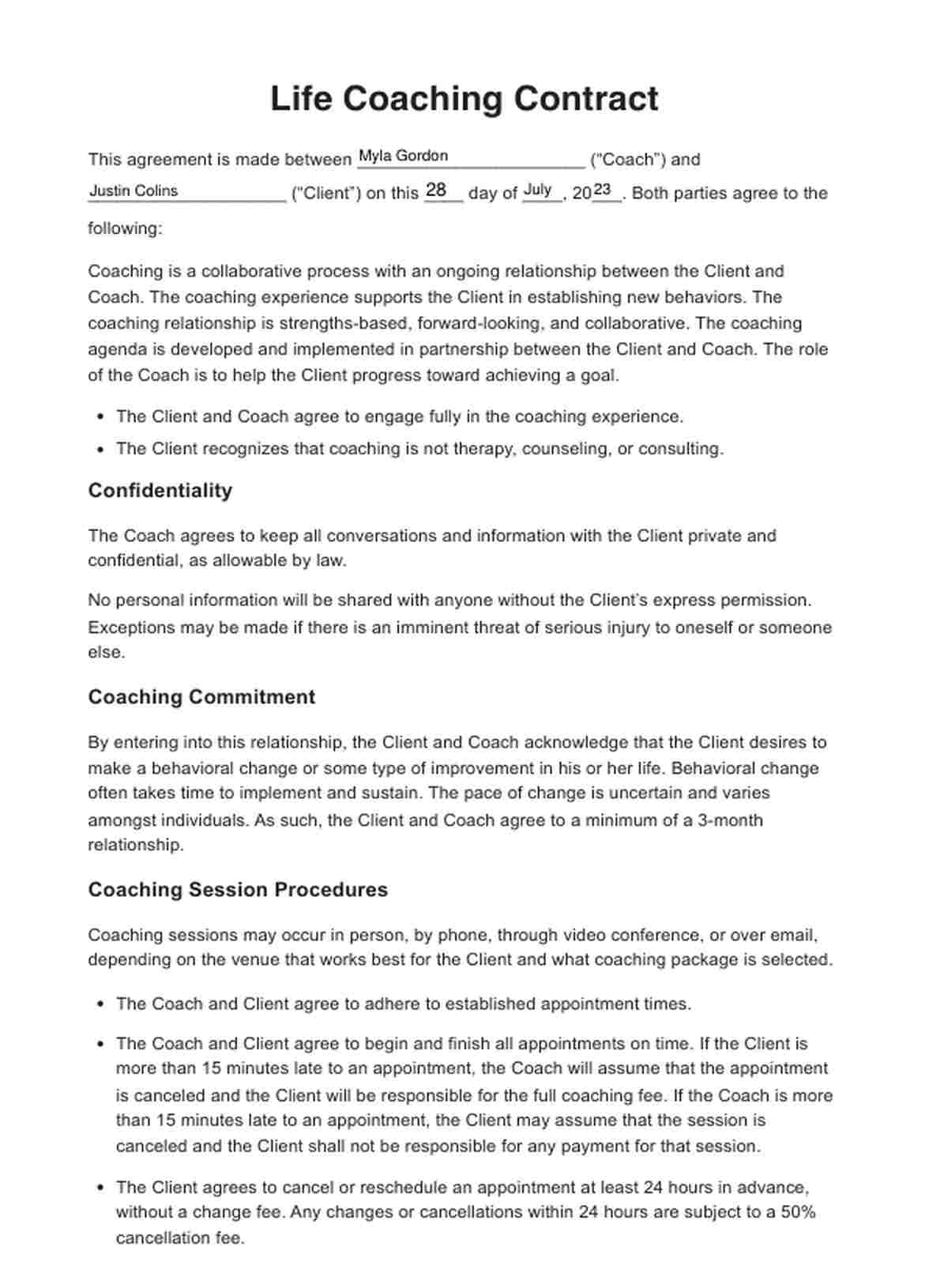
A professional coaching contract is a legally binding agreement that defines the scope, expectations, financial arrangements, and boundaries of the coaching relationship. It serves to protect both the coach and the client by clarifying the nature of the service, establishing professional accountability, and providing a framework for dispute resolution should expectations fail to align.
Understanding the Purpose of Coaching Agreements
In the coaching industry, a contract—often referred to as a coaching agreement or letter of engagement—is the foundation of professional practice. Unlike therapy or consulting, which may have specific clinical or project-based regulations, coaching often operates in a field with varying levels of oversight. A written contract functions as a risk management tool that mitigates ambiguity regarding what the coach will and will not do.
By formalizing the arrangement, both parties acknowledge the voluntary nature of the coaching process. The document outlines the specific goals the client intends to achieve, the duration of the engagement, and the frequency of sessions. Furthermore, it establishes the standard of conduct for the relationship, which helps maintain professional integrity and ensures that the client understands that the coach is not assuming the role of a licensed therapist or financial advisor.
Core Components of a Comprehensive Contract
A robust coaching contract must address several critical areas to be enforceable and effective. While templates exist, they must be tailored to the specific niche of the coach, whether it involves executive, life, health, or business coaching.
- Service Scope: Clearly define the coaching services provided. Specify whether sessions are conducted via video conferencing, phone, or in person, and define the boundaries of the coach’s support outside of these sessions.
- Payment Terms: Detail the fees, payment schedules, and accepted methods of payment. Include clear language regarding late fees, taxes, and refunds.
- Cancellation and Rescheduling Policy: Protect the coach’s time by outlining a mandatory notice period (e.g., 24 or 48 hours) for cancellations, specifying if late cancellations result in the forfeiture of the session fee.
- Confidentiality Provisions: Explicitly state the limits of confidentiality. While coaches generally keep information private, they must disclose legal obligations, such as instances involving potential self-harm, harm to others, or illegal activities.
- Disclaimers and Liability: Include a clear disclaimer stating that coaching is not a substitute for medical, legal, or psychological professional services. This section limits the coach’s liability regarding the client’s personal or professional outcomes.
Comparison of Contract Elements by Coaching Niche
The requirements for a contract can shift significantly depending on the client’s goals and the industry of the coach. The following table provides a comparison of how focus areas typically influence contract structure.
| Contract Element | Executive Coaching | Life Coaching | Business Coaching |
|---|---|---|---|
| Privacy Scope | High (Corporate NDA) | Moderate (Personal) | High (Trade Secrets) |
| Primary Goal | Leadership/Performance | Personal Development | Revenue/Strategy |
| Liability Focus | Professional Misconduct | Mental/Emotional Scope | Financial/Risk Advice |
| Termination | Usually via Company | Usually by Client | Usually Project-Based |
Establishing Boundaries and Ethical Standards
One of the primary reasons to utilize a formal contract is to delineate the boundary between coaching and other professional services. Coaches often work with clients who are facing significant life challenges, and it is imperative that the client understands that a coach is not a substitute for a therapist, psychiatrist, or legal counselor.
If the coach discovers that a client’s needs exceed the coach’s scope of practice, the contract should contain a clause permitting the coach to terminate the engagement and provide referrals to appropriate professionals. Ethical coaching bodies, such as the International Coaching Federation (ICF), emphasize the importance of professional standards, and having a written agreement acts as the primary document to reference if an ethical dilemma arises.
Addressing Intellectual Property and Data Protection
In 2026, the rise of digital coaching platforms and proprietary content makes intellectual property (IP) protection increasingly important. If you are providing workbooks, exercises, or proprietary methodologies, the contract should explicitly state that these materials remain the intellectual property of the coach and that the client is granted a limited license for personal use only.
Additionally, with the global focus on data privacy, ensure your contract complies with relevant regional regulations. If you collect sensitive data or store session recordings, you must disclose how this information is collected, stored, and eventually destroyed. The agreement should serve as the primary notice to the client regarding their digital privacy rights within the coaching context.
Common Pitfalls to Avoid
Even with a formal document, coaches often face issues due to poorly drafted or ignored agreements. A common mistake is using a "one-size-fits-all" template found online without customizing it to local jurisdictional laws. Legal requirements for contracts vary by country and state, particularly regarding consumer protection laws and digital signature validity.
Another pitfall is the failure to review the contract with the client during the intake session. A contract that is signed but never discussed loses much of its value as a tool for setting expectations. Use the signing process as an opportunity to walk the client through the cancellation, refund, and confidentiality policies, ensuring they truly understand the terms they are agreeing to.
Handling Disputes and Termination
Despite clear communication, disputes occasionally arise. Your contract should include a clear "dispute resolution" clause. This often requires the parties to attempt mediation before escalating to legal action. Clearly defining how to handle premature termination—whether by the coach or the client—prevents messy financial disputes. For instance, determine if the client is entitled to a prorated refund if they choose to stop coaching mid-contract, or if the fees are non-refundable as a matter of policy.
Next Actions for Implementation
To implement an effective coaching contract, begin by consulting with a legal professional in your specific jurisdiction to ensure your template meets all local requirements. Once you have a verified template, integrate it into your automated onboarding process. Using secure, timestamped e-signature platforms is the industry standard for 2026, as it provides an immutable record of the agreement. Periodically review your contracts to ensure they reflect any changes in your service offerings or current business regulations, ensuring that your practice remains both legally protected and professional.
Frequently Asked Questions
Is a verbal agreement considered a binding coaching contract?
While verbal agreements can be legally binding in some jurisdictions, they are rarely sufficient for professional coaching. Relying on them creates significant evidentiary issues if a dispute over fees, cancellation policies, or scope of service arises. A written contract is essential for clarity and professional protection.
Do I need to consult a lawyer to draft my coaching contract?
Yes, it is highly recommended. While you can find templates online, legal requirements—especially regarding consumer protection and professional liability—differ by jurisdiction. A lawyer ensures that your specific service offerings are protected and that the language used is enforceable in your region.
What should I do if a client refuses to sign the contract?
You should not begin the coaching engagement. A client’s refusal to sign a standard, fair contract is a significant red flag regarding their commitment to the process and their willingness to respect professional boundaries. Protecting your practice means maintaining a consistent policy that no services are rendered without a signed agreement.
How do I handle contract updates for existing clients?
If you need to change terms for ongoing clients, draft an amendment or a new agreement. Present it to the client, explain the reasoning for the update, and request a signature before the new terms go into effect. Never force changes without transparent communication and documented consent.
Can I include a non-compete clause in my coaching contract?
Enforceability of non-compete clauses varies drastically depending on local labor and employment laws. In many regions, they are difficult to enforce in a service-based consulting relationship. Consult with a legal professional to determine what is reasonable and legally binding in your specific location.