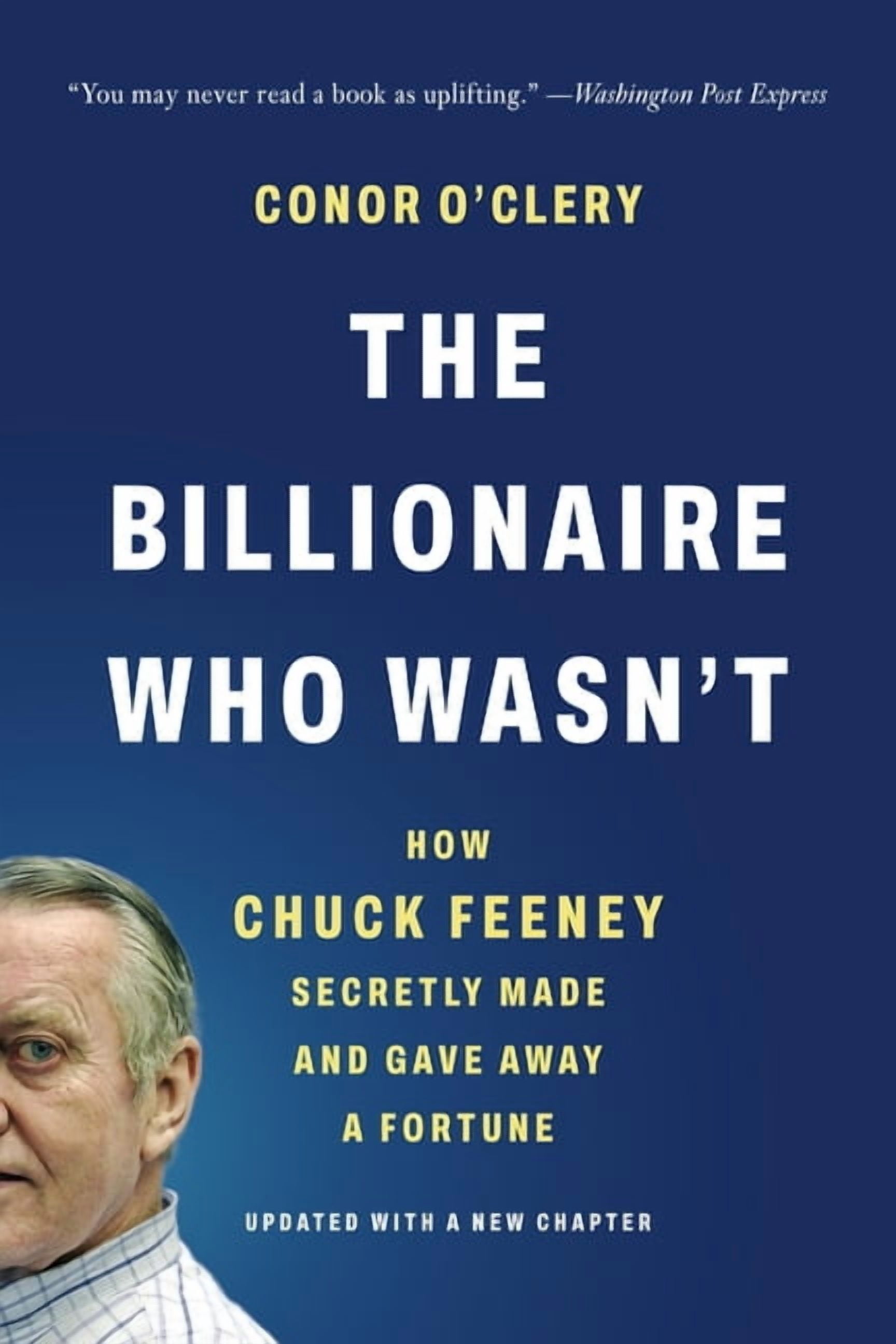
Chuck Feeney, the co-founder of Duty Free Shoppers (DFS), achieved notoriety not for the accumulation of his wealth, but for the radical strategy of giving it all away during his lifetime. By the time of his passing in 2023, his personal net worth had effectively been reduced to a negligible sum, as he had donated more than $8 billion to charitable causes through his foundation, The Atlantic Philanthropies. Feeney redefined the concept of "giving while living," prioritizing active impact over the static accumulation of an endowment.
The Origins of Duty Free Shoppers and Wealth Accumulation
To understand the scale of Feeney’s philanthropy, one must first recognize the source of his capital. Born in New Jersey in 1931, Feeney served as a radio operator in the U.S. Air Force during the Korean War before attending Cornell University on the GI Bill. Alongside his classmate Robert Warren Miller, he identified a lucrative gap in the international travel market. In 1960, they co-founded Duty Free Shoppers, a retail operation designed to sell luxury goods to travelers without the burden of import taxes.
The business model was simple yet highly effective: target international tourists, primarily from Japan, at transit hubs and city-center locations. As global travel expanded exponentially through the 1970s and 1980s, DFS became a retail empire. Feeney’s share of the profits grew into a multi-billion-dollar fortune. Despite his immense success, Feeney was famously frugal, living a modest lifestyle that stood in stark contrast to the traditional billionaire archetype. His focus remained on expansion and efficiency within the business, providing the bedrock for what would later become one of the most ambitious philanthropic endeavors in history.
The Atlantic Philanthropies: A Strategy of Giving While Living
In 1982, Feeney established The Atlantic Philanthropies. While many high-net-worth individuals create foundations intended to exist in perpetuity, Feeney operated under a different mandate. He believed that the world’s most pressing problems required immediate attention, and that waiting for compound interest to grow a fund over several decades was a waste of time and human potential.
The foundation functioned with a "spend-down" philosophy. This meant that, rather than investing the bulk of its capital to grant only the interest, the organization aggressively allocated its principal toward transformative projects. By the time the foundation concluded its grant-making operations, it had funneled over $8 billion into global health, education, civil rights, and social justice. This approach necessitated a lean organizational structure, as the objective was to move money into the hands of effective practitioners as quickly as possible.
Key Focus Areas of Philanthropic Impact
The deployment of $8 billion required a strategic, albeit diverse, range of focus areas. Feeney’s contributions were rarely small, scattered donations; they were often massive, structural investments designed to alter the trajectory of entire institutions or policy landscapes.
| Sector | Focus of Investment | Impact Type |
|---|---|---|
| Education | Large-scale infrastructure & research funding | Institutional transformation |
| Global Health | Medical research & public health infrastructure | Systemic capacity building |
| Human Rights | Advocacy for marriage equality & legal reform | Societal change |
| Peace Building | Funding for the Northern Ireland peace process | Conflict resolution |
In Ireland, Feeney’s influence was profound. He became one of the largest private donors in the nation’s history, funding universities and research centers that elevated the country’s standing in the global knowledge economy. In the United States, his investments in public health and medical research helped establish the foundation for modern breakthroughs. Perhaps his most controversial and high-impact work was in the field of civil rights, where he provided early and substantial funding for the campaign to achieve marriage equality in the United States.
The Contrast of Wealth and Minimalism
While Feeney’s net worth originated in the millions and climbed into the billions, his personal spending remained remarkably low. He famously eschewed the trappings of billionaire life—no private jets, no mansions, no luxury yachts. Even as his charitable giving reached the billions, he reportedly lived in rented apartments and traveled via economy class.
This behavior was not a performance; it was a reflection of his internal values. He viewed his wealth not as a personal asset to be enjoyed, but as a tool to be utilized. He believed that the accumulation of extreme wealth could be a barrier to clarity and effective decision-making. By maintaining a simple life, Feeney ensured that his focus remained entirely on the efficiency and impact of his philanthropic work, avoiding the social and logistical distractions that often accompany extreme wealth.
The "Spend-Down" Legacy: Why It Matters
Feeney’s model of the "spend-down" foundation is increasingly studied by modern philanthropists. The traditional model of a permanent endowment often results in foundations that act more as financial institutions than as change agents. By contrast, the Atlantic Philanthropies showed that a temporary organization can achieve rapid, large-scale results by being unencumbered by the need to maintain its own existence.
The challenges associated with this model are significant. It requires a high level of trust in the executors of the funds and a willingness to accept that the organization will eventually cease to exist. However, the benefits are clear: maximum impact at the time of greatest need. Feeney essentially argued that the problems faced by society today—climate change, healthcare disparities, and inequality—are too urgent to wait for the future, and therefore, resources should be liquidated and deployed in the present.
Frequently Asked Questions
How much was Chuck Feeney’s final net worth before he passed?
By the time of his death in 2023, Feeney had essentially reduced his net worth to zero, aside from a small amount reserved for his basic living expenses. He had successfully fulfilled his life goal of donating virtually his entire fortune.
How did Chuck Feeney give away his money?
Feeney channeled his wealth through The Atlantic Philanthropies. This foundation operated as a "spend-down" entity, which intentionally liquidated its assets to fund specific, high-impact projects in education, health, and human rights, rather than keeping the principal as an endowment.
Did Chuck Feeney regret giving away all his money?
There is no public record of Feeney expressing regret. To the contrary, he consistently spoke about the satisfaction he derived from "giving while living" and seeing his resources make a tangible difference in the world while he was still alive to witness the impact.
Was The Atlantic Philanthropies a private or public foundation?
It was a private foundation. Because of its private status, Feeney was able to maintain control over the strategic direction of the funds, allowing him to take calculated risks on sensitive political or social issues that larger, more conservative institutions often avoided.
How does Feeney’s strategy influence modern billionaires?
Feeney’s influence is evident in modern giving pledges. He shifted the conversation from "How much will I give in my will?" to "How much of my wealth can I deploy effectively right now?" His approach has encouraged many ultra-high-net-worth individuals to set firm deadlines for the distribution of their assets.
Taking Action: Applying the Principles of Effective Giving
If you are considering how to structure your own philanthropic efforts, Feeney’s life offers several actionable lessons. You do not need to possess billions to adopt the principle of "giving while living."
- Define Your Impact Goal: Identify the specific societal, environmental, or educational change you wish to influence. Narrowing your scope allows for deeper, more effective investments.
- Prioritize Urgency: Evaluate whether your resources would be more effective if deployed now or saved for the future. For many, the problems of the present are the priority.
- Minimize Overhead: Whether managing a small donor-advised fund or a large foundation, focus on moving resources to the front lines rather than building an institutional bureaucracy.
- Practice Frugality: Adopting a lean personal budget can increase the capital available for your charitable goals and help maintain a focus on your stated mission rather than lifestyle maintenance.
By focusing on the immediate application of resources, you can ensure that your contribution, regardless of size, creates a measurable difference within your own lifetime.