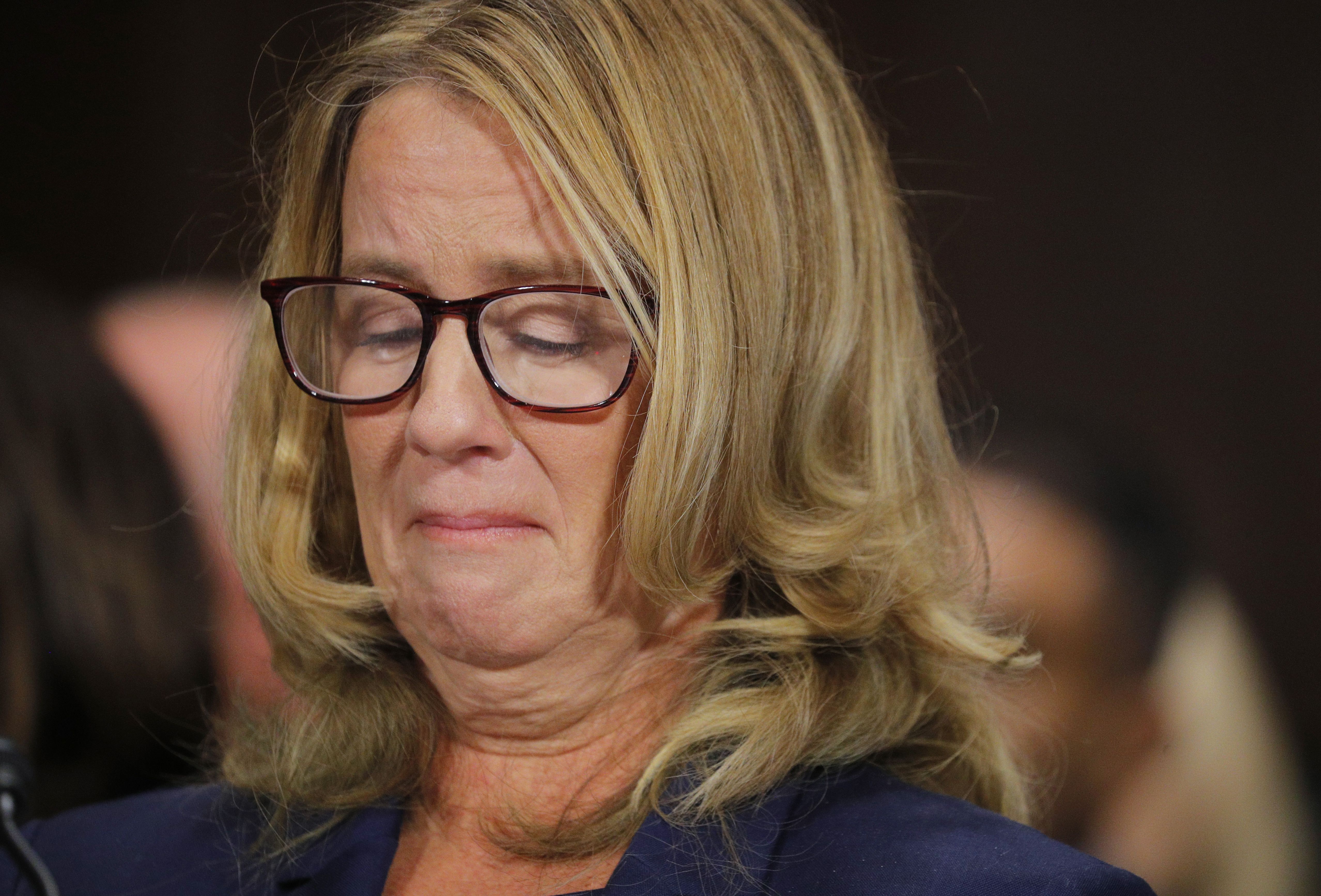
As of 2026, Dr. Christine Blasey Ford is not scheduled to testify in any new or ongoing legal proceedings related to the 2018 Supreme Court confirmation hearings. Her historic testimony took place on September 27, 2018, before the Senate Judiciary Committee. While she remains a significant figure in public discourse, her primary recent contributions have shifted from the witness stand to literature and academia, notably through her 2024 memoir, One Way Back.
The question of whether Dr. Christine Blasey Ford will testify again often arises during shifts in the political landscape or when new information regarding Supreme Court ethics or historical investigations surfaces. To understand the current status of her involvement in the legal system, one must look at the specific nature of the 2018 hearings, the subsequent investigations, and the legal finality of the confirmation process. Dr. Ford’s testimony was a pivotal moment in American judicial history, and while the door for civil litigation or new congressional oversight is never theoretically closed, there are currently no active subpoenas or voluntary appearances scheduled for the 2026 calendar year.
The Historical Context of the 2018 Senate Testimony
In September 2018, the United States was transfixed by the confirmation process of then-Judge Brett Kavanaugh to the Supreme Court. Dr. Christine Blasey Ford, a professor of psychology at Palo Alto University, came forward with allegations of sexual assault dating back to the early 1980s. Her decision to testify was not a legal requirement at the outset but became a focal point of the Senate’s "advice and consent" role.
The hearing held on September 27 was a marathon session of emotional testimony. Dr. Ford’s appearance was characterized by her detailed account of an incident in suburban Maryland during their high school years. For researchers and legal analysts in 2026, this event is studied as a masterclass in the intersection of trauma-informed testimony and political theater. The Senate Judiciary Committee, then led by Chairman Chuck Grassley, utilized a specialized sex-crimes prosecutor, Rachel Mitchell, to conduct the questioning, highlighting the delicate procedural nature of the event.
The testimony was not a criminal trial. This is a critical distinction for anyone asking about future testimony. Because it was a confirmation hearing, the burden of proof and the rules of evidence differed significantly from a court of law. The objective was to determine fitness for a lifetime appointment, not to secure a criminal conviction. This distinction explains why, despite the gravity of the allegations, the testimony did not lead to immediate criminal charges, which would have required a different venue and a different set of procedural hurdles.
Legal Requirements and the Subpoena Process
For any individual to "testify," there must be a formal legal proceeding or an official inquiry. In the context of 2026, several factors influence whether someone like Dr. Ford would be called to the stand again.
- Congressional Inquiries: If a new session of Congress were to open an investigation into the 2018 FBI supplemental background check—which many critics argued was incomplete—Dr. Ford could theoretically be called as a witness. However, such inquiries are rare once a Justice is seated, as the focus usually shifts toward legislative reform or ethics oversight rather than relitigating past confirmations.
- Civil Litigation: In American law, the statute of limitations often dictates whether a case can proceed to a point where testimony is required. Different states have varying "lookback windows" for survivors of sexual assault to file civil suits. While Dr. Ford has not pursued a civil path that would lead to a 2026 trial, the legal framework for such actions remains a topic of academic discussion.
- Criminal Prosecution: For criminal testimony to occur, a prosecutor would need to bring charges. Given the decades that have passed since the alleged events and the jurisdictional complexities involved, the likelihood of a criminal trial requiring Dr. Ford’s testimony is considered negligible by legal experts.
Impact of the 2024 Memoir: One Way Back
In March 2024, Dr. Ford published her memoir, One Way Back. This publication served as a definitive record of her experiences, effectively providing a "written testimony" to the public. The book detailed the lead-up to the 2018 hearing, the intense pressure of the four days surrounding the testimony, and the subsequent threats that forced her family into hiding.
The existence of this memoir changes the necessity for future testimony. Often, public figures use books to establish their narrative permanently, which can reduce the appetite for further public questioning. In the memoir, Dr. Ford clarified her motivations and the personal cost of her 2018 appearance. By 2026, the book has become a primary source for historians, reducing the "information gap" that often drives calls for new testimony or interviews.
Comparing Testimony: Historical Precedents
To understand the weight of Dr. Ford’s testimony, it is often compared to that of Anita Hill in 1991. Both women testified before the Senate Judiciary Committee regarding Supreme Court nominees, and both changed the national conversation regarding harassment and assault.
| Feature | Anita Hill (1991) | Christine Blasey Ford (2018) |
|---|---|---|
| Nominee | Clarence Thomas | Brett Kavanaugh |
| Nature of Allegation | Workplace sexual harassment | Attempted sexual assault |
| Hearing Length | 3 Days | 1 Day (Specific to her) |
| Outcome | Nominee Confirmed (52-48) | Nominee Confirmed (50-48) |
| Subsequent Action | Academic/Advocacy focus | Memoir/Psychology research |
| New Testimony as of 2026 | None | None |
This table illustrates that once a confirmation process is finalized, the legal system rarely reverts to a phase where additional testimony from the original witnesses is required. The political and social impacts continue, but the formal "testifying" phase usually ends with the Senate vote.
Why New Testimony Is Unlikely in 2026
The structural reality of the U.S. government makes a repeat of the 2018 testimony highly improbable. The Supreme Court is a co-equal branch of government, and the "finality" of a confirmation is a cornerstone of judicial stability.
Furthermore, the "Me Too" movement, which was a significant cultural backdrop for Dr. Ford's appearance, has evolved into a more institutionalized form of advocacy. In 2026, the focus has moved toward legislative changes, such as the "Speak Out Act" and various state-level reforms regarding non-disclosure agreements (NDAs). Dr. Ford’s role has transitioned from an active witness to a symbol of these reforms. She has participated in various educational forums and supported survivors' rights groups, but these are voluntary speaking engagements, not sworn legal testimonies.
There is also the matter of personal privacy and safety. Following her 2018 testimony, Dr. Ford faced significant security threats. In her 2024 writings, she expressed the toll this took on her family life and professional career. Unless a legal mandate (like a federal subpoena) were issued, it is widely understood that she has fulfilled her perceived civic duty and would not seek out a return to the witness stand.
Understanding the Role of the FBI Supplemental Investigation
A lingering question for many is the "missing" testimony—the interviews that were never conducted during the 2018 supplemental FBI background check. Critics at the time, and some oversight committees in the years following, noted that the FBI did not interview Dr. Ford or Judge Kavanaugh during that specific one-week window.
In 2026, while the window for "completing" that investigation has effectively closed from a confirmation standpoint, it remains a subject of "congressional oversight." If a future administration or a specific Senate committee decided to investigate the process of the FBI’s work, they could call for depositions. However, these would likely focus on the FBI agents and Department of Justice officials involved in the 2018 scope-setting, rather than requiring Dr. Ford to repeat her 2018 account.
Common Misconceptions About Witnesses
It is a common misconception that high-profile witnesses are required to testify whenever a new "lead" or public discussion arises. In the American legal system, testimony is a specific act tied to a specific case.
- Voluntary Interviews vs. Sworn Testimony: Many confuse media interviews (like a "60 Minutes" appearance) with legal testimony. While Dr. Ford may choose to speak to the media in 2026, this does not constitute "testifying" in a legal or congressional sense.
- The Power of the Subpoena: A subpoena is a legal order to appear. In 2026, there are no active subpoenas for Dr. Ford. Without one, she cannot be forced to appear before a committee or court.
- Admissibility: Even if new evidence were found, the rules of the Senate Judiciary Committee are determined by the sitting Chairperson. The current 2026 legislative priorities do not suggest a reopening of the 2018 files.
Frequently Asked Questions
Has Christine Blasey Ford testified since 2018?
No, Dr. Ford has not provided sworn legal or congressional testimony since her appearance before the Senate Judiciary Committee on September 27, 2018. While she has written a book and given public speeches, these do not carry the same legal weight as sworn testimony under oath in a government proceeding.
Is there a trial involving Christine Blasey Ford in 2026?
There are no active or scheduled trials involving Dr. Ford as a plaintiff, defendant, or witness in 2026. The allegations she made in 2018 were presented during a Senate confirmation hearing, which is a legislative process, not a criminal or civil trial. No subsequent litigation has reached a stage requiring her testimony.
Can she be forced to testify again?
Yes, under specific circumstances, such as a congressional subpoena or a court order in a civil or criminal case. However, as of 2026, there is no active legal mechanism or open case that would justify the issuance of such an order. Subpoenas are typically reserved for active investigations where the witness has unique, relevant information.
What did Dr. Ford say in her 2024 book about future testimony?
In One Way Back, Dr. Ford reflects on the 2018 hearing as a "one-way" journey, suggesting that her goal was to fulfill her civic obligation rather than to enter a permanent state of litigation. She emphasized the importance of truth-telling but also highlighted the immense personal cost, which suggests she is unlikely to seek out further testimony unless legally compelled.
Why was her testimony not used in a criminal court?
The 2018 hearing was a personnel evaluation for a Supreme Court seat. For a criminal case to proceed, there must be a formal police report, an investigation by local or federal law enforcement, and charges filed by a prosecutor within the applicable statute of limitations. In Dr. Ford's case, these legal thresholds were not pursued to the point of a criminal trial.
Where is Dr. Ford now?
In 2026, Dr. Ford continues her work as a professor of psychology. She has become an advocate for trauma-informed education and has received various awards for her courage. She largely maintains a private life in California, coming into the public eye primarily for academic or survivor-advocacy events.
Recommended Actions for Legal Researchers
For those tracking the legal and historical implications of Dr. Ford’s involvement in the judicial system, the following steps are recommended:
- Consult the Official Transcripts: The most accurate record of her testimony remains the "Hearing on the Nomination of the Honorable Brett M. Kavanaugh to be an Associate Justice of the Supreme Court of the United States (September 27, 2018)." This is available via the Government Publishing Office (GPO).
- Review the Speak Out Act: Research how testimonies like Dr. Ford's influenced the 2022 Speak Out Act, which limits the enforceability of NDAs in sexual assault and harassment cases. This provides context on her legislative impact beyond the witness stand.
- Monitor Senate Judiciary Archives: Should there be any change in status, the Senate Judiciary Committee’s official website would be the first to announce new oversight hearings or witness lists.
- Academic Journals: In 2026, several psychological and legal journals have published peer-reviewed studies on the "Ford-Kavanaugh Effect" regarding witness credibility and public perception. These provide a more technical depth than standard news reports.