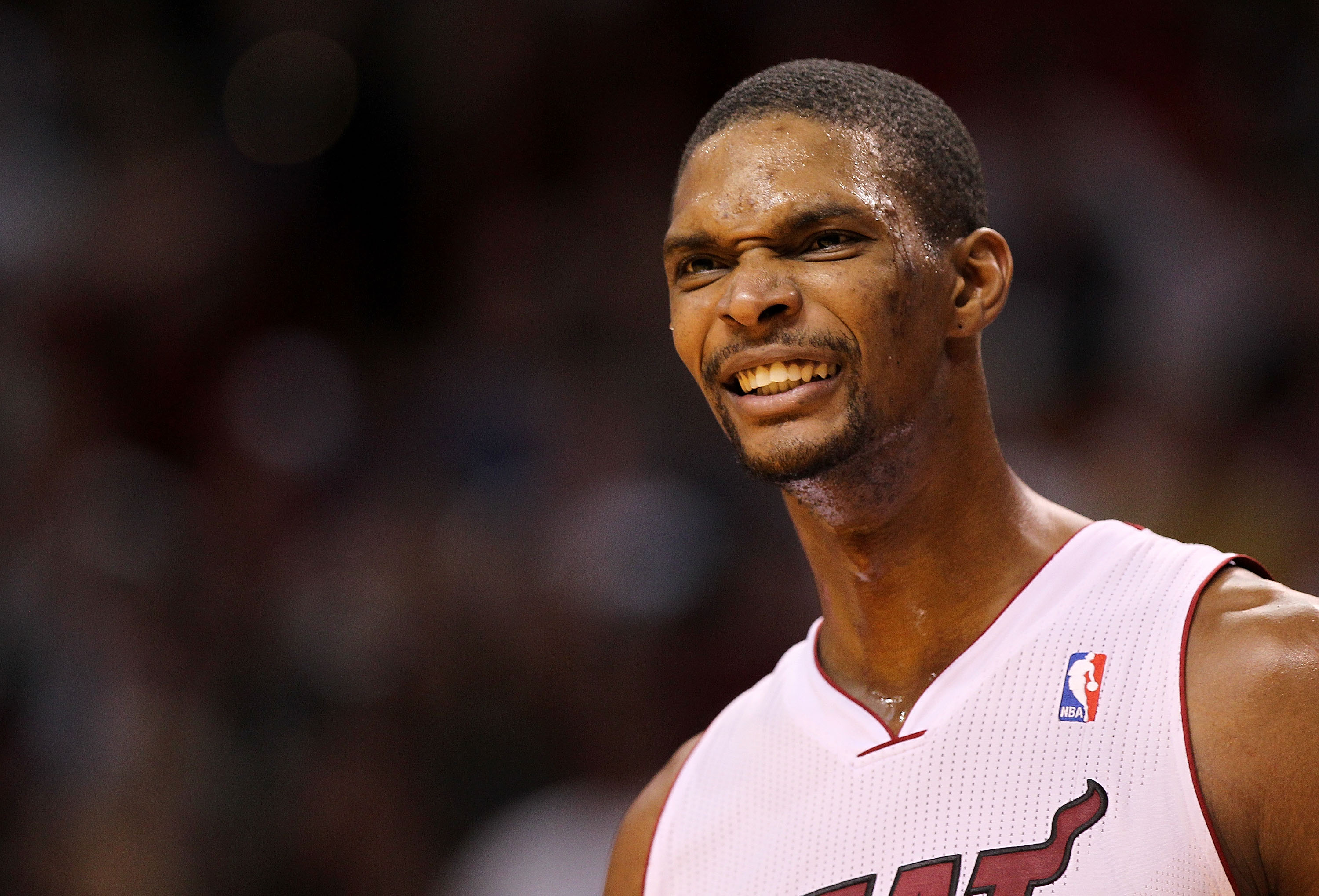
Chris Bosh is a retired professional basketball player widely recognized for his high-IQ style of play, technical evolution as a "stretch big," and his pivotal role in the Miami Heat’s championship era. His career transitioned from being a cornerstone franchise player for the Toronto Raptors to an essential tactical component in one of the NBA’s most successful "Big Three" lineups alongside LeBron James and Dwyane Wade.
The Early Years and Toronto Ascent
Drafted fourth overall in the 2003 NBA Draft—a class widely considered one of the deepest in league history—Chris Bosh began his career with the Toronto Raptors. During his seven seasons in Canada, Bosh emerged as one of the most efficient power forwards in the league. His early professional development was characterized by a rapid refinement of his mid-range jump shot and an ability to navigate the paint against established veterans.
By his second season, Bosh assumed the mantle of the franchise’s centerpiece. He led the Raptors to multiple playoff appearances, showcasing a rare combination of agility, perimeter shooting, and rim protection. During this tenure, he solidified his reputation as a "double-double" machine, consistently averaging over 20 points and 10 rebounds per game. This period of his career established the technical foundation that would later define his "stretch four" versatility, a prototype that eventually became the standard for modern NBA frontcourt players.
Tactical Evolution: The Miami Heat Era
In 2010, Bosh entered free agency and joined the Miami Heat, an move that fundamentally altered the tactical landscape of the NBA. The formation of the Big Three necessitated a shift in Bosh’s role. Whereas he was the primary offensive option in Toronto, he adapted into a secondary scoring role and the team’s primary floor spacer, allowing the Heat’s offensive scheme to maximize spacing for slashers like LeBron James and Dwyane Wade.
This transition was not merely statistical; it required a significant adjustment to his playstyle. Bosh focused heavily on his defensive awareness, particularly in pick-and-roll coverage, and expanded his shooting range beyond the three-point line. His tactical intelligence enabled the Heat to employ "small-ball" lineups, where Bosh operated as a mobile center capable of switching onto smaller guards defensively while pulling opposing rim protectors away from the basket on offense. This tactical flexibility was a cornerstone of the Heat's back-to-back championships in 2012 and 2013.
Statistical Impact and Notable Achievements
Throughout his 13-season career, Bosh’s statistical output remained remarkably consistent, reflecting his durability and high basketball IQ. His ability to perform under pressure was highlighted by his performance in the 2013 NBA Finals, specifically the pivotal offensive rebound and subsequent assist that led to Ray Allen’s game-tying shot in Game 6—a moment frequently cited as one of the most significant plays in league history.
| Milestone | Career Achievement |
|---|---|
| NBA Championships | 2 (2012, 2013) |
| All-Star Selections | 11 Consecutive (2006–2016) |
| Career Points | 17,189 |
| Career Rebounds | 7,592 |
| Olympic Gold Medals | 1 (2008) |
These figures, however, only capture part of his influence. The technical value Bosh provided—often referred to as "gravity" in modern basketball analysis—meant that his mere presence on the court forced defensive rotations that favored his teammates. This unselfish approach to team construction is widely credited as a necessary sacrifice that enabled the sustained success of the Miami Heat franchise during the early 2010s.
Challenges and Premature Retirement
The trajectory of Chris Bosh’s career was abruptly halted by medical complications involving blood clots. In 2015 and 2016, his seasons were cut short due to health concerns, specifically Deep Vein Thrombosis (DVT). These medical challenges forced a premature end to his playing days, leading to his formal retirement in 2017.
The medical nature of his departure serves as a critical reminder of the physical toll of professional sports and the importance of player safety protocols. Since his retirement, the NBA has implemented enhanced screening and monitoring procedures for vascular health, ensuring that players receive comprehensive medical assessments. For fans and analysts, Bosh’s exit remains a poignant example of the unpredictability of professional athletic careers, even for those at the peak of their performance.
Legacy and Impact on Modern Basketball
Chris Bosh is widely regarded as a bridge between the traditional power forwards of the 1990s and the multifaceted "stretch" bigs of the 2020s. His success proved that a big man did not need to reside solely in the low post to be effective. By embracing the three-point line and demonstrating high-level defensive mobility, he provided a blueprint that current NBA stars follow today.
Beyond the box score, his influence is felt in how organizations value versatility. He proved that high-usage players could successfully adapt to team-oriented systems, prioritizing winning over individual statistical dominance. His transition from franchise icon to team-first champion remains a primary case study for leadership and professional adaptability in sports management.
Frequently Asked Questions
What was Chris Bosh’s primary position?
Chris Bosh primarily played power forward for the majority of his career, particularly during his time with the Toronto Raptors. However, during his tenure with the Miami Heat, he frequently transitioned to playing center in small-ball lineups, a role that leveraged his perimeter shooting and defensive mobility to create advantages against larger, traditional centers.
How did Chris Bosh change the role of the modern power forward?
Bosh was instrumental in the evolution of the "stretch four" archetype. By moving his offensive game away from the basket and developing a consistent mid-range and eventually three-point shot, he forced opposing defenses to account for him at the perimeter. This opened up the paint for his teammates, a tactical shift that is now standard practice in contemporary professional basketball.
Why was Chris Bosh forced to retire?
Chris Bosh retired due to repeated incidents of blood clots, specifically a condition known as Deep Vein Thrombosis. Because of the inherent risks associated with blood thinners—which are required to treat the condition—and the physical nature of professional basketball, it was determined that continuing to play posed a significant threat to his long-term health and safety.
What is Chris Bosh’s status in the Basketball Hall of Fame?
Chris Bosh was inducted into the Naismith Memorial Basketball Hall of Fame in 2021. This honor recognized his 11-time All-Star appearances, two NBA championships, and his significant contributions to the sport both as a dominant individual player and a vital component of one of the most successful teams in the modern era.
How does his legacy influence today’s NBA players?
Modern players often point to Bosh as a mentor and an example of professional discipline. His ability to accept a reduced individual role to prioritize collective team success while maintaining a high level of technical efficiency is considered a hallmark of his career. Many of today’s versatile frontcourt players utilize the same "switch-everything" defensive style and perimeter-oriented offensive approach that Bosh popularized.
Next Steps for Basketball Enthusiasts
If you are interested in further exploring the career of Chris Bosh, the best course of action is to view archived footage from the 2012 and 2013 NBA Finals. Analyzing these games allows for a firsthand look at his defensive positioning and his role in the "Big Three" spacing strategy. For those interested in the statistical breakdown of his career, official records maintained by the NBA provide detailed game logs and advanced metrics that underscore his efficiency across his 13-year career.