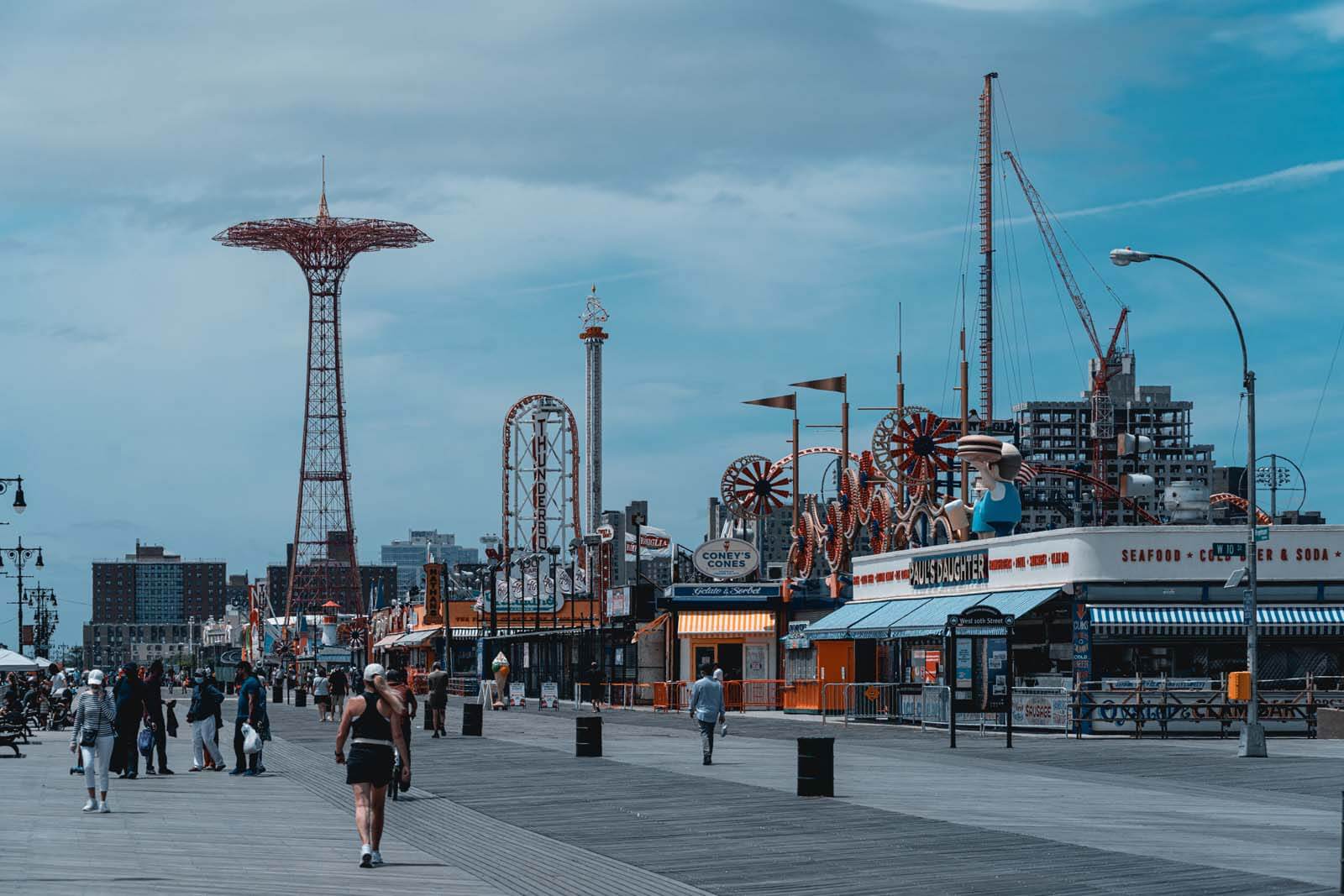
Traveling from the iconic Brooklyn Bridge to the historic shores of Coney Island is a journey that traverses the heart of Brooklyn’s diverse neighborhoods. In 2026, the most efficient way to make this trip is via the New York City Subway (specifically the F or Q lines), which takes approximately 45 to 60 minutes and costs a flat fare of $2.90. Alternative methods include the scenic NYC Ferry, cycling via the Ocean Parkway Greenway, or utilizing rideshare services, each offering different balances of speed, cost, and sightseeing potential.
Navigating the Starting Point: Brooklyn Bridge Terminus
Before selecting a route, it is essential to identify exactly where you are positioned at the Brooklyn Bridge. The bridge spans the East River, connecting Lower Manhattan to Downtown Brooklyn. Most travelers seeking a guide to Coney Island have just completed the 1.1-mile walk across the wooden planks and find themselves at the Brooklyn-side exit.
If you are at the Manhattan side (near City Hall), your transit options differ slightly from those at the Brooklyn side (DUMBO/Downtown Brooklyn). This guide focuses primarily on the journey starting from the Brooklyn terminus, as this is the most common trajectory for tourists and locals making a full day of Brooklyn exploration.
The Brooklyn exit of the bridge deposits pedestrians near the intersection of Tillary Street and Adams Street, or via the pedestrian staircase down into the DUMBO neighborhood (Washington Street). From here, you are within walking distance of several major subway hubs that provide direct access to the Atlantic Ocean.
The Subway: The Primary Transit Arterial
The New York City Subway remains the most reliable and cost-effective method for reaching Coney Island. By 2026, the system relies almost exclusively on the OMNY (One Metro New York) contactless payment system, allowing you to tap your smartphone, wearable device, or contactless credit card at the turnstile.
The F Train from York Street
If you exit the bridge and head into the DUMBO neighborhood, the York Street Station (F Line) is your closest entry point.
- Route: The F train runs south through brownstone Brooklyn (including Jay St-MetroTech, Bergen St, and Park Slope) before heading toward South Brooklyn.
- Transit Time: Approximately 50 minutes from York Street to the Coney Island-Stillwell Avenue station.
- Why choose this: The F train offers a unique perspective of the borough. As it reaches the Smith-9th Streets station, it climbs to the highest point of the subway system, offering a panoramic view of the Manhattan skyline and the Gowanus Canal before descending back underground.
The Q and B Trains from DeKalb Avenue
For those willing to walk about 10–15 minutes from the bridge exit toward Downtown Brooklyn, the DeKalb Avenue station provides access to the Q and B lines.
- Route: The Q train is often preferred because it runs express in certain sections and emerges onto an elevated track as it approaches the coast, providing a scenic look at the neighborhood of Brighton Beach.
- Transit Time: 35 to 45 minutes.
- Why choose this: The Q train is generally perceived as faster than the F train for this specific journey. The "Stillwell Avenue" terminus is a modern, sun-drenched terminal just a block away from the world-famous Nathan’s Famous Hot Dogs and the boardwalk.
Costs and Logistics
As of 2026, a single subway fare is $2.90. The MTA continues to offer a "fare cap" system via OMNY, where after 12 paid trips in a week (starting Monday), all subsequent rides are free. This makes the subway an unbeatable value for visitors planning multiple stops.
The NYC Ferry: The Scenic Alternative
The NYC Ferry has become a vital part of the city’s transit infrastructure. While there is no direct "Brooklyn Bridge to Coney Island" boat, the transfer process is straightforward and offers the most visually stunning commute in the city.
The Route and Transfers
To use the ferry, walk from the bridge exit to the DUMBO landing (located at Brooklyn Bridge Park, Pier 1).
- Board the South Brooklyn (SB) Route: Take the ferry south. You will pass under the Manhattan and Williamsburg bridges (if looking back) and sail past Red Hook and Sunset Park.
- Transfer at Bay Ridge: Disembark at the Bay Ridge landing.
- Board the Coney Island (CI) Route: Transfer to the dedicated Coney Island ferry. This final leg takes you around the southwestern tip of Brooklyn, offering views of the Verrazzano-Narrows Bridge.
Transit Times and Costs
- Transit Time: Total travel time can range from 70 to 90 minutes, depending on transfer windows.
- Cost: As of 2026, a single ferry ticket is $4.50. If you purchase a 10-trip pack, the cost per ride is reduced. Note that the NYC Ferry is a separate system from the subway; OMNY is currently integrated for payment, but free transfers between the subway and ferry do not exist.
The ferry is best suited for those who view the transit itself as part of the sightseeing experience. The outdoor decks provide sea breezes and a vantage point of the city that a subterranean subway ride simply cannot match.
Cycling the Ocean Parkway Greenway
For the active traveler, the journey to Coney Island can be completed via one of the oldest dedicated bike paths in the United States: the Ocean Parkway Greenway.
The Route
From the Brooklyn Bridge exit, you will first navigate the protected bike lanes on Tillary Street or Jay Street to reach the entrance of Prospect Park. After cycling through or around the park, you will exit at Machate Circle to join the Ocean Parkway Greenway.
- Distance: Approximately 11 to 13 miles depending on your specific path through Downtown Brooklyn.
- Path Quality: The Greenway is separated from motor vehicle traffic, though it does intersect with cross-streets. It is a straight, flat shot directly south to the boardwalk.
Transit Times and Rental Costs
- Transit Time: 60 to 90 minutes, depending on your pace.
- Costs: If using Citi Bike (the city’s bike-share program), 2026 rates for non-members are approximately $4.79 per 30-minute ride on a classic bike, or higher for e-bikes. Day passes are often the more economical choice for a round trip to Coney Island.
Cycling is an excellent way to see the transition of Brooklyn's architecture—from the high-rises of Downtown to the Victorian homes of Ditmas Park, and finally the salt-air bungalow style of the coast.
Driving and Rideshare Logistics
Driving from the Brooklyn Bridge to Coney Island is often the fastest option in terms of raw distance, but it is the most volatile in terms of time due to New York City’s legendary traffic.
Routes: The BQE and Belt Parkway
Drivers typically take the Brooklyn-Queens Expressway (I-278) West to the Belt Parkway East.
- Peak Hours: Avoid traveling between 7:00 AM – 10:00 AM and 3:00 PM – 7:00 PM. During these windows, the Belt Parkway can become heavily congested, turning a 25-minute drive into a 75-minute ordeal.
- Parking: Coney Island has several paid parking lots (rates in 2026 range from $20 to $40 per day) and limited street parking. On summer weekends, street parking is nearly impossible to find.
Rideshare Costs (Uber/Lyft/Revel)
In 2026, a rideshare from the Brooklyn Bridge area to Coney Island typically costs between $45 and $75, depending on demand and vehicle type. During major events, such as the Mermaid Parade or the July 4th Fireworks, surge pricing can easily push these rates above $100.
Comparative Travel Summary
The following table provides a side-by-side comparison of the primary transit methods available in 2026.
| Method | Approx. Time | Approx. Cost | Best For |
|---|---|---|---|
| Subway (Q/F Lines) | 45–55 Min | $2.90 | Efficiency & Budget |
| NYC Ferry | 75–90 Min | $4.50 | Scenery & Couples |
| Cycling (Ocean Pkwy) | 60–80 Min | $15–$30 (Rental) | Fitness & Local Feel |
| Rideshare (Uber/Lyft) | 25–60 Min | $45–$75 | Groups & Comfort |
| Walking | 3.5–4 Hours | Free | Endurance & Exploration |
Frequently Asked Questions
Which subway line is the most scenic for this trip?
The Q train is widely considered the most scenic route. After leaving the tunnel in South Brooklyn, it travels on an elevated track through neighborhoods like Sheepshead Bay and Brighton Beach. This provides riders with views of local life and, eventually, a first glimpse of the Atlantic Ocean and the Parachute Jump tower as the train pulls into the Stillwell Avenue station.
Is it safe to take the subway to Coney Island late at night?
Yes, the subway to Coney Island is generally safe late at night, as the Stillwell Avenue station is a major transit hub with constant activity. However, in 2026, as with any major metropolitan transit system, it is recommended to ride in the conductor’s car (usually located in the middle of the train) during late-night hours and to remain aware of your surroundings.
Can I take my bike on the subway if I get tired of cycling?
New York City subways allow bicycles at all times, but it is advised to avoid peak rush hours when cars are crowded. If you cycle to Coney Island via Ocean Parkway and feel too tired for the return trip, you can bring your bike onto the F, N, or Q trains at the Stillwell Avenue station. Use the end of the train cars to avoid blocking doors.
Is the NYC Ferry to Coney Island a year-round service?
In 2026, the Coney Island ferry route operates on a year-round schedule, though frequency is significantly increased during the summer months (May through September). During the winter, the "beach" crowds disappear, but the ferry remains a vital link for residents and those visiting the New York Aquarium, which is open year-round.
What is the "OMNY" fare cap I should know about?
The OMNY fare cap is a benefit for frequent travelers. Once you spend $34.80 (the cost of 12 rides) using the same device or card within a seven-day period starting Monday, every subsequent ride on the subway or local bus is free for the remainder of that week. This is particularly useful if your trip to Coney Island is part of a larger week-long exploration of New York City.
Strategic Recommendations for Your Trip
To maximize your experience, the best strategy is to mix your transit modes. Many travelers find the most satisfaction by taking the subway (Q train) down to Coney Island in the morning to arrive quickly and beat the crowds. After a day of enjoying the Cyclone, the Wonder Wheel, and the boardwalk, take the NYC Ferry back toward the Brooklyn Bridge at sunset.
The return ferry trip offers a dramatic view of the Manhattan skyline lighting up as you approach the Brooklyn Bridge. Ensure you have the NYC Ferry app downloaded to check real-time schedules, as the last boat of the evening can fill up quickly during the summer season. If you are traveling with a group of four or more, a rideshare may be comparable in cost to the ferry, but it will lack the coastal views that make the ferry a standout experience.