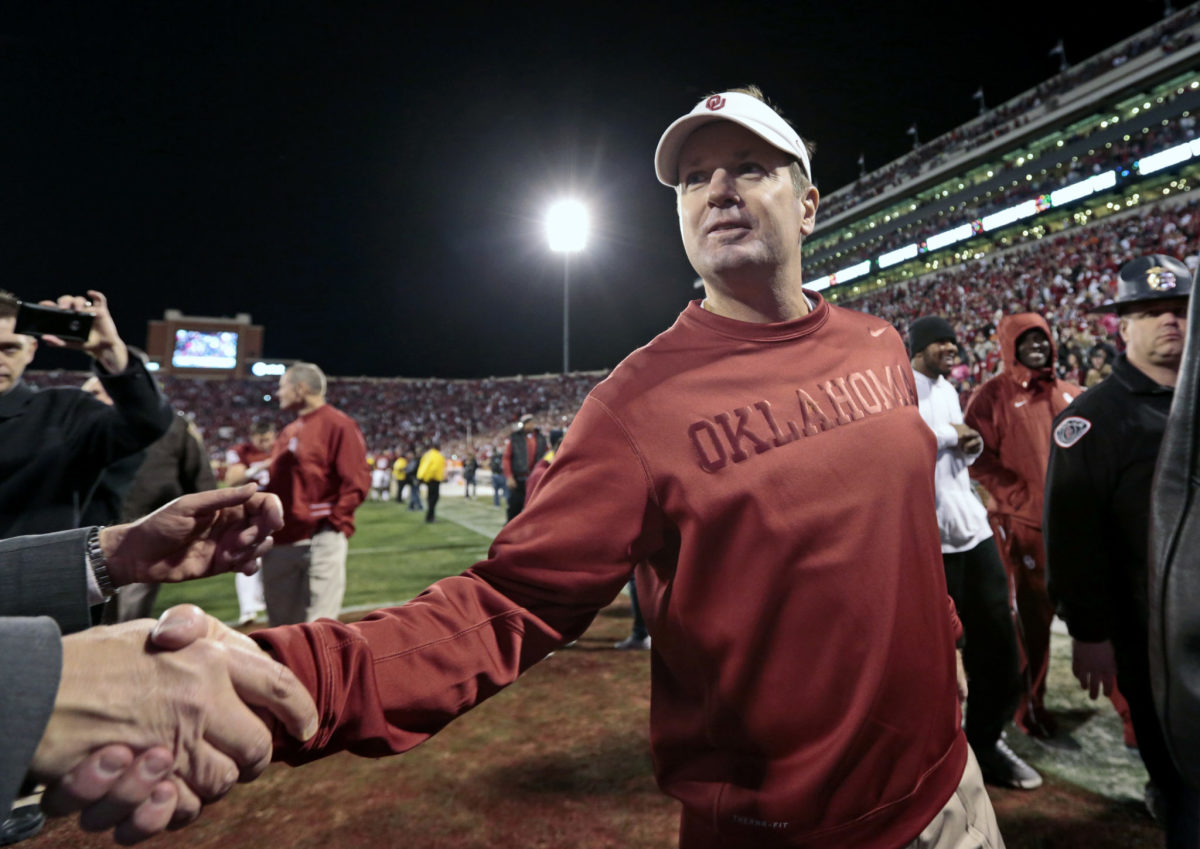
Bob Stoops’ coaching tree is one of the most prolific in modern college football history, featuring successful head coaches like Lincoln Riley, Mike Leach, and Brent Venables. By blending defensive discipline with innovative offensive philosophies, Stoops’ proteges have captured numerous conference titles and national championships, fundamentally altering the tactical and cultural landscape of the sport across the United States.
The Architect of Excellence: Bob Stoops’ Mentorship Philosophy
To understand the vast reach of the Bob Stoops coaching tree, one must first analyze the foundation upon which it was built. When Bob Stoops arrived at the University of Oklahoma (OU) in 1999, the program was in a state of stagnation. Having refined his craft under legendary mentors like Bill Snyder at Kansas State and Steve Spurrier at Florida, Stoops brought a unique "CEO-style" management approach to Norman. He didn't just coach a team; he built an infrastructure for leadership development.
Stoops’ philosophy was rooted in a rare balance: he was a defensive mastermind who was humble enough to grant total autonomy to his offensive coordinators. This willingness to empower his staff allowed assistants to develop their own identities, a prerequisite for any successful head coach. He prioritized staff stability, which in turn created a masterclass environment where young assistants could observe the nuances of program management, recruiting logistics, and media relations. As we look back from 2026, the "Oklahoma Standard" established by Stoops remains the blueprint for how a singular head coach can influence the entire collegiate coaching market.
The Offensive Revolution: Mike Leach and the Air Raid Diaspora
One of the most consequential decisions of Bob Stoops’ career was his initial hire of Mike Leach as offensive coordinator in 1999. Although Leach only stayed in Norman for one season before taking the head coaching job at Texas Tech, that single year ignited an offensive revolution that still dictates the terms of engagement in football today.
The "Air Raid" offense, characterized by its wide splits, high-volume passing, and simplified progressions, was refined under the Stoops umbrella. This branch of the tree has produced some of the most innovative minds in the game:
- Mike Leach: The primary architect who transformed programs at Texas Tech, Washington State, and Mississippi State. His legacy, even after his passing in 2022, continues through the dozens of coaches he mentored.
- Lincoln Riley: Perhaps the most famous branch, Riley served as Stoops’ offensive coordinator before succeeding him as head coach. Riley’s ability to develop Heisman Trophy winners (Baker Mayfield, Kyler Murray, Caleb Williams) has made him a titan at both Oklahoma and USC.
- Josh Heupel: The quarterback who led Stoops to his 2000 National Championship transitioned into coaching, eventually taking the helm at UCF and then Tennessee. His hyper-fast tempo offense is a direct evolution of the principles fostered during his time with Stoops.
- Sonny Dykes and Seth Littrell: Both coaches carry the offensive DNA of the Stoops/Leach era, emphasizing space and pace to neutralize more talented defensive fronts.
Defensive Dominance: The Brent Venables and Mike Stoops Legacy
While the offensive fireworks often grab the headlines, the defensive side of the Bob Stoops coaching tree is equally formidable. Stoops was an elite defensive coordinator himself, and he demanded a specific brand of "tough-mindedness" that translated well into the coaching careers of his defensive staff.
Brent Venables stands as the most prominent example. After serving as Stoops' defensive coordinator for over a decade and winning a national title in Norman, Venables moved to Clemson, where he became the highest-paid and most respected assistant in the country. His return to Oklahoma as head coach in 2022 marked a "full circle" moment for the tree. Venables’ defensive schemes—noted for their complexity, aggressive blitz packages, and "positionless" defenders—are taught at every level of the game.
Additionally, Mike Stoops, Bob’s brother, played a critical role in the early 2000s dominance. His subsequent head coaching stint at Arizona and his various coordinator roles have spread the "Stoops Defense" (a hybrid of 4-3 and 3-4 principles with an emphasis on secondary play) across the Pac-12 and SEC. Other defensive disciples like Bo Pelini (former Nebraska head coach) and Mark Stoops (Kentucky head coach) have utilized the foundational principles of physical gap control and disciplined secondary rotations to build winning programs in historically difficult environments.
Quantifying the Influence: Success Metrics of the Stoops Tree
The impact of the Stoops tree isn't just theoretical; it is backed by decades of data. As of 2026, coaches who worked directly under Bob Stoops or were heavily influenced by his immediate proteges have accounted for a significant percentage of New Year’s Six bowl appearances and conference championships over the last quarter-century.
| Coach | Primary Role under Stoops | Primary Success Metric | Notable Achievement |
|---|---|---|---|
| Lincoln Riley | Offensive Coordinator | 4 College Football Playoff Appearances | Produced 3 Heisman Winners |
| Brent Venables | Defensive Coordinator | Multiple National Titles (As Asst.) | Revitalized Oklahoma (Post-2022) |
| Mike Leach | Offensive Coordinator | 158 Career Wins | Revolutionized the Air Raid Offense |
| Josh Heupel | QB / Quarterbacks Coach | Top 5 Offense (Tennessee) | 2000 National Champion (Player) |
| Mark Stoops | Support/Family Influence | All-time Winningest Coach (Kentucky) | Transformed UK into a SEC Contender |
| Kevin Sumlin | Special Teams/WR Coach | 2012 SEC Coach of the Year | Developed Johnny Manziel at Texas A&M |
| Jay Norvell | Wide Receivers Coach | Multiple Bowl Appearances (Nevada/CSU) | Known for "Air Raid" adaptations |
The "Stoops Way": Culture and Program Management
Beyond the X's and O's, the Bob Stoops coaching tree is defined by a specific culture of program management. Stoops was known for his "no excuses" mantra and his ability to handle the intense pressure of a blue-blood program like Oklahoma without succumbing to the "coaching burnout" that plagues many of his peers.
His proteges often mirror his media savvy and his ability to relate to players from diverse backgrounds. Stoops was a pioneer in the early 2000s in terms of utilizing high-end facilities and marketing to modernize recruiting. This trend has been carried forward by coaches like Lincoln Riley, who became a master of the NCAA Transfer Portal and Name, Image, and Likeness (NIL) era.
The impact also extends to the "coaching of coaches." Stoops didn't just hire assistants; he developed them by involving them in the administrative side of the program. This exposure to the "business of football" is why so many of his assistants were prepared to become head coaches at a young age.
The Persistence of the Tree in 2026 and Beyond
As we navigate the 2026 college football season, the Stoops influence remains as visible as ever. The expansion of the SEC and Big Ten has placed many of his disciples in direct competition. The "Big 12 style" of play—once mocked for its lack of defense—has essentially become the national standard, with even the staunchest SEC programs adopting the spacing and tempo concepts popularized by the Stoops/Leach connection.
Furthermore, the longevity of Mark Stoops at Kentucky and the resurgence of Oklahoma under Brent Venables demonstrate that the Stoops tree is not just about "flashy" offense; it is about sustainable building. While many coaching trees wither when the "trunk" retires, the Stoops tree has proven to be incredibly resilient, with third-generation coaches (assistants of assistants) now entering the head coaching ranks at the Group of Five and Power Four levels.
How many former Bob Stoops assistants became head coaches?
Over 10 former assistants under Bob Stoops eventually became Division I head coaches. Notable names include Mike Leach, Lincoln Riley, Brent Venables, Josh Heupel, Kevin Sumlin, Jay Norvell, Seth Littrell, and Bo Pelini. This does not include his brothers, Mark and Mike Stoops, who shared deep professional and philosophical ties with him.
What is the most significant tactical contribution of the Stoops tree?
The most significant contribution is the popularization and refinement of the Air Raid offense in major college football. By hiring Mike Leach in 1999, Stoops bridged the gap between "experimental" small-school offenses and the elite talent of programs like Oklahoma, proving that high-tempo passing could win national championships.
Did Bob Stoops' coaching tree influence the NFL?
Yes, the influence is profound. The concepts developed by Lincoln Riley and Mike Leach, such as RPOs (Run-Pro-Options) and advanced vertical passing concepts, are now staples in the NFL. Former Oklahoma quarterbacks like Baker Mayfield and Kyler Murray, coached by Stoops’ proteges, helped bring these collegiate schemes to the professional level.
Is Kirby Smart part of the Bob Stoops coaching tree?
No, Kirby Smart is primarily a product of the Nick Saban coaching tree. However, Smart and Stoops share a common philosophical ancestor in the "Snyder/Saban/Stoops" defensive era of the 1990s. While they are not directly linked by employment, their defensive structures often utilize similar "pattern-match" coverage principles.
How did Bob Stoops' retirement affect his coaching tree?
Stoops’ retirement in 2017 actually strengthened his tree by allowing Lincoln Riley to take over the Oklahoma program. This smooth transition proved that Stoops had built a self-sustaining system. His brief return to coaching in the XFL and as an interim at OU in late 2021 further solidified his role as a "mentor emeritus" for the next generation.
Pursuing a Legacy in Coaching Leadership
For those looking to emulate the success of the Bob Stoops coaching tree, the primary takeaway is the importance of balanced mentorship. Stoops demonstrated that a leader does not need to be an expert in every facet of the organization to be successful; rather, they must be an expert at identifying talent and providing that talent with the resources to thrive.
Aspiring coaches and leaders should focus on building a versatile "playbook" that includes both tactical innovation and administrative discipline. As the landscape of sports continues to evolve through the mid-2020s, the principles of the Stoops tree—stability, empowerment, and adaptability—will remain the gold standard for leadership development.